Birth of Two Nations – The Hundred Years War

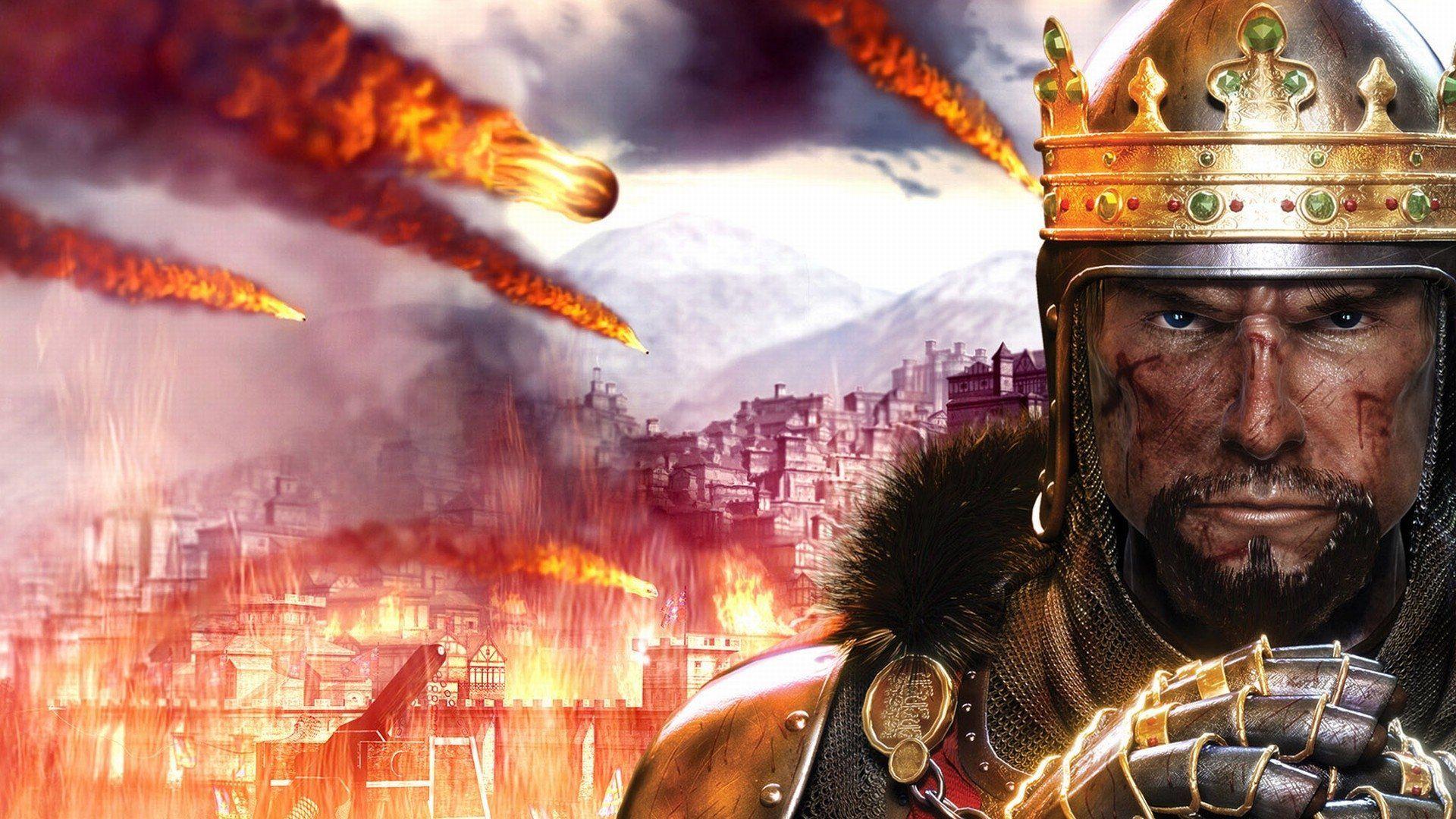
Image result for medieval total war wallpaper

The Hundred Years War is one of those historical things I’ve always felt guilty about not knowing more about. It is the medieval conflict. Any time you picture knights in armor, castle sieges, charging heavy cavalry, longbows, squabbling royal families, you are probably subconsciously picturing something from the Hundred Years War template.

I finally got around to figuring out one of Europe’s greatest struggles through the blandly named, Hundred Years War: The English in France 1337-1453, by Desmond Seward.

Seward opens his work by stating that it is intended to be a broad overview of the Hundred Years War with a particular emphasis on portraying the English conduct during the conflict more accurately than past historical efforts. At least according to him, English historians have tended to romanticize the war as a valiant effort of early English nationhood against a vastly superior foe while overlooking or minimizing the brutal realities of English strategy which more closely resembled a Viking onslaught than typical feudal warfare (which was not known for its gentleness anyway). So make of that what you will.

My goal with this piece is to summarize the entire conflict and draw out the social, cultural, military, and political trends that I found most interesting.

Continue reading “Birth of Two Nations – The Hundred Years War”

Examining 1999’s Culture Through Its Best Movies

Image result for the matrix 1999

In college, I had this class where we were supposed to learn about 19th century upper-class British culture by analyzing hundreds of paintings commissioned and hung in wealthy British estates during that time period. Some insights are surface level, like British people loved to hunt foxes. Other potential insights were hotly debated in class, like whether the presentation of women tended towards subservience or maternalism, or both, or neither, etc.

Either way, it was surprisingly fun, and I enjoyed sort of doing it again with Best. Movie. Year. Ever.: How 1999 Blew Up the Big Screen, by Brian Raftery.

The book examines dozens of 1999’s best movies, ranging from entire chapters dedicated to Blair Witch ProjectFight Club, and Sixth Sense, to brief interludes on American Pie, The Mummy, and Varsity Blues, to passing mentions of many more films. Between the stories, Raftery offers his own nuggets of speculations on the cultural, filmmaking, and business trends that caused 1999 to be such an incredible movie year.

Continue reading “Examining 1999’s Culture Through Its Best Movies”

The New Epidemic – My Experience of Losing a Friend to Heroin

Note – This is a true story based on my own experiences and what I’ve heard from the people involved, but for privacy, all of the names have been changed.

Note 2 – This is an old piece, republishing was accidental.

I grew up in a “hamlet” (the administrative level below “town”) in the Northeastern US, with a population of just over 3,000. It’s not so much a community as a bunch of scattered homes in the middle of the woods barely connected by two one-lane highways and a network of mostly dirt roads. The closest thing to a “center” it has is a church, middle/elementary school, deli, and gas station on one stretch of road. I attended that school from kindergarten through 8th grade, and graduated from it 13 years ago from a class of 30 students.

So far, 2 of those 30 have died from heroin overdoses, along with one other student from two grades below me, and a dozen individuals from the adjacent school district within the same age range. All were male.

One of those two from my graduating class was Jack, my childhood best friend. He died at age 23.

His death was entirely unexpected to me, but seemingly everyone else in his life knew he had been addicted to heroin for five years. During and after the wake, funeral, and mourning period, I did my best to figure out what happened to him. From a broad sociological standpoint, Jack is a case study in how a white, middle-class teenager with good parents growing up in a fairly affluent place somehow ends up dying from a drug addiction. From a personal standpoint, I just wanted to know how this happened without me knowing about it.

The following is my attempt at putting everything together. I’m going to do my best to not just write another “sad addiction story.” I want to try to find useful take-aways from the experience that have some sort of relevance for how we do/should look at addiction, mental illness, and treatment.

Continue reading “The New Epidemic – My Experience of Losing a Friend to Heroin”

The Philosophy of Tyler Durden

Image result for tyler durden

I just finished reading Fight Club for the first time in over a decade, so I’m going to break its first rule.

It’s a cliché by this point, but Fight Club really was amazingly prophetic in identifying a few particular social trends/neuroses of the following decades. It was written in 1996, and the more-famous movie came out in 1999, but its core themes were more strongly felt from 2010-today than during the 90s. Some of it is a bit out there, but I think the core themes are still very much alive today.

Here is the philosophy of Fight Club, or at least of Tyler Durden, in a nutshell –

Continue reading “The Philosophy of Tyler Durden”

The Opium War – The War On/For Drugs

Wallpapers ID:81842

Over the previous month, I have slowly made my way through the audiobook of Imperial Twilight: The Opium War and the End of China’s Last Golden Age, by Stephen R. Platt.

Prior to reading it, I knew next to nothing about the Opium Wars except that they were a series of conflicts between Great Britain and China over opium that led to the British acquisition of Hong Kong, and that they inspired much modern-day nationalism in China where they are seen as the start of China’s “Century of Humiliation.”

(Note – from now on I’ll just refer to a singular “Opium War.” There were a few of them, but the first one is the important one.)

Now that I’ve read it, I feel like I’ve only grasped the surface-level of a vast conflict containing multi-national corporate drug dealers, local mafia drug distributors, corrupt government agents, home-sick merchants, panicking diplomats, political lobbyists, a British merchant who nearly started an international war because he wanted to bang his wife, a Chinese merchant who almost defected to America, drug legalization advocates on both sides of the world, a Chinese advisor who wanted to execute anyone caught holding opium, and countless more individuals, organizations, and governments caught in a tangled international web.

And yet, despite building up at the start of the 18th century and coming to a climax in the mid-19th century, while reading this book about the Opium War, I couldn’t help but think:

This is all so familiar.

The Opium War is like a fictitious allegorical retelling of a whole bunch of very real political problems in the modern world. Namely:

  • The ongoing, intractable, unwinnable WAR ON DRUGS
  • The inherent difficulties of conducting a policy of FREE TRADE when the trading partner is a hostile, protectionist nation
  • The limits of STATE SOVEREIGNTY and MULTICULTURALISM against pressing private concerns

In this post, first I’ll do my best to recount the basic outline of the conflict as well as its most interesting trends and moments. Nearly all of my information comes from the book, with gaps filled in by Wikipedia.

Continue reading “The Opium War – The War On/For Drugs”

Hillbilly Elegy – The Culture of White American Poverty

Image result for appalachia people

I’ve written a couple of book summaries on here over the past few months, and this one for Hillbilly Elegy will be the most difficult. J.D. Vance’s autobiography is a sociological summary of Appalachian American culture, and by extension the culture of poverty across America, which uses his own life as a case study. The book is basically a series of linked anecdotes with only occasional introspections thrown in, so I’ll try my best to lay out Vance’s story, and integrate his claims and arguments.

Continue reading “Hillbilly Elegy – The Culture of White American Poverty”

Mongol Apologia – How Genghis Khan Made the Modern World

Image result for genghis khan

In Dan Carlin’s Hardcore History podcast on the Mongols, he recounts taking a class in college on Genghis Khan where he wrote a paper about some of the economic benefits of the Mongol Empire’s reign, and his Chinese professors gave him a bad grade for overlooking the tens of millions of people the nomads killed to acquire their massive empire. Carlin argued that the Mongol death toll wasn’t the point of the essay and it was unfair to grade him that way, but the teacher said it was morally inexcusable to overlook blatant genocide in this context.

I had a vaguely similar encounter in college, but in the other direction. I took a class on Mongol history taught by a professor who was famous in the field (he had spent years unsuccessfully searching for Genghis Khan’s body in Mongolia), and he used to make good-natured jokes about how one of his TAs was an unabashed Mongol fan. The TA didn’t just think the Mongols were interesting, he genuinely believed they were a force for good in the world, and when giving lectures he would go on at lengths rattling off the accomplishments and stats of the Mongol Empire, only to be occasionally interrupted by the main professor who would remind everyone that the Mongols probably killed a higher percentage of the earth’s population than any military force in history.

I just finished listening to the audiobook of Jack Weatherford’s book, Genghis Khan and the Making of the Modern World. When I started it, I wondered if the publisher forced that rather click-baity title on Weatherford. After all, though it’s a well-written and entertaining account, it is a fairly straightforward historical survey of Genghis Khan’s life and legacy. The book never concisely states what the “modern world” is or how exactly Genghis Khan made it.

But now that I finished it, I think Weatherford may have chosen the title after all, because he is about as pro-Mongol as one can get. And though the book is more of a historical account than an argument for a grand historical/cultural/societal explanation for the modern world, there is a faint outline for such a thing somewhere in there.

Even though I don’t totally buy it, I’ll do my best to explain Weatherford’s argument. I’ll also try to explain how Genghis Khan was so awesome (at least in a purely amoral, achievement-based sense) and why he’s one of the most famous people in all of history.

Continue reading “Mongol Apologia – How Genghis Khan Made the Modern World”

The Phantom’s Pain – A Metal Gear Solid V Narrative Analysis

maxresdefault

Introduction

“Now do you remember? Who you are? What you were meant to do? I cheated death, thanks to you. And thanks to you I’ve left my mark. You have too – you’ve written your own history. You’re your own man. I’m Big Boss, and you are too… No… He’s the two of us. Together. Where we are today? We built it. This story – this “legend” – it’s ours. We can change the world – and with it, the future. I am you, and you are me. Carry that with you, wherever you go. Thank you… my friend. From here on out, you’re Big Boss.”

– Big Boss

When I first finished Metal Gear Solid V: The Phantom Pain, like so many other players, I was disappointed. MGSV was supposed to be the “Missing Link” in the Metal Gear canon. It was that game that would reveal the bridge between the heroic Big Boss of MGS 3, Portable Ops, and Peace Walker, and the grand historical villain of Metal Gear 1 and 2. As expressed by numerous launch trailers and Hideo Kojima tweets, MGSV was going to be a tale of Big Boss’s fall into darkness, driven by an insatiable lust for revenge, a consummate anger lit by his enemies which would scorch his soul until nothing was left but a power-hungry mad man who would threaten the world with nuclear war for the sake of his deluded ambitions.

Instead we got an incredibly weird twist which did little more than retcon patch a largely ignored plot hole in one of the least-played Metal Gear games. We found out that the final boss of Metal Gear 1 was not Big Boss, but a body double, who through surgery and hypnotherapy was made into almost an exact copy of the legendary soldier.

Again, like most other players, when I first finished the game I thought this was a neat trick, a typically crazy, convoluted, but seductively entertaining twist from one of my favorite storytellers of all time. But of course… it was also a major let down.

Finding out that I had just played as some random-ass medic from Militaires Sans Fronteres for the last 80 hours instead of the most important character in the entire Metal Gear canon was certainly a mind-fuck, but also left me feeling deflated. What was the point of it all? Why did I just follow some entirely new character for an entire game who has only a minor, tangential connection to the series’ larger plot instead of seeing Big Boss’s moral/psychological/narrative transformation which is at the heart of the entire series and was supposed to be the entire point of Metal Gear Solid V?

Continue reading “The Phantom’s Pain – A Metal Gear Solid V Narrative Analysis”

Why We Create – A Transistor Analysis

相關圖片

Introduction

Transistor is one of my favorite games of all time. Upon completing my first playthrough I was enraptured by the atmosphere, visuals, soundtrack, characters… and that I understood next to nothing of what happened over the preceding six hours.

Transistor is clearly not meant to be easily understood. Its story is presented in a manner that’s somewhere between “avant-garde” and “infuriatingly vague.” The game shows a world dramatically different from our own based on unexplained rules that defy all physical and metaphysical rules. This world is populated by quite strange individuals who not only never react with as much shock as one would expect from, say, having one’s soul become trapped in a giant sword, but also never bother to just sit down explain whatever insane event happened two minutes ago, like, say, being attacked by a sentient, semi-organic building.

Yet I love Transistor dearly. I not only love it for the aforementioned atmosphere, visuals, soundtrack, characters, and bewildering narrative, I love it for the vision. It blows my mind that a group of people actually conceived this idea, sketched out every component of its otherworldly presentation and utterly unique combat, raised money from investors, and then made a full-fledged video game product out of it. There simply is nothing like Transistor1. It looks like nothing else, sounds like nothing else, feels like nothing else, and therefore stands out as the type of singularly-envisioned creation that the characters of Cloudbank would be proud of.

One of the things I love most about Transistor is that it is maybe the densest game I have ever played. For one thing, I managed to write 29,580 words about a game that takes about six hours to play through. So an experienced Transistor player should be able to play through the game again in less time then it takes to read my analysis of its world, plot, and themes. But that’s just the nature of the game. You could freeze any single frame in the entire game and spend an hour talking about the implications of every detail, from the architectural designs to the characters’ clothing. I’m not sure there is a narratively-based game out there which packs so much content into such little space.

Continue reading “Why We Create – A Transistor Analysis”