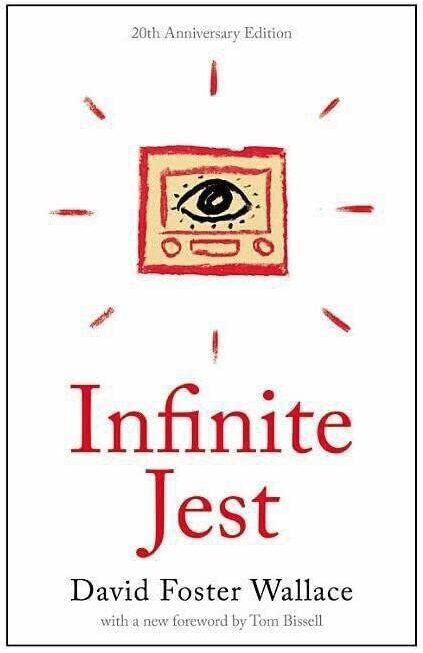
Infinite Jest Extraction

https://www.amazon.com/Infinite-Jest-Novel-20th-Anniversary/dp/0316306053

I read David Foster Wallace’s Infinite Jest via audiobook, which at the default speed, takes over 52.5 hours. On paper, the book is usually over 1,100 pages, including its 388 endnotes.

I’ve written about books before, but these essays are so long and so much of them are devoted to summarizing the texts that I don’t really consider them reviews. I think of them more as extractions, as attempts to capture the value of the books in the most dense and entertaining way possible. Writing is a method of processing information, and I feel like I have a better grasp of the life of Napoleon and the Incan conquests because I wrote about them.

I’m not sure there has ever been a book written anywhere in the world at any point in human history that is better suited to an extraction essay than Infinite Jest. It is a vast, opaque, and impenetrable work from the outside, and actually sitting down to read it doesn’t clarify its meaning so much as bury you in it. It’s a true classic novel in the sense that it’s a book that everyone wants to have read but nobody wants to read.

What is Infinite Jest about? The setting is an alternate history America that is wacky and largely established for comedic and thematic purposes, the plot matters even less and barely exists across 52.5 hours/1,100 pages but consists mostly of groups of people living their lives at an elite tennis academy and a drug/alcohol rehab facility, the characters matter a lot and many are very deep but there are a billion of them and their stories are told temporally out of order in a way that leaves you (the reader) often not understanding them until, like, 45 hours/800 pages into the book. The vast majority of chapters are devoted to describing characters in little snippets of their lives in ways that have some thematic relevance but usually no story relevance.

But Infinite Jest is also about is the rot of cynicism and the painful catharsis of earnestness and the trap of excessive entertainment potency and figuring out how to find meaning in giving your life to something.

Continue reading “Infinite Jest Extraction”

Pure Kojimism – A Death Stranding Analysis

Death Stranding' Details: When Can Fans Expect More Updates About ...

Death Stranding simultaneously contains more good and more bad than probably any other video game I have ever played.

Death Stranding’s basic setting and story pieces are epic, ambitious, utterly original, and wonderfully imagined. Many cutscenes are the best Kojima has ever directed. The atmosphere is grim, immersive, all-encompassing, and beautifully crafted, just like the game’s environment and music. Many characters are crisp, fun, and well-captured by real actors. The core gameplay is a revolution in fundamental game mechanics. I blasted through a 50-hour initial playthrough, put in another 20 hours to get all the trophies, and then replayed the whole story again in an additional 20 hours, and I was never bored.

Death Stranding’s plot is convoluted, confusing, both over-and-under explained, and lets down its incredible premise. The pacing is bad, with way too much happening at the beginning and end of the game and not enough happening in the vast middle. Many of its characters are dull or nonsensical. Plenty of dialogue is cringeworthy. The core gameplay is too easy, and barely evolves throughout the course of quite a long game.

That mixture of greatness and disaster is what makes Death Stranding so amazing. It’s a work of pure auteurism. Hideo Kojima is an eccentric genius with a touch for imaginative worlds and epic stories and big ideas executed in completely original ways, but he’s also a bad writer with some terrible storytelling instincts. There has been much speculation on how these two parts of Kojima were enhanced or hindered during the development of each Metal Gear game, but Death Stranding seems to be the ultimate personification of both at the same time… the best and worst Kojima has to offer in one package.

Continue reading “Pure Kojimism – A Death Stranding Analysis”

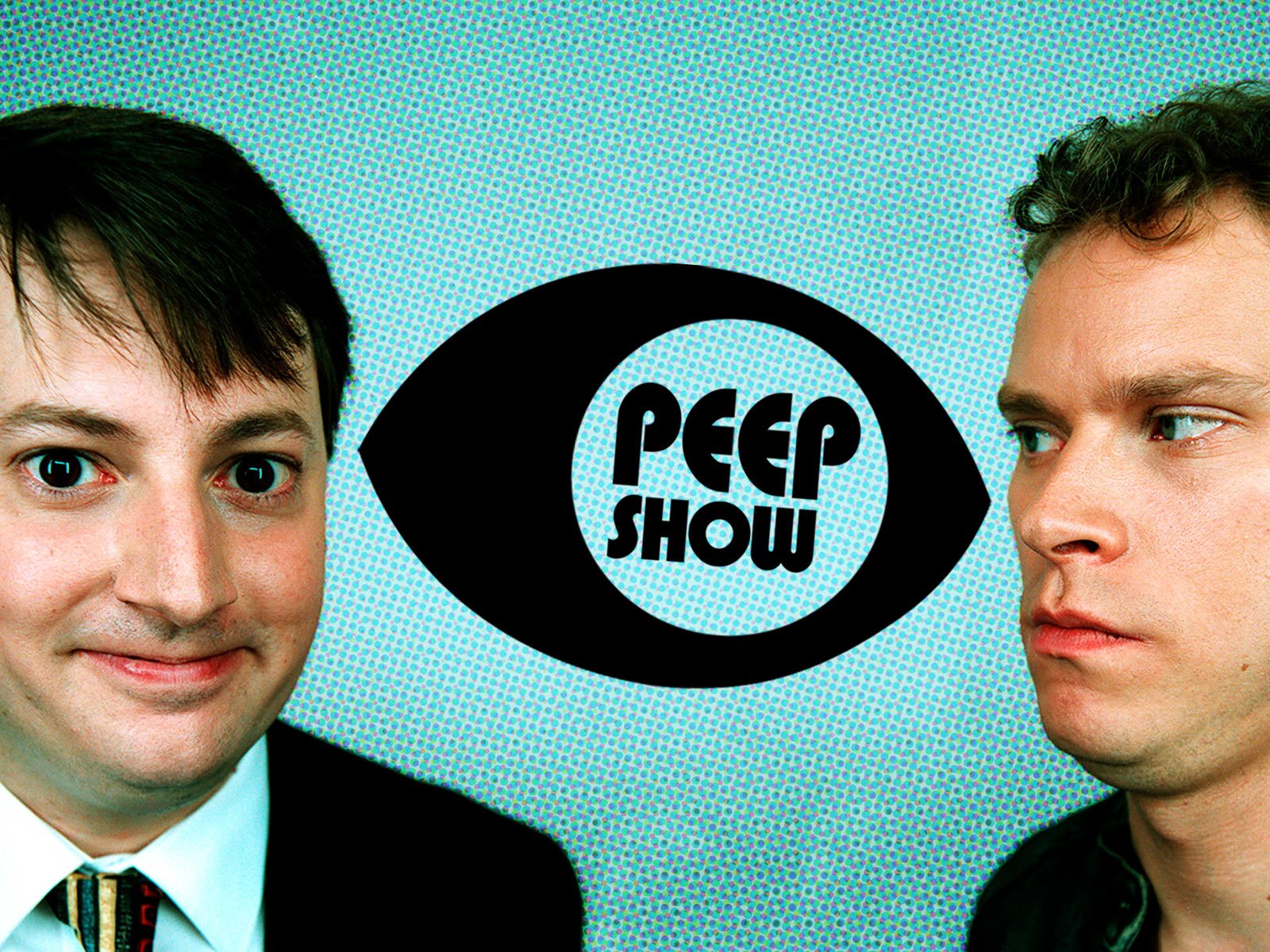
Peep Show – The Most Realistic Portrayal of Evil Ever Made

Watch Peep Show | Prime Video

Peep Show, a British tv series running from 2003 to 2015, starring David Mitchell and Robert Webb as a pair of miserable, co-dependent roommates living in Croydon, London, is the most realistic portrayal of evil I have ever seen.

Admittedly, I’m using “evil” in an unorthodox way. Most people think of “evil” as being synonymous with “malicious” and “doing really, really bad things.” But I have a broader view of “evil.” I consider a thing to be evil if it creates bad outcomes not just out of malice, but instinct or carelessness.

By that standard, Peep Shows’s protagonists, Mark Corrigan and Jeremy “Jez” Usborne, are evil. They’re not evil in quite the way serial killers and murderous dictators are, nor in the exaggerated cartoony manner of other comedic anti-heroes like the characters on It’s Always Sunny in Philadelphia, Arrested Development, or Archer. Rather, Peep Show’s characters are evil in the scariest way possible – they’re realistically evil. They embody the worst, weakest, most destructive traits that every single individual knows exists inside of them to one degree or another. They are evil incarnate.

Continue reading “Peep Show – The Most Realistic Portrayal of Evil Ever Made”

The Phantom’s Pain – A Metal Gear Solid V Narrative Analysis

maxresdefault

Introduction

“Now do you remember? Who you are? What you were meant to do? I cheated death, thanks to you. And thanks to you I’ve left my mark. You have too – you’ve written your own history. You’re your own man. I’m Big Boss, and you are too… No… He’s the two of us. Together. Where we are today? We built it. This story – this “legend” – it’s ours. We can change the world – and with it, the future. I am you, and you are me. Carry that with you, wherever you go. Thank you… my friend. From here on out, you’re Big Boss.”

– Big Boss

When I first finished Metal Gear Solid V: The Phantom Pain, like so many other players, I was disappointed. MGSV was supposed to be the “Missing Link” in the Metal Gear canon. It was that game that would reveal the bridge between the heroic Big Boss of MGS 3, Portable Ops, and Peace Walker, and the grand historical villain of Metal Gear 1 and 2. As expressed by numerous launch trailers and Hideo Kojima tweets, MGSV was going to be a tale of Big Boss’s fall into darkness, driven by an insatiable lust for revenge, a consummate anger lit by his enemies which would scorch his soul until nothing was left but a power-hungry mad man who would threaten the world with nuclear war for the sake of his deluded ambitions.

Instead we got an incredibly weird twist which did little more than retcon patch a largely ignored plot hole in one of the least-played Metal Gear games. We found out that the final boss of Metal Gear 1 was not Big Boss, but a body double, who through surgery and hypnotherapy was made into almost an exact copy of the legendary soldier.

Again, like most other players, when I first finished the game I thought this was a neat trick, a typically crazy, convoluted, but seductively entertaining twist from one of my favorite storytellers of all time. But of course… it was also a major let down.

Finding out that I had just played as some random-ass medic from Militaires Sans Fronteres for the last 80 hours instead of the most important character in the entire Metal Gear canon was certainly a mind-fuck, but also left me feeling deflated. What was the point of it all? Why did I just follow some entirely new character for an entire game who has only a minor, tangential connection to the series’ larger plot instead of seeing Big Boss’s moral/psychological/narrative transformation which is at the heart of the entire series and was supposed to be the entire point of Metal Gear Solid V?

Continue reading “The Phantom’s Pain – A Metal Gear Solid V Narrative Analysis”

Why We Create – A Transistor Analysis

相關圖片

Introduction

Transistor is one of my favorite games of all time. Upon completing my first playthrough I was enraptured by the atmosphere, visuals, soundtrack, characters… and that I understood next to nothing of what happened over the preceding six hours.

Transistor is clearly not meant to be easily understood. Its story is presented in a manner that’s somewhere between “avant-garde” and “infuriatingly vague.” The game shows a world dramatically different from our own based on unexplained rules that defy all physical and metaphysical rules. This world is populated by quite strange individuals who not only never react with as much shock as one would expect from, say, having one’s soul become trapped in a giant sword, but also never bother to just sit down explain whatever insane event happened two minutes ago, like, say, being attacked by a sentient, semi-organic building.

Yet I love Transistor dearly. I not only love it for the aforementioned atmosphere, visuals, soundtrack, characters, and bewildering narrative, I love it for the vision. It blows my mind that a group of people actually conceived this idea, sketched out every component of its otherworldly presentation and utterly unique combat, raised money from investors, and then made a full-fledged video game product out of it. There simply is nothing like Transistor1. It looks like nothing else, sounds like nothing else, feels like nothing else, and therefore stands out as the type of singularly-envisioned creation that the characters of Cloudbank would be proud of.

One of the things I love most about Transistor is that it is maybe the densest game I have ever played. For one thing, I managed to write 29,580 words about a game that takes about six hours to play through. So an experienced Transistor player should be able to play through the game again in less time then it takes to read my analysis of its world, plot, and themes. But that’s just the nature of the game. You could freeze any single frame in the entire game and spend an hour talking about the implications of every detail, from the architectural designs to the characters’ clothing. I’m not sure there is a narratively-based game out there which packs so much content into such little space.

Continue reading “Why We Create – A Transistor Analysis”