Other Notes on West Africa

I’ve written about Nigeria, Benin, The Gambia, Mauritania, Ghana, Guinea, and the Ivory Coast in West Africa. I also traveled to Togo, Sierra Leone, Liberia, Guinea-Bissau, Senegal, and Mali, but I don’t think I have enough interesting things to say about each one to justify a full post. So I’m going to do a quick, bullet-point summary of notes on all these leftover countries in one essay. But first, I’ll go over some bigger West African trends that I couldn’t figure out how to fit into individual country entries.

Continue reading “Other Notes on West Africa”

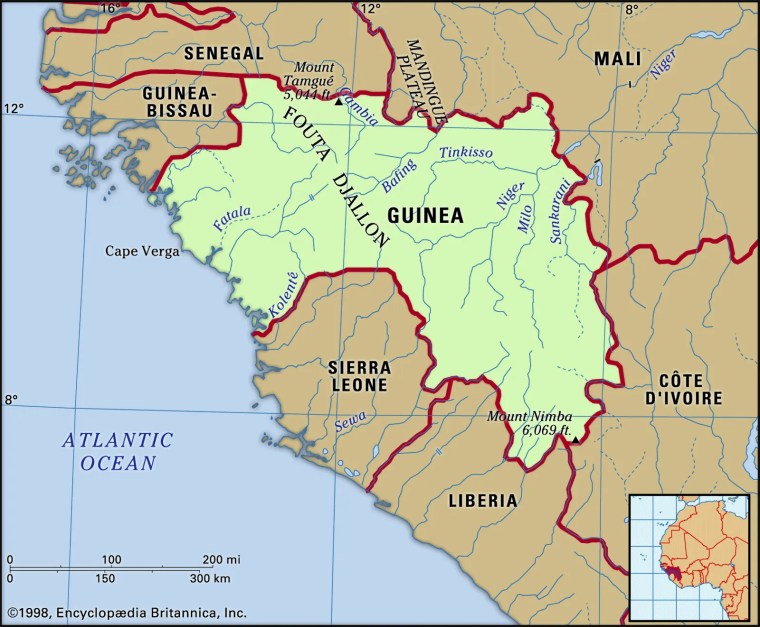
Notes on Guinea

I spent about nine days in Guinea, mostly in Conakry and being driven around the countryside. My notes here have a heavier bend toward personal experiences than usual, though I do go into the basics of Guinean history.

As always, Martin Meredith’s Fate of Africa is a major source for me, but I also got a lot out of Tom Burgis’s The Looting Machine: Warlords, Oligarchs, Corporations, Smugglers, and the Theft of Africa’s Wealth. Other assorted sources are linked within.

Continue reading “Notes on Guinea”

Notes on Mauritania

I spent about a week in Mauritania, visiting the cities of Nouakchott, Nouadhibou, Zouerate, and a bunch of small towns over the course of multiple 10+ hour car rides and a train ride. As usual, these are my notes on my experiences and various rabbit holes.

Continue reading “Notes on Mauritania”

Notes on The Gambia

I spent eight days in The Gambia, visiting Banjul, Serrekunda, Georgetown, and driving most of the length of this small country.

Continue reading “Notes on The Gambia”

Notes on Benin

I travelled through Benin for about 12 days, visiting Cotonou, Porto Novo, Abomey, Ouidah, and Grand Popo. I spent a decent chunk of my time there writing about Nigeria, so I didn’t dig into Benin quite as much and this piece will be shorter than others.

Continue reading “Notes on Benin”

Notes on Nigeria

I want to thank Chris Quintero for all his help on my Nigeria/West Africa trip. If you’re interested in going to Nigeria, definitely check out his guide.

I spent 12 days in Nigeria, and saw the cities of Lagos, Kano, Ibadan, and Abeokuta. Even compared to my other travel writing, I have barely scratched the surface of Nigeria, but these are my notes on what I saw and various historical rabbit holes I went down.

My first big secondary source is Martin Meredith’s The Fate of Africa: A History of the Continent Since Independence, which gives a phenomenal overview of a huge topic with exactly the right amount of summary and detail.

My other big secondary source is Dictatorland: The Men Who Stole Africa by Paul Kenyon which is narrower in scope, but somehow even better at storytelling history.

I also want to give a special thanks to the people who hosted me in Lagos and the person who connected me to them. The trip wouldn’t have been possible without them.

Continue reading “Notes on Nigeria”

Shadow of the Sun

Travel book review: The Shadow of the Sun, by Ryszard Kapuscinski | Travel | The Sunday Times

Sometimes I want to abandon any pretense of a normal life and live like a drifter. I could drop the burden of ordinary work, friends, relationships, property, and just go to unusual places, see unusual things, and exist on the margins of civilization where society doesn’t really make sense, but is never boring. I’d have to give up on safety, stability, and the traditional building blocks of happiness (family, structure, etc.), but I’d gain adventure, ruggedness, and assuredness born from being solely responsible for my safety. I’d live by my own rules.

In other words, sometimes I wish I could live like Ryszard Kapuscinski.

Fact and fiction | Financial Times

Continue reading “Shadow of the Sun”

How Much Would You Need to be Paid to Live on a Deserted Island for 1.5 Years and Do Nothing but Kill Seals?

I read and reviewed Oliver Platt’s Imperial Twilight: The Opium War and the End of China’s Last Golden Age over a year ago, and I haven’t been able to get one small story from the book out of my head.

In 1793, the British government launched the Macartney Embassy, the nation’s first formal diplomatic mission to China. A few ships led by statesman George Macartney set sail from Portsmouth, England, traveled down to Rio de Janeiro, then around the southern tip of Africa, across the bottom of the Indian Ocean, up through Indonesia, along the Chinese coast, to finally arrive at Beijing. The whole journey took ten months, and the diplomats played cards, drunk tea, looked out for exotic wildlife, and watched crew whippings to forget about being bored out of their minds.

While in the middle of the Indian Ocean, the crew spotted a tiny volcanic island. To their surprise, there were two men on the land desperately waving a makeshift flag in the air to get the crew’s attention. Macartney assumed the men were shipwrecked sailors, and he quickly ordered the ships to stop to lend assistance.

Wanna Run and Hide Big Time? Travel to 6 of the World's Remotest ...

On the island, the crew found five men – three Frenchmen and two Americans (from Boston). Surprisingly, they were not shipwrecked, but were living on the island voluntarily under contract with a French merchant company. Their jobs were to harvest seal pelts to sell in Canton, China. They had been alone on the island for six months and had wracked up 8,000 seal pelts, and they still had another year to go on the contract before the merchant company picked them up.

Continue reading “How Much Would You Need to be Paid to Live on a Deserted Island for 1.5 Years and Do Nothing but Kill Seals?”