
I spent eight days in The Gambia, visiting Banjul, Serrekunda, Georgetown, and driving most of the length of this small country.
Overview
Population (2022) – 2,413,403
Population growth rate (2021) – 2.5%
Size – 4,400 square miles (smaller than Connecticut)
GDP (nominal, 2021) – $2 billion
GDP growth rate (2021) – 4.3%
GDP per capita (2022) – $846
GDP per capita PPP (2022) – $2,640
Inflation rate range (2018-2023) – 6.5%-17.5%
Biggest export – rough wood (basically unprocessed wood)
Median age – 17.8
Life expectancy (2020) – 63
Founded – 1965
Religion (2019) – 96% Muslim, 3.5% Christian
Corruption Perceptions Index rank – #110
Heritage Index of Economic Freedom ranking – #101
Why Is This River Its Own Country… and Should It Be?
If you look at The Gambia on a map, you’ll notice that the entire country is just the land around the Gambia River. The Gambia is an enclave within Senegal except for a sliver of coastline on the Atlantic.
The short explanation for this odd geographic construct is that the French nabbed the Senegal River and all the land around it, while the British tussled with the French, Dutch, and Portuguese (Gambia from “cambio” = “trade” in Portuguese) to take the Gambia River and all the land around it, mostly to be used as a slave-exporting region.
There’s a folk story that the borders of The Gambia region were determined by the British sailing a ship down the river, firing cannons out of both sides, and drawing the borders where the cannon balls landed. Atlas Obscura says the story is apocryphal and the borders were just established by numerous treaties between the French and British (primarily through the 1783 Treaty of Versailles, the same one that ended the American Revolution War). But the myth probably arises from the British enforcing their claims by sailing ships down the river and firing on local chieftains revolting against British-French dividing lines arbitrarily cutting through their territories.
The layout of The Gambia and Senegal, both during their colonial era and post-independence, created some pretty interesting economic and political considerations. The Gambian people are ethnically indistinguishable from the Senegalese people surrounding them (though both countries consist of numerous ethnic groups). While many educated Gambians speak English and educated Senegalese speak French, most people speak common tribal languages most of the time. Both populations are almost entirely Muslim.
And yet despite basically being the same people with the same customs, there have always been chronic tensions between Senegal and The Gambia, sometimes erupting into outright conflict. Historically, due to laxer British trade customs, The Gambia has operated as a smuggling hub in the region for Senegalese to dodge French and French-inspired trade restrictions. This smuggling sometimes dips into more illicit trades (ie. drugs) and has been used to finance a low-intensity separatist movement in southern Senegal for decades. Plus, the relatively stable state of Senegal has always been concerned that the more unstable Gambia will collapse into chaos and cause spillover problems.
Thus, some portion of the populations, particularly among the elites, consider a union between Senegal and The Gambia to be a logical conclusion to a historical accident. Uniting the governments would mean customs and monetary unions which would ease trade for the Senegalese locals and help the economy of the chronically poorer Gambia, and combining the governments would stabilize The Gambia as well as weaken Senegalese separatists.
In 1964, four years after Senegalese independence and the year before Gambian independence, the United Nations seemingly looked into a post-colonial merger, but I guess nothing came of it.
In 1965, The Gambia got its independence from Britain and initially gained a reputation as a post-colonial success story, at least politically though not really economically. Like Senegal, The Gambia held decently fair democratic elections for two decades after independence, the first of which rejected an attempt to remove The Gambia from the British Commonwealth. I haven’t seen any attempts to explain The Gambia’s political orderliness, but I’m guessing the small population and geographic size of the country helped install a sense of localism which resisted the tribal fracturing of a lot other African states.
The political peace finally broke down in 1981 with an attempted leftist coup. The president, who was in London at a conference at the time, asked Senegal to intervene on his behalf, and was answered with a 2,700 troop invasion. After some surprisingly bloody fighting left hundreds dead, the Gambian president retained power. Senegal’s motivation for the intervention was both a pre-existing treaty and concerns that a successful coup sort of within its own borders would trigger separatist movements throughout the region.
The Senegalese intervention brought renewed interest to the unification question. So shortly after the failed coup, the governments of Senegal and The Gambia sat down for a conference and agreed to a merger to form Senegambia. Though the latter country got more than half of the new name, it was clearly the junior partner of the new state, with its leader being made vice president and the new combined armed forces being dominated by Senegal. However, the union was more of a confederation overall with lots of local autonomy left in the regional Gambian government’s hands, plus The Gambia retained its own militia which was chronically pissed off at receiving lower pay than the national army.
(I can’t find great sources on the conference, but I wonder how much strong-arming was going on. Did Senegal lean on any threats to enforce the union? It wouldn’t have to be a threat of invasion or occupation, just a threat of passivity if more unrest were to come to The Gambia.)
Based on Wikipedia’s summary of a few academic sources, Senegambia was doomed from the start. The union process was almost entirely driven by elites concerned with economic policy, while the common people had drifted apart despite their ethnic similarities (I’m guessing English vs. French language had a lot to do with it). It didn’t help when in 1987, the Senegal-born president referred to The Gambia as an “accident of history.”
My take on the deeper cause of the union’s failure is that there was no way to merge the countries without the Senegalese elite eclipsing The Gambian elite, and the latter obviously didn’t want to let that happen. Senegal is much bigger and wealthier than the Gambia, even at a per capita level (about 2X today). So a lot of the seemingly common sense components of the merger – like a customs union, monetary union, military merger, etc. – would inevitably result in marginalizing The Gambian elite after they lost state-backing for their economic and political privileges. The Senegalese government probably has the military and economic power to force a union on The Gambia if it really wants to, but I’m sure that would cause all sorts of international and domestic problems that even a fairly stable African state is not prepared to handle.
In 1989, Senegambia got into a border tussle with Mauritania; the national forces stationed in The Gambia were transferred to the northern Mauritania border. Gambian leaders saw this as an opportunity to dissolve the union with minimal risk, and so the nation of Senegambia once more reverted to the nations of Senegal and The Gambia after a mere seven years.
It’s way above my paygrade to analyze whether this was a good idea for either or both countries, but my impression is that Senegal has continued to be a well functioning country by the extremely low standards of West Africa, while The Gambia has continued to flounder economically while going the military authoritarian route that everyone expected of it politically. Senegal has also had to deal with a flair-up of separatist rebels in the Casamance region who use The Gambia as a smuggling post (though the Senegalese appear to have finally defeated these rebels recently). So my low confidence assessment is that the break-up was probably bad for both countries.
Unfortunately, I didn’t get much of an opportunity to talk to Gambians or Senegalese about their thoughts on a union, though I heard quite a few references to both countries’ people being essentially the same.

Modern Politics
In 1989, the re-independent Gambian government operated pretty much as it had during and before the Senegambian union, except now there weren’t thousands of Senegalese troops stationed in their land to keep the peace. Unfortunately for the Gambian leadership, they were not popular. A New York Times article from the mid-90s pointed out that maintaining elections was basically the only good thing the Gambian government had ever done; in the 30 years since independence, not a single school nor university had been built in the country, though the government did build one hospital.
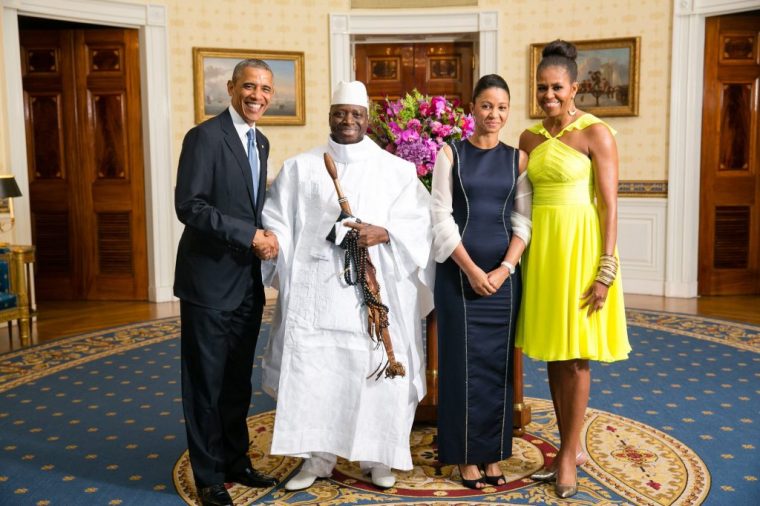
In 1994, The Gambia finally had its first successful coup. Yahya Jammeh, a 29 year old lieutenant with some American military training but only a 10th grade education, bloodlessly overthrew the democratic government and established a military junta with him at its head. The entire Gambian military only had about 800 personnel, so I guess that made it relatively easy for a charismatic young officer to gain a following and arrest many of his superiors. Much of Jammeh’s government, reign, and conduct are pretty normal for a terrible African dictator, but at least his billowy white robe and trademark scepter is quite striking:
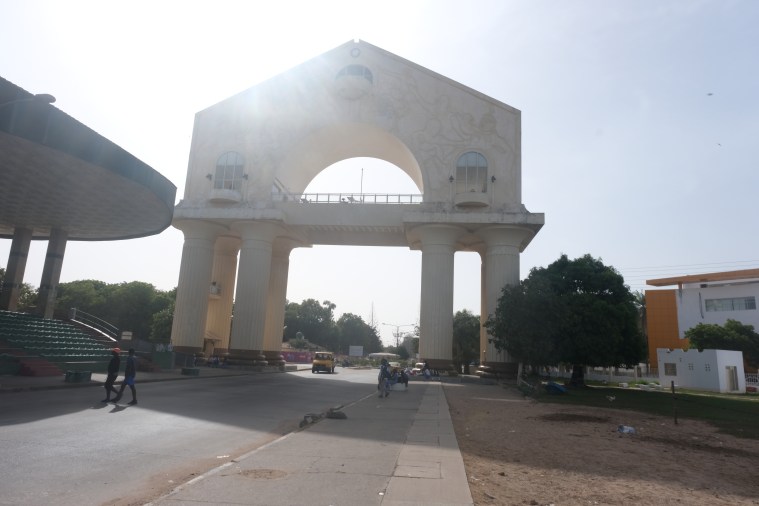
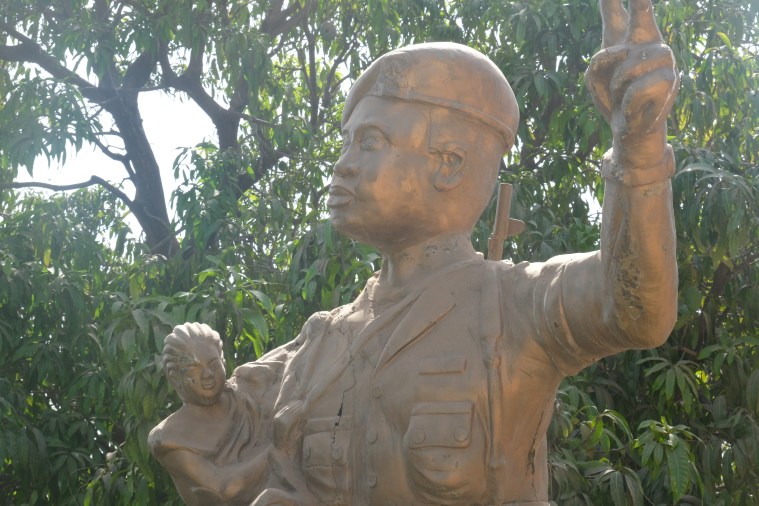
Jammeh declared that his coup was a revolution to remove the old corrupt elite and restore order to The Gambia, and of course, that democratic elections would closely follow. He proved his revolutionary credentials in 1996 when the government built an Arc de Triomphe knock-off to commemorate the revolution. However, Jammeh, unlike Napoleon, insisted that only he was allowed to drive through it. And yes, it is right on a major highway in the capital city.
Jammeh’s rule quickly settled into the generic dictator playbook. All political activity was banned, major players in the old regime were executed or exiled, and a bunch of journalists were arrested. Many of these crackdowns were enforced by Jammeh’s personal thug squad, known as the Green Boys since they wore green clothes and sometimes face paint in honor of Jammeh’s political party. A few months after his coup, another group of officers attempted to overthrow Jammeh, but failed and were all executed. Two of Jammeh’s main co-conspirators were quietly marginalized until they tried their own power plays and were promptly arrested, leaving Jammeh in firm dictatorial control over the country only two years after taking power.
In 1996, under international pressure, Jammeh held elections both for president and ratification of his newly assembled constitution. The constitution was approved by a whopping 70% but Jammeh only won the election with 56% of the vote, so his rigging game was pretty weak (foreshadowing). Nevertheless, Jammeh’s main opponent in the election ended up fleeing the country and the dictator-turned-president proclaimed he had a democratic mandate from the people.
Jammeh, henceforth decreed His Excellency President Professor Dr. Al-Haji Yahya Jammeh, didn’t really espouse or abide by an ideology besides being anti-corruption and anti-colonialist. He did take The Gambia out of the British Commonwealth, but he didn’t really fight corruption; he just replaced the old corrupt politicians with new corrupt cronies who could profit off selling lumber concessions and looting the treasury just like in the old days.
One interesting aspect of Jammeh’s reign was his relationship with Islam. The Gambia had traditionally been a fairly secular state despite its heavily Muslim population. In some ways, Jammeh was something of a progressive Muslim and outlawed female circumcision as well as child marriage. But in other ways, he definitely was not a progressive Muslim, hence outlawing homosexuality and publicly threatening to decapitate all gay Gambians. Some apt quotes straight from Jammeh:
“We will fight these vermins called homosexuals or gays the same way we are fighting malaria-causing mosquitoes, if not more aggressively.”
“As far as I am concerned, LGBT can only stand for Leprosy, Gonorrhoea, Bacteria and Tuberculosis, all of which are detrimental to human existence.”
“If you do it [in the Gambia] I will slit your throat – if you are a man and want to marry another man in this country and we catch you, no one will ever set eyes on you again, and no white person can do anything about it.”
He also officially renamed the country to “Islamic Republic of The Gambia” (it would be reverted back to “The Gambia” just over a year after he lost power). Also interesting – a European living in The Gambia I spoke to said the country was a lot more religiously conservative than most people think, and he predicted that its legal system would get more Islamic in the coming years. So perhaps Jammeh was tapping into a populist vein.
While the weirdness of African dictators can be amusing from afar, it’s important to remember that these leaders are terrible people who have caused an immense amount of suffering. Jammeh’s death toll is nothing crazy by dictator standards, but his regime imprisoned thousands and killed at least hundreds, including more than a dozen students at a protest in 2000, dozens of illegal immigrants at the hands of one of Jammeh’s death squads, and dozens or hundreds more accused of politically subversive acts.
But ok, with that out of the way, here’s some weird African dictator shit Jammeh got up to.
Jammeh condemned all Western medical treatments of HIV/AIDS, discouraged their use, and in 2007, claimed his government had created its own cure for HIV/AIDS (and for asthma as well) consisting of a secret blend of herbs and bananas. Not a man known for his humility, Jammeh declared:
“Whatever you do there are bound to be skeptics, but I can tell you my method is foolproof… Mine is not an argument, mine is a proof. It’s a declaration. I can cure Aids and I will.”
Not wanting to scare the masses with his awesome power, Jammeh reassured his people:
“I am not a witch doctor and in fact you cannot have a witch doctor. You are either a witch or a doctor.”
On this statement, Jammeh would be proven a hypocrite only two years later. After the death of his aunt, presumably by natural causes, Jammeh came to believe she was killed by witchcraft. I assumed witchcraft is perpetrated by witchdoctors, but this is apprently incorrect. Rather, based on what was to occur in The Gambia, I am forced to infer that witchcraft is perpetrated by witches, and witchdoctors fight against witchcraft.
Hence, in 2009, Jammeh imported a squad of witchdoctors from nearby Guinea, partnered them with the Green Boys, and deployed them to stomp out The Gambian witch problem once and for all. The witchdoctor squad kidnapped up to 1,000 alleged witches from Gambian villages, and forced them to drink “a foul-smelling concoction that made them hallucinate” and also caused them to become violently ill (even killing a few). I can’t find much info on what happened to the alleged witches after that, but I presume they were given long jail sentences.
The international community, and especially Senegal (which had a separatist movement Jammeh was gleefully supporting), became increasingly incensed with Jammeh and put more pressure on his thinly-veiled dictatorship. In response, Jammeh declared he would hold a second presidential election in 2016 and super duper swore that he would leave office if he lost.
Maybe Jammeh is just really bad at rigging elections, or maybe it was witchcraft, but either way, Jammeh surprisingly lost the presidential election to opposition leader, Adama Barrow. Jammeh immediately denounced the results as fraudulent and refused to relinquish power. With a casus beli firmly in hand, ECOWAS (basically the closest equivalent to a West African NATO/EU) invaded tiny Gambia, whose paltry military didn’t even pretend to put up a fight. Fearing being arrested and tried for all the horrible shit he had done, Jammeh capitulated and agreed to leave office.
But first, Jammeh had to make some preparations. He made a call to one of the few people in Africa worse than him: Equatorial Guinea’s dictator, Teodoro Obiang Nguema. As mentioned in Notes on Nigeria, Equatorial Guinea is arguably the most unequal country in the world, with Nguema and his cronies getting extremely rich by selling oil concessions while 70% of the Equatorial Guinean people live in absolute poverty. Jammeh presumably made some sort of deal with Nguema where the former gave the latter a big pile of cash and Jammeh was permitted to live in a big mansion on one of Equatorial Guinea’s island paradises free of any international arrest concerns.
But Jammeh wasn’t going to show up to his island paradise empty-handed. During his last week in power, he stole over $11 million from the state treasury, and used some of it to ship his luxury vehicles and other assorted belongings on a cargo plane.
In the early days of his reign, newly elected President Barrow set up a commission to investigate Jammeh’s crimes, and found that his thefts from the state amounted to somewhere around $300 million, which is a lot for one of the poorest countries on earth. Only a small portion that he had left behind in private bank accounts was seized by the new government, and some of his personal luxury goods (including gold-plated pistols) were auctioned off. The American government also seized his $3 million mansion in Potomac, Maryland.
Jammeh has lived in Equatorial Guinea ever since, but he seemingly keeps trying to feel out a comeback attempt. There’s talk of Barrow, ostensibly Jammeh’s greatest political rival, trying to make some sort of deal to let Jammeh come back without prosecution, but the Gambian people appear dead set against a return.
Jammeh vs. Barrow
I talked to four Gambians and three Europeans living in The Gambia about their experiences under Jammeh and Barrow, and there was a strong consensus about the pros and cons of each.
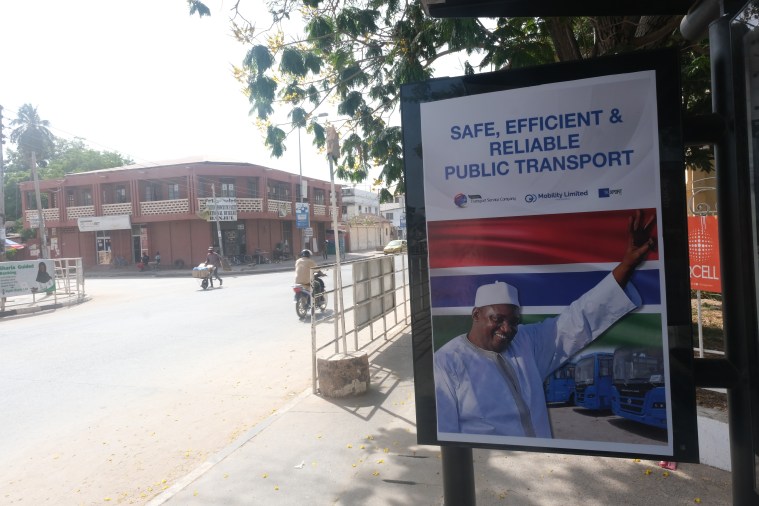
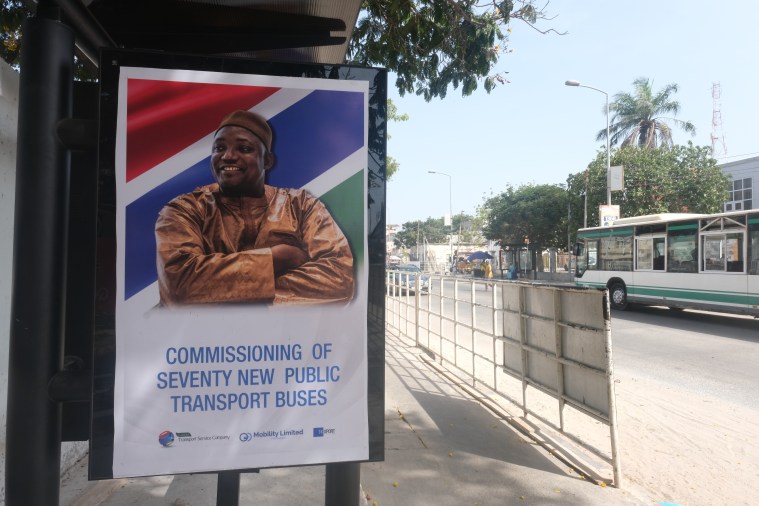
Everyone knew Jammeh was corrupt and brutal, and almost no one liked him by the end of his reign. Voting was a joke, the economy was stagnant, the currency was inflating, and the police/military had jackbooted tendencies, including harassing random passerbys and liberally demanding bribes. With the removal of Jammeh, there was a brief period of optimism where people hoped Barrow would turn the country around, and indeed he released a lot of political prisoners and removed restrictions on the press, and best of all, The Gambia experienced a fresh influx of government and NGO aid flowing into a now ostensibly democratic country. But the seven years of Barrow have only disappointed and seemingly little has changed. The economy is still terrible, and it’s not clear what Barrow is doing with all his foreign aid, besides buying some busses:
One way in which things have gotten worse under Barrow is crime. The jackbooted cops/military under Jammeh were annoying and occasionally scary, but apparently they did a decent job of keeping the gangs suppressed. Literally everyone I spoke to for more than ten minutes noted rising crime in The Gambia, not usually murders, but lots of burglary and muggings. One European who had lived near the capital for twenty years had his home burgled a few months ago, prompting him to buy a 24/7 security guard and an (adorable) guard dog.
Also, from a nine year old Reddit thread:
“Thirdly, since 1994, the same dictator (Y. Y. Jammeh) has been in power, which is terrible for the citizens and people living there full time but great for the people visiting as he has created extremely strict rules for anybody who bothers or robs tourists. As such, the country is different from others in the region in that you can walk around in a group or by yourself, even wasted drunk in the middle of the night, and be sure that you won’t have any problems or that anyone will bother you.”
Thus it’s common to hear a bit of nostalgia for the Jammeh days, especially since it’s not clear The Gambia is any more democratic under Barrow. Upon taking office, Barrow promised to only serve three years of his five year term and then call new elections, but he blatantly blew past the deadline, won reelection again in 2021, and no one knows when or if he will be stepping down from power.
However, I have to wonder how much of what I heard is influenced by a “the grass is always greener on the other side” mentality. In 2023, everyone is complaining about crime, but if I walked around The Gambia in 2015, maybe everyone would be complaining about police harassment and military extortion.
(Of note – the single most common way locals described The Gambia was “peaceful,” which I found pretty strange. Sure, The Gambia has never technically been in a war, but there have been ECOWAS soldiers occupying the country since they invaded seven years ago, and there were Senegalese soldiers for 7+ years before then.)
Dictatorship vs. Democracy
(Preface – I’ve done a lot of personal research into post-colonial Africa over the last half year, but haven’t had many opportunities to discuss it, let alone with knowledgeable experts. Take the following section as my low-confidence personal views that will surely develop over time.)
The views I heard on Jammeh vs. Barrow in The Gambia broadly reflect the views I heard on the efficacy of dictatorships vs. democracies throughout West Africa. Nearly every West African state has veered between the two since independence, and despite a broad consensus in favor of democracy in the West, many Africans and critical observers are not so sanguine about the value of traditional representative democracy.
While fully acknowledging that I just talked to random West Africans, and my take here does not constitute a formal survey, I’ll try to broadly summarize the political views of many West Africans on the dictator question, while adding in qualifiers based on my own research and analysis to steel man their position:
Democracies in Africa always produce corrupt leaders. No one gets elected in Africa without promising ample spoils to tribal and strategic supporters, so corruption is baked into the system. Plus, elections are terrible ways to choose leaders in Africa. Most voters are poor and uneducated, and don’t know anything about policies, so they just default to tribal allegiances or buy into lies peddled by demagogues. And on top of all that, elections are almost never fair, and often devolve into all sides engaging in various forms of voter fraud and voter bribery to win, so nobody feels like elections capture a genuine feeling of representation.
More than one person I spoke to explicitly said something like, “democracy is a Western invention that doesn’t suit African culture/politics.” To paint a very broad brush – the default leadership of the vast majority of Africans prior to colonialism and locally during colonialism, was either small-scale kingdoms or tribal chiefdoms, both of which usually operated similarly to dictatorships. Thus, some Africans believe this is what modern Africa is still most suited to.
Compared to democratically elected African leaders, dictatorships are more likely to “get things done,” and produce “strong leaders” who can cut through the politics and tribalism. Their power is not (as) dependent upon currying favor from elites and the general population with bribes and handouts to win fraudulent elections. They can sweep all that nonsense aside and do what needs to be done. Jammeh could deal with The Gambia’s crime, Abacha could take back Nigeria’s oil, Assimi can effectively fight Mali’s civil war, etc., and all without having to promise kickbacks to the right tribal chiefs or hiring some political ally’s nephew as the Minister of Finance or whatever. Plus, as long as the individual dictator is competent and honest enough, he can root out corruption at all levels of government, a commitment that democratically elected leaders are inherently adverse to since the entire basis of their rise to power is corruption.
(I plan on doing a full review of Dambisa Moyo’s Dead Aid later, but by her statistical analysis, super poor African countries have better economic growth rates on average under dictatorships than democracies. She actually advises that such nations should stick to dictatorships until they get to low-tier Eastern European levels of per capita wealth.)
I need to linger on this “strong leader” point because it’s a really big deal in Africa. I heard that exact phrase many times. When referencing a good leader, whether in Africa or elsewhere in the world (including in reference to Trump), “strong” was probably the single most common adjective used by Africans. I can recall at least four incidents of Africans expressing support for Russia in the Ukraine War, and every time Putin was called a “strong leader” (this may be a product of purposeful propaganda). On more local levels, I heard Africans speak glowingly of “strong” chiefs who still hold considerable influence in villages and communities throughout the continent.
I don’t think I’m overstepping to suggest that there is something in African culture that prizes strength, dynamism, will, or whatever you want to call it in a leader, and therefore many Africans have an inherent tendency towards supporting dictatorships.
But I don’t want to paint these Africans I spoke to as blind supporters of strongmen either. Plenty of locals noted that African dictators can be just as corrupt as their democratic counterparts, likely even more so in the long-run without any sort of democratic feedback from the population. Most locals also readily acknowledged that dictatorial efficiency is traded off with a loss of civil rights. African legal systems are not generally known for their justice, but African democracies tend to have more safeguards to protect people from abuse, often due to a greater presence of ostensibly benevolent Western NGOs, companies, and advisors. Meanwhile, African dictatorships are more likely to perform arbitrary arrests, particularly of political opponents and journalists, though such actions are often justified on the grounds of anti-corruption or fighting rabble-rousers.
At the more extreme end, most of Africa’s worst post-colonial leaders were dictators, or at least became dictators – Idi Amin of Uganda, Macias Nguema of Equatorial Guinea, Hissene Habre of Chad, Charles Taylor of Liberia, Isaias Afwerki of Eritrea, Mengistu of Ethiopia, Bokassa of the Central African Republic, Mobutu of the Democratic Republic of Congo, etc. There were plenty of awful democratically elected African leaders (IMO, Nkrumah of Ghana and Zuma of South Africa, for example), but none of the democratically elected leaders were as brutal or murderous as the worst dictators, at least not without becoming dictators first.
To summarize my own thoughts on the dictatorship vs. democracy question in Africa…
African democracies tend to consistently produce corrupt, uninspiring, mediocre leaders. African dictatorships tend to produce less corrupt leaders on average, and possibly more competent ones on average (I’m not sure), but at the cost of civil liberty repression, a sizable reduction in foreign aid, and most importantly, a far greater risk of truly abysmal leadership.
So… compared to democratically elected African leaders, African dictatorships have more upside potential and possibly a higher average quality, but with greater variance and therefore far worse downside potential. I’m not brave enough to assert a preference for one over the other.
The Laziest Bribe Solicitation
I had just crossed the northern border of The Gambia from Senegal. I got a taxi nearby, paying $5 for the 45 minute ride, which I suspect was too high. We drove for about 10 minutes until we encountered the first police checkpoint, just a rope stretched across the road attached to two sticks with a cop standing to one side.
The cop came up to the driver’s side of the taxi, greeted the driver, and then saw me sitting in the passenger’s seat.
“Hey! My Man!” He offered me a fist bump, which I reciprocated. “Where are you from?”
“America.”
“Ohhhhh I love Americans! Good man!” He offered me another fist bump, which I reciprocated. “I like you, my man.”
“Thanks.”
“…do you have anything for me?”
“…no, sorry,” I turned to look straight ahead.
“Nothing for me?”
“Sorry, I have to go.” I kept staring straight ahead.
“Ok, my man. Ok.”
He let us go. No hassle, no threats, just a weak bribe solicitation easily rejected.
Many of the drivers I accompanied throughout this African trip have not been so lucky. They often keep a stash of petty cash on hand and immediately put a bill in their palms as they approach a police/military checkpoint. Occasionally, they will be more actively shaken down, and even more occasionally, they will be explicitly threatened by the cop/soldier.
But the police/military treat us foreigners, or at least us white foreigners, better. Shakedowns like this one in The Gambia happen sometimes, but it feels opportunistic and lazy. I keep thinking back to, “you miss 100% of the shots you don’t take.” These cops/soldiers probably see me, and get the idea that they might as well go for the bribe, but they rarely want to push it too far. Who knows what sort of trouble I could get them in?
(I’m seriously asking. I genuinely don’t know what sort of trouble I could get them in.)
Unfortunately, the relative passivity of the cops/military didn’t hold up forever. Guinea, Guinea-Bissau, Sierra Leone, and Liberia have more hostile police/military than the rest of West Africa, particularly Guinea.
The Sharing Culture
Many days later, I was being driven around inland Gambia by a guide, and we came upon another police checkpoint, maybe the fifth or sixth in the last two days of driving. My guide and the cop shook hands, exchanged a few words, and then with no prompting at all, my guide handed him the equivalent of about $1, and we drove off.
This surprised me. If anything, my guide seemed to have a latent hostility to the police. I saw him get in a fight with another cop at a checkpoint yesterday that erupted into a shouting match and ended with cold stares. I saw no evidence that this current cop had solicited a bribe, so I asked the guide why he gave him money.
The guide explained that this is how things are done. The cop didn’t ask for money, but he was nice, and he had a tough, boring job of standing by the side of the road in the middle of nowhere, and he made a very low salary, so the guide was happy to help him out a bit.
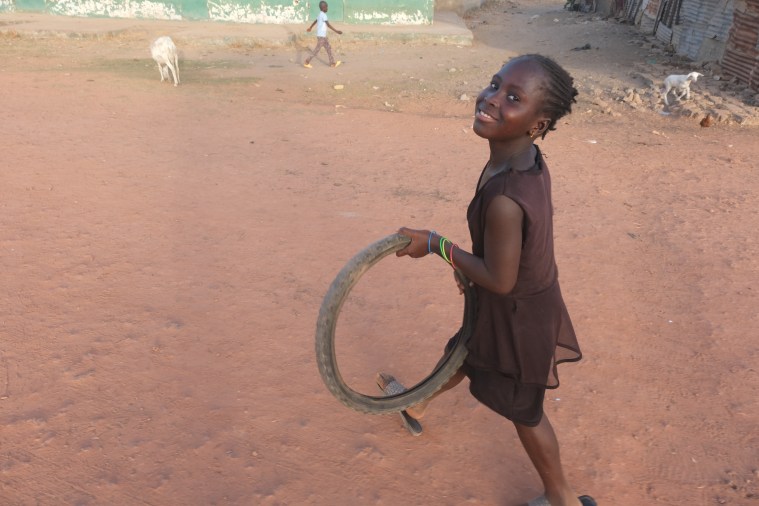
This is quite a common sentiment throughout Africa (or at least West Africa). Everybody shares. If one member of a family comes into some money, the assumption is that it will be shared with the rest of the family, and maybe some friends too. Even bribes to the police/military are often framed as a form of “appreciation” for their work and acknowledgment that their official salaries are awful. This sharing culture probably partially explains why most Africans are incredibly nice to me; sharing with a stranger is expected, and maybe, just maybe, they hope I’ll share something back.

“Are You From Hitler?”
As a poor country gets more tourism, the locals adapt. Many become more welcoming and friendly towards tourists since they represent an opportunity for personal and national enrichment. But other locals become more adept at exploiting tourists, whether through fraud, deception, or guilt.
One form of the latter treatment is to yell at random passerbys, usually to get attention to make some sort of sale or offer a service. This is by no means a unique element of West African travel. Any tourist who has been to Egypt, Morocco, India, Thailand, etc. knows exactly what I’m talking about.
The amateur tourist makes the mistake of defaulting to polite sensibilities and grants attention to the bystander who shouted “Hello, sir!”, “Excuse me, sir!”, “Nice to meet you, sir!”, “Where are you from, sir?”, or whatever, and is soon sucked into a time-wasting and generally annoying sales pitch or preamble to a sales pitch. The experienced tourist keeps looking forward, not granting an iota of attention, in order to signal that they will not be suckered in and parted with cash.
However, in some of the more advanced tourist hotspots, locals will respond to being iced out by experienced tourists with guilt-tripping or even hostility.
The Gambia, likely due to its English speaking and relatively high tourism rates, falls into this category. Here are some things that were shouted at me by random bystanders after I had ignored their attempts to get my attention:
– “It’s nice to be nice.” This was by far the most common one. I heard it maybe four or five times.
– “It’s ok man, it’s all chill here.” Of that, I have no doubt.
– “You must be Russian.” In my experience, Russian tourists tend to be quite affable, but maybe not in Africa.
– “Are you from Hitler?” I’m not sure if this was a guess that I’m German, an attempt to call me racist, or both.
(Sex) Tourism (For Women)
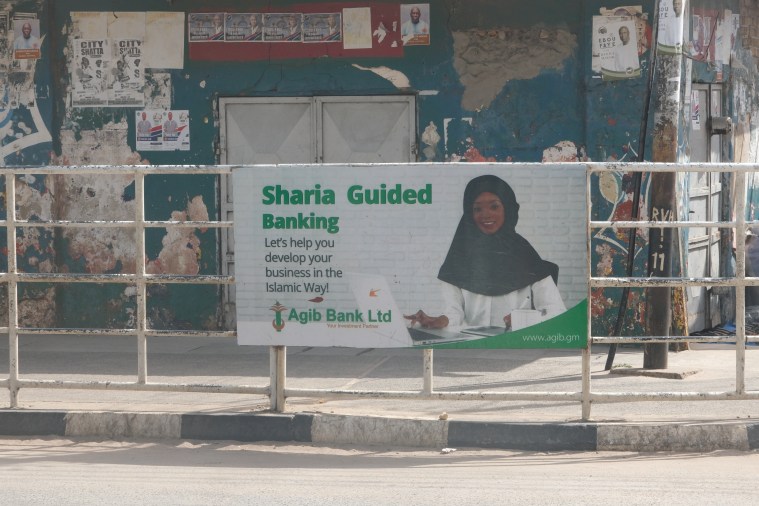
The Gambia is one of the premier sex tourism destinations for women in the entire world. It is to older white women what the Philippines or Thailand are to older white men. See here, here, here, etc.
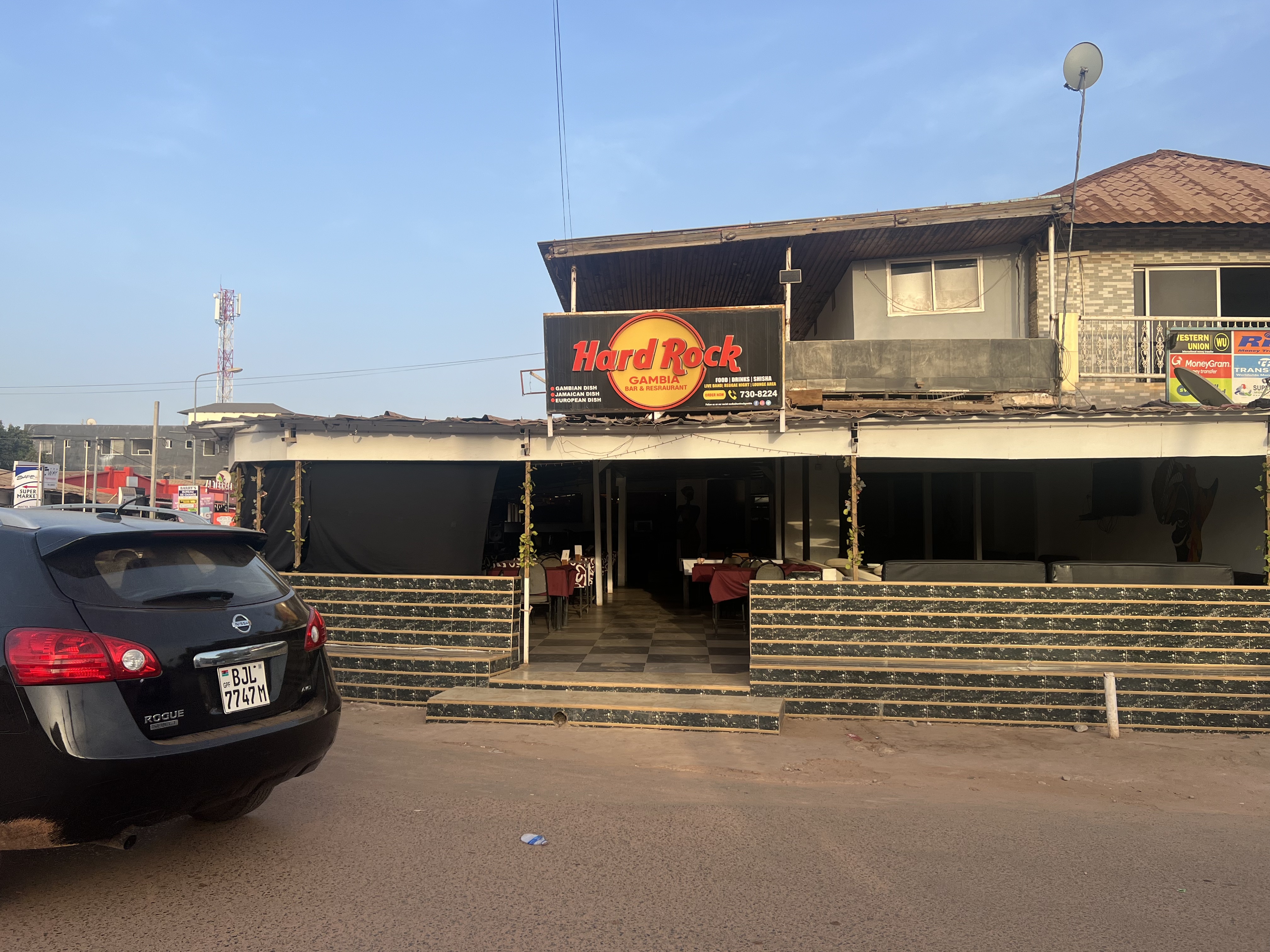
It was easy enough for me to see this on the ground. The center of The Gambia’s sex tourism is Senegambia Road in Serrekunda, the country’s largest city. It’s not too different from a standard main street-ish area in a developing country – a hastily paved road lined with mostly Western restaurants and bars. The average age of the clientele has to be over 60, and the vast majority are white. Each establishment has 2X more employees than it needs due to low labor costs, so there are always two or three men and women standing at the entrance who try to entice passerbys with the classic, “hello, how are you, where are you from, I love [insert country], are you hungry, you should eat here!”
I think sex tourism is kind of like tech companies or anime conventions. If the gender ratio is merely balanced, then it’s considered a female hot spot. Meaning, I saw just as many old white dudes with younger, hotter African women, as I saw old white women, with younger, hotter African men. But from what I recall of the Philippines, Thailand, and the Dominican Republic, female sex tourists are virtually non-existent in the traditional sex tourism destinations, so I evaluate all the lurid online articles about The Gambia’s reputation as basically true.
From the aforementioned nine year old Reddit thread:
“I visited this country last year. These prostitutes or “bumsters” as they’re called, hang out in large groups (7-20) out side of resorts on the beach. They all do exercises together to try to attract the European women. It’s really quite ridiculous looking”
Hey, I saw that! When I was on the beach, I saw a bunch of buff dudes with no shirts jogging around and doing calisthenics. Little did I know that these beef cakes were purposefully on display.
One European who had lived in The Gambia for decades said he saw the same sad story over and over. An older woman, usually from the U.K., but potentially from Germany, the Netherlands, or somewhere else in Europe that speaks English decently enough, would arrive in The Gambia with some mixture of love and lust on her mind. These women would find a local at a bar, at the beach, or even on the street, get lost in their steamy gaze, swim in the intoxicating pull of a decent-looking younger man’s eager smile, and spend a night with him. Or two. Or three.
Neither I, nor this local, begrudge the older man or woman who seeks companionship abroad. We’re all human, we all have desires. The sane 50+ something man or woman is typically explicitly or implicitly aware that they can’t bag an attractive individual in their 20s or 30s back home, so why not seek an easier market?
But, as the European local warned me, sometime around that second or third week of new romantic fling bliss, the trouble starts to set in as a blurring of reason and reality. The foreigners forget what they’re doing and where they are. They begin to buy into the illusion.
For instance, How Stella Got Her Groove Back is a once-quite-famous 1996 semi-memoir and 1998 film based on mid-40s author Terry McMillan going to Jamaica on vacation and meeting a charming, handsome, chiseled local man 23 years her junior. They fall into a passionate love affair that concludes in a full-blown relationship and marriage, and then the book ends. In real life, six years later, they got divorced as it was revealed the man was gay and only married McMillan for a green card so he could move to the United States.
According to my European source, versions of this tale play out regularly in The Gambia, especially during the dry season from November to May when most of the sexpats come. Also according to him, the female sexpat tourists more often fall for this trick. They, and sometimes the older men, lose sight of the reality that the dozens of young, decent-looking African men and women who hang out around Senegambia Street are mostly just prostitutes in short-term or long-term form looking for financial and social gain, either by getting money for the night, or parlaying a feigned affection into a marriage to escape their rather unfortunate West African circumstances.
This very sentiment was relayed to me by a guy I’ll call Omar, my guide for three days while I explored the inland of The Gambia. Omar is a Gambian in his early-thirties, with two kids, and a divorce. I’d say he was pretty good looking except he was missing a few of his teeth, likely due to some combination of malnutrition, bad dental hygiene, and smoking lots of cigarettes.
Omar told me that his explicit current top priority in life is to find a Western woman and marry her. He had met an African American woman from Pennsylvania online (Facebook friend of a friend) and had talked to her for six months while trying to convince her to fly out to The Gambia to meet him and see where they could go. Operations went smoothly, plans were made, and even flight dates were set, but she ghosted Omar at the last minute and he was sent back to square one.
Legitimately to Omar’s credit, he is not devious in his intent. He explained to me that he sees his ambition as an earnest transaction. He would be loyal, caring, affectionate, and physical with a woman indefinitely if she could give him a better life, even if he wasn’t attracted to her. He knew other local men who were far more deceptive, even predatory, and tried to juggle multiple women at once. But not Omar. He wasn’t shooting for love, but he was shooting for a fair deal.
I met another European living in The Gambia who was more acquainted with the less romantic side of the sex tourism industry. As an unmarried man living on a generous European pension, he had frequented the female prostitutes of The Gambia for well over a decade. He noted that very few of the prostitutes in The Gambia are actually from The Gambia – they’re more often Nigerians, sometimes Ghanaians, occasionally Senegalese. He also said they tended not to be very attractive, but they were usually young (20s) and cheap – 400-1,000 Dalasi ($6.70-$17) for a decent session. Though, as a “fresh” foreigner, he told me the girls would ask 4,000 ($67) of me for the same service.
I’ve never paid for sex in my life but even I know that’s cheap. I asked for a sense of local comparison, and a different European living in The Gambia told me his cleaning lady made 4,000 Dalasi per month.
There’s prostitution everywhere, especially in the developing world. That I get. What I don’t get is the female sex tourism in this particular place. Why The Gambia? What does it have that elsewhere doesn’t?
Ok, in its sex tourism favor, The Gambia is cheap, speaks English, has some great beaches, and it’s visa-free for 90 days for citizens of the European Union and the United Kingdom (though not the United States).
But the same could be said for Jamaica, the Bahamas, and most of the Caribbean (almost all visa-free for the US too). The same could also be said for Senegal besides the English speaking, and Dakar is one of the best cities in Africa (though it’s more expensive). And – please don’t hate me – I found Senegalese people to be the best looking on average in West Africa.
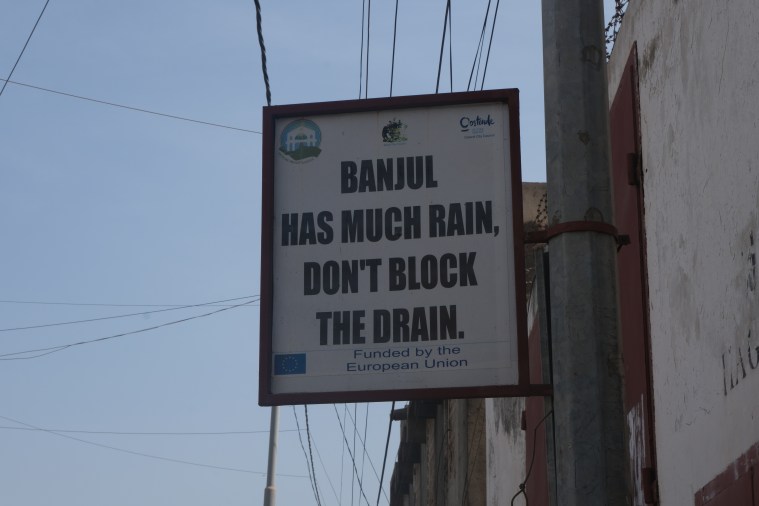
The Gambia also has serious drawbacks – it’s extremely poor ($846 GDP per capita compared to Jamaica’s $5,900), its infrastructure is typically terrible for West Africa, its premiere city is quite ugly, it has lots of beggars, it’s filled with corrupt cops and military, and it’s ruled by a super corrupt president who came to power after a super corrupt dictator was overthrown by foreign military intervention.
So… yeah, I don’t get it. If anyone can tell me some other good reasons why The Gambia is a female sex tourism hot spot, let me know.
The Expats
I think I met more expats in The Gambia than any other African country, and without trying to. They were all older, at least in their 50s, and most were retired, though some ran local businesses. They came from numerous European countries, though I’d rather not be too specific.
I asked all of them why they chose to live in The Gambia, and I’d say only one was a dedicated sexpat. The rest answered with some form of “freedom.”
Maybe not political freedom in the classical sense, but social, economic, and lifestyle freedom. Almost everything is cheap, and perversely, the rampant corruption often makes things very easy to deal with. If you want to start a business or get a license or acquire some random imported good, you just need to know who to pay and it will be taken care of.
Plus there are nice beaches, friendly locals, and plenty of sunshine. There are lots of hassles of course, but for a certain very specific person, life in an African coastal country makes perfect sense.
The (Ongoing) Great Gambian Fishing Heist
I’ll write more about China’s influence on Africa in another essay, but for now, I’ll just note that Chinese businesses have a highly mercenary reputation in Africa. They’ll do business with anyone, even the worst of the dictators, and they’re very much of the “buyer beware” mentality. For instance, in The Gambia, Chinese businessmen have seemingly stolen a substantial portion of the country’s fish with government support, and have decimated the native fishing industry.
In 2015, after some complicated diplomatic stuff resulted in Jemmeh renouncing The Gambia’s recognition of Taiwan, The Gambia was swept into China’s Belt and Road Initiative, wherein the Chinese government and Chinese businesses invest heavily in poor countries in exchange for resources and some measure of political influence. The Gambia is light on classic extractive African resources like oil and minerals, but it has lumber and a coastline filled with fish, much of which was promised to China with a 99 year lease. The full terms of the deal aren’t known, but in 2017, China cancelled $10 million of The Gambia’s debt, and invested $28.7 million into the country.
I don’t know how rapidly Chinese fishing access expanded, but in 2022, Chinese companies accounted for 40% of all caught fish in The Gambia. I heard about this because three different Gambians told me that the Chinese had depleted the local fishing stock, which both tanked the sizable local fishing economy and raised the price of fish, which accounts for about 50% of the country’s protein.
If The Gambia was seeing a tangible benefit, then selling off the domestic fish stock might be excusable, but most locals assume the concession sales were pocketed by corrupt politicians. There are also alleged pollution problems: wastewater from a Chinese factory supposedly turned part of the Gambia River red and killed a lot of local fish, and elsewhere, fishermen are reporting skin problems.
In March 2021, a protest in a Gambian town erupted into a riot that burned down a Chinese-owned fishing factory, a police station, and 40 fishing boats. From the article:
“The factories are alleged to dump untreated waste, while the smell of the fishmeal processing has devastated local tourism, and waste from the factories is linked to mass mortalities of fish and birds. Many artisanal fishermen and women involved in fish smoking have lost the trades which they have practiced for many years.”
Oddly enough, the catalyst was a dispute between a Gambian and a Senegalese that resulted in the Gambian’s death, and the article claims the Senegalese in general are seen as Chinese collaborators.
The Gambia Gets Most of Its Electricity from a Turkish Ship
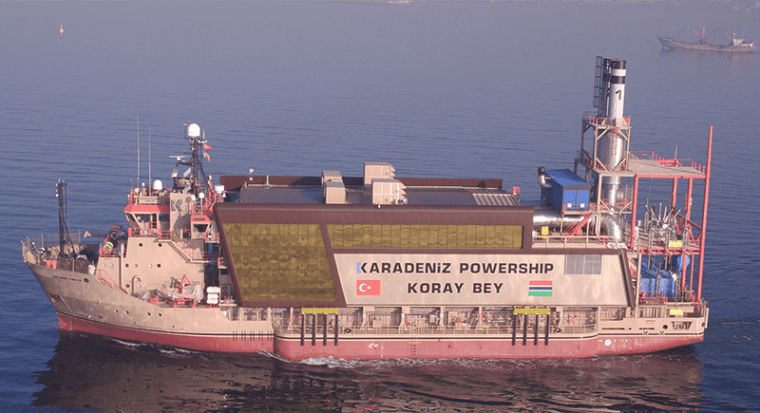
The Gambia River, around which the entire country is based, only has one bridge, and it’s pretty far inland. I entered The Gambia from its northern border with Senegal and took a taxi to the mouth of the river where I could cross by (extremely crowded) ferry to the capitol of Banjul. On the ferry, I struck up a conversation with a local, and he pointed to a big tanker ship right off the coast which supplies most of The Gambia’s electricity.
What? A country gets most of its electricity from a boat?
It’s true. In 2018, The Gambia signed a deal with a Turkish power company, Karpower, to provide 30 megawatts (or 36) of electricity to the nation. I have no idea what 30 megawatts means, but it’s the equivalent to 2.5% of the electricity needed to power a time traveling car. At the time, The Gambia produced 70 megawatts from “some old generators” and needed 110 megawatts to cover the whole population. According to Karpower’s website, its ship currently supplies 60% of The Gambia’s electricity.
I find this weirdly mind blowing. I’m no expert on electricity, but I have a firm mental image of large-scale power generation coming from giant power plants, not from a ship sitting off-shore burning diesel. But apparently, this is Karpower’s modus operandi. They have dozens of ships deployed around the world to supply power, another of which I saw in Sierra Leone. I can’t imagine this is the most environmentally friendly way to generate electricity for poor countries, but I admire the brute ingenuity of it.
Monkeys!
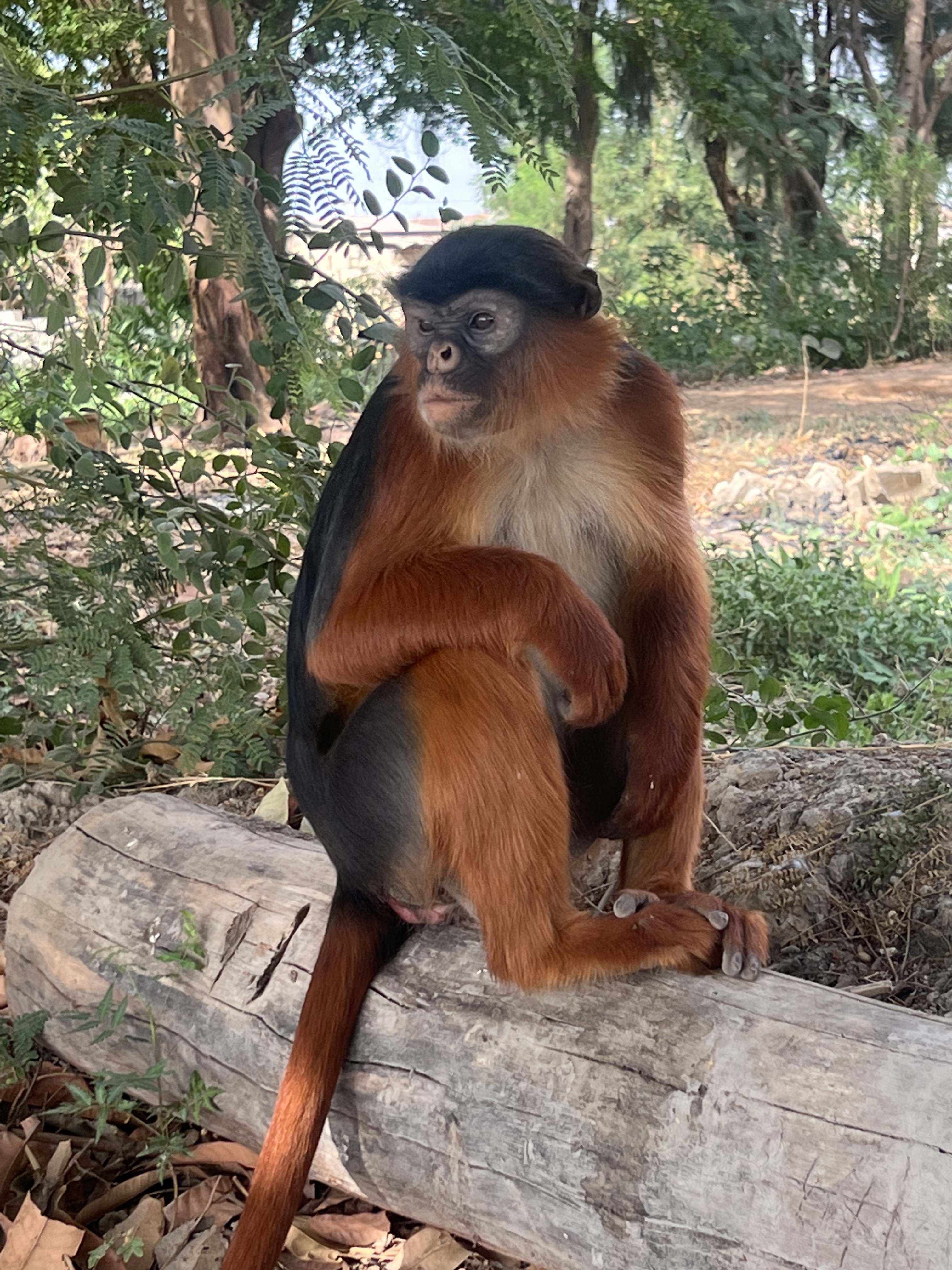
One of the highlights of The Gambia is “Monkey Park” which is exactly what it sounds like. Located in Serrekunda near a beach, for a low fee you can walk through a forested park and hand-feed monkeys bananas and peanuts. I encountered a few little monkey groups (packs? troops?) and there was always an alpha that would usually attack the other monkeys and try to hoard all the food, so it was fun to try to spread out the goods to the smaller monkeys.
Monkey Park is a great example of the sort of thing you can only do in Africa, or at least poorer developing countries. If, somehow, such a place existed in the United States or Europe, I’m sure there’d be endless legal concerns about hand-feeding semi-wild primates, many of whom were happy to walk up to me and grab my pants, or smack each other with a yelp. And I’m sure there’d be sanitary concerns about literally handing food to animals. But in Monkey Park, no one cares! I had a blast and then washed my hands afterward.
The unfortunate downside of something like Monkey Park in Africa or a similarly poor developing country is the beggars.
I purchased a ticket at the gate and paid a little extra for some cut-up bananas; low prices, all good. But once in the park, a group of locals waved me over and said I should get a guide. I asked if one was necessary, and they said it wasn’t required, but it was strongly recommended. Seeing my skepticism, they began to tell me about how pregnant monkeys or recent mothers could be very aggressive. But I inferred that even an African public park wouldn’t let tourists get their faces torn off by monkeys, so I refused a guide. They insisted. I refused. They insisted again. I refused again.
“Sir, you need a guide. PLEASE. Hire a guide.”
Just like that, the tone swung from helpful to persuasive to straight-up begging. I politely refused yet again and walked on to the monkeys alone.
A Prosperous Future?
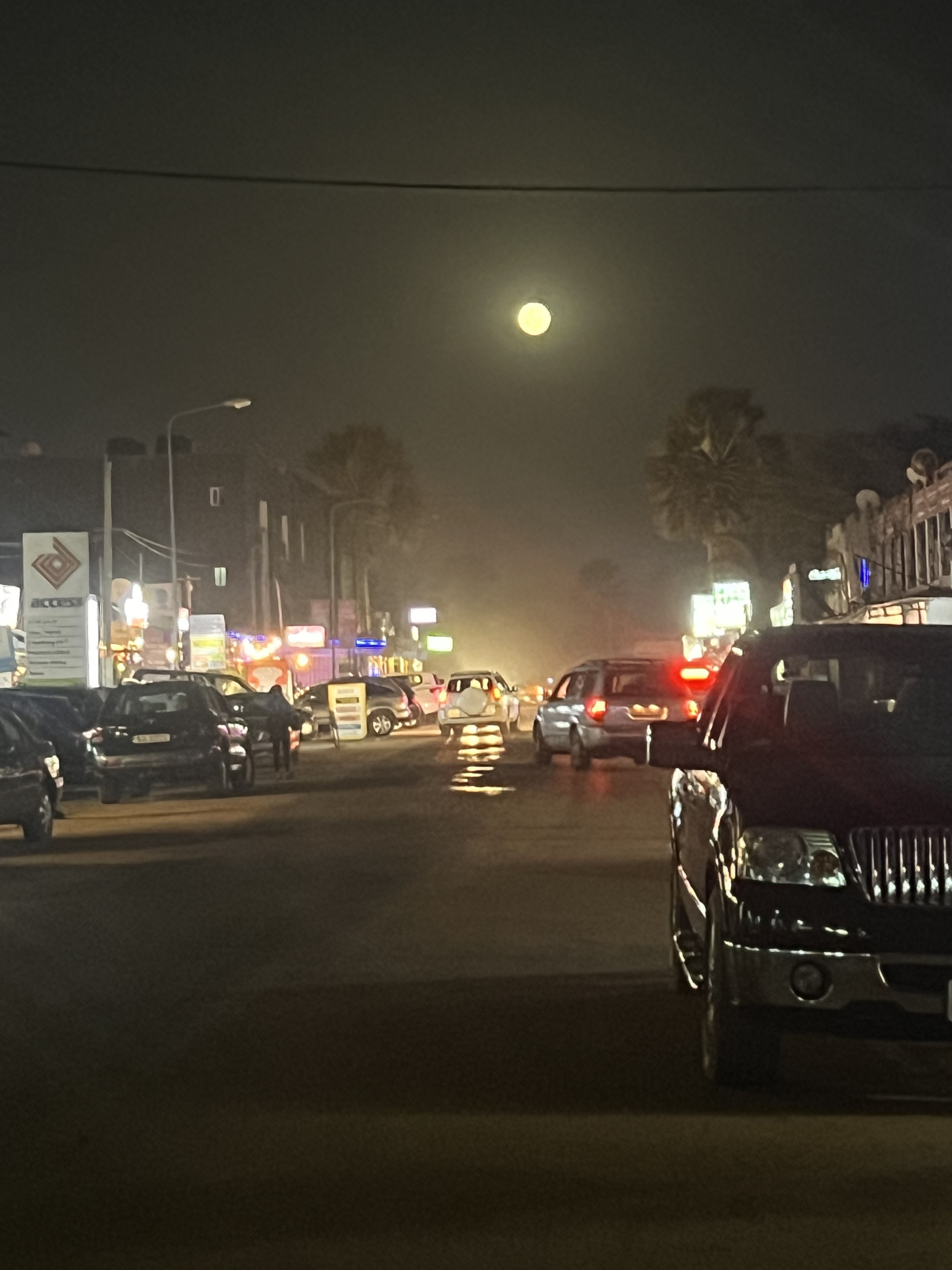
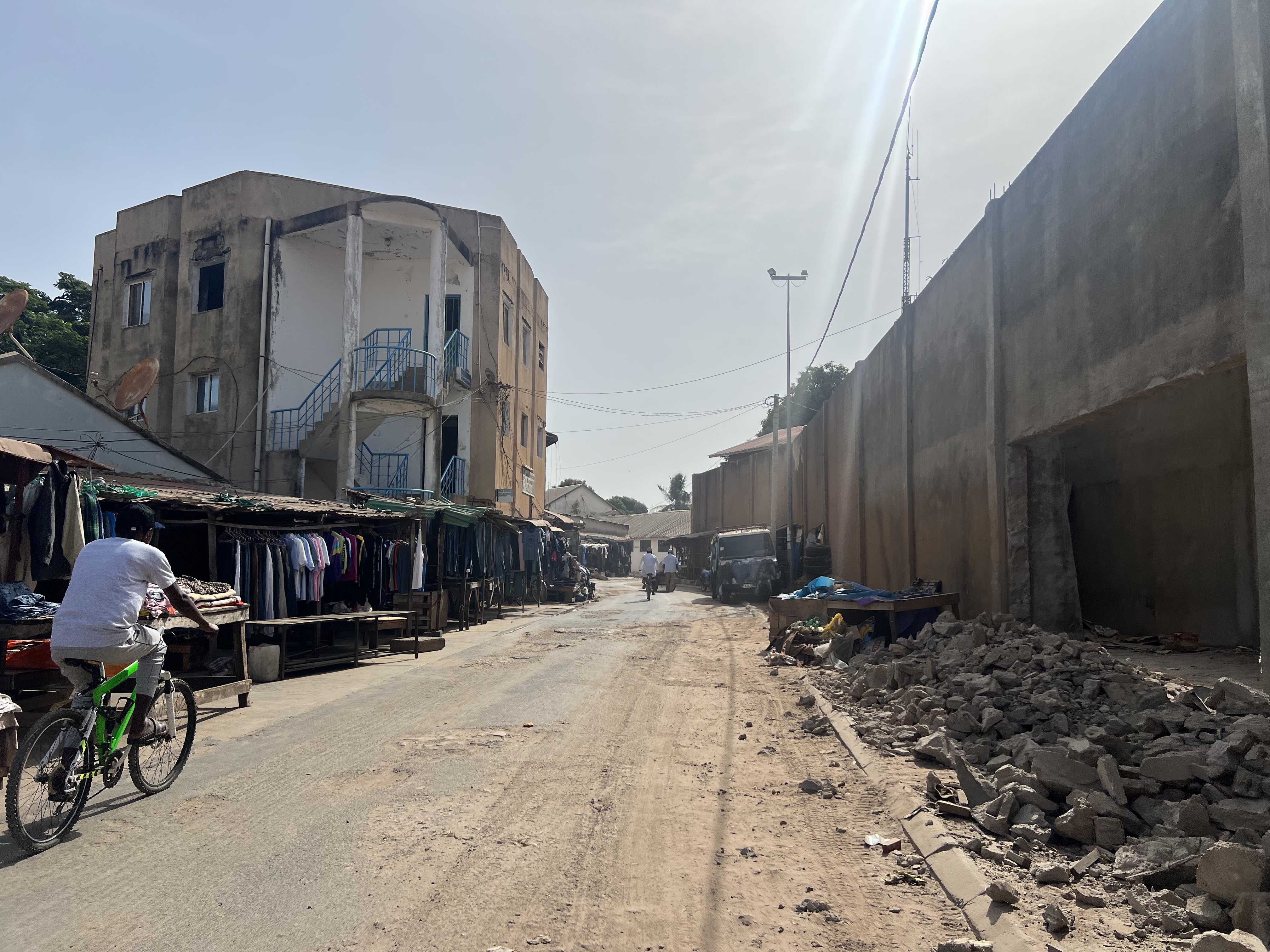
Serrekunda, the main urban center of The Gambia, has lots and lots and lots of construction going on right now. One of its main roads, located not far from the sea, is currently half-dirt since the entire street is being refurbished. And along this road, there are lots and lots and lots of hotels, restaurants, and all-purpose structures rising from the sand.
Someone or someones is dumping a lot of money into The Gambia. With 20% of its GDP coming from tourism, The Gambia has a very different economic base than any other West African nation. Sure, the government says it’s sick of “tourists that come just for sex” but they must be money-makers. Perhaps The Gambia will be the first Jamaica or The Bahamas of West Africa, and achieve some measure of prosperity on the tourism dollar.
Or maybe not. One European local I talked to was highly pessimistic. He said all these construction projects have been in development forever. A lot of them have been sitting idle for longer than they’ve been worked on. Indeed, I looked over the wall next to my hotel and saw one rather grand concrete skeleton with grass and vines growing all over it like a building from The Last of Us. I asked the guy why there was so much construction if none of these projects are ever completed since it seemed like a big waste of money. He said they were all vanity projects or money laundering schemes.
I can’t confirm any of that, but I share his general skepticism on the prospects of The Gambia. I don’t understand its tourism edge over Senegal aside from the somewhat prevalent English. And even besides discounting the sex tourism reputation, The Gambia has a bit of a shady feel. Senegambia Street, the center of tourism, is closer in spirit to Khaosan Road in Bangkok than Miami Beach.
I hope I’m wrong, but I’m bearish on The Gambia.
Miscellaneous
- “The Gambia” and “The Bahamas” are the only countries in the world with “The” in their official names.
- The standard term for a white foreigner in The Gambia is “toubab,” and I heard plenty of it, particularly from beggars.
- At one point, my guide lit up a marijuana joint and offered me some. The same thing occurred to me in four other African countries.
- I experienced a new type of scam, but fortunately I was forewarned. My guide took me to a little slavery museum and told me ahead of time to be wary of the manager. He has a guestbook at the front where people write their names, where they came from, and the amount they donated to the museum. The manager liked to add an extra “0” to the donation amounts to make it look like everyone was giving 10X more, thereby encouraging future visitors to give more.
- In Georgetown, a small inland city and historical trading hub, I was told that British slavers would keep their freshly captured slaves in a few buildings around the town. Supposedly, if a slave managed to escape his holdings and reached a specific tree at the city center (guarded by vicious dogs), he would automatically be freed, though temporarily pressed into service by the slavers to manage the other slaves. I don’t know, sounds kinda apocryphal, but I guess this system might benefit the slavers by incentivizing slaves to make a risky run for the tree rather than just flee into the surrounding wilderness.
 Matt Lakeman
Long time reader, first time poster. I love your essays. One quick note, doesn’t “The Netherlands” count as a country with “The” in it?
LikeLike
Just had to Google this:
“Netherlands” is a country. There is no “the” in the official titles.
Netherlands is one of four countries under the domain of “Kingdom of the Netherlands,” which is a commonwealth-type structure, but isn’t technically a country.
LikeLike
An important thing missed here is the Saudi link. The reason you see *way* more niqabs in Gambia than the rest of coastal West Africa is because the Saudis have long propped up the government. They pay for a number of schools and mosques as well. Across the border in Senegal, Islam is much more relaxed, and dominated by local traditions.
LikeLiked by 2 people
Hey Matt, love the country reviews! The image of The Gambia you give makes the river Gambia seem like a big deal, but then your review doesn’t really mention any cultural or economic arrangements that the river enabled. I would have initially thought that the river Gambia would play a similar role to say the river Nile or Louisiana Bayou, where its presence dictates the living conditions of those that settle around it to a substantial extent. Was there anything you noticed besides the lack of bridges? And if not, did the river’s relative unimportance surprise you / do you have thoughts as to why?
LikeLiked by 1 person
Thanks Christian.
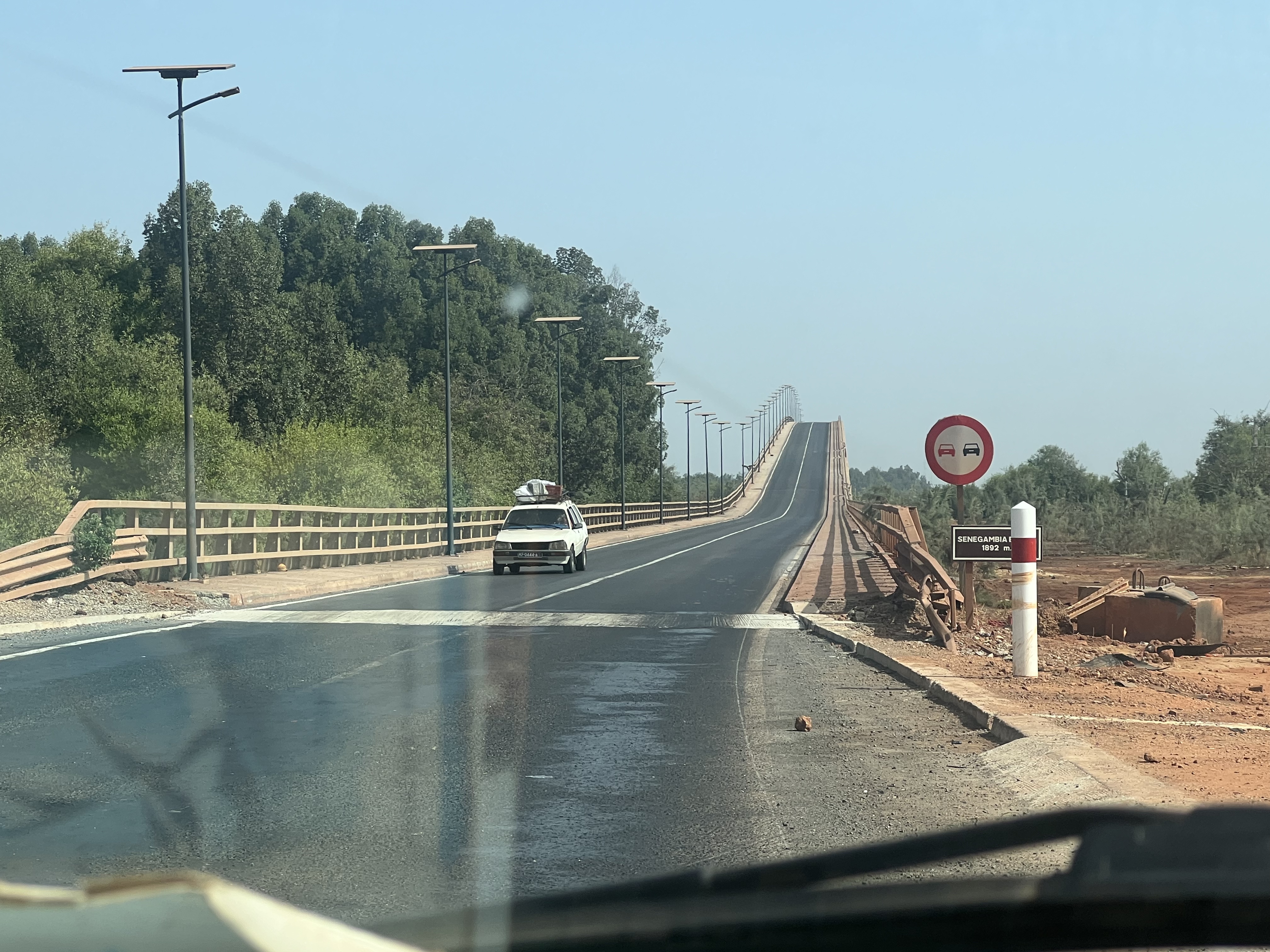
On not mentioning much about the river… that’s interesting, I didn’t even notice. On reflection, I think The Gambia is probably too poor to really do much with the river besides fishing and maybe some irrigation. The one bridge across the river was only built in 2019.
LikeLike
Your dictatorship vs democracy discussion feels very west African to me. I think the experience is quite different in east Africa and somewhat different in Southern Africa.
LikeLiked by 1 person
The power boat is a pretty smart move. Foreign companies are reluctant of locating large capex/FDI infrastructure in places where it can just be seized by the powers-that-be. This piece of infrastructure can just sail away if someone attempts holding it up!
LikeLiked by 2 people
Hey, in the section on electricity, you’ve got some unit confusions. Watts are a measure of power (energy/time), not energy. You almost certainly don’t mean to speak of “30 megawatts annually” — “30 megawatts” is *already* a rate (30 megajoules per second). You probably just mean “30 megawatts”. Similarly in the other cases where you say “megawatts annually”.
For the same reason, the comparison you make with New York doesn’t make sense, because, once again, you’re treating megawatts as a unit of energy, rather than power. Note that the statistic about New York’s energy use in the article you link is expressed somewhat confusingly… it says New York uses 11,000 megawatt-hours per day, which is just a needlessly indirect way of saying about 460 megawatts (≈11,000/24). It looks to me like you’ve accidentally misread this as “11,000 megawatts per day”, which, again, would just not be the correct dimensions and so meaningless.
You should probably fix the units and comparisons here (although fixing the New York comparison may be tricky if you still want to phrase it in terms of time; it might just be better not to). Thanks!
LikeLiked by 1 person
Thanks for the notes, made some changes.
LikeLike
Hi Matt, I really enjoy your country notes. That said, the Treaty of Paris ended the American revolution, not the Treaty of Versailles.
LikeLiked by 1 person
Thanks, fixed. I didn’t realize they were two separate treaties (negotiated at the same time).
LikeLike
Great post! I really enjoyed this one and the one about Peru. They both provided insight into countries that don’t get much press.
LikeLiked by 1 person
Another great read. I hope you can keep them coming.
Minor correction:
“as well child” -> “as well as child”
LikeLiked by 1 person
Fixed, thanks.
LikeLike
Fascinating article! I’ve not added all your others in the series to my reading queue!
One note: the reason that feeding wild animals is generally banned in wealthier countries is because it creates a dependence on humans. Of course, this only works if such a dependence hasn’t already been created.
LikeLiked by 1 person
Super interesting article!
LikeLike
> I think sex tourism is kind of like tech companies or anime conventions. If the gender ratio is merely balanced, then it’s considered a female hot spot
Very funny. Nevertheless you may be suprised to learn that anime conventions tend to have a fairly balanced gender ratio. Female anime watchers are more common than people realise but they are not very visible online. And they seem to be disproportionally interested in conventions (likely for the cosplay, art and workshops for both).
Concerning “The” Netherlands: The Kingdom of the Netherlands is a memeber of the UN and its constituant countries (Netherlands, Cureçao, Aruba, St. Maarten) are not sovereign themselves. The relationship is more like that between the UK and the Channel Isles/Man than the Commonwealth. Yes, it’s complicated.
LikeLike
There is in fact at least one park in Western Europe where you can hand feed monkeys : the “Forêt des Singes” in France. They give you a handful of popcorn, tasty and low-calorie, and you can only feed them that. Monkeys won’t bite your hand (possibly they select the best-behaved individuals) but they’ll snatch the food rather brusquely.
The monkeys there are Barbary macaques while the one in your picture looks like a red colobus.
On the subject of African sex tourism for European woman there was an Austrian dark comedy a few years back that took place in Kenya, not Gambia : Paradise Love. Your descriptions made me think of it.
LikeLike
The comments on democracy vs dictatorship remind of a similar offhand point I heard made by the economist Tim Besley (democracy having a lower variance in performance). It was in a youtube video (around 58:45), titled: “Rekindling Britain’s economic flame – Lord Sainsbury, Andy Haldane, Anton Howes, Deirdre McCloskey”
LikeLike
My long-term flatmate is from The Gambia and we have chatted at length about his country.
It’s interesting to get another, independent perspective from you. I did not realise The Gambia was so poor and corrupt in comparison to other countries. Regarding corruption, my flatmate seems to have some doublethink: he tells me the Gambian police are “not corrupt, you just sometimes have to give them some money and it’s fine…” He also told me that travelling during covid, he knew the right people at the airport to pull some strings and avoid having to do any quarantine/test/vax requirements.
It was very interesting to read about the scene for female sexpats, because – reading between the lines – I think it was a British female sexpat who gave my flatmate the opportunity to come to the UK.
LikeLiked by 1 person
A little background about toubab. In fact its a Senegalese/Wolof word. This is how we called the French when Senegal was colonized. Toubab just means a white person. The word is now used everywhere across francophone Africa. Sometimes you will hear toubabou a slightly deformed version of toubab.
LikeLiked by 1 person