
I travelled through Benin for about 12 days, visiting Cotonou, Porto Novo, Abomey, Ouidah, and Grand Popo. I spent a decent chunk of my time there writing about Nigeria, so I didn’t dig into Benin quite as much and this piece will be shorter than others.
Overview
Population – 13 million (about the same as Pennsylvania)
Size – 44,310 square miles (a bit smaller than Ohio, a bit larger than Bulgaria)
GDP (nominal, 2021) – $17.14 billion
GDP growth rate (2019, pre-pandemic) – 6.9%
GDP per capita (2021) – $1,319
GDP per capita PPP (2021) – $3,649
Population growth rate (2015-2020) – 2.8%
Median age – 17.5
Life Expectancy (2020) – 60
Founded – 1960
Religion (2013, nothing more recent) – 48.5% Christian, 27.7% Muslim, 11.6% Voodoo, 2.6% local Animist
Corruption Perceptions Index ranking – #72
Heritage Index of Economic Freedom ranking – #84
Vive La Benin
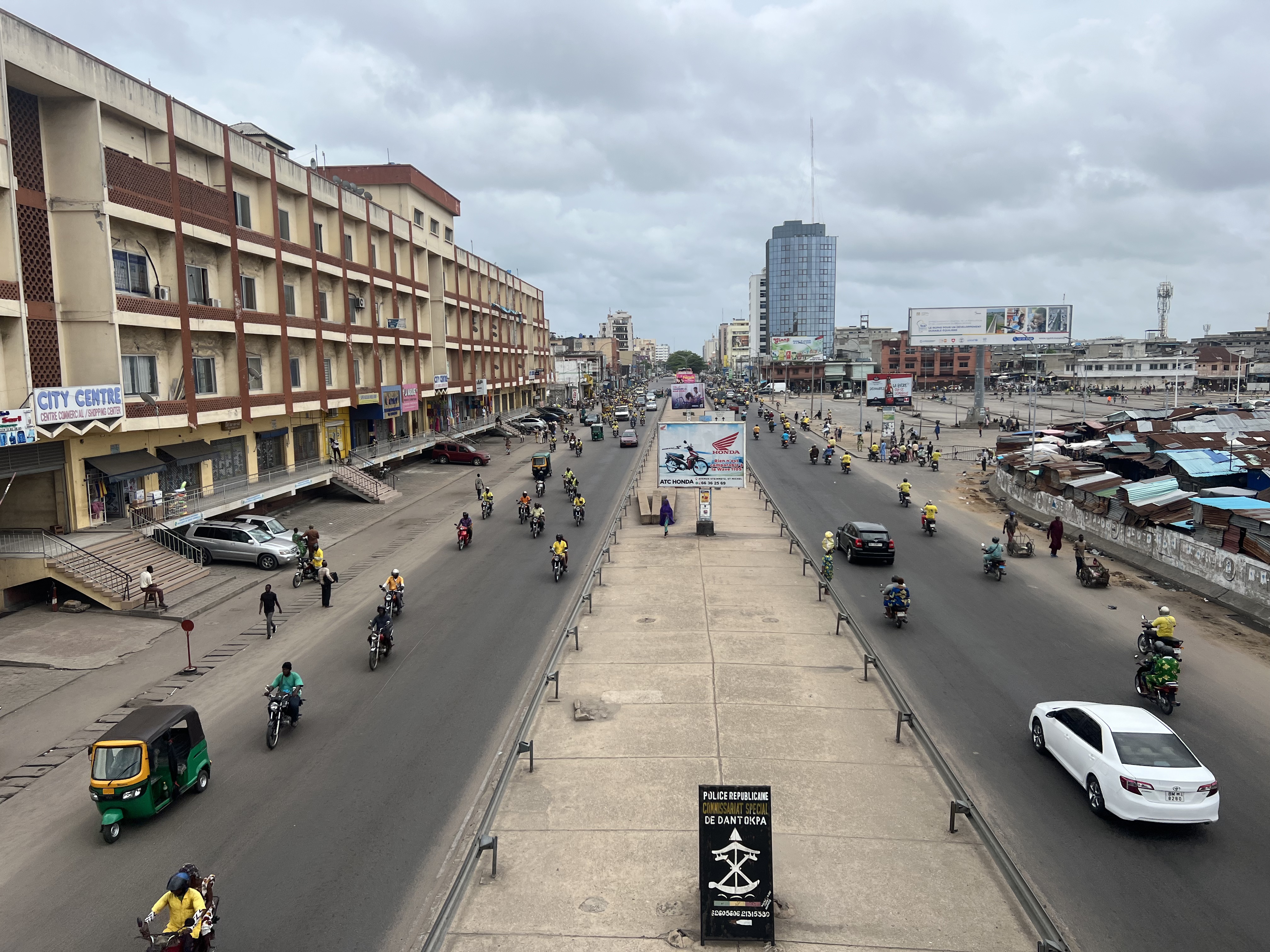
After being in Benin for a matter of minutes, I learned that travelling through Nigeria really is the hard mode of West Africa. Benin is much calmer, much easier, much more comfortable than Nigeria, at least for a tourist.
I give the French some credit for this. The contrast between Nigeria and Benin is similar to that between Thailand and Vietnam. In both cases, the cities of the former are modern chaotic messes built atop ancient chaotic messes, and the latter’s cities have clearly been designed by Frenchmen who really want their colonies to look like France.
Outside of some of the newer, wealthier parts of Lagos (and I’m told the capital Abuja), Nigeria’s cities tend to either resemble their ancient roots or sprawling modern megaopolises. Either way, their organization is charitably organic rather than well-structured. That means lots of winding streets and even more winding alleys. Modern highways randomly cut through side roads, neighborhoods, and entire slums.
In contrast, Benin’s largest city, Cotonou, has these wonderfully wide avenues that run into generous roundabouts and cut sensible lines through the city. Surrounding them are mostly street grids, making local navigation easy and orderly. The other Benin cities have similar designs at their centers, but even their old school roots around them feel more coherently laid out.
Then again, this could all be a matter of population. Lagos may very well have more people than all of Benin. Or maybe between the bustling markets, the two hour traffic jams, and omnipresent slums, it just feels like there are more people in Lagos than all of Benin. Meanwhile, outside of Cotonou’s massive market, Benin’s most populous city practically feels quaint, with fairly few cars and pedestrians.
Benin is definitely cleaner than Lagos, though that is not a high bar to clear. There is noticeably less garbage on the ground, fewer foul smells, and the big canal cutting through the center of Cotonou (built by the French) is not completely clogged with trash. There are also fewer open sewers, though still plenty. The sidewalks are often lined with these concrete slabs which rest above the sewers, but every 5th to 10th slab is missing for some reason, so there are these random holes every 10-20 paces you have to watch out for. They actually seem to be a common place for people to piss in; that’s gross, but I suppose pissing into a sewer has a certain logic.
Beyond the calmer and cleaner cities, you can really feel the Frenchness of Benin. Most people speak French, or at least a heavily accented version of it. Baguettes are sold at street stalls. Local restaurants have a bit of cafe flair. There’s a Charles De Gaulle Stadium in Porto Novo. White people are far more common in Benin than Nigeria (or maybe they’re just more easily visible), and are almost always French.
Allow me to deflect some of the perceived negativity toward Nigeria in my writings by noting that though Benin is a lot more pleasant for travellers than Nigeria, it’s also more boring. “Vibrant” might be the single-most overused word in travel writing, but yeah, Nigeria is a lot more vibrant than Benin. It feels like more is going on, like there’s more development, like there’s more opportunity, and overall Nigeria was a more interesting travel experience than Benin.
I talked to a Nigerian who agreed with me on the calmer vibe of Benin and vacationed there for exactly that reason. He loved Nigeria, but needed a break sometimes from the chaotic energy, so he’d chill out in Cotonou or the beaches of Grand Popo.
But he noted one exception to Benin’s more relaxing demeanor… bribery. He said paying bribes is much less stressful in Nigeria because the police and military just outright ask for money. But in Benin, they beat around the bush, hem and haw, and wait for you to offer the bribe, then they act shocked by the suggestion, make threats, and only when you’ve raised the offer sufficiently do they nod and take your money. Fortunately, I never had to bribe anyone in Benin (though I was close once).
Slaver State
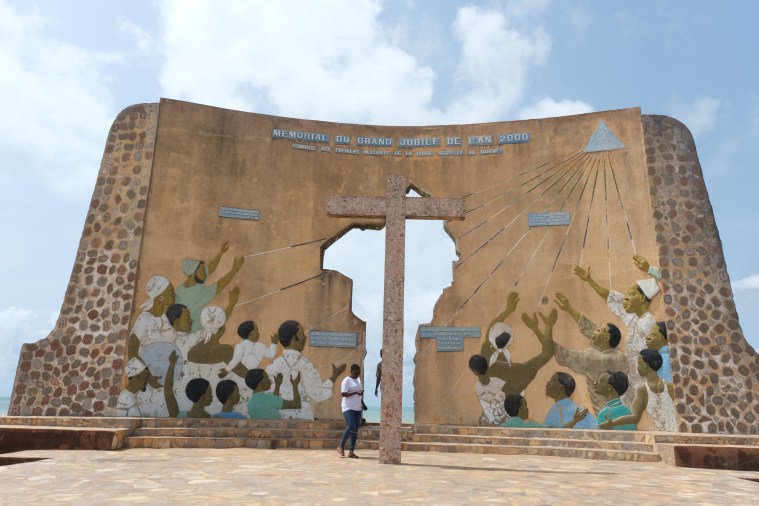
In 2000, officials from the Benin government went on a tour in America to apologize for slavery. In a Baltimore church, the president of Benin fell to his knees and begged forgiveness from African Americans.
Until 1975, Benin was called Dahomey after the kingdom which occupied much of the modern state’s territory from 1600 onward. Like many of the tribes and polities of the region, the Dahomey government captured people both from within and outside its own borders and sold them into slavery, usually to Portuguese or French merchants.
But Dahomey was uniquely good at it. By exporting around 3 million slaves over almost 300 years, Dahomey became one of the most prolific slaver states of Africa and a regional power, which is really saying something in a region known as the “Slave Coast.” The kingdom rode slavery to prosperity until the British government sent a naval expedition to blockade Dahomey in the 1840s to stop its slave trade, which then declined dramatically and finally died out for good in 1885. Slavery within Benin was ended a decade later by French colonial authorities.
Dahomey has recently gotten some attention because it’s the subject of the 2022 film, The Woman King, which many consider to be historically inaccurate to the point of outright revisionism. From what I gathered by watching the movie and reading a bit about the real events:
The Woman King depicts Dahomey under the real life King Ghezo, who ruled from 1818 to 1858. In the movie, Ghezo launches a revolt against the Oyo, a stronger tribe to whom Dahomey was a long-time protectorate, and he attempts to end the Dahomey slave trade by refocusing the economy on palm oil. He is resisted in both efforts by the Oyo and Portuguese merchants who wished to continue buying slaves.
In real life, all of that is true with one massive caveat: King Ghezo only ended the enslavement of his own people. He continued to harvest slaves from outside his kingdom, both through slaver raids and capturing prisoners in war. Ghezo was in power when the British blockaded Dahomey and demanded an end to the slave trade, and Ghezo actually met with the British and expressed support for abolition… but he claimed that the Dahomey economy and society were too dependent on the slave trade to entirely abandon it. I have no idea whether that was Ghezo’s earnest belief, or a bullshit tactic, but either way, he quite impressed the British, with one missionary calling him: “one of the most remarkable men of his age, whether we consider him in his private capacity as a man, or as a warrior and a statesmen.”
So King Ghezo was probably an interesting guy, and he deserves credit for pushing Dahomey in the right direction, but the ultimate heroes of the story should have been the British Empire which dispatched forces at taxpayer-expense for the purely altruistic purpose of fighting slavery (of course, this act does not entirely absolve the British government for supporting the slave trade for centuries before then).
I went to Abomey, the capital of the old Kingdom of Dahomey and the site of the kingdom’s many palaces. Unfortunately, there isn’t much to see these days. Or rather, there are nine palaces throughout the city, but they’re not much to behold:

Admittedly, I’m spoiled when it comes to ruins. I didn’t even find Chichen Itza all that impressive.
The most interesting part of my visit was that I accidentally got into the main palace complex through a side entrance and walked around taking pictures for twenty minutes until a worker yelled at me. I then found out that I had committed two faux pas: taking pictures within the palace, and walking within the palace with my shoes on. I made my way to the main entrance where I paid less than $5 for a guided tour, which consisted of me and eight Chinese people listening to one guide speak in French, then one woman in the group translate it into Mandarin, and then another guide translate it into English. The Chinese group was in a rush, so they kept walking away in the middle of their translations.
Politics
After a fairly unique and interesting 1800s, Benin’s 20th century political trajectory is quite average by African standards. A quick overview could almost be used as a standard template for African governments.
The Kingdom of Dahomey lost a series of wars against French forces at the end of the 19th century and was finally conquered in 1892. The French outlawed slavery, which triggered some internal conflicts, but otherwise “French Dahomey” became a boring chunk of French Africa due to its lack of resources and population. The unfortunate reality was that without slavery, Dahomey didn’t have much of value in the contemporary economy, besides some cotton.
The modern Benin government was set up in 1958 and granted independence in 1960, whereupon it almost immediately collapsed into a series of coups for a decade. The 1970s and 80s followed pretty much the same trajectory but with some clear demarcations where different governments sent the country careening wildly between ideologies. There was the nationalist era in the early 1970s, followed by a disastrous Marxist-Leninist era until the early 1980s, and finally topped off by an economically liberal era in the 1980s which went into a downward spiral after Nigeria closed its border and drastically reduced Benin’s custom tax revenue.
In 1990, Benin returned to democracy with an Americanish system, but in a very typically African manner. Nearly every election since has been at least somewhat fraudulent, and many have been denounced by the losing candidates. The “elected” presidents have been various wealthy businessmen and tribal leaders with ample corrupt connections that allowed them to amass great wealth in one of the poorest countries on earth. But to Benin’s credit, it has had elections, but no civil wars nor coups since 1990, which is an achievement many African nations cannot claim.
Benin’s current president is Patrice Talon, who was first elected in 2016 and is currently serving his second term. Talon, a descendant of slave merchants, is one of the richest men in Benin with an estimated net-worth somewhere around half a billion dollars. His nickname is the “King of Cotton,” and it shouldn’t be surprising that cotton is Benin’s largest export. Career highlights include fleeing Benin on charges of embezzlement after running the Cotonou government’s customs ministry, being accused of trying to assassinate a former president, and then being pardoned and allowed back into Benin, all of which occurred in three years.
Despite Talon campaigning on instituting stricter presidential term limits, he’s been slowly tightening his hold over Benin since first being elected, including by sentencing a few political opponents to jail for decades. He was reelected in 2021 with a suspicious 86% of the vote. In January 2023, the opposition party gained 20 seats in parliament, leaving Talon’s party with a paltry 81 out of 109 seats, prompting the opposition to reject the results and proclaim the election fraudulent.
I met a Nigerian who exports goods to Benin, and he claimed Talon was running a very convoluted plot to bring all of Benin’s farms under state control through various export restrictions and monopolizing key inputs (fertilizer and tractors) and then forcing most farmers to grow cotton instead of the currently more profitable soy beans. I have no idea if any of it is true, but it sounds exactly like something a corrupt African leader would do.
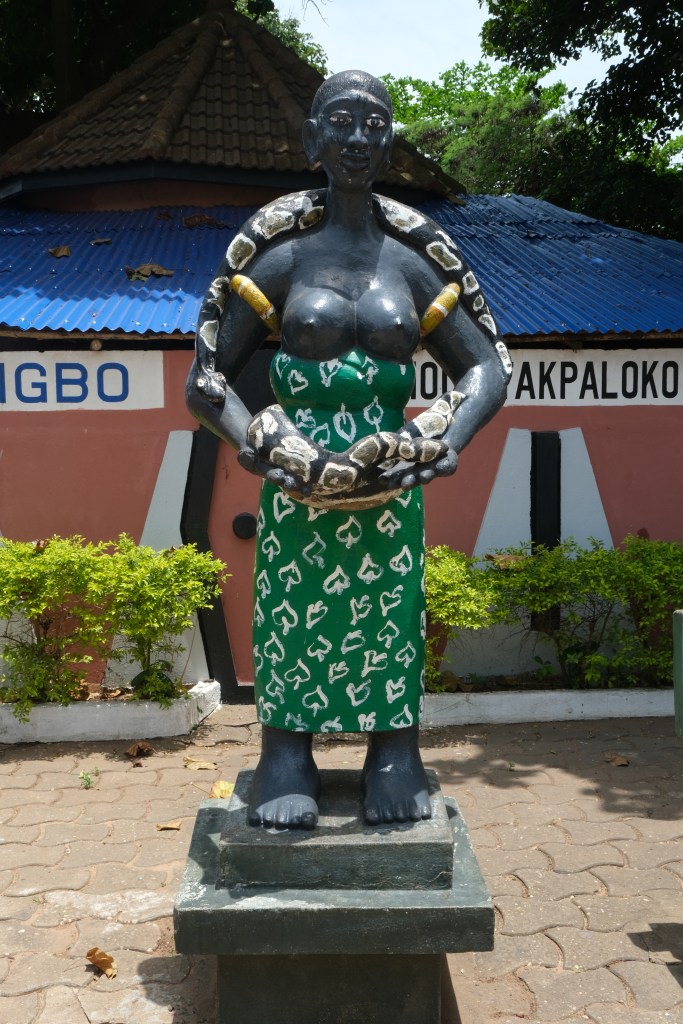
Glorious People’s Statue
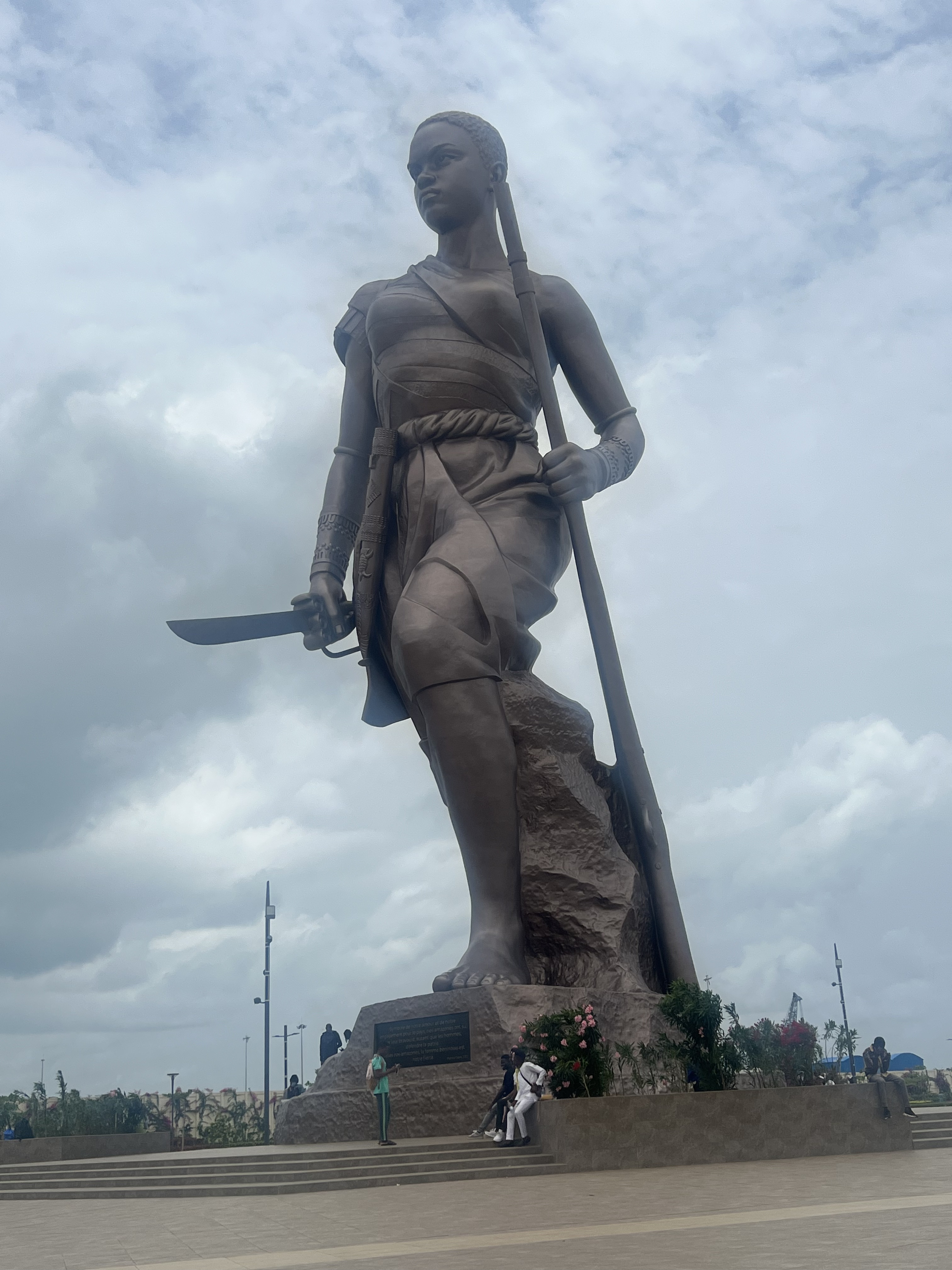
This is the Amazon Monument in Cotonou, a striking 100-foot colossus that looks like it was designed by North Koreans because it was designed by North Koreans.
I had no idea that this was a whole cottage industry for the Hermit Kingdom. Through a front group and a bunch of fake Chinese people/companies, North Korea has been building giant statues around the world, but especially in Africa, for a while. There’s another statue (of a horseback warrior) in Cotonou built by North Korea, and recently, Senegal unveiled its own North Korean-designed colossus. There are more in Angola, Botswana, Congo, Ethiopia, Mozambique, Togo, Zimbabwe, Namibia, Cambodia, and maybe Germany.
How can North Korea of all places be so good at something that countries around the world are risking violations of sanctions to contract them? The simultaneously horrifying and absurd implication must be that brutal, totalitarian dictatorships based on a cultish worship of the leader are really, really good at building giant statues.
Voodoo
Benin has one of the largest Voodoo populations in the world. As far as I can tell, Voodoo’s reputation as a creepy source of black magic and witches has something to do with European attitudes toward the Haitian Slave Revolt, or maybe whites being weirded out by black slaves committing animal sacrifices in the Caribbean and American South. But Voodoo is actually just one of many native West African animist religions, though it seems to have survived crossing the Atlantic Ocean better than any other.
Within the religion, a “voodoo” is a spirit that can inhabit particular objects, ranging from dead animal heads to statues, and voodoo practitioners consult voodoo priests on how to use voodoos to their advantage, for instance, to attain fortune or physical protection from harm.
In Togo (the country just to the west of Benin), I went to the world’s largest fetish market, which is not a place to get your balls crushed by an Asian dominatrix, but rather a place to buy voodoo fetishes, which are objects endowed with voodoos (spirits), thus granting them supernatural powers. The market has stuff like this:
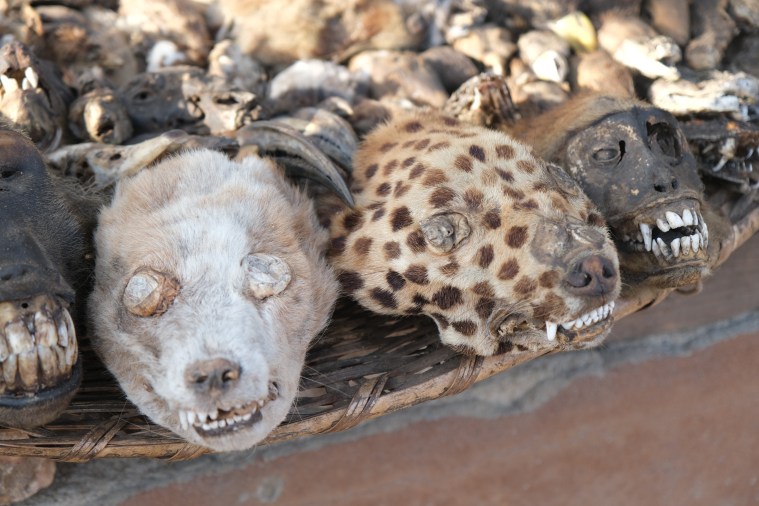
A local claimed that most of these animals died of natural causes, but I’m extremely skeptical.
I did briefly talk to a voodoo priest, but I felt it might be disrespectful to ask him what I really wanted to know… why don’t all voodoo practitioners fetish-max? Why not buy every voodoo charm you possibly can and go through life with a massive entourage of spirits to help you? I don’t mean this sarcastically; I assume there are rules or norms that govern how this stuff works, like how a Christian knows he can’t just constantly pray to get god to do everything for him.
In Ouidah, I went to Python Temple, a Voodoo temple tourist trap that was pretty cool. For reasons not well explained by a local guide, this Voodoo temple has 40+ defanged pythons living in its walls. They’re let out once per month to roam around town and eat. If a local finds one, they’re supposed to call the temple to get it picked up. Yet again, I really wish I could have asked about the logistics of this. What’s the attrition rate for defanged pythons wandering around a city filled with goats, large birds, and a food-insecure human population?
I couldn’t find much info online about this, but one local told me that a lot of so-called Catholics in West Africa are actually into Voodoo. Either they practice both religions, or they incorporate voodoo prayers and concepts right into the faith. However, the various Evangelical sects that are currently booming across West Africa don’t abide by this blasphemy and rigorously enforce anti-Voodooism in their followers. Likewise, I’d be surprised if African Muslims continued voodoo practices, though I later encountered a rural village in Mali which simultaneously practiced Islam and made annual animal scarifies to spirits.
If anyone has any info on this – how local beliefs are incorporated into these larger religions, whether Catholic priests/Islamic imams tolerate it, etc. – let me know.
Tough Tourism
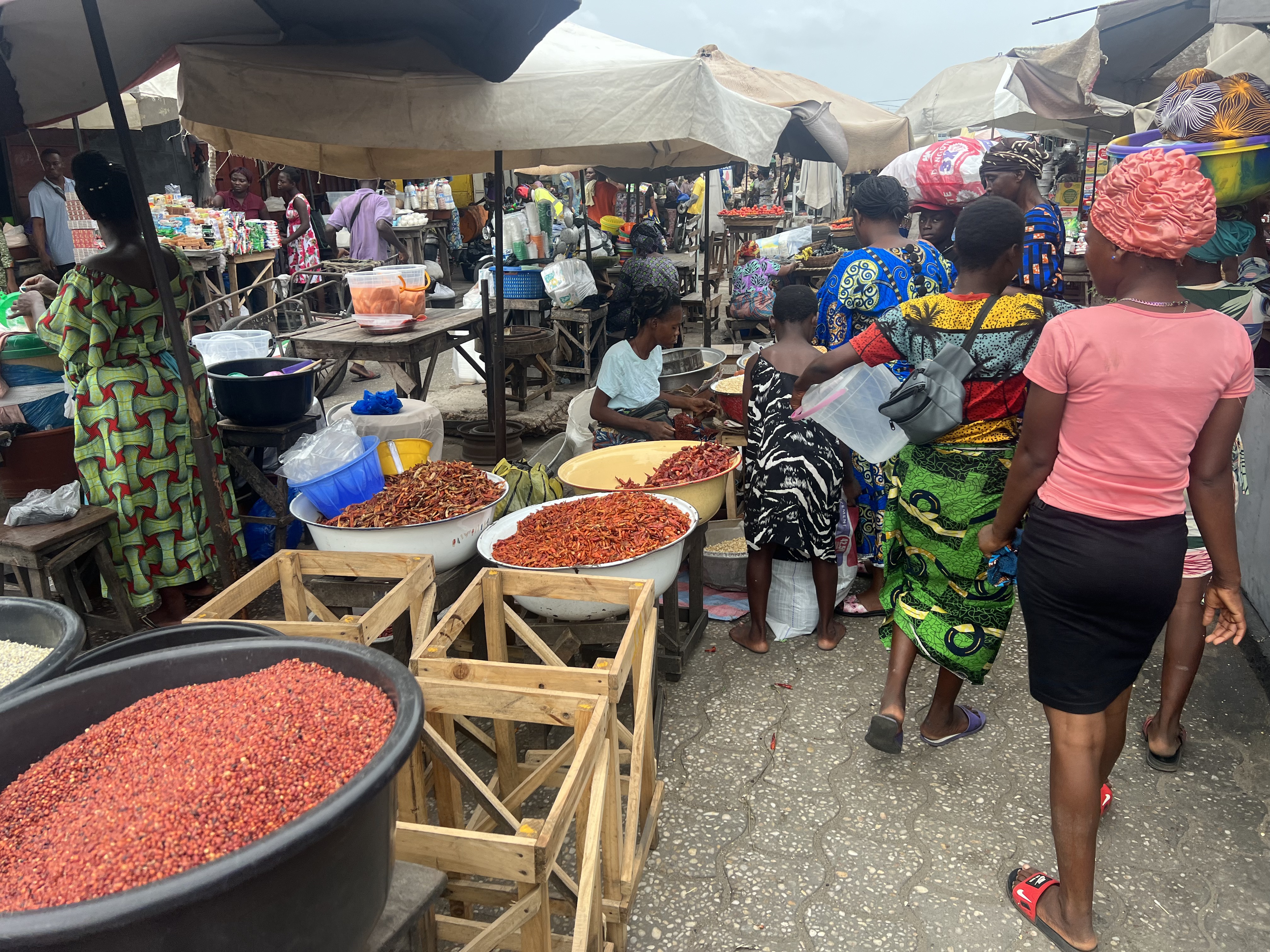
I’m starting to see why tourism is difficult in Africa aside from all the obvious reasons, like poor infrastructure, extreme heat, Malaria, bribes, etc. In the vast majority of West Africa, there simply isn’t much to do in a traditional tourist sense.
My travelling modus operandi is to pick something touristy on a map (building, monument, museum, neighborhood, etc.), and then walk 30-90 minutes to get there. This lets me soak in the environment and peel off to see anything interesting that might come up. Then at night, I try to talk to people in hostels/hotels, contact any locals I set up connections with in advance, etc.
But in Benin my options were quite limited. In all the cities I visited, I could do the touristy stuff in about half a day (if that), compared to 3-7 days in your typical European capital, and African cities tend to look fairly uniform outside their centers, so there isn’t much interesting cityscape to explore. At night, or any other time, it’s tough to talk to locals. Ok, yes, part of that is because I don’t speak French, but even if I did, it wouldn’t be easy. As a white guy walking around, there’s this automatic disconnect between me and the locals. Three examples:
I sat down at an outdoor dining area in Porto Novo and ordered a beer. I got my beer, and 15 minutes later, the lady behind the counter who served me waved for my attention. After two minutes of trying to understand her and using Google translate and having another local come to help, I figured out that she was asking for money. I told her that I had already paid for the beer. She said she wanted more money, and in a fairly forceful manner. I asked why. She said to feed her family. It finally clicked that she was begging. She must have been surprised that her restaurant was being patronized by a white guy, so it took her awhile to realize this was an opportunity to beg for money. You miss 100% of the shots you don’t take, I guess. I just walked away.
Second, I went to a bar in Porto Novo. The instant I entered, four employees approached me and asked various questions in broken English. They wanted to know what I was doing there, what I was doing in Benin, where I was from, what I do for work, etc. When I finally sat down and ordered a beer and some food, the employee who spoke the best English, a young woman, sat with me. She proceeded to sit with me throughout my entire meal. I found the whole situation strange, but I figured this was an opportunity to talk to a local, but every time I tried, she answered briefly and didn’t follow up, so I gave up on conversation. When I was done eating, she moved from across the table to sitting next to me. Quite closely next to me. I began to wonder if she was a prostitute, but she wasn’t dressed for the part. I just finished my second drink and left.
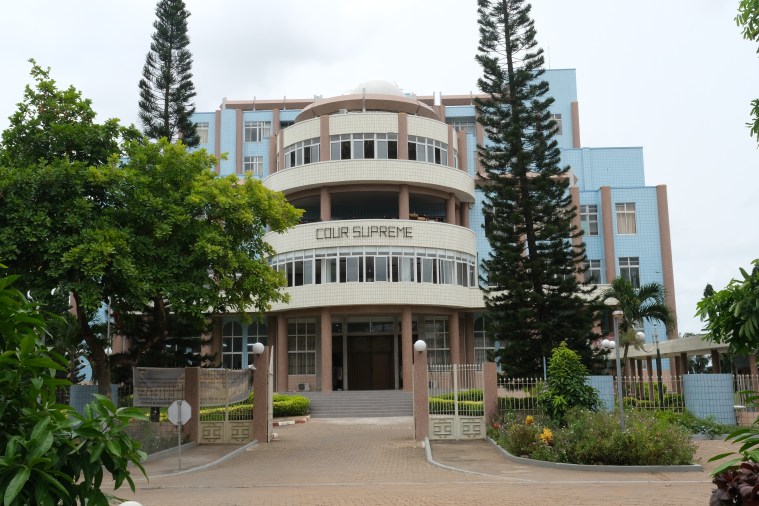
Third, I took a picture of an interesting building that happened to be the Benin Supreme Court. A military guard started calling to me. I tried to ignore him, but a bunch of people around me pointed him out, so I went over to the guy. I was dreading the worst… I had a DSLR camera around my neck and worried that he might claim my photo of the Supreme Court was a security threat and confiscate my camera, and indeed, he immediately took my camera from me. I found that the guy didn’t speak any English, but through five minutes of Google translating, I told him I was an American tourist, that I didn’t know that this was the Supreme Court, and that I was happy to delete the photos. He asked for my name and my phone number, I assumed for some sort of security report. But then he took out his phone, put my number in it, called me to make sure it was real, and then took a smiling selfie with me. I guess he parlayed this potential security threat into an opportunity to meet a white guy. As of writing this two weeks later, he still occasionally texts me.
In other words, it’s difficult to travel around Benin because there isn’t much normal tourist stuff to see, and it’s difficult to talk to local people because I’m often treated like something between a low-level celebrity and a lottery machine (though plenty of random locals were also really nice to me).
This is not to say there is no value in travelling around Benin, only that I have to work for it. It means longer walks in 90+ degree heat, it means going to more random locations on the map (I found a cool 100 year old cemetery and walked through the richest neighborhood in the entire country) and it means having lots and lots of awkward conversations until I found some good ones.
The Conversion Mystery – Probably Solved
In Notes on Nigeria, I described crossing the border into Benin:
“…so I went off to a money changer, who to my bafflement, gave me a rate of 630 CFA to the dollar, even though Google said the real rate was 602.”
A reader who happened to go to Benin not long after me thinks he got to the bottom of the conversion mystery. A significant portion of Nigeria’s oil production is stolen by organized crime syndicates and sold abroad, including to neighboring Benin. This results in an omnipresent fuel black market in Benin that undercuts the formal market (ie. the roadside stalls with guys selling oil in glass bottles are much cheaper than the formal gas stations).
The reader suggested that the huge black market exporting oil from Nigeria to Benin likely puts downward pressure on the street value of Benin’s currency (the West African Franc, or CFA) compared to the Nigerian Naira, at least close to the border.
So, if any readers are looking for an adventurous way to make money, there’s a sweet arbitrage opportunity right on the Benin-Nigerian border – just buy a ton of CFA, go elsewhere, and sell it for a different currency. Alternatively, you can try to get in with the crime syndicates and become a motorcycle-driving Nigerian oil smuggler, or “human bombs” as they’re known.
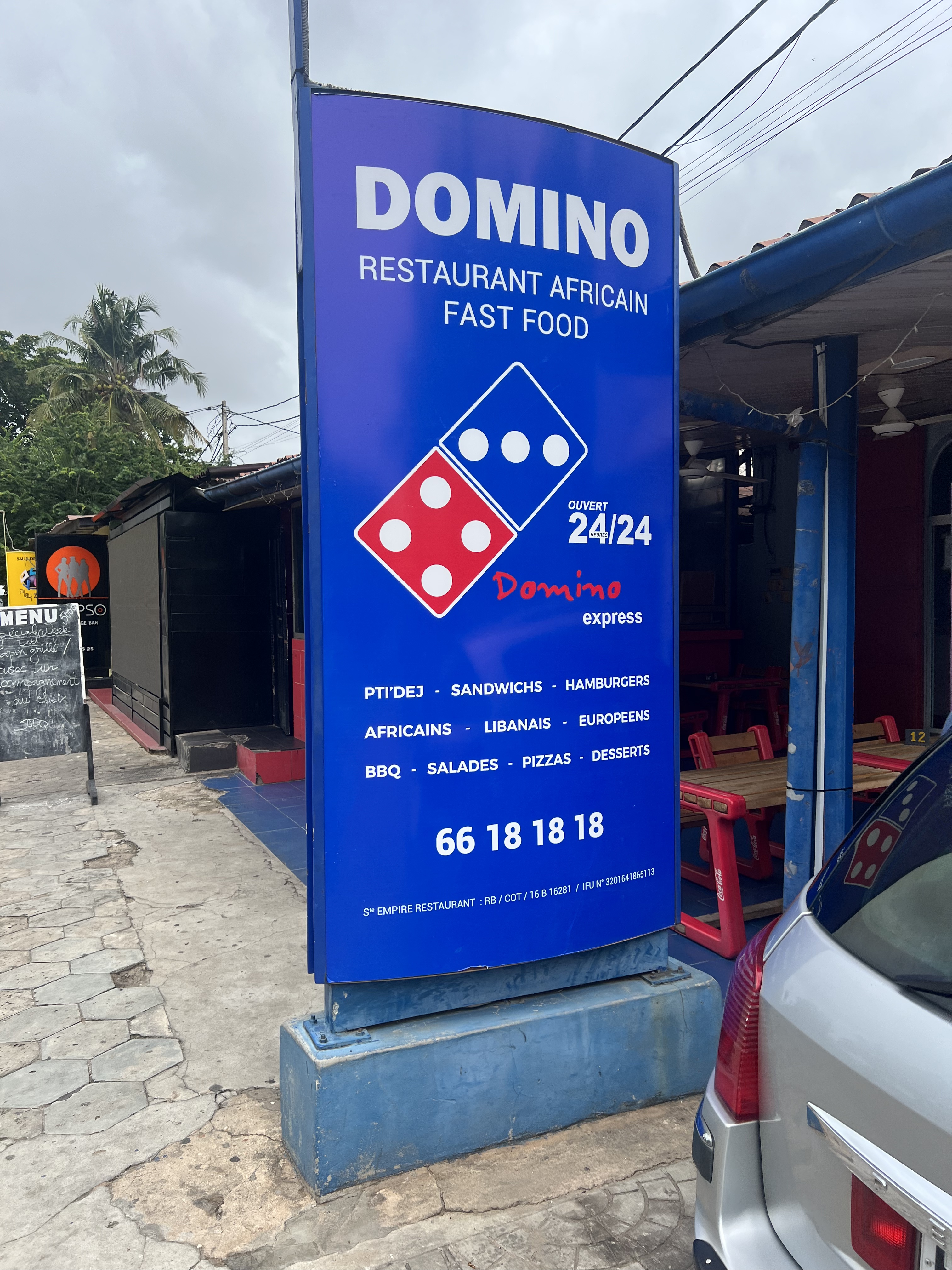
All Roads Lead to Burgers, Pizza, and Pasta
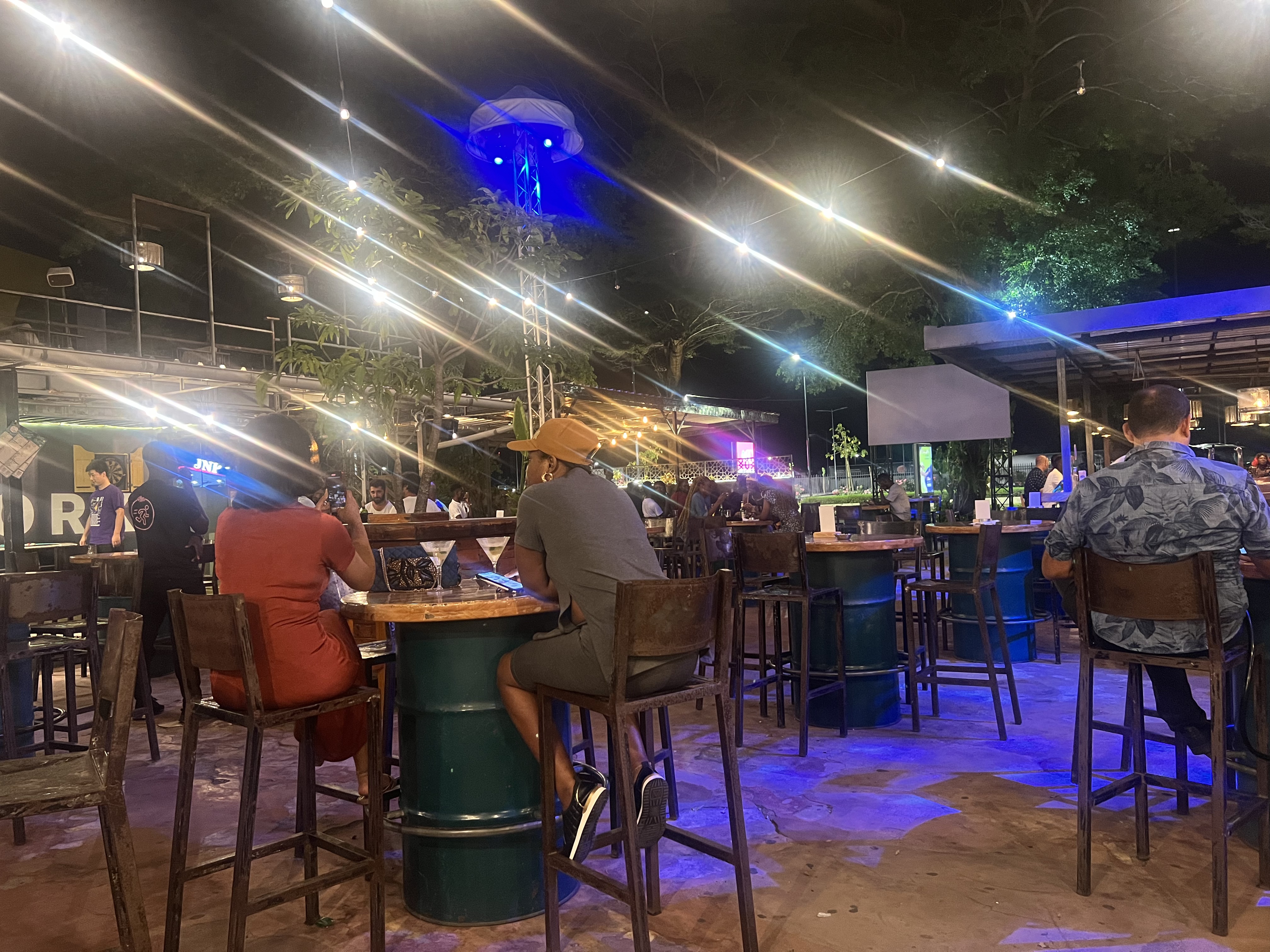
If you go to pretty much any poor or developing country, and find their nicest restaurants, they will almost certainly serve burgers, pizza, and pasta. This was the case in the nicest neighborhood in Cotonou, which is the nicest neighborhood in Benin, just as it is in many of the nicest neighborhoods in Egypt, Iraq, India, China, etc.
Is this the American cultural victory? The export of our glorious cuisine abroad until all poor foreigners are brainwashed into thinking this really is the food of the wealthiest humans to ever walk the earth?
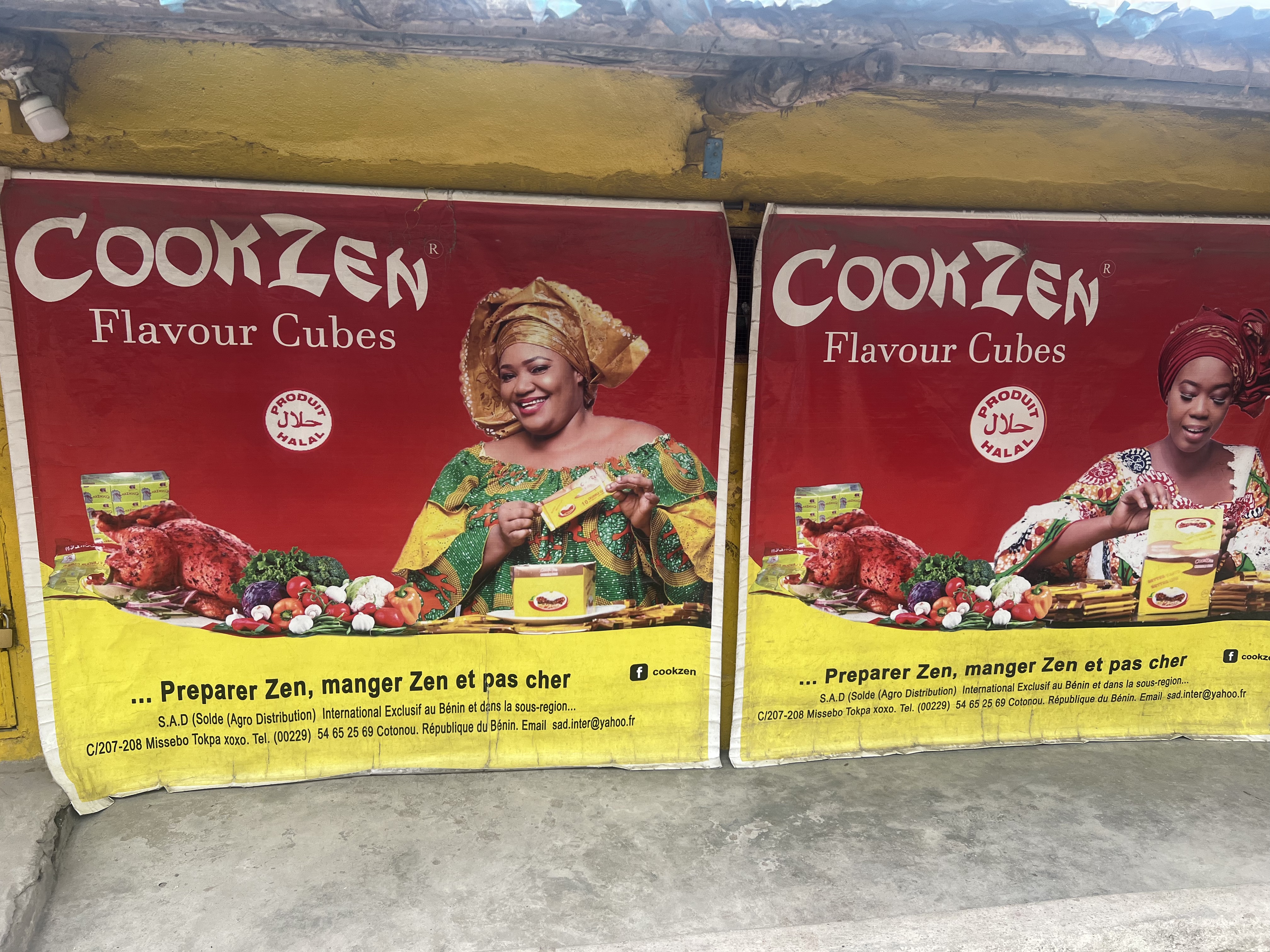
China
China is well-known for its increasingly large presence in Africa, and I’ll do more extensive write-ups on their influence and the local reaction to the Chinese in later essays. For now – I’m told that Nigeria actually doesn’t have many Chinese people or businesses, but I began to see more signs of them in Benin:
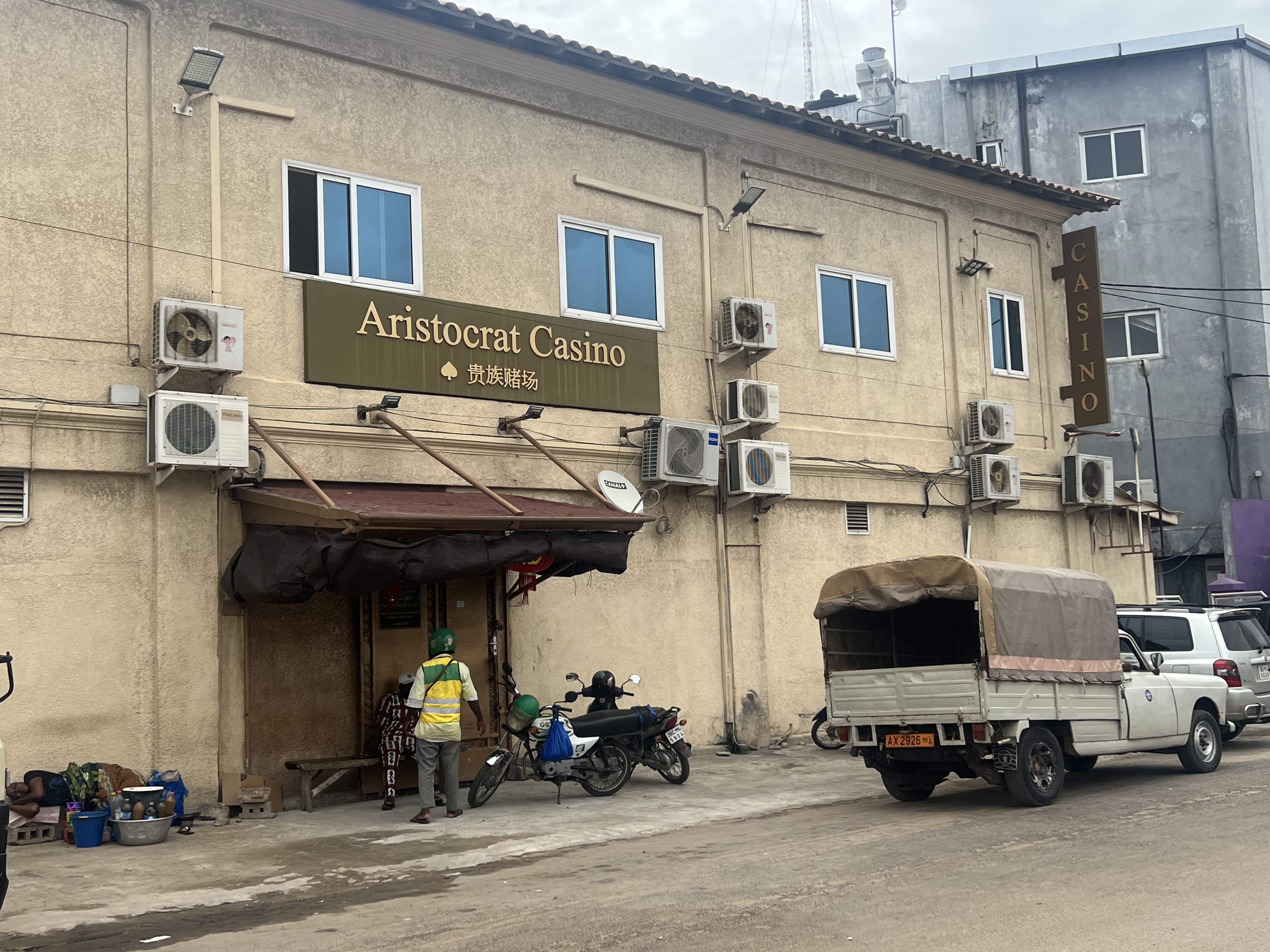

Miscellaneous
- People of Benin are not called “Beninins” or “Beniners,” but “Beninoise.”
- A tour guide in Abomey told me that the first two-story building in all of Benin was built in the late 19th century as a gift from a Portuguese slave trader to the Dahomey king.
- African cotton is almost always grown on trees, whereas American cotton comes from low-to-the-ground “cotton plants.” Cotton plants grow much faster and are a lot more productive, but don’t do well in African climates.
- Martin Meredith’s Fate of Africa doesn’t say much about Benin, but Meredith quotes an expert on Benin’s state-backed corporations after independence: “The institutions were found to be hierarchical, authoritarian, and highly bureaucratic, leading to failure to perform essential tasks, to waste and inefficiency. The personnel, apart from being in many cases being unqualified or ill-qualified, tended to be idle, undisciplined, arrogant, and above all, corrupt, so that fraud as well as inefficiency abounded in the parastatal sector.”
- The main Dahomey Palace complex had a bunch of cannons individually called the “12 Virgins Cannon” because that was the price (in slaves) paid by the Dahomey king for each one.
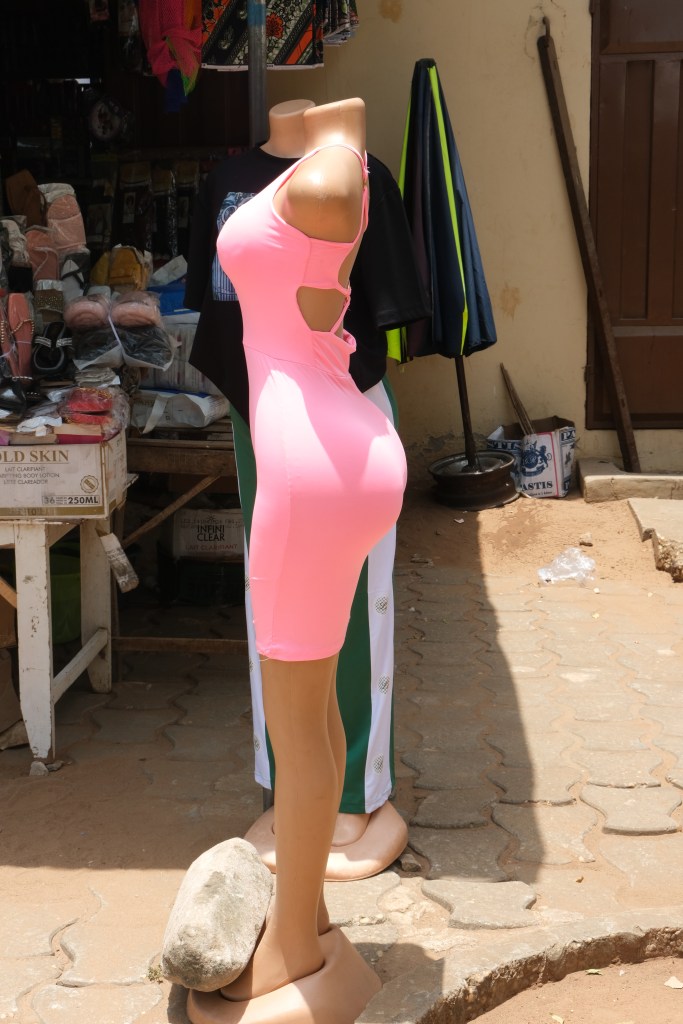
- This is a standard mannequin in Benin (same with at least Nigeria, Togo, and Ghana):
- I saw a man and a little girl get baptized in the canal in Cotonou.
- When I tried to go to the Cotonou Cathedral, I awkwardly walked in on a funeral. The people were very nice about it.
- Benin has mostly avoided the conflicts with radical Islamism present in its neighbors (Nigeria, Niger, and Burkina Faso) but occasionally there is spillover. In May of this year, 15 people were killed and several abducted on a farm in northern Benin, likely by Islamic terrorists. In 2019, two French tourists were kidnapped by terrorists in northern Benin, and later rescued in Burkina Faso by French commandos.
- One of the weirder experiences in my life – being extremely thirsty after walking around Cotonou in the heat for two hours without water, wandering around a market with thousands of bottles of water trying to buy one, but none of the wholesalers would let me buy just one. I ended up walking half a mile until I found a pharmacy.
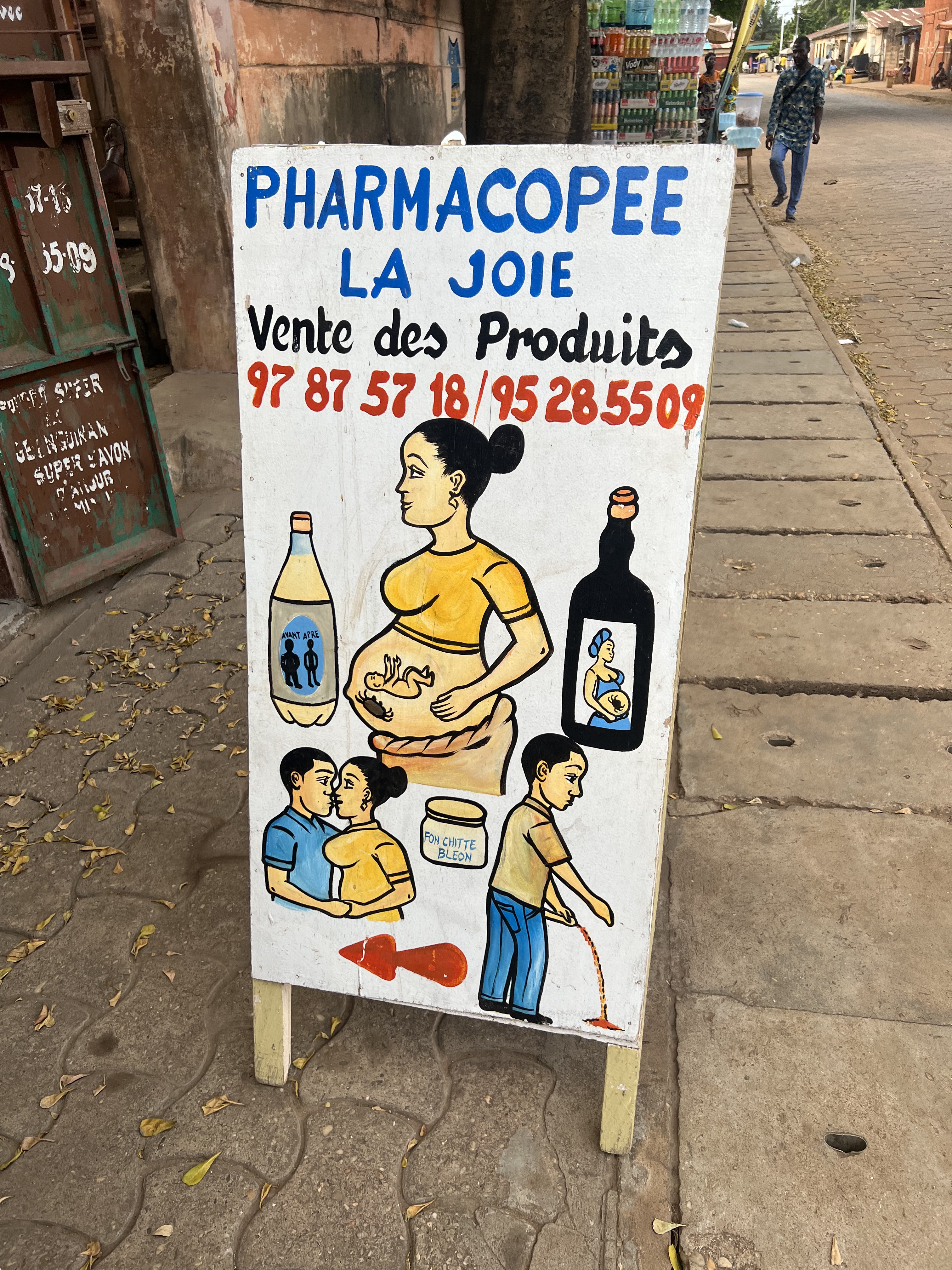
- Fortunately, Benin has the best pharmacies:
 Matt Lakeman
Love this Matt!
I didn’t know about Mansudae Overseas Projects, but this makes a lot of sense.
I posted some of my pics of Benin here: https://www.instagram.com/p/CsyvwQcow55/ (no account needed to view)
LikeLiked by 1 person
The 4 people on the bike + the pineapples in the car are the most African pictures possible.
LikeLike
Any interpretation of the pictograms on the pharmacy sign?
LikeLike
I’m guessing either something to with STDs or abortions.
LikeLike
I wonder what the little crab in the womb is about.
LikeLike
The crab being on the bottle makes me think it might be to warn about the affects of alcohol during pregnancy?
LikeLike
I’d say I’m 90% sure it’s STDs
LikeLike
Very interesting!
Though I’m confused why would you count pizza & pasta as an American culture victory when it’s clearly an Italian one?
LikeLike
Ehhhhh I’d say America has adopted and twisted pizza and pasta sufficiently to claim them, or at least a version of them. At the very least, I’m pretty sure pizza is more popular in America than Italy.
LikeLike
A version of them – probably yes, but is that the version you encountered in your travels? I’m curious now whether people in different parts of the world consider pizza American or Italian. In Europe, it’s definitely Italian.
Or maybe it’s just a global sidh instead. I recall Scott Alexander making the point that many “American” things are more like “optimized for humans” or “global” things that simply overtook the US first. The example he gave was Coca Cola: of course it was invented & is associated with the US, but it relies on ingredients not native to the US, doesn’t have an intrinsic connection to the American culture, and could’ve just as well been invented somewhere else. Like, is a lightbulb American?
LikeLike
“… pizza didn’t spread to the rest of Italy [outside Naples] until the 1960’s, after it had taken off in the Americas. And it happened mostly because American tourists to Italy were desperately trying to find the “real thing” in places where it had never existed, which is why there’s a credible claim to be made that pizza, as it currently exists, is really an American dish. ”
https://eccentricculinary.substack.com/p/pizza-isnt-italian
LikeLike
Huh, that’s very interesting, thanks! It seems that I’ve fallen victim to the Italian propaganda 😀
LikeLike
If anyone has any info on this – how local beliefs are incorporated into these larger religions, whether Catholic priests/Islamic imams tolerate it, etc. – let me know.
syncretism is quite common in many religions as far as I know, and some remnants of the old religion remains part of culture and people don’t think of them as religious stuff anymore (like knocking on wood).
I can give a lot of examples of remnants of Tengrism as part of culture in Turkey but don’t want to bore readers.
LikeLike
I really liked the blog but what’s with the hundreds of (quite a few unrelated) tags for each post? SEO? Reminded me of Buzzfeed…
LikeLike
Extremely interesting, as always. I knew nothing about this country.
Minor mistake: “as their known” -> “as they’re known”.
LikeLike
Thanks, fixed.
LikeLike
I’m American and my wife is Tunisian, from a not very religious tmuslim family. Tunisia is far less animist than, say, Morocco, but black magic and African animist beliefs are quite intertwined with Islam. I would entirely expect voodoo and other religions like catholicism to be there, too
LikeLike
did you say “purely altruistic”?
British abolition efforts were entangled with several self-interested motivations. Britain had already largely shifted its colonial labor model, so suppressing the slave trade also hampered economic competitors like Brazil, Cuba, and the United States who still relied on it. there’s also a well-documented pattern historians call “humanitarian imperialism”, abolitionism provided moral cover and justification for expanding British influence in West Africa, which eventually contributed to formal colonization of the region. the blockades and treaties Ghezo signed with Britain also weren’t just about ending slavery they opened Dahomey to British commercial influence.
crediting Britain as the heroes of a story about Dahomean agency is also a somewhat ironic framing given what British imperialism eventually did to West Africa.
LikeLike