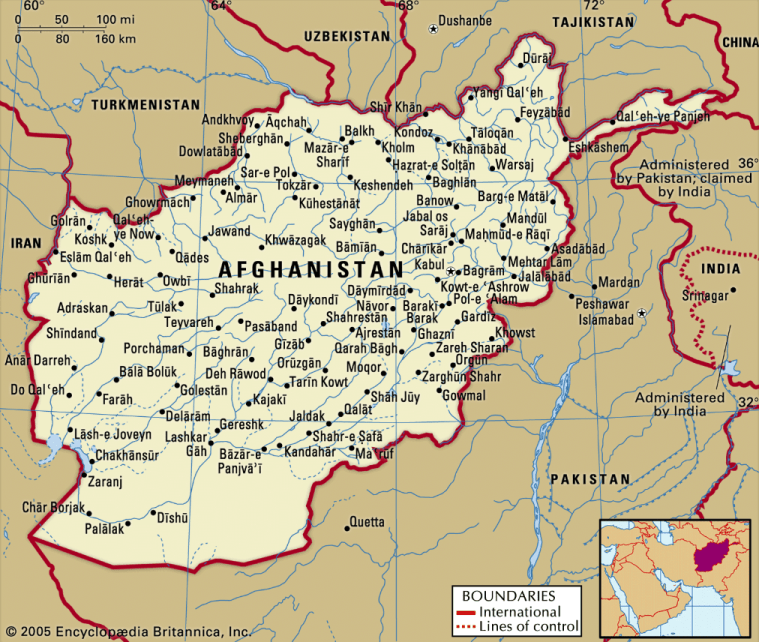
Notes on Tunisia

I spent almost three weeks in Tunisia, visiting the cities of Tunis, Bizerte, El Kef, Tozeur, Tataouine, El Jem, Sfax, Sousse, Monastir, Kairouan, and a few smaller towns in between.

At first, I thought this post would be heavy on travel and light on history, but I got carried away on the background reading and surprisingly interesting politics of the country. Modern Tunisia is another one of those one-time democracies that recently fell into an authoritarian quasi-dictatorship, like Turkey’s Erdogan, El Salvador’s Bukele, Hungary’s Orban, etc. But compared to those examples, Tunisia’s President Kais Saied feels like more of an accident, a product of a flailing, random political trajectory that no one could have predicted. The fact that a guy like this ended up running a country like this in this way is more baffling than scary or exciting.

Before travelling, I read “Tunisia, a Country Study” in the Handbook series commissioned by the U.S. Army and published in 1987 (I’ll refer to this as the “Handbook”). Other historical and contemporary sources are linked within.

Continue reading “Notes on Tunisia”

Conquest of the Incas

I wrote about the Spanish conquest of the Aztecs five years ago during the early days of this blog. The conquistadors have since remained a fascination of mine, but I haven’t had a chance to go back to them until recently when I read Bernal Diaz’s The Conquest of New Spain and then The Last Days of the Incas by Kim MacQuarrie. My goal was to get a thorough understanding of the two major Spanish New World conquests and how small Western military forces achieved such stunning successes over gargantuan native empires.

In the case of Hernan Cortes, about 400 Spanish soldiers (later increased to over 1,000) subjugated the Mexican Empire of about 6 million inhabitants. In the case of Francisco Pizarro, about 180 Spanish soldiers (eventually rising to over 1,000, but with rarely more than 500 ever concentrated in one place) conquered the Inca Empire of maybe 10 million inhabitants. In both cases, the Spanish invaders had almost no understanding of the local politics, geography, culture, religion, or people they were invading. In both cases, the expedition leaders deserve a ton of credit for extraordinary leadership and competence while leveraging a technological imbalance to achieve a staggering military force and diplomatic multiplier.

Since I already wrote about the Aztecs, this essay is primarily focused on Pizarro’s conquest of the Incas, which, as a reader, I found no less insane, exciting, ridiculous, and fascinating based on MacQuarrie’s fantastic The Last Days of the Incas. I want to present the most straightforward account of what happened and why with enough detail to get a sense of the difficulty and enormity of the conquest, but pared down enough to make the story digestible. I’ll also intersperse some of the most interesting points I learned from The Conquest of New Spain, which is translated from a first-hand account of one of the conquistadors present at the invasion of the Aztec Empire. At the end, I reflect a bit on why I find this stuff so interesting and can’t stop thinking about it.

Continue reading “Conquest of the Incas”

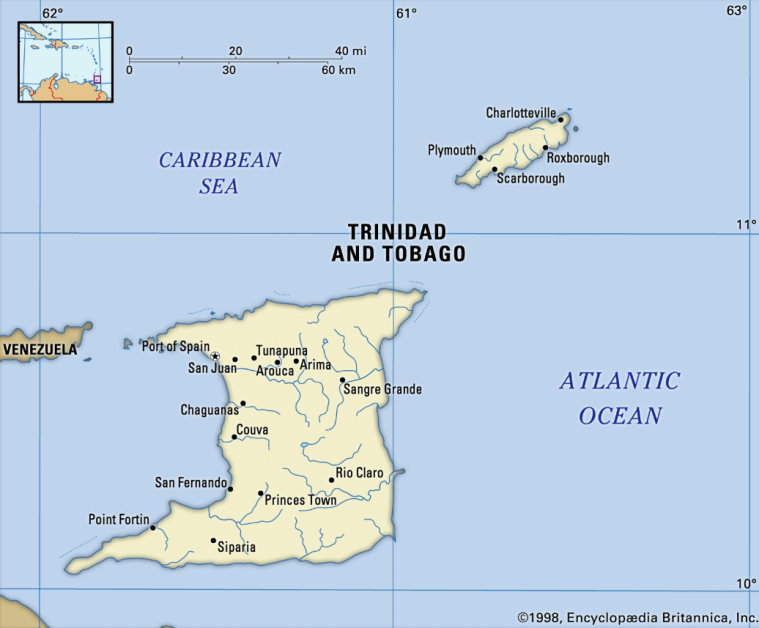
Notes on Trinidad and Tobago

It’s hard to find a good map of this country.

I spent a week in Trinidad and Tobago (which I’ll call “TT”), mostly in Port of Spain (the capital) and the northern mountain region of Trinidad.

My major source this time is the Area Handbook for Trinidad and Tobago commissioned by the U.S. Army in 1975 (which I’ll refer to as the “Handbook”). If I have learned anything from these blog posts, it’s that U.S. government-commissioned country surveys are great sources. I imagine that if I was a diplomat sent to Trinidad and Tobago in 1975 and I knew absolutely nothing about the country, this would get me up to speed. It’s easy to read, perfect level of detail, comprehensive, if rather blunt in its pre-PC era evaluations of cultural norms. Other sources are linked within.

Continue reading “Notes on Trinidad and Tobago”

Notes on Guyana

Over the summer, I visited Guyana (pronounced Guy-on-uh), mostly in and around the capital of Georgetown. I had plans to see far more of the country but they didn’t come to fruition.

Sometimes while writing these 25,000+ word posts, I feel the need to justify why anyone would want to read about a random country they may or may not have heard of. My pitch for reading about Guyana is that its history involves two death cults, diverse leadership (including individuals of the male, female, black, Indian, white, Chinese, Christian, Hindu, Islamic, and Jewish persuasions), a semi-race war, a legal argument over the definition of the word “majority,” CIA-backed regime change, a conspiracy to thwart a multi-national territorial arbitration, and the largest per capita oil discovery in the history of mankind.

If you’re not interested in any of the above, skip to the last section where I describe why Guyana is possibly my least favorite national travel destination ever. But before I get to that…

Continue reading “Notes on Guyana”

Notes on Tajikistan

Over the summer, I spent about two weeks in Tajikistan, mostly in Dushanbe (the capital) and various points along the Pamir Highway, which borders Afghanistan and later leads into Kyrgyzstan.

This was my first time in central Asia and easily one of my most interesting trips in a while. Tajikistan is a fascinating mixture of Soviet, Islamic, Persian, steppe, and Himalayan culture, all rolled into one beautiful, weird, dysfunctional country, and I couldn’t get enough of it. So this essay will be similar to Notes on Mauritania and Notes on Guinea with more of a focus on my day-to-day travel than the history.

Continue reading “Notes on Tajikistan”

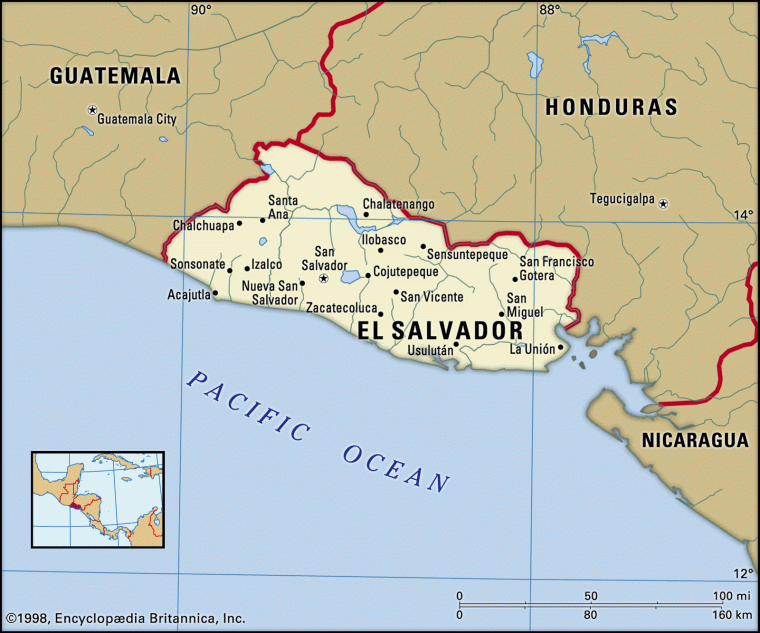
Notes on El Salvador

In 1995, El Salvador had an intentional homicide rate of 139 per 100,000, the highest in the world and one of the highest rates recorded in modern history.

Like all educated middle-class Americans, my core understanding of urban crime comes from The Wire, so for comparison, when the show took place, the homicide rate in Baltimore was in the high 30s and low 40s. The national US homicide rate peaked in 1980 at 10.2. The 2023 rate was about 5.5, which is very high for a wealthy Western country. Using data from the last few years, France, Germany, Italy, and Spain are all between 0.5-1.1. Japan and Singapore are at about 0.1-0.2.

While the murder rate in El Salvador fell quickly after 1995, it remained the highest on average in the world across much of the following years, ranging between 40 and 107 from 2002 to 2018, typically beating out other highly murderous countries like Jamaica, Honduras, Belize, South Africa, the Bahamas, Brazil, Saint Lucia, Guatemala, and the Dominican Republic. As far as I can tell, the only country to match El Salvador’s murder rate in modern times was Colombia in the late 1980s and early 1990s during the height of the drug war against Pablo Escobar.

But in 2023, El Salvador’s official murder rate dropped to 2.4 per 100,000, putting it in the league of Lithuania, Montenegro, and Canada. The rates of El Salvador’s neighbors, Guatemala and Honduras, remain 5-10X higher. Not far away, Jamaica holds the top spot in the world at about 50.

El Salvador’s seemingly miraculous turnaround has been largely attributed to the efforts of President Nayib Bukele, who first took office in 2019 and launched possibly the most successful anti-crime crackdown in modern history. The country has been under quasi-martial law since 2022 and about 1.7% of the population is in prison.

I traveled through El Salvador for nine days, stopping in San Salvador (the capital), Santa Ana, La Palma, and along the Ruta de Flores. I wanted to see for myself how much the country had changed, whether it really was safer, and to hear what Salvadorans thought of Bukele. Like Notes on the Ivory Coast, most of this essay is devoted to my research based on readings and talking to locals, but I’ll also write a bit about my travel experiences at the end.

Continue reading “Notes on El Salvador”

Other Notes on West Africa

I’ve written about Nigeria, Benin, The Gambia, Mauritania, Ghana, Guinea, and the Ivory Coast in West Africa. I also traveled to Togo, Sierra Leone, Liberia, Guinea-Bissau, Senegal, and Mali, but I don’t think I have enough interesting things to say about each one to justify a full post. So I’m going to do a quick, bullet-point summary of notes on all these leftover countries in one essay. But first, I’ll go over some bigger West African trends that I couldn’t figure out how to fit into individual country entries.

Continue reading “Other Notes on West Africa”

Notes on the Ivory Coast

I spent about ten days in the Ivory Coast, mostly in Abidjan, but also Yamoussoukro, Man, and Grand Bassam.

(Note – The Ivory Coast is so French in culture and temperament that it insists on officially being called “Côte d’Ivoire.” But I don’t know how to make that accent on my keyboard and I don’t feel like copy-and-pasting the name over-and-over, so I’m just going to call it the “Ivory Coast.”)

The Ivory Coast was the last stop on my West African trip, but it was also one of my most anticipated. I keep writing about being fascinated by particular countries or leaders, but I think the Ivory Coast tops my fascination ranking for West Africa. That’s why this post is over 30,000 words long. If you’re not interested in the economics and history of the Ivory Coast, skip to the end for a bit of travel writing.

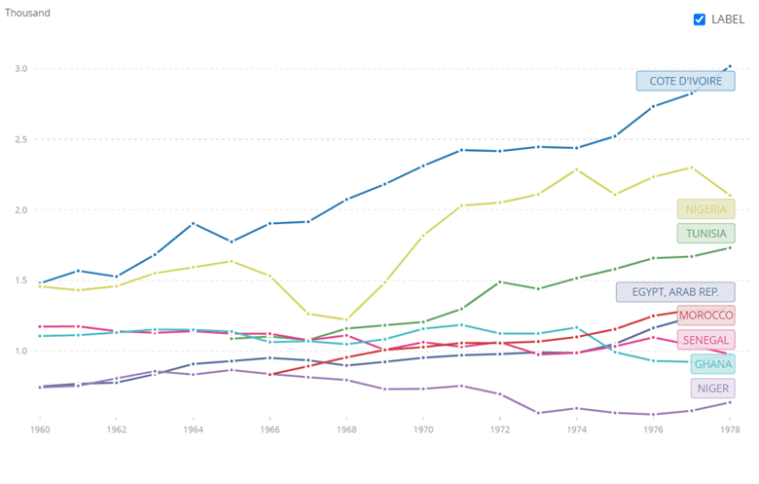
If you’ve spent a lot of time reading about Africa, a thought may have occurred to you as it did to me: how are there no successful post-colonial African countries? By “successful,” I mean consistent strong economic growth, political stability, and a reasonable income distribution so the new oil/gold/mineral wealth isn’t all held by the dictator and his friends. For awhile, you could say South Africa or Rhodesia, but only if you ignored the apartheid. It feels like one of the other 50+ African countries should have achieved success, even if just by chance.

About 40 years ago, there actually was a clear example of a successful African country. Here is GDP per capita in constant 2015 USD from 1960-1978:

Continue reading “Notes on the Ivory Coast”

Notes on Guinea

I spent about nine days in Guinea, mostly in Conakry and being driven around the countryside. My notes here have a heavier bend toward personal experiences than usual, though I do go into the basics of Guinean history.

As always, Martin Meredith’s Fate of Africa is a major source for me, but I also got a lot out of Tom Burgis’s The Looting Machine: Warlords, Oligarchs, Corporations, Smugglers, and the Theft of Africa’s Wealth. Other assorted sources are linked within.

Continue reading “Notes on Guinea”

Notes on Ghana

I spent 12 days in Ghana, specifically in Accra, Kumasi, Cape Coast, and Mole National Park. These are my notes, though this essay is more like Notes on Saudi Arabia with a bigger emphasis on the history of Ghana than my travel experiences.

Ghana has a reputation for being the “easy mode” of West African travel, in contrast to Nigeria being “hard mode.” Ghana speaks English, is a democracy, has been politically stable for 30+ years, has little ethnic tension, low crime, and is one of wealthiest per capita West African states. Altogether, this makes Ghana the (relative) success story of West Africa and I wanted to find out how that happened. A quick rundown of sources:

First, as mentioned in previous essays, Martin Meredith’s Fate of Africa: A History of the Continent Since Independence is an amazing overview, and particularly useful for understanding Ghana’s first prime minister, Kwame Nkrumah.

Second, Jeffrey Herbst’s The Politics of Reform in Ghana, 1982-1991 is a lot less dry than it sounds, and is my main source for Ghana’s second key leader, Jerry Rawlings.

Third, I used a pair of interviews: Jerry Rawlings in 2015 and Corporal Matthew Adabuga in 2018, a former Rawlings bodyguard who wrote a tell-all memoir about Rawlings. Both interviews are fascinating and I highly recommend listening to them if you find the history here interesting, especially since Rawlings’s interview is obviously self-serving, and Adabuga’s claims are suspect, to say the least. Highlights include the (excellent) interviewer asking Adabuga, “do you take delight in killing?” and “why did you kill so many people?,” to which Adabuga responds at one point, “I have never killed anybody physically like that without any cause.”

Other smaller sources: The Legacy of J.J. Rawlings in Ghanaian Politics, 1979-2000, The Rawlings’ Factor in Ghana’s Politics: An Appraisal of Some Secondary and Primary Data, Dead Aid: Why Aid is Not Working and How There Is A Better Way for Africa, a 1985 letter from the Ghana Congress of USA and Canada to the CIA, Ghana’s Foreign Policy Under Jerry Rawlings by Lucy Ansah, Kovsie Journals’s “a comment on frank gerits’ incorrect,” along with various Wikipedia entries and random articles I’ll link directly in the essay when relevant. Continue reading “Notes on Ghana”