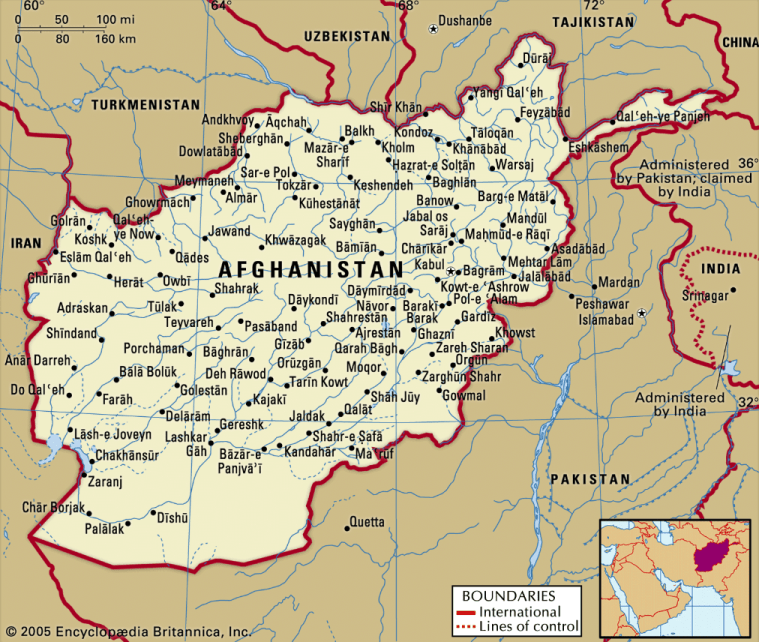
In Fall 2025, I spent three weeks in Afghanistan travelling through Kabul, Bamiyan, Ghazni, Kandahar, Herat, and Mazar-i-Sharif. The following is a recounting of the interesting parts of my travels and readings on the country.
By far the best source I’ve found for understanding Afghanistan and particularly the Taliban is Taliban: The Power of Militant Islam in Afghanistan and Beyond by Ahmed Rashid, a Pakistani journalist who was in and around Afghanistan for much of the 1990s. I read the third edition published in 2022 as an update of the book originally published in 2000. The foreword in my version claimed the book was currently banned in Afghanistan, so I prayed to Allah that the Taliban wouldn’t look through my Audible app.
To understand the post-9/11 invasion of Afghanistan and the failed attempt to build a Western-backed government, I read The American War in Afghanistan: A History by Carter Malkasian, who is now a historian but during the war worked in numerous advisory roles for American government agencies operating in Afghanistan. It’s an extremely impressive work, and though I think it pulls a few punches on the Afghans, the book is both highly insightful and shockingly readable for something so long and dense.
I read The Great Gamble: The Soviet War in Afghanistan by Gregory Feifer, a journalist and Russian expert. It helped fill in a bit of the color of the Russian invasion of Afghanistan, but it was too narrative-heavy for me and didn’t have enough discussion of broader trends.
I also read The Places in Between by former British MP Rory Stewart. It’s a memoir about a few months he spent walking across central Afghanistan from Herat to Kabul in 2001, shortly after the Western invasion and overthrow of the Taliban; it’s also a good reminder that no matter how much I travel, I’ll never be a Real Traveller.
Finally, I found a bunch of articles and podcasts from Graeme Wood to be extremely insightful (ex. “This Is Not the Taliban 2.0” or his appearance on The Remnant). IMO, Wood is the best journalist working today.
Other minor sources are linked within.
Overview:
Population (2024) – 42.65 million
Population Growth Rate (2024) – 2.8%
Size – 252,072 square miles (a little bigger than France, a little smaller than Texas)
GDP (nominal, 2023) – $17.2 billion (less than Moldova)
GDP growth rate (2023) – 2.3%
GDP per capita nominal (2023) – $414 (by some estimates, the second-lowest in the world after South Sudan)
GDP per capita PPP (2024) – $2,201 (bottom #10-15 globally)
Inflation rate (2020-2024)- Wild swings from positive double digits to negative double digits
Biggest export – Coal
Median age (2025) – 17.3 years
Life expectancy (2023) – 66 years
Murder rate (2022) – 4 per 100,000 (I would not put a lot of stock in this figure)
Ethnicity (2012) – ~40% Pashtun, ~25% Tajik, ~10-15% Hazara, ~10% Uzbek, and a bunch of other small groups (all very rough estimates)
Religion (2020) – 1000000% Islam (about 90% Sunni, 10% Shia)
Corruption Perceptions Index – Rank #165/180
Heritage Foundation Index of Economic Freedom – “Not Graded”
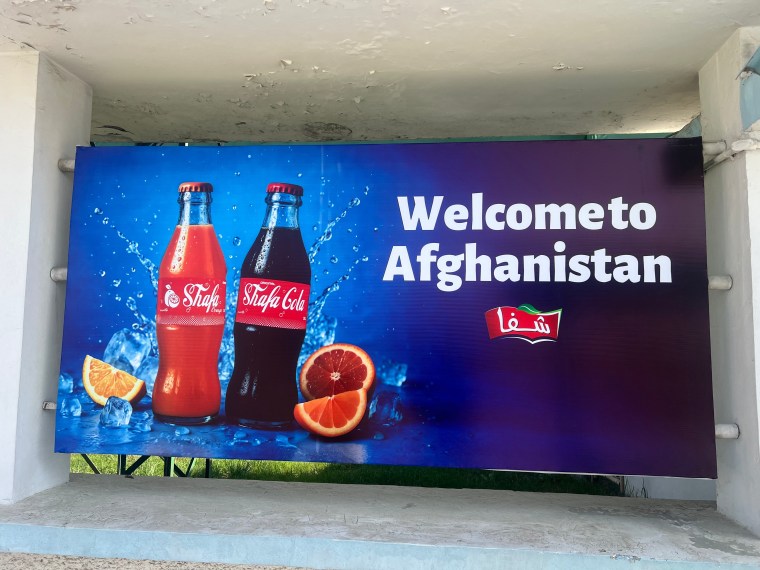
Why and How Does One Go To Afghanistan?
In 1973, the multi-century old Afghan monarchy was overthrown by a cousin of the King named Mohammad Daoud, who named himself president but ruled as a mostly secular quasi-dictator. In 1978, Daoud was overthrown by a communist government. In 1979, the communist leader was killed in a coup by another communist. Later in that year, that communist leader was killed by a commando squad deployed by the Soviet Union. Then, from 1979 to 1988, Soviet troops were deployed to Afghanistan to fight alongside the communist government troops against the Mujahideen, a highly diverse and loosely aligned coalition of Islamic Afghan rebels assisted by foreign Islamist fighters (including Osama Bin Laden). In 1988, the Soviet military left Afghanistan. In 1992, the Mujahideen won and the communist Afghan government fell (total estimated death toll of the entire war = ~1-3 million). Within literally weeks, the Mujahideen groups splintered into mostly ethnic-based factions commanded by warlords who fought each other for control of Afghanistan. The country descended into anarchy as day-to-day governance and law was run by the whim of local commanders who could do whatever they wanted to whoever they wanted, and often did so. In 1994, the Taliban arose in southern Afghanistan and promised an end to the chaos. In 1996, the Taliban captured Kabul and took control over about half the country.
By 1998, the Taliban controlled about 85% of Afghanistan and they proceeded to establish one of the worst regimes on earth. Just about all forms of recreation – cinema, music, board games, kites, etc. – were outlawed. Women were banned from nearly all work, forced to cover their heads and faces, and reduced to near-slave status. Men were legally obligated to have beards as long as their fists. Men and women could be subjected to punishments like impromptu beatings, whippings, cutting off hands, or cutting off heads at the whims of religious police given nearly complete power by the Taliban.
Then, in 2001, within a few months of 9/11, the Taliban was overthrown by US-led Western military forces coordinating with the anti-Taliban coalition (the Northern Alliance), and a Western-backed state known as the Republic of Afghanistan was established. In August 2021, the Republic of Afghanistan fell and the Taliban’s Emirate of Afghanistan re-rose in its place.
Soon after, the Taliban legalized standard tourism under its rule for the first time in its history. During the 1995-2001 Taliban era, tourism was restricted in part because the Taliban never fully won the civil war so there was always low-level fighting on the periphery of its territory, in part because the Taliban came from deep rural Afghanistan/Pakistan and was weary of foreigners in general, and in part because the Taliban was doing stuff like publicly stoning adulterers to death in soccer stadiums and didn’t want foreigners to see.
But the new Taliban regime that took power in 2021 was a bit different. Allegedly. It was the Taliban 2.0. It wasn’t exactly progressive, but it claimed to be a little more diplomatically open now that the Afghan people had experienced 20 years of quasi-Western rule and everyone has TikTok. Plus, without Western boots on the ground + international aid, the already dire Afghan economy collapsed to sub-sub-Saharan depths, so the Taliban needed money badly.
From the Taliban’s own numbers, they got 2,300 tourists in 2022, 7,000 in 2023, and almost 9,000 in 2024. The early tourists to take the Taliban up on their offer were mostly thrill-seekers, particularly YouTubers, who chose to believe the Taliban’s claims about Afghanistan now being safer and more secure for tourists than any time in its modern history. In terms of crime and warfare, this seems to be true as there are no reported incidences of tourists in Afghanistan being killed or harmed by either, with the exception of when three Spanish tourists were gunned down by ISIS in a Bamiyan market in 2024.
But the bigger concern for tourists, though the Taliban would never admit it, wasn’t the degree of safety provided by the Taliban, but rather safety from the Taliban, which has not been great. By my count, there have been at least seven instances of the Taliban detaining single tourists or groups of tourists from the United States and Britain on dubious or likely fabricated grounds, including an American Delta Airline mechanic in 2022 and an elderly British couple in February 2025.
Fortunately, again just to my knowledge, every arbitrarily detained tourist was released eventually, sometimes within days, usually within months, occasionally in over a year. As of late 2025, there are no American or European embassies in Afghanistan, besides Russia’s, so if any Westerners are arrested in Afghanistan, they likely have to go through a long and tedious diplomatic process just to begin grinding the gears of international diplomacy to get released.
Even still, diplomatic relations between Afghanistan and the rest of the world have been steadily warming on net since the Taliban came to power in 2021. Despite Western concerns that the return of the Taliban would usher in a new age of unprecedented awfulness in Afghanistan, thus far, the Taliban have been mostly, kind of, imperfectly on their best behavior. There was no post-war bloodbath of previous regime loyalists, adulterers aren’t being publicly stoned to death in stadiums, and the Taliban isn’t hosting terrorist groups that are attacking Western countries (only Pakistan). In fact, the Taliban is fighting a terrorist group that is attacking Western countries.
And so the Emirate of Afghanistan has been slowly inching itself closer to being on minimally respectable diplomatic terms with the rest of the world. Officially, the US has had a ceasefire with the Taliban since American soldiers pulled out of Afghanistan in 2021, and though the US still officially lists the Taliban as a terrorist organization, it’s on a lower tier than the likes of Al Qaeda or ISIS. Diplomatic connections between the US and the Taliban have gotten considerably smoother since the famously diplomatically adept Qataris became the official diplomatic representatives of America, and have secured numerous prisoner releases, especially in the last two years.
Non-Western countries, particularly Russia and China, have made more aggressive inroads in Afghanistan to rebuild some infrastructure and develop mineral extraction potential. In July 2025, Russia became the first country in the world to recognize the Emirate of Afghanistan as the legitimate government of Afghanistan, but other states give the Taliban some form of diplomatic recognition. For instance, India has become quite cozy with the Taliban in late 2025 as a diplomatic maneuver against eternal rival Pakistan.
Which is all to say that by mid-2025, I felt like Afghanistan might be safe enough for me to consider visiting. A rough analogy:
Riding in taxis in places like Afghanistan or any extremely poor country is a harrowing affair, particularly on highways. Drivers love to go into oncoming traffic lanes to get around cars or trucks going slightly slower than them This behavior is literally life-risking, and I’m fairly certain that the closest I have come to dying while travelling has been during these maneuvers, particularly a legitimately terrifying instance in Kyrgyzstan where the driver was texting while pulling around a truck, and if it wasn’t for the oncoming car screeching to a halt, we would have either smashed head on into him or veered right into the side of the truck or swung left off a beautiful Kyrgyz mountain cliff.
The way I get myself through such car trips is to repeatedly remind myself that the driver and I have the same incentives. The driver must value his own life, right? Perhaps not as much as I value my own life, but still. The driver does not want to crash into another car head-on and die, so when he does this maneuver, he is trying his very best not to die, and therefore is doing his very best to keep me alive. Hopefully.
When I started researching my trip to Afghanistan, I was inundated with a strong salvo of Afghan propaganda… the Taliban want tourists. This sentiment is echoed in every blog, YouTube video, relevant Facebook page, and official Taliban press releases. The Taliban want tourists.
This was exactly what I wanted to hear. My incentives are aligned with the Taliban’s. The Taliban want tourists, so if I were a tourist, they would treat me (an American) well, because if they didn’t, it would be an international news story (because I’m American), and then the Taliban would get fewer tourists, and they would get less money. I had to take the Taliban at their word that they don’t want to run a weird pariah state again. They may have won the war against the US and Western forces eventually, but it cost 20 years, tens of thousands of lives, and pretty much all that remained of Afghanistan’s wealth. So this time, the Taliban wants to build a very marginally more cosmopolitan society, and part of that process involves attracting international tourists with their sweet, sweet dollars, Euros, rubles, and RMB. The Taliban wants tourists, so if I am a tourist, they are unlikely to arrest and/or kill me.
Of course, this logic only goes so far. The insane drivers executing the passing maneuvers may have my and their best interests at heart, but they can still have bad judgement. In my opinion, even the best of third world drivers can’t pull off that maneuver 10,000 times in a row, so every taxi ride is something of a lottery ticket for death. Likewise, the newly hospitable Taliban could still arrest a tourist if the relatively placid diplomatic status quo were to be upended for whatever reason. Like, if, theoretically, a very stable genius with a nuclear arsenal suddenly started threatening the Taliban over an abandoned air base.
I almost always travel alone. I prefer being able to go where I want when I want without having to worry about other travellers. Plus, in my experience, I meet far more locals when I’m alone compared to when I’m travelling with companions. However, I was a little nervous about travelling through Afghanistan alone given the potential pitfalls. So I decided to hire a guide for my first few days in Kabul to show me the ropes, and then travel around the country by myself for the rest of the three-week trip.
After some Googling, I contacted two tour companies and told them my plan. Both said it was impossible. They claimed that tourists were legally required to have guides while travelling around Afghanistan. I contacted a third guide, this one independent, and he told me I should have a guide while travelling around Afghanistan, but it was possible to do it solo. We haggled a bit and settled on a too high price to secure his loyalty, though I wouldn’t have to pay until I saw him in person in Kabul because he didn’t know what cryptocurrency was or any other way to send him money digitally.
Speaking of money, the guide told me that there were no functioning ATMs in Afghanistan, and that I could legally bring up to $5,000 in cash into Afghanistan, but could only take $500 out of the country, so I would have to pretty closely predict how much money I was going to spend in Afghanistan over three weeks, and take that amount with me. If I brought too much, I’d have to spend it in the country; if I brought too little, I guess I’d be screwed. I’ll have a lot to say about my guide later, and overall he was awesome, but like many other things he told me and many things I read on Afghan travel forums and Facebook groups, his guidance was only about 50% accurate.
That accuracy level extended to his advice on getting an Afghan tourist visa. As of writing this, the Emirate of Afghanistan has 22 diplomatic missions abroad. From researching, the ability of a tourist to get a visa at any one of these locations is extremely variable and arbitrary. Some give it out easily, some not all, some are cheap, and some cost an arm and a leg. Most people recommend going to Dubai or Peshawar in Pakistan, but I decided to roll the dice and take my chances in Doha, Qatar.
Why? For one, the Doha embassy was the Taliban’s first international diplomatic consulate, and it was where much of the negotiations to end the American war took place, so it had some historical value. And second, I had never been to Qatar, and my self-esteem is based on my country count, so I figured I’d knock out a little petrol state on my way to Afghanistan. I consulted my guide, and he said I would have no trouble getting the visa in Doha.
About two weeks before my flight out of the US, Israel launched an airstrike on Doha to try to kill a bunch of Hamas leaders. The bombing site was in a suburb of the city and coincidentally not far from the Afghan Embassy. Here I was worried about my safety going to Afghanistan and now I had to worry about getting airstriked by the IDF while just trying to get my tourist visa.
Two weeks later, I was standing in the security line at the airport, scrolling through my phone, when I saw that President Donald Trump had posted this on Truth Social:
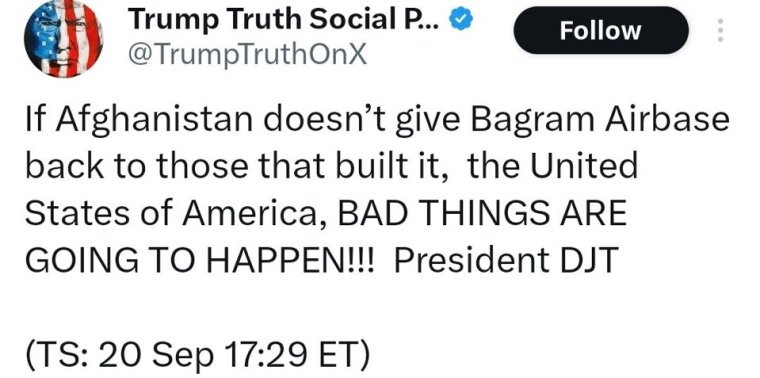
Great. I spent the next few days in Qatar trying to figure out how much of my time, physical safety, and life I was willing to risk based on Trump’s behavior over the following month. An errant Truth Social post could literally lead to my arrest as one of the probably dozen Americans idiotic enough to go to Afghanistan at this particular time. I briefly considered abandoning the Afghanistan expedition entirely to go to Oman or maybe Pakistan, but decided to just go ahead with the planned trip anyway. Maybe I do value my life as little as those third world taxi drivers.
My Uber ride from my hotel to the Afghan Embassy in Doha took me to the Leqtaifiya neighborhood, and I noticed a street blocked off by Qatari police, which I assume is the bombed area where the Hamas leaders may or may not have been living (they all reportedly survived the airstrike). The nearby Afghan Embassy is a modest building surrounded by beige walls. To avoid an immediate diplomatic faux pas, I refrained from taking pictures of the embassy, and then after being let through the front gate checkpoint, I immediately committed a diplomatic faux pas by neglecting to take off my shoes when I entered the main office waiting room area. To be fair, I was the first visitor of the day, and so there were no shoes on the ground at the entrance, so I didn’t know I was even supposed to take off my shoes until my second trip to the embassy. Oops.
Inside, I had my first encounter with the Taliban. The guy sitting behind the glass wore traditional Afghan clothes and a turban. He looked at me with moderate surprise for a few seconds, and then turned around and called back to somewhere. Then another Taliban guy wearing traditional clothes and a turban came to the glass and nodded for me to approach.
I guess this guy spoke the best English in the embassy, but it still wasn’t good. He greeted me and asked how he could help me. I told him I wanted a tourist visa. He asked me some questions about my background, including whether I was a YouTuber, which I accurately denied, though I withheld the bombshell that I was actually the legendary travel blogger Matt Lakeman. He asked for my passport and told me to sit down.
While the Taliban guy spent five minutes making photocopies of my passport and whatever else, I had a gander around the room. There was a sign in Arabic and English which (to very heavily paraphrase) implored the workers at the Embassy to not be too brutal in their administration of justice because doing so would create enemies; instead, they should live by the Koran and Sharia to create a just world. There was also a list of embassy services with prices; one item was a “Certificate of Celibacy,” and I wish I had the courage to ask the Taliban workers what exactly that entails. According to some Googling, for a woman to get the certificate, she needs two adult male “witnesses” and three adult male “confessors,” all of whom must swear to the woman’s celibacy, though I can’t figure out the distinction between the two categories.
The Taliban guy called me back to the window, gave me back my passport, and pointed to a piece of paper taped to a wall. It had a QR code with instructions for how to fill out an online form for the tourist visa application. I had already printed out a nearly identical form and filled it out, but apparently that was no longer in use or only used at some other Afghan embassy, or something. The Taliban guy told me to fill this new form out, submit it online, and then text the embassy on WhatsApp with a provided phone number.
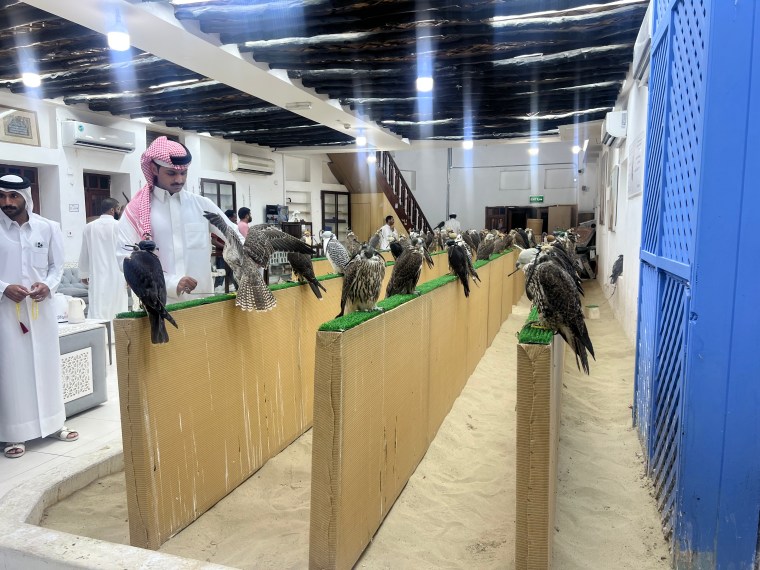
So I left the embassy and did just that while spending a few days meandering around Doha. Highlights include the falcon store:
The mall that looks like tacky Venice:

And what became one of my favorite buildings on earth, the Qatar National Library:
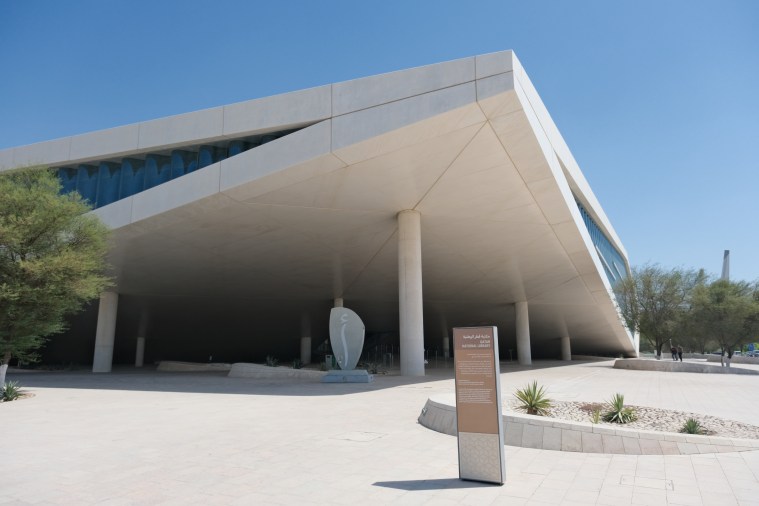
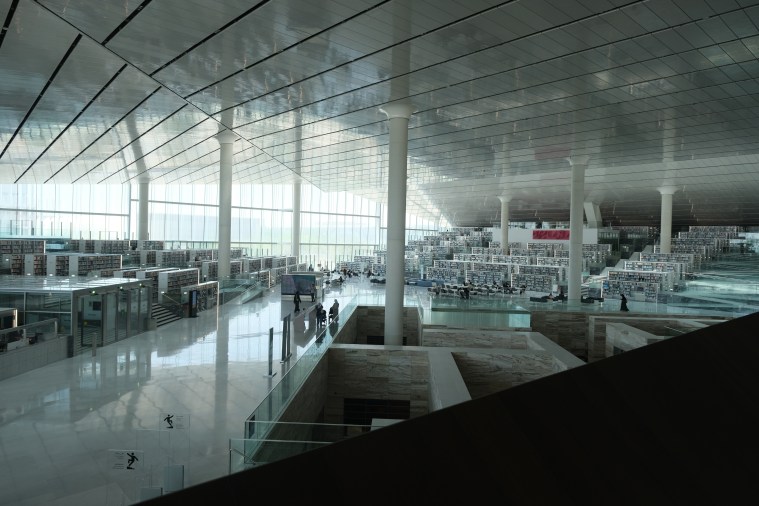

I first went to the Afghan Embassy on a Tuesday and was supposed to fly to Afghanistan via Dubai in the very early hours of Saturday. When I filled out the online form on Tuesday and then texted the embassy, the response was “We will Contact You Once You Get Approved to Visit Afghanistan” (the capitalization is verbatim). I figured they would get back to me in a day or two.
By Thursday, I still had no response. I texted the embassy in the morning and it responded with a generic recorded text in Arabic telling me the embassy’s hours of operation. So I went back to the embassy in person, realized my shoe-wearing blunder, removed my shoes this time, went inside, and asked the same guy at the counter when I could expect to get my tourist visa.
He said they would likely get a decision to me in one month.
Great. Thanks for telling me.
I booked the first flight to Dubai and got there that night. Mercifully, the Afghan Embassy in Dubai is open on Fridays (the Islamic holy day), though it closes early, so I went to the embassy at 8:30 AM when Google said it opened. This turned out to be a lie since there were already nearly 100 people waiting in line when I arrived. Fortunately, I bypassed literally all of them to go to a tiny back office where I applied for a tourist visa. The process took one hour and cost ~$180. The last thing the Taliban guy asked me while he was giving me my passport back with my Afghanistan tourist visa was, “are you a YouTuber?”
Since I hadn’t slept the night before and I had another red-eye flight in the early morning to Kabul, I went to my guesthouse to try to sleep. If I had more time in Dubai, I would have gone to the site of the recently started Azizi Tower, which, once completed, will be 133 stories high and the second tallest building in the world behind Dubai’s Burj Khalifa. The titular “Azizi” is Mirwais Azizi, who, with a net worth somewhere in the tens of billions of dollars, is the richest Afghan in the world by a colossal margin. Of course, Azizi hasn’t lived in Afghanistan in decades (he was given citizenship in the United Arab Emirates when its economy was taking off in the 1990s), but he owns Afghanistan’s largest private bank (Azizi Bank) and he’s currently in talks with the Taliban to invest $10 billion into Afghanistan’s economy (current GDP = $17.2 billion).
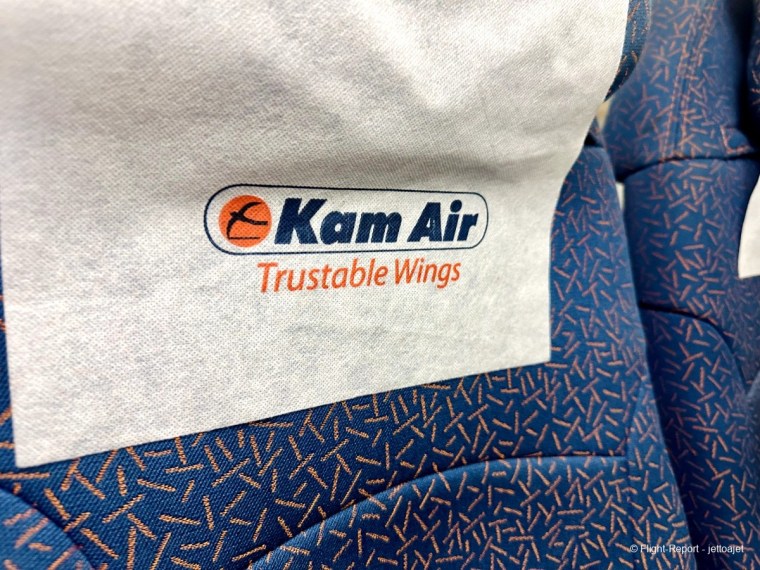
I could have gotten into Afghanistan on a cushy Fly Dubai flight, but I decided to immerse myself in Afghan culture by flying on Kam Air, which is shockingly one of two of the country’s airlines. I ended up flying on Kam Air three times and I have no complaints, except that the company’s motto is “Trustable Wings,” which, as confirmed by Google, is not precisely synonymous with wings that are “trustworthy.” To be “trustable” only implies the potential to be trustworthy. Which I suppose is a good metaphor for the new Taliban. But I digress. What matters is that Kam Air successfully brought me to Kabul with a tourist visa in hand.
The Ethnicities
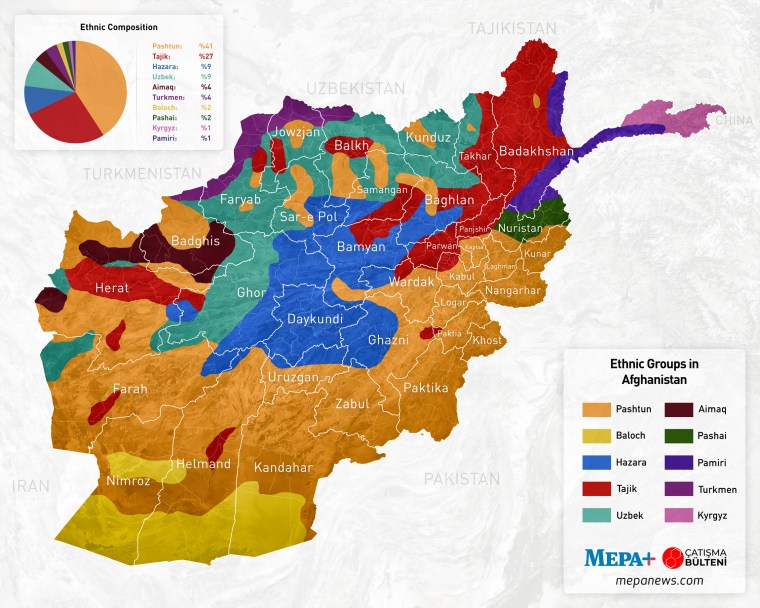
Afghanistan is ~40% Pashtun, ~25% Tajik, ~10-15% Hazara, ~10% Uzbek, and the other 10-15% consists of dozens of smaller ethnic groups. Of course, all of these numbers are extremely rough since modern Afghanistan is not known for the accuracy of its census data. To understand Afghanistan, its culture, its history, and where its future might lead, you need to know at least the basic properties of these primary ethnic groups.
Pashtuns
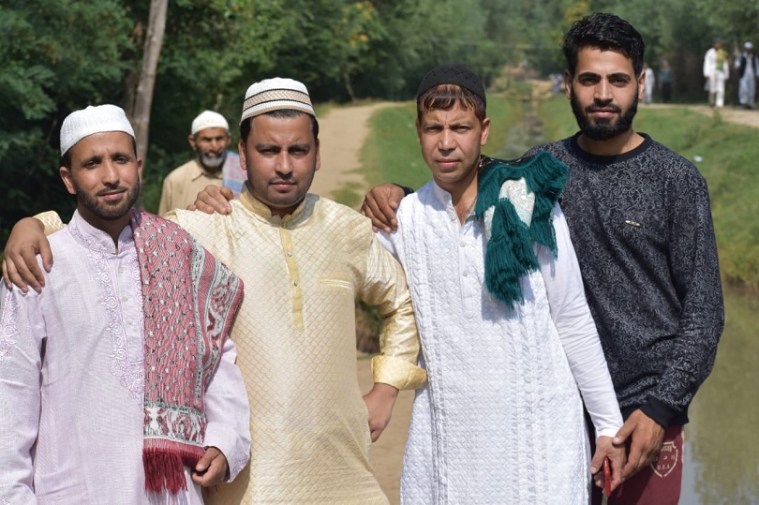
The Pashtuns are the largest ethnic group in Afghanistan and have been the historic political leaders of the region since the rise of the Durrani Empire in the mid-18th century. They have traditionally ruled from Kabul despite being a minority in the city, while the base of the Pashtuns is in the south of Afghanistan, stretching from the Iranian border to the Pakistani border. Next door, Pashtuns make up about 15% of the population of Pakistan (which is around 40 million people, basically the same size as all of Afghanistan).
Pashtuns speak Pashto, which is an “Eastern Iranian” language, but not a form of Persian. EffectiveLanguageLearning.com puts Pashto in the second-hardest category of languages to learn for English speakers out of five groups. All I ever learned was “manana,” which means “thank you,” which is easy to remember because it sounds like “banana.”
All of the major ethnic groups in Afghanistan are highly tribal or even clannish by nature. But the Pashtuns are especially tribal and clannish by nature, with some sources calling them the world’s largest tribal population. There are a bajillion Pashtun tribes and sub-tribes across Afghanistan and Pakistan, though the two largest confederations (constituting about 2/3rds of all Pashtuns) are the Durrani (based around Helmand and Kandahar provinces) and the Ghijli (based in the southeast near Pakistan).
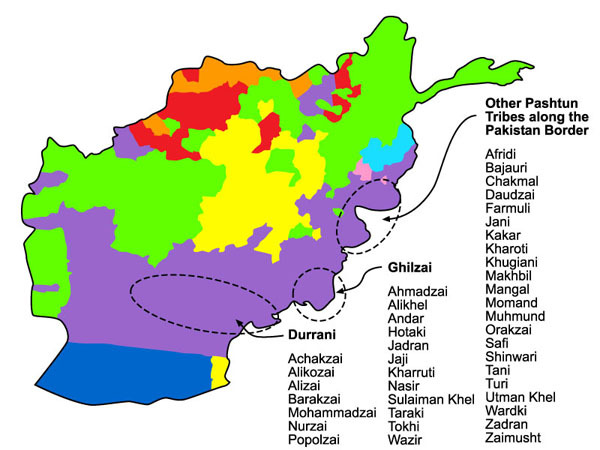
The Pashtun are virtually all Muslim and overwhelmingly Sunni and Hanafi. Even today, they tend to be extremely traditional, and women have very few rights legally/culturally. Men pretty much always wear long, flowing clothes, and often wear turbans. Women are usually in long, dark clothes, and burqas.
Ironically, despite being the historical leaders of Afghanistan, the Pashtuns naturally tend toward extremely localized and decentralized social structures. Though they are more urbanized today, in rural Pashtun regions, local village elders tend to hold political power, and they come to decisions by broad consensus rather than rely on single leaders. Historically, when broader political affairs needed to be decided, Pashtuns formed jirgas, or tribal councils, consisting of representatives of village elders from multiple villages, cities, or provinces.
Pashtuns are known for their Pashtunwali, an informal code of conduct for Pashtuns that includes guidance on a wide array of individual and collective topics, including settling disputes, how to treat neighbors and relatives, how to “honor” women, when to get revenge for slights, and most relevantly for me, how to be ridiculously, absurdly hospitable toward guests. It’s a little like European chivalry in some ways, but it’s a lot more like the East Asian concept of face or the North Indian/Pakistani concept of izaat (which has recently gone a bit viral).
I think it’s fair to describe Pashtun culture as chaotic. To me, it’s reminiscent of the pre-Saudi tribes of the Arabian peninsula or the feuding Nordic clans of ancient lore. Fights between Pashtun tribes and subtribes and villages and families were and are extremely common. They fight over land, resources, women, insults, everything you can imagine. One of the most important functions of Pashtunwali is to lay out the parameters by which chronic Pashtun blood feuds are started, waged, and decided. Although how successfully it does so is highly debatable.
From the above, it is both unsurprising and surprising that the Taliban is a creation of the Pashtuns, particularly the Durrani Pashtuns. I’ll go into more detail later, but the Taliban basically originated as a hybrid of the most conservative elements of Pashtun societies with radical Islamic fundamentalism. Though, interestingly, one of the most defining aspects of the Taliban, and one of the greatest sources of success in Afghanistan, was that they espoused an ideology based on sublimating tribal divisions by unifying under Islam. It’s almost like Pashtun culture taught them the follies of extreme tribalism and they learned how to beat it.
Finally, to describe my personal experience with Pashtuns… I’ll mostly get to that in the Politeness, Friendliness, and Sovereignty section. For now, I’ll just say that they are often the nicest people on planet earth but also extremely overwhelming.
Tajiks
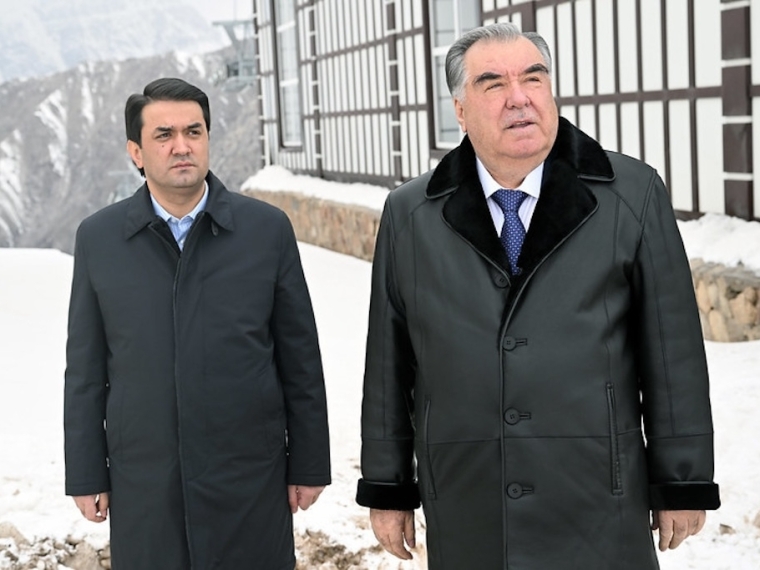
Tajiks are the second-largest ethnic group in Afghanistan, and with a population of around 10 million, there are actually more Tajiks in Afghanistan than in neighboring Tajikistan. There are also about 1.5 million Tajiks in Uzbekistan and hundreds of thousands of Tajiks in the other Stans and Russia. In Afghanistan, Tajiks are mostly based in the north where they boarder Tajikistan and Uzbekistan, but they also have enclaves in Pashtun areas, and hold the key Panjshir Valley north of Kabul.
If you take seriously the Rashid thesis that Afghanistan is a cultural product of the mixing of the sophisticated Persians and rough-riding Turkic horse nomad peoples, then the Tajiks are more Afghan than the Pashtuns since the former are essentially a genetic mix of the Western Persians and Northern Turks. They speak Tajik, also known as Dari, which is a variant of Persian.
Like the Pashtuns, the Tajiks are almost all Muslim, and overwhelmingly Sunni and Hanafi. They wear mostly similar clothes but tend to be more colorful. Afghan Tajiks are still very culturally and religiously conservative by international standards, but significantly less so than the Pashtuns.
Despite Pashtun political dominance, Tajiks have been significantly overrepresented in the Afghan military during both premodern and modern times, and have historically been the biggest competitors to both the Pashtun and the Taliban. When the Soviet-backed Afghan regime fell in 1992, a Tajik-dominated state rose in its place as the nominal government of Afghanistan based out of Kabul. Then, throughout the Civil War of the 1990s, the Tajiks had the highest quality military force and easily the best military leader (Ahmad Massoud), but they never had the manpower or political strength to gain de facto control over more than about 40% of the country. Eventually, the Taliban rose up in the south and overwhelmed the Tajik government and the rest of the Civil War factions with larger and far more fanatical armies. However, the Tajiks were never entirely defeated; they fell back to the northern Afghan mountains and successfully defended for years, until the US-led invasion overthrew the Taliban in 2001. Both during that fighting and afterward when the US formed the new Afghan government, Tajiks filled the majority of rank-and-file military roles.
In my personal experience in Afghanistan, Tajiks tend to be more pro-Western and pro-American than the Pashtuns, and they tend to be more openly anti-Taliban. They also tend to be polite without the overwhelming exuberance of Pashtuns.
Hazaras
Unlike the Pashtuns, Tajiks, and Uzbeks, almost all of the world’s Hazaras live in Afghanistan, and most of the Hazara populations elsewhere (Pakistan, Iran, Australia, etc.) are there precisely because they fled Afghanistan. In Afghanistan, the Hazaras are mostly clustered right smack in the middle of the country, in the province of Bamiyan, which lacks a major centralizing city even by Afghan standards. Other pockets of Hazaras can be found in major cities, including Kabul.
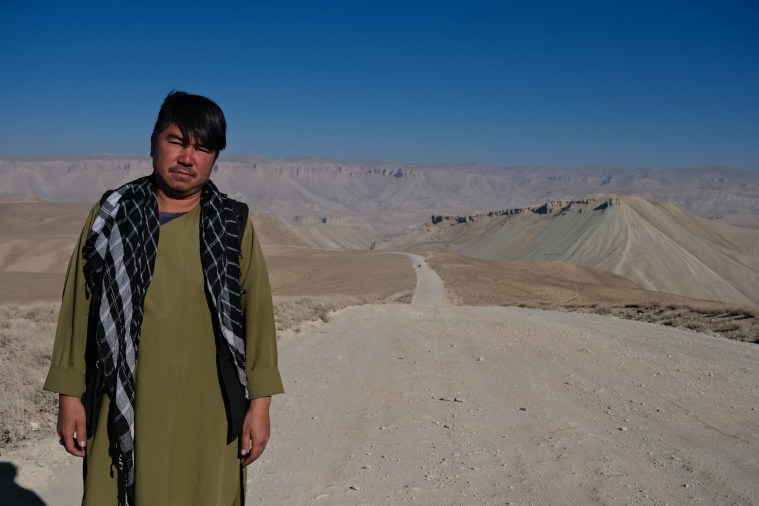
Like the Tajiks, the Hazara speak Dari, but unlike the Tajiks, the Hazara are not ethnically Persian, and you don’t need to be a geneticist to figure that out. The Hazaras phenotypically look East Asian, or more specially, Mongolian. The probably-true-but-never-actually-confirmed explanation is that the Hazaras are the descendants of Mongol settlers left behind by Genghis Khan’s conquests. In some parts of Afghanistan, the Hazaras are literally called “Mongols.”
The Hazaras have had a rough time in Afghanistan. The formation of Afghanistan as something very roughly approximating a modern nation state is usually credited to the Pashtun Abdur Rahman Khan, AKA the “Iron Emir,” who in the late 19th century waged a successful centralization campaign by fighting and subduing the region’s major tribal lords and their armies. This included slaughtering as many as 60% of the Hazaras in Afghanistan after a Hazara uprising. Afterward, the weakened Hazaras were constantly beset by the more populous Pashtun tribes to the south and Tajiks to the north. During the Civil War in the 1990s, there was even a brief period where the Hazaras sided with the Taliban against the Tajik forces, but then the Taliban kidnapped the head Hazara warlord and tortured him to death. Afterward, Hazara forces were besieged by the Taliban for over year in Bamiyan, and essentially starved out and subsequently massacred with such brutality that it has been called a Hazara genocide.
The constant historical brutality and struggle have sharpened the Hazaras into a particularly cohesive political unit. Though they have always lacked the population numbers to break out and form the mythical Hazarastan, the Hazaras tend to be more unified than the other ethnic groups, and whether due to political machinations or legitimate ideological sympathies, they tend to be more pro-Western than the rest.
A peculiar note on the modern treatment of Hazaras – one of the Taliban’s rules in the 1990s was that all men had to grow beards to about the length of a fist. That’s annoying but not too difficult for Pashtuns, Tajiks, and Uzbeks, but Hazaras are genetically closer to East Asians, and East Asians are not well known for their bushy beards. It turns out that most Hazara men literally cannot grow beards that long. Thus, during the pre-2001 Taliban era, Hazara men were constantly harassed and beaten for failing to meet the beard requirements. Many Hazara men covered their faces at all times in public, a practice still sometimes used in Afghanistan by recently shaven or trimmed men.
However, the historical and contemporary targeting of the Hazaras is not a racial matter but a religious one. In the 16th and 17th centuries, the Safavid Persians tried their darndest to convert Afghanistan from Sunni Islam to Shia Islam. Only a few minuscule pockets of Pashtuns and Tajiks converted, but for whatever reason, the Hazaras went Shia en masse. The upside was gaining the Persians as an eternal ally even to this day, the downside was pissing off everyone else in Afghanistan as heretics.
I don’t want to paint too broad of a brush, but the Hazaras were my favorite people in Afghanistan. I’ll get into it more in the Politeness, Friendliness, and Sovereignty section, but I found Hazaras to be consistently the easiest Afghans to deal with. The Hazaras were also fun to talk to because they were never shy about telling me how much they really fucking hate the Taliban.
Uzbeks
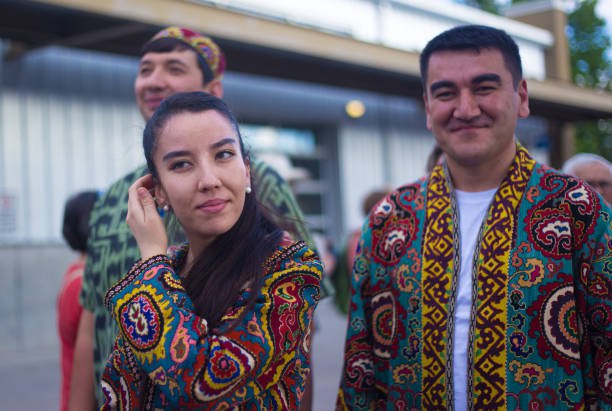
The Uzbeks are the last major ethnic group in Afghanistan, with around 4 million people constituting about 10% of the population. Next door, Uzbekistan has almost 30 million Uzbeks who are currently getting quietly rich off natural gas deposits. Afghan Uzbeks are clustered in the central North of the country, though communities can be found in major cities.
Uzbeks are the most Turkic of the Afghan ethnic groups (along with the Turkmen) and they claim decent from Timur the Lame of the Timurid Empire. Their Uzbek language is Turkic and guttural compared to the smoother Persian.
If you want to go down a fun historical rabbit hole, I recommend reading about the Uzbek warlord Abdul Rashid Dostum, who was, IMO, the most interesting warlord of the Afghan Civil War. He was a gigantic “bear of a man” (Rashid’s description) who loved fighting and allegedly killed another man by screaming at him. He was an excellent commander who “acquired a reputation for brutal and extreme violence” but was also probably the single most liberal warlord in the Afghan Civil War, and governed his territory accordingly, including permitting alcohol to flood the streets (not surprisingly, he was a heavy drinker, and once said about the Taliban, “We will not submit to a government where there is no whisky and no music”). If you happen to know Metal Gear Solid lore, he is basically the Afghan Revolver Ocelot; he was the only major Afghan warlord to fight for the communists and against the Mujahideen (very well in fact), and at various points in the conflict, he sided with and betrayed the Tajik government, the major Pashtun warlord (Hekmatyar), the Taliban, the Tajik government again, the Northern Alliance, the American government, and the post-2001 Afghan government (from which he was first removed for allegedly kidnapping and torturing a political rival, but later returned to become Vice President). During the US invasion in 2001, he led a 3,000 man army entirely on horseback, which was assisted by US Army Rangers who also rode on horseback, which is the basis for the movie 12 Strong. And he’s still alive! Albeit living in Turkey in exile.
Anyway, I didn’t interact with too many Uzbeks in Afghanistan. I didn’t go to their Afghan population centers, and they aren’t too visually distinctive. For what it’s worth, my guide in Kabul described Uzbeks as “very angry people.”
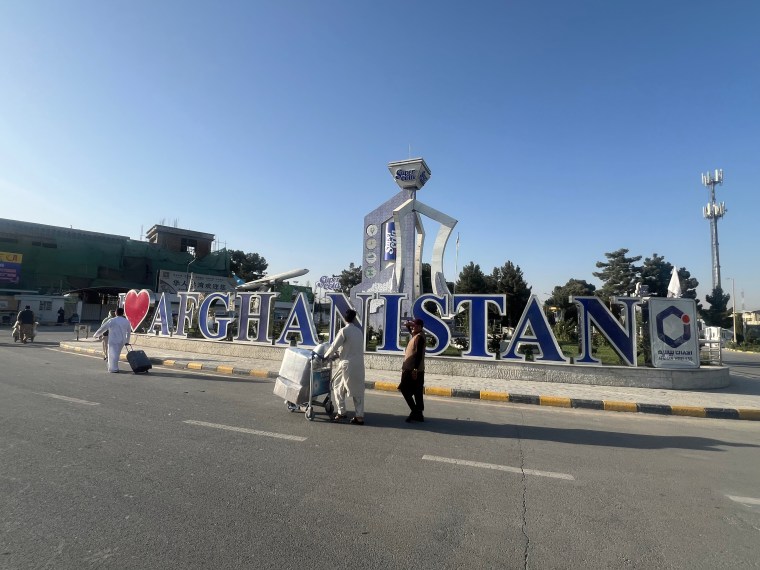
Day 1
I was nervous about entering Afghanistan. From Facebook groups and forums, I heard a lot of horror stories about getting into the country. Some visitors said that the Taliban would take every single item out of your bags and inspect them individually. Some said they would take you into a private room and interrogate you about your background and intentions. Some said that they would ask you to unlock your phone and then go through your internet search history and pictures. I met two tourists in Afghanistan who admitted to deleting nude photos from their phones before arriving.
None of that happened to me in the Kabul airport or Afghanistan as a whole. Maybe it used to happen, or maybe it happens at trickier borders like up in Wakhan (as a different guide told me), or maybe it happens to particularly shady-looking tourists. But the security in Kabul just checked my passport and visa, asked a few basic questions (“why are you here?”, “where did you come from?”, etc.), and let me through.
This was good foreshadowing for my experience of travelling in Afghanistan – as a heuristic, people don’t know what they’re talking about. Guides, random locals, forums, even Taliban agents – all of them will tell you what you’re supposed to do in Afghanistan, and none of them will be entirely correct. You’ll be lucky to find someone who is 75% correct.
This heuristic applied to my guide, whom I met outside the Kabul airport. He was from a rural area in the north, but according to documents on his phone that I couldn’t read, he was a licensed guide in Afghanistan. His journey from his home village to Kabul had taken almost 1.5 days across two buses and a shared taxi ride. I was pleased to find that he spoke English much better than he wrote it on WhatsApp.
Up until that point, almost all of our communication had been about the trip, so we sat down in a café for some meet-and-greet chit-chat. He was soft-spoken, maybe 5’ 8, and thin. He wore the standard Afghan outfit: a vest over a loose garment that I would describe as a “dress for men,” with a scarf that could be used for warmth, covering his face from the sun, or blocking out dust/sand. He was 29 but could pass for his early 40s in the US. He had travelled all over Afghanistan with tourists but he had never left the country. He was married to a distant cousin who was uneducated and illiterate, and who he didn’t seem to like, though he did seem to like going to Kabul to get away from her. Their marriage was arranged by their parents. He had three kids whom he almost never mentioned. Including his wife, kids, parents, and various other relatives, 14 people lived in his household.
My guide didn’t graduate from high school, but I would come to think of him as quite smart. His English was among the best I encountered in the country, and that’s against a lot of competition. He learned English initially through a private service, but he said it improved greatly through conversations with tourists. He was very curious and asked just as many questions about me and US politics and culture as I asked about him and Afghanistan. He had started the tour company in 2020, had gotten some early good business, but had understandably gotten barely any customers since the Taliban took over in 2021. He supplemented his income with a small shop in his home village, which he estimates had a few hundred inhabitants.
After I finished my coffee and he finished his tea, my guide decided on using the fourth taxi we approached to get to the hotel; the first three tried to charge extortionate prices. Our driver was thrilled to have us, and not just because he still charged a higher-than-normal price. He explained, through my guide’s translation, that he had worked for “the Americans” before 2001, and after I asked for clarification, he said that he was in the Afghan National Army. I would come to learn that Afghans generally equivocate between the old government and “the Americans.” I would also have five different Kabul taxi drivers during my trip who used to work for the Western military or the old government as soldiers or drivers.
There were security guards at the airport who didn’t look too dissimilar to airport security in any other country, but during the taxi ride to my hotel, I saw my first real Taliban in Afghanistan. They were all over Kabul – at checkpoints, observing traffic, piled into pickup trucks, walking down the street, etc. They weren’t hard to spot – they always carried guns, always had turbans, always had long beards, and always wore what I would describe as robes. Outside of Kabul, they pretty much always carried AKs, but in Kabul, many carried M4s and drove around in machine-gun-mounted camo-colored Humvees. That stuff was clearly American-made, left over from the 2021 US evacuation. Some Taliban soldiers even wore American uniforms. My tax dollars at work.
While stopped in traffic, a motorcycle carrying two crammed Taliban guys drove past us while blasting music. I had read that the Taliban banned music, so I asked my guide if this was true. He explained that most music is illegal, but there are Taliban-approved songs, many of which were made by the Taliban. Apparently, all the lyrics are patriotic/Islamic propaganda about how amazing the Taliban and Afghanistan are. Nevertheless, throughout my trip, it was common for taxi drivers to play music on the radio, usually local, sometimes Western, though they always turned it off whenever Taliban were nearby, and they played it at extremely low volumes by third-world country standards.
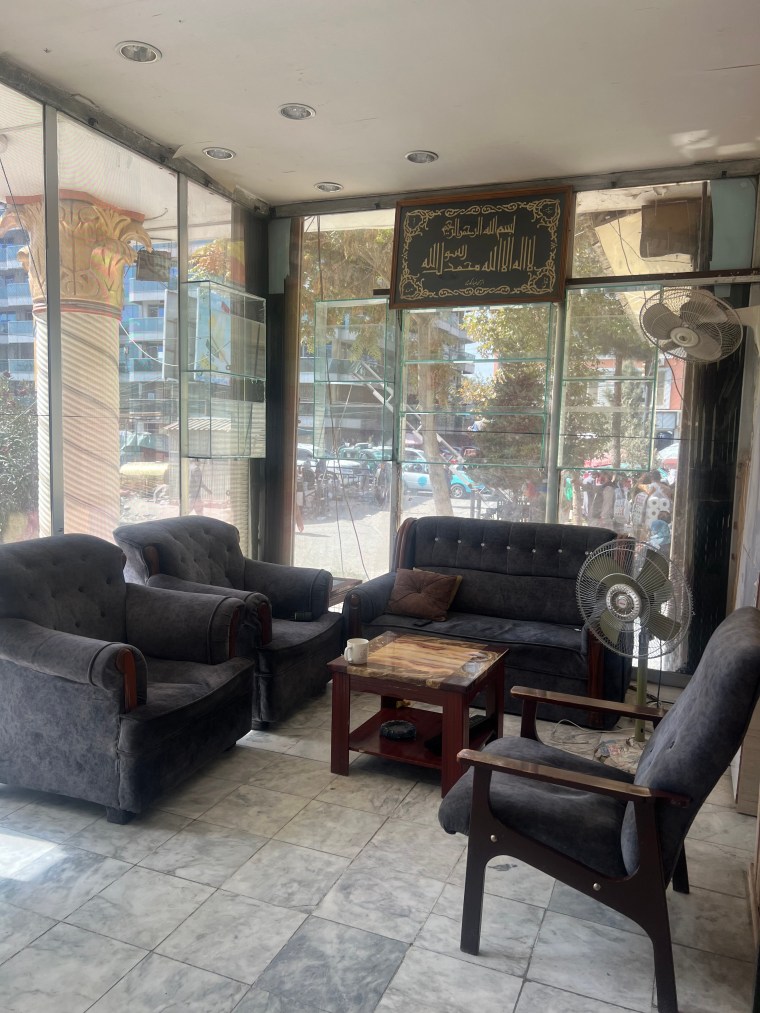
My guide and I stayed at a decent hotel in the middle of Kabul. Since 2021, like many other relatively high-end or Western-ish establishments, it had been nationalized by the Taliban. It still functioned as a hotel, but now there was an armed Taliban guy (they’re always armed) constantly standing outside the front door or sitting in the lobby. He looked at me briefly when I arrived and then barely looked at me again for the next three days while he sat in one of these seats:
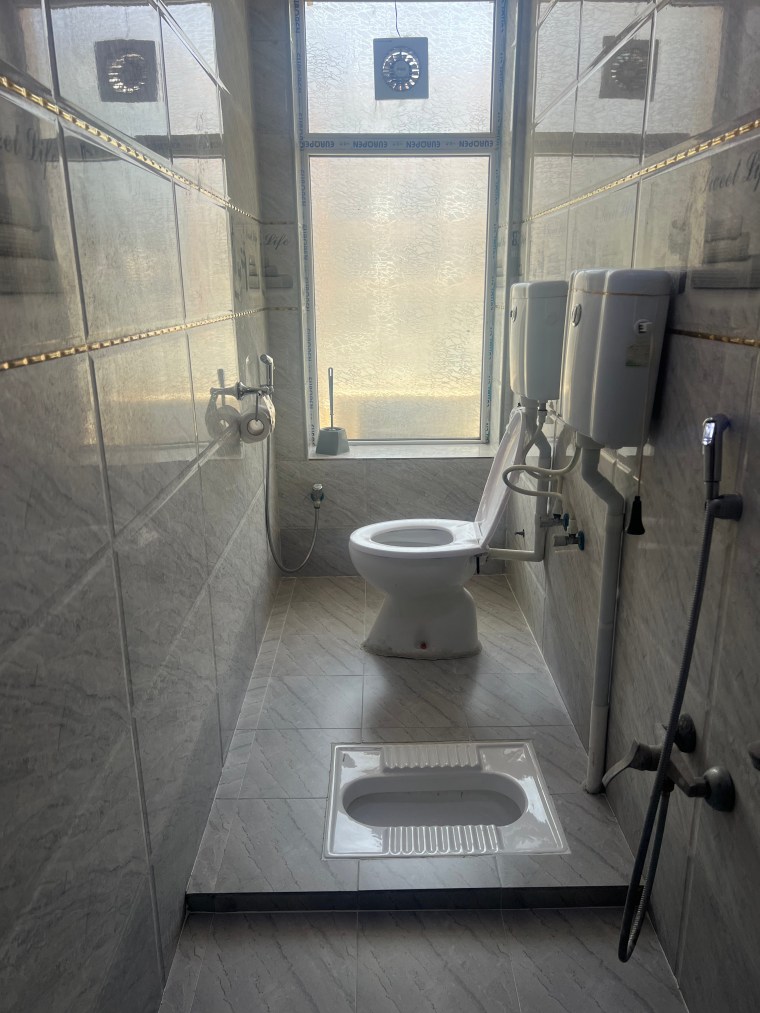
My room was decently comfy but weird. I wish I had taken a picture, but it had faux-Versailles-style wallpaper, except for the ceiling, which had different wallpaper to make it look like a blue sky on a sunny day. The bathroom had both a Western toilet and a squat toilet; I always opted for the former because I don’t always follow “when in Rome.”
This was the view from the balcony:
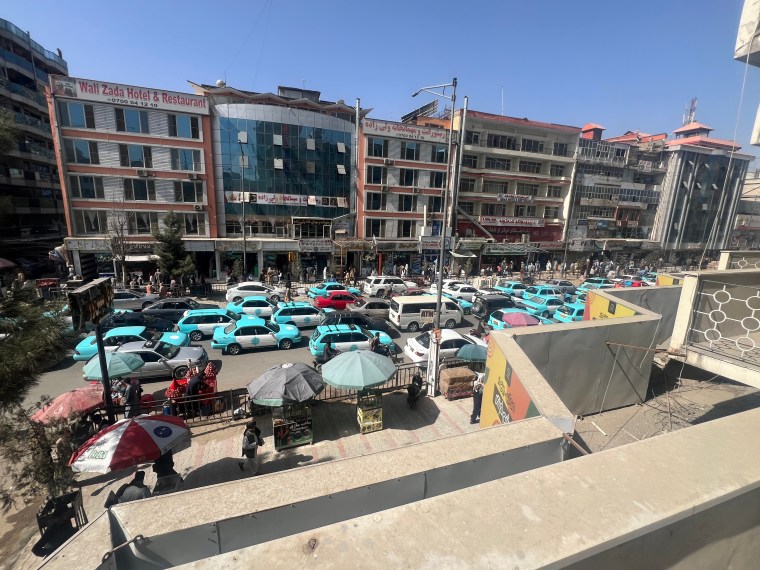
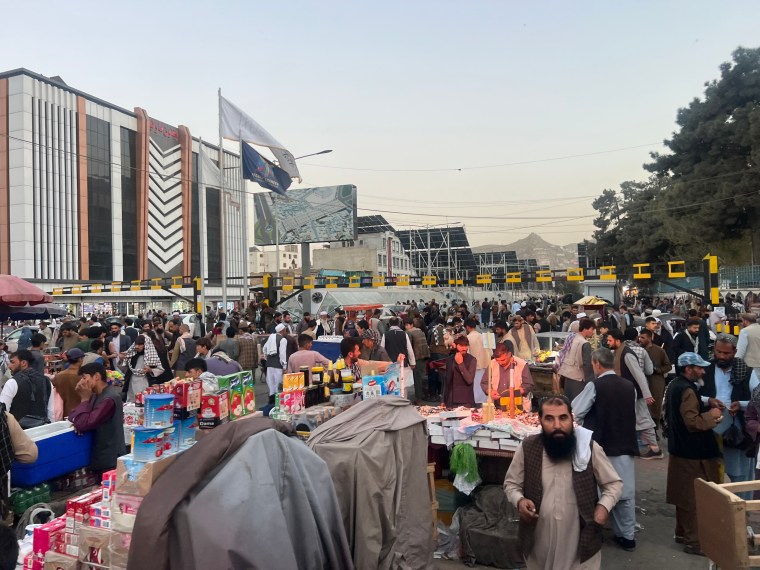
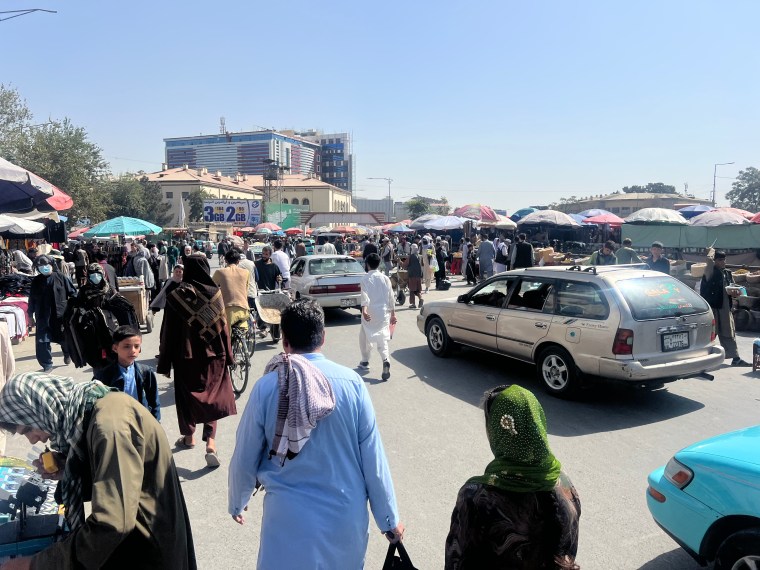
After a power nap, I left the hotel with my guide to explore Kabul a bit. We were ideally situated in the city center, which, like the center of every other Afghan city, was a giant bazaar extending in all directions. The urban chaos levels of these bazaars didn’t quite reach India or Nigeria levels, but it was close.
One oddly un-chaotic thing I quickly noticed was the noise level. I’ve written before (ex. about Guyana) that the idea of wanting a quiet public square is a uniquely Western concept, or possibly a uniquely Anglo/Germanic/Scandinavian/East Asian concept. Everywhere else in the world is fine with constant blasting noises, or even prefers them. In that frame of mind, I found Afghanistan to be surprisingly quiet, even at the heart of its urban areas. Obviously there was still plenty of noise from cars and people talking, but:
- The main languages (Pashto and Dari) seem naturally pretty quiet.
- Shouting is rare and seems to be frowned upon.
- Unlike most markets in poor countries, there are no speakers blasting sales and prices. I suspect this is due to a Taliban prohibition since the only time in Afghanistan I heard a speaker was from a Taliban van driving down a street in Herat blasting Allah-knows-what propaganda.
- Also extremely unlike most markets in poor countries, there was no BLASTING music, which was another gift of the Taliban.
What does reach the chaos levels of India and Nigeria are Afghan roads. There are technically stop signs and streetlights and crosswalks, but they are vague suggestions at the best of times. People drive like they walk, with both an incredible level of vehicular proprioception (which I lack) and a far higher tolerance for minor collisions.
In nearly all regards, all three countries have very low-trust societies, but when it comes to crossing the street, Afghanistan (and to a lesser degree India and Nigeria) are extremely high-trust societies. The way you walk across a busy city center street in Afghanistan is you just go and give your complete and utter trust to every car around you that it won’t hit you. You can’t wait for openings in traffic; they don’t exist. The best strategy the pedestrian can pursue is to strike a reasonably slow, but more importantly, steady pace. Your goal is to make yourself predictable to the drivers. I sort of knew this from previous travels but quickly re-learned this by initially following as close as humanly possible behind my guide as he crossed the streets until we separated days later and I had to take my life into my own hands. I can proudly say that I was never once hit by a car in Afghanistan.
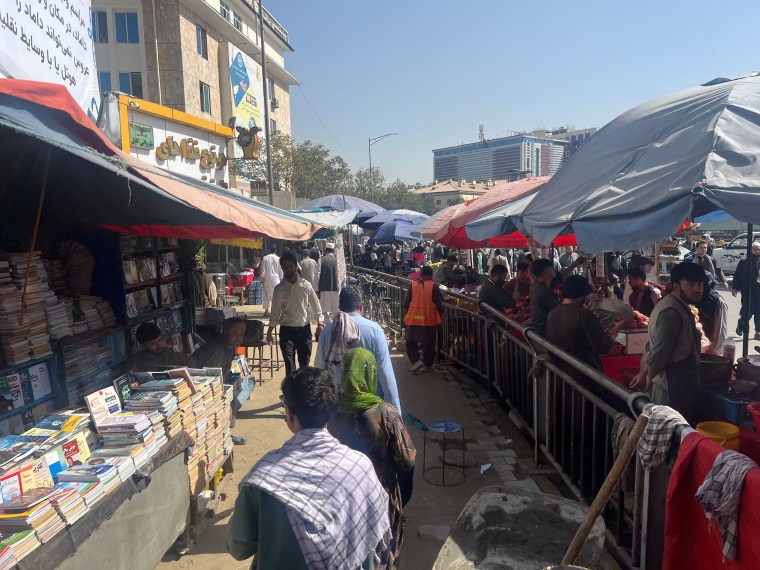
Shortly after leaving the hotel, my guide and I passed through a book market section of the general market area. I wanted to stop and see what sort of Western books made it to Afghanistan (do they have Mein Kampf like in India?) but I was already noticing a lot of attention from bystanders toward me, and didn’t want to attract more by stopping. It was the very start of my Afghanistan trip, so I decided to try to keep a low profile until I figured things out here.
This decision clashed with my natural impulse to take pictures of everything when I travel. I had asked and clarified with my guide multiple times about what I could and could not take photos of, and I think I understood. As a tourist, it was generally fine to take pictures of anything except the Taliban, military things, government things, women, or children, and I had to be aware that using a DSLR camera would bring me a lot of attention. This was all fair, and pretty standard for a poor Muslim country.
So while walking down the street of Kabul, I had my phone out, and raised it above my head to grab quick pics, like this:
I was doing this for about one minute, after walking for about five minutes, after being in Afghanistan for about three hours, when a furious AK-armed Taliban guy started screaming his head off at me. We were standing in the middle of a market nexus where multiple walking streets converged, and there were a billion people around, and suddenly half of them were watching this Taliban guy scream in my face.
I had no idea what the Taliban guy was saying, so I just kept innocently shrugging and looking at my guide, who was standing next to me, a calm but concerned expression on his face, listening to the Taliban guy shouting in my face. I was briefly annoyed at my guide for not intervening more quickly, but as I was to learn, this was a deliberate and well-crafted strategy. He was really good at dealing with the Taliban, and he did so through this purposefully soft-spoken, approachable manner, which got him and me through more than one difficult situation.
When the Taliban guy finally stopped shouting, my guide finally began speaking in his trademark mild manner. The Taliban guy’s angry eyes darted back-and-forth between me and the guide. Then the Taliban guy barked something at me, and my guide told me to take out my passport. I did and gave it to the Taliban guy, while my guide went through his own bag and took out his tourist guide license, as well as a permit he had gotten from some ministry before I arrived to mark him as my official guide.
Then my guide spoke with the Taliban guy for five minutes, though he mostly listened. Throughout that time, random bystanders kept walking up to us. One shook my hand and said something to me. Maybe three or four briefly said something to my guide, sometimes whispering in his ear. One or two said something to the Taliban guy and were clearly annoyed.
The Taliban guy gave our papers back and said one final thing to me. He still seemed irritated, but he was calmer now, and he turned around and left. I asked my guide what happened, and he said the Taliban guy was angry at me for taking pictures. I replied that he (my guide) had told me that it was fine to take pictures, and he reiterated that it was, but this random Taliban guy didn’t know that. My guide said it was all fine, just don’t take pictures for a few minutes until we are away from this particular Taliban soldier.
I asked my guide what all the other people who approached us were saying. He explained that the ones who went up to the Taliban guy were scolding him, the one who went up to me was apologizing on behalf of Afghanistan, and the ones who went up to my guide were telling him to apologize to me and tell me that the Taliban were ignorant, and all guests should feel welcome in Afghanistan.
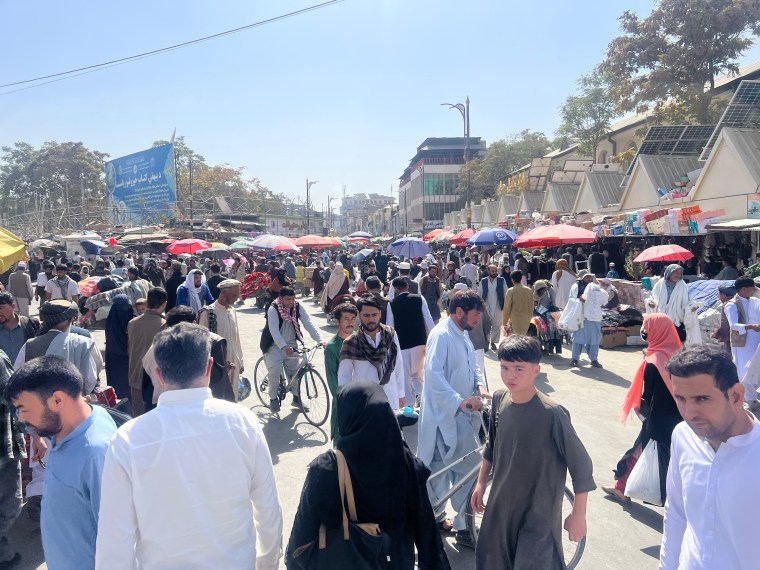
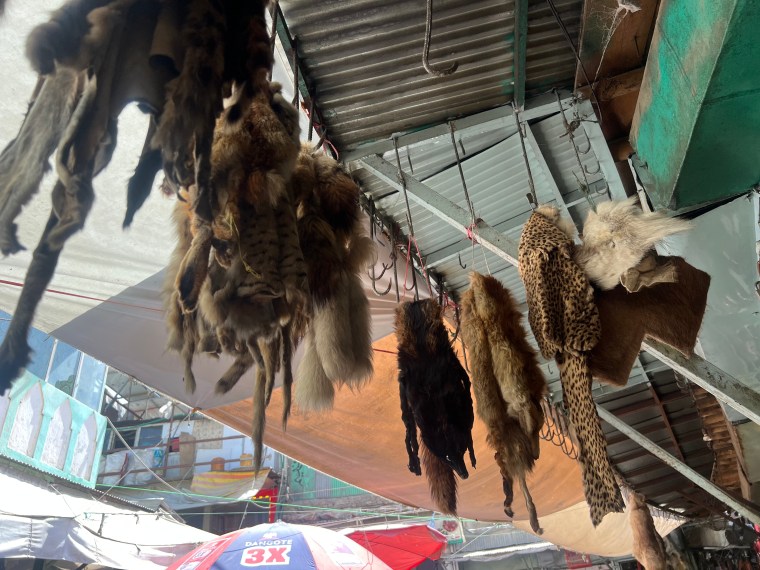
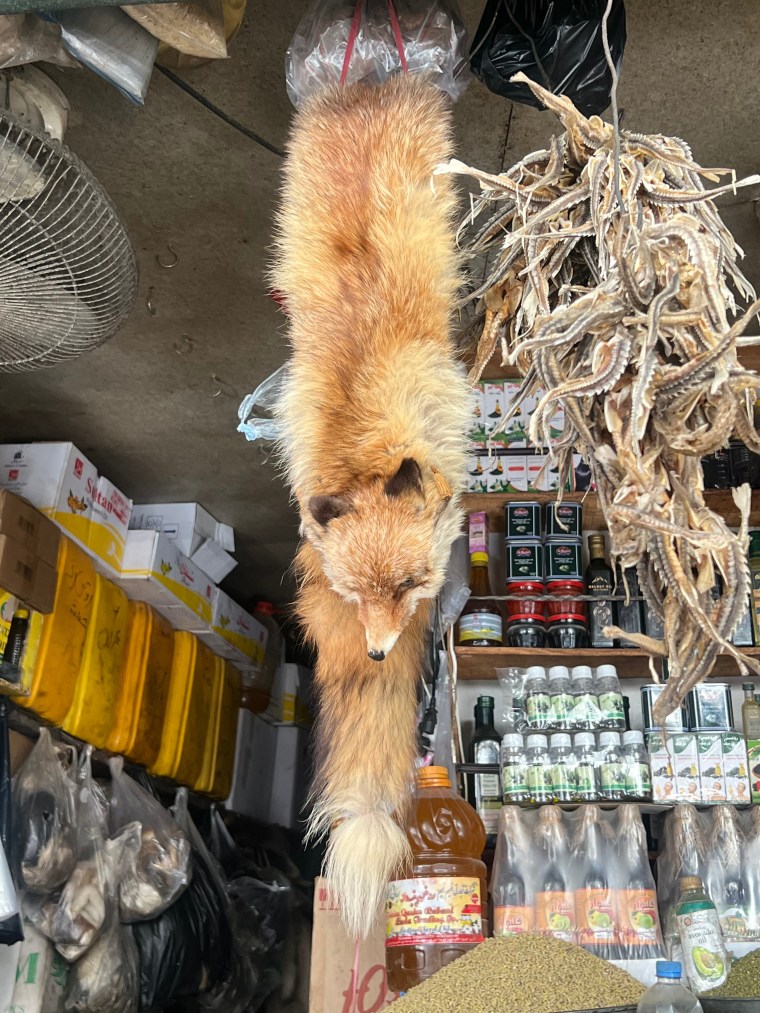
Undeterred, we walked around Kabul’s central marketplace for the next few hours. One highlight was the Bird Market, not to be confused with Chicken Street, which is also a well-known market, but only the former actually sells birds. It’s a pretty standard Islamic bazaar – narrow, all pedestrians, very crowded – and the merchants cluster by type, so there are 50+ rug merchants right next to each other, then 50+ merchants who sell pots and pans, and then 50+ merchants who sell shoes, etc. There were two merchants who sold animal skins, including wolves, foxes, and leopards:
And of course, they sell birds:
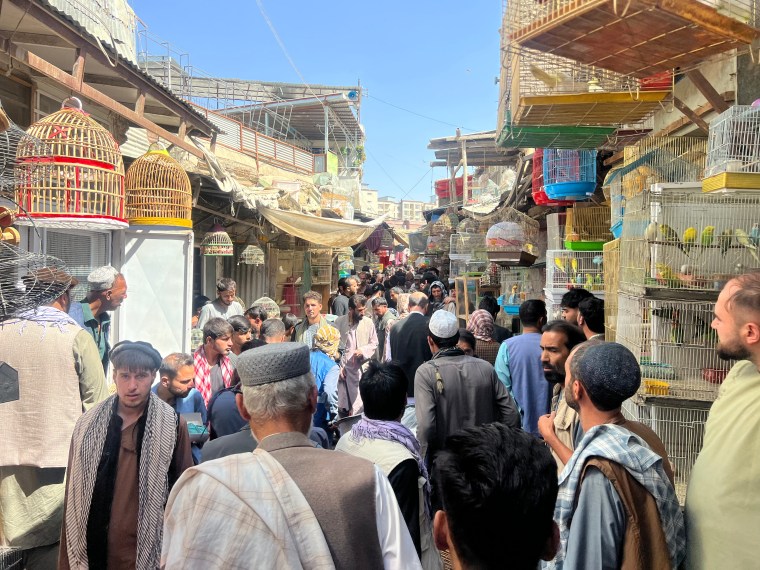
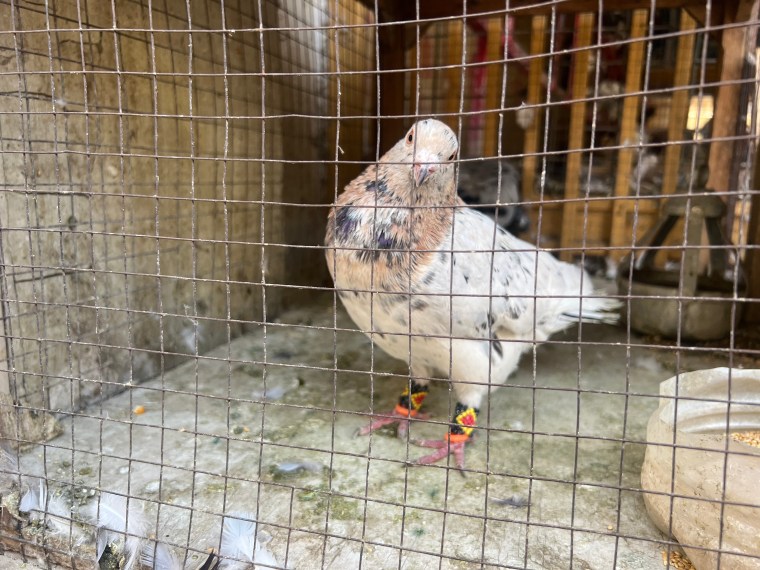
Right in the middle of the bird area, which is a particularly narrow and crowded street, there was a mass of people so thick that it blocked our way through, especially since they were all standing still. It was also the one part of Kabul so far where I wasn’t being stared at by 95% of the people who noticed me. As my guide and I wormed our way through the crowd, we eventually stumbled into the epicenter of the mob where two men were screaming at each other. One was covered in blood. I didn’t want to stop and take too much of a look since that would garner more attention, but I briefly saw blood stains clumped in maybe four or five spots on his chest and stomach.
Once my guide and I had cleared the mob, I asked him what the hell that was, and he said the bloody guy had been stabbed multiple times. I asked why, and he said he didn’t know.
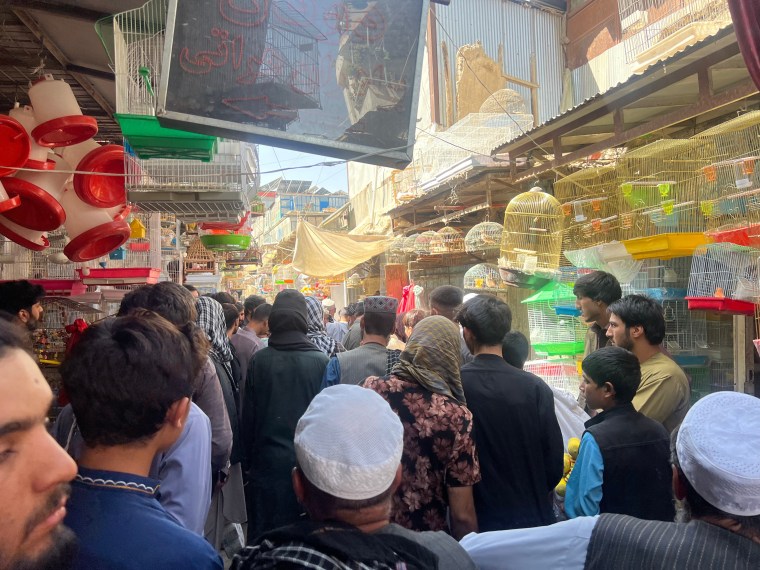
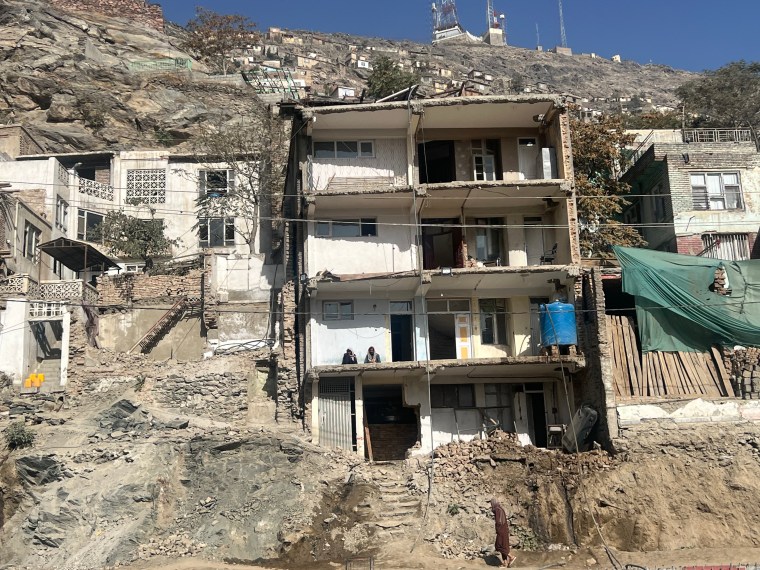
Knifed guy aside, as we continued walking around for probably the fourth hour that day, it dawned on me how relatively normal Kabul was. This was the capital of a country that had been in foreign wars, civil wars, or in massive political upheaval almost continuously for about 45 years until 2021. And since then, its peace has been guaranteed by one of the worst organizations on planet earth.
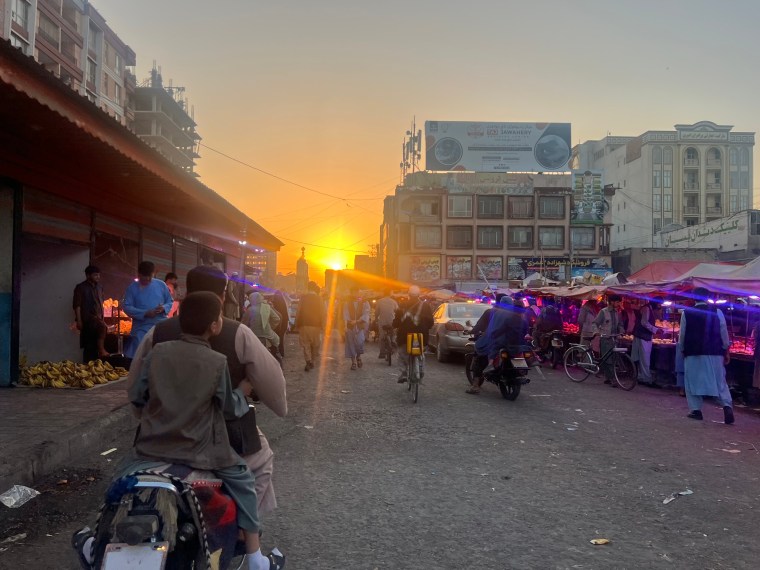
And yet, Afghanistan, or at least Kabul, looked and functioned pretty normally for the capital of an impoverished country. People went to work, they prayed, they argued, they bought stuff, they had families. Even I could tell by clothing and faces that the different ethnic groups all mingled together. Despite the extreme economic privations of the country, you can still find Coca-Cola, potato chips, and cookies in every convenience store, and Pepsi in some, though, sadly, no Coke Zero. Restaurants commonly serve pizza, and some serve hamburgers or pasta, since all cultures eventually converge on these foods. Afghan traffic is terrifying, but people still get where they need to go, and drivers adapt. Afghan women are horribly oppressed, but you see them walking around. The Taliban are monsters, but they mostly seem pretty bored and they really do keep order.
Maybe this is a banal observation, but life goes on unless it really can’t. It reminds me of my time in Ukraine right after the war started. Even when Russia was in the process of invading Ukraine, a substantial portion of the male population had joined the military (voluntarily or otherwise), about 10% of the population had fled the country entirely, and another portion of the population had been internally displaced, most Ukrainians still lived their lives mostly normally in most of the country. They still went to work and cafes and restaurants and stuff. It wasn’t until I arrived in Kharkiv, which was then at the front line of the war, that I saw a city where life was completely different from normal. The city was about 95% empty, and everyone remaining either worked for the government or supplied it. If I had made it farther inland into Russian-controlled territory, like Bakhmut, then I would have seen cities that looked like something out of Central Europe in early 1945.
And so it is with Afghanistan. There are plenty of Afghans who hate the Taliban, hate what they’re doing to women, hate the economic situation in the country, wish the Americans or the warlords had won and taken over the country permanently (I frequently met people who believed all these things), and yet they still live normalish lives. Or at least they do as long as they don’t excessively run afoul of the Taliban.
In the late afternoon, my guide and I went to Kabul’s Blue Mosque. Like nearly all other turquoise-colored mosques, it is Shia (the Taliban and most of Afghanistan is Sunni), and in this case, largely used by Hazaras, an Afghan ethnic minority. And also like most other turquoise Shia mosques, it is insanely intricate and beautiful. IMO, the Shias have the Sunnis beat on the mosque game: 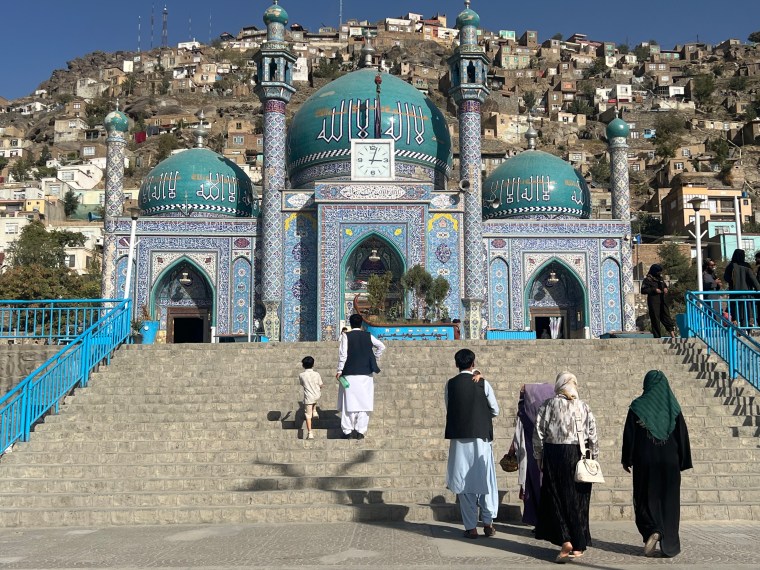
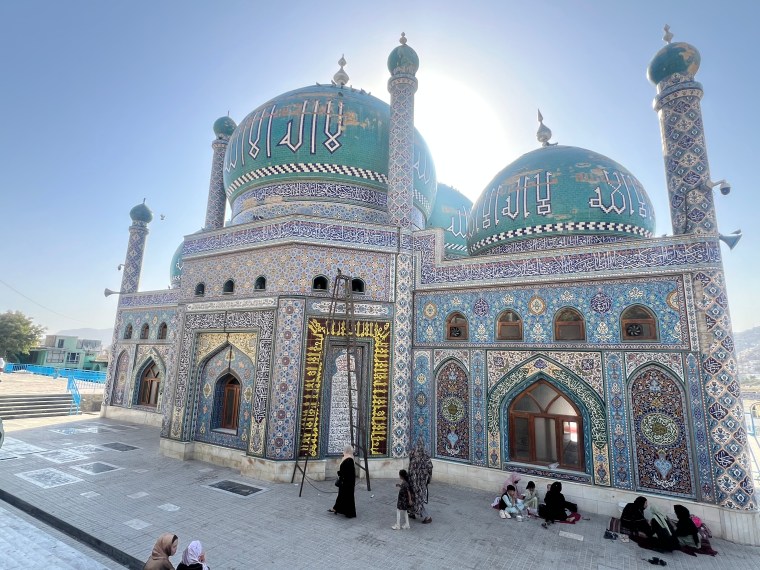
This was the first of many times in my trip that I would have to go through a Taliban checkpoint. The mosque was fenced off, and the entrance was guarded by two or three AK-wielding Taliban guys who patted entrants down to check for weapons. That might not be a bad idea since in 2018, ISIS killed 33 people here in a bombing. In what was to become a routine process, the Taliban guys looked at me coldly, spoke to my guide, he told me to give them my passport while he fished out his permit for me, they studied it all, gave it all back, patted me down, and then said a welcoming phrase. There were no problems, but after this first encounter, I learned to always greet the Taliban with a “salaam,” or, if I was feeling ambitious, the full-fledged “assalamu alaykum.” It made them a little bit nicer.
Immediately after passing the checkpoint, two old men with long beards in traditional (even by local standards) Afghan clothing came up to us and looked at me with intense fascination. They spoke to me in Pashto, which I obviously didn’t understand, so then they spoke to my guide. Through him, I answered some questions about where I was from and what I was doing here.
For the first of many times to come, they asked if I was a Muslim. I said I was a Christian, which isn’t true, but I always say I’m a Christian in Muslim countries. Muslims are generally cool with Christians – they are both Monotheists, both people of the Book, and both love Jesus Christ. Plus, Christians tend to have a bit of foreign, Western exoticism to them. I never told people in Muslim countries that I was an atheist, which could provoke hostility, and I also think it’s best not to experiment with claiming to be Jewish.
The two old men heavily shook my hand and said a bunch of stuff directly to me that I didn’t understand. I nodded and smiled and thanked until they walked off. Then I asked my guide who those guys were. He struggled at first to explain: “they are the men who hit women if they don’t cover their heads.” They must be the religious police. At least they were nice to me.
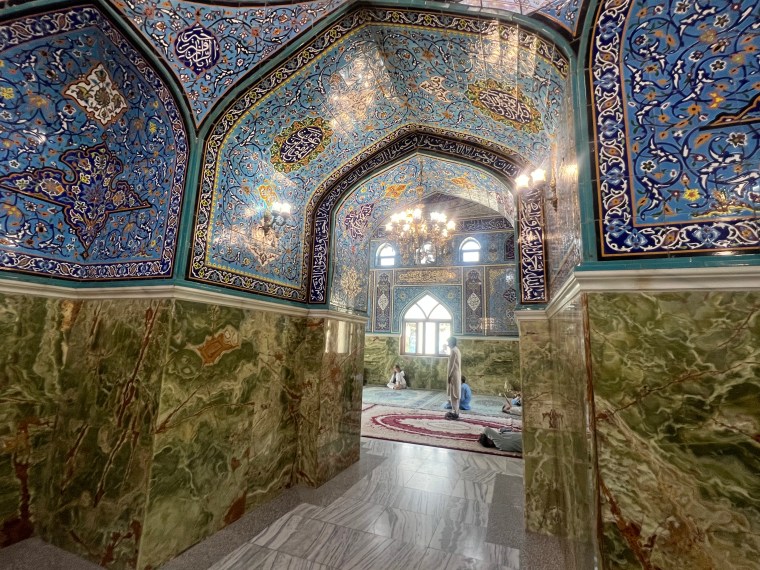
While walking around the Blue Mosque, my guide told me about how under the old US-backed government, it was common to see romantic couples here, even holding hands. Then, and in later conversations, he expressed gratitude to the Taliban for bringing peace to Afghanistan, and he even described the 2021-to-present political era as the best of his life. But that was solely due to the peace and safety; in most other regards, my guide opposed Taliban policy. He was a Muslim like everyone else, but on the secular side by Afghan standards (I never saw him pray). He was scared of the Taliban’s fundamentalism and lamented how “serious” they were about their beliefs. He was particularly worried about the futures of his two daughters, and, like so many other Afghans I met, he wanted to leave Afghanistan, ideally to live in the West, and even more ideally in the US, but he would settle for Pakistan.
Also while walking around the mosque, I saw a concentration of Hazaras for the first time. My guide said they “look like Chinese people” but they are really closer to Mongols, with the wider faces and slightly darker complexion. That night, over dinner, I asked my guide if the Taliban discriminated against the Hazaras or Shias. He said they didn’t; they could practice their religion and were treated like everyone else as long as they followed Taliban rules. I asked if the Taliban discriminated against any minority group or supporters of the previous regime; he said he didn’t. By his assessment, everyone was treated the same, and he commended the Taliban for that, if not their specific policies. This view was shared by some other Afghans I met, and strongly disputed by others.
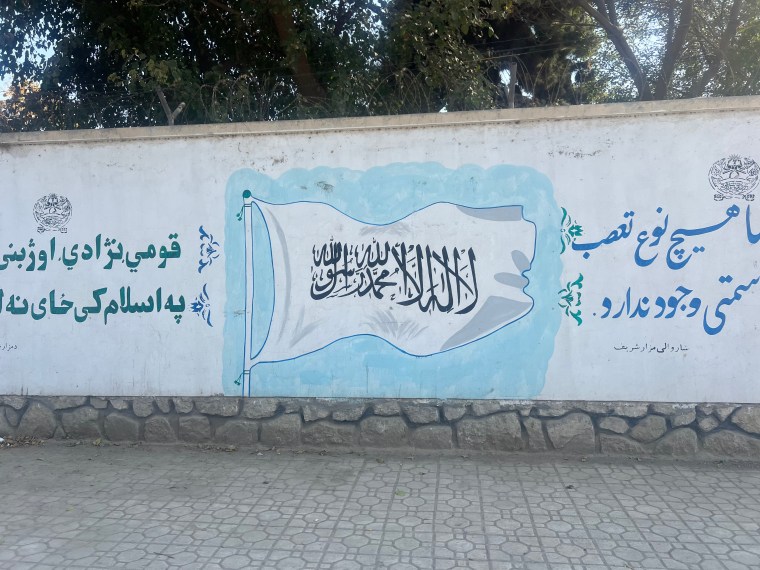
What is the Taliban?
I’ll paraphrase a rough analogy Grame Wood gave in a podcast:
Imagine that the United States descended into a horrific civil war where the major states like Texas, California, and New York were led by ethnic warlords, and the rest of the country devolved into anarchic banditry that included widespread practices of the worst crimes imaginable. And then imagine that a group of radical Christian preachers in Appalachia banded together, declared one of their own the second-coming of Christ, raised a local army of nearly illiterate hillbillies, proceeded to conquer the United States, and replaced all the anarchic horror with their own brand of marginally less horrible theocratic tyranny.
That is very roughly the contextual trajectory of the Taliban. But to understand how that happened, you need to look at the not-so-recent ideological history of Islam. Namely, Islam has had a serious problem for the past 500ish years… it keeps losing.
Islam was started by Muhammad, an Arabian warlord who lived in the late 500s and early 600s AD, who claimed that god sent an angel to him to dictate the words of god by which all men should live for the rest of history. That’s a tall order for potential followers to swallow, but part of Muhammad’s pitch was that he, a random Arabian warlord, suddenly went on an extremely successful conquest spree that saw the first Islamic political state take over a big chunk of the Middle East. And then Muhammad’s successors proceeded to take over a big chunk of the earth with a domain stretching from Persia to southern Spain, while other believers brought Islamic armies to the far reaches of sub-Saharan Africa and East Asia. It was easy to believe that god really was on the side of the Muslims when they kept pulling off these incredible wins.
That all started to unravel around the 1500s or 1600s when the European Christians began to pull ahead of the Muslim powers technologically, economically, and militarily. By the 1700s, the Christians weren’t just pushing the Muslims out of Spain, but taking over really huge chunks of the globe, like nearly all of the Americas, India, and later Africa. By the 1800s, it was extremely obvious to any Muslim visitors to Europe that Christian societies, and even the more secular states, were simply doing better than the Muslim societies in so many respects and would likely continue to do so.
At the time, lots of Muslims, particularly in places like the Ottoman Empire, were asking the logical question – if god is with us and not them, why are they winning?
There are in-built Islamic explanations for this. In Muhammad’s time, when he was winning lots of battles and conquering lots of land, he also had a bunch of defeats, betrayals, and withdrawals. But of course, he eventually triumphed in the end, so by my understanding, the setbacks are justified as tests of the faithful to stay loyal to god and his plan, which will eventually lead to greater victories.
But considering the scope and scale of the Christian advancement past the Muslim states, more theory-crafting was needed in the Islamic world. In the Arabian Peninsula in the 18th century, Ibn Abd al-Wahhab developed what became known as Wahhabism, which preached that Islam had been weakened by decadence and straying from the original message of the prophet Muhammad, particularly by the likes of the Ottoman Empire, whose liberal Sufism devolved into mysticism and idolatry, and may as well be considered heresy. Wahhab proposed to strengthen Islam and the Muslim people by embracing a radical orthodox form of the faith based on replicating the lifestyle of the prophet Muhammad, who we should not forget was a 7th century warlord living in the Arabian desert. The nascent Wahhabi movement was adopted by the Saud family, who would go on to conquer Arabia and run Saudi Arabia quite proficiently.
In the Indian subcontinent, a similar but significantly more moderate movement was developed in the early 20th century in a city called Deobond in Uttar Pradesh, a particularly poor region in north-central India. This philosophy, which would become known as Deobondism, similarly preached that a handful of British soldiers had managed to conquer the colossal Indian subcontinent, including its vast Muslim minority, because the Islamic population had strayed too far away from the teachings of Muhammad. Deobondism spread and evolved throughout the subcontinent and was even brought abroad to places with large Indian populations like South Africa.
But Deobonism found its greatest following in the corner of the subcontinent that later became Pakistan, which had tens of millions of Muslims at independence in 1947, and has 250+ million Muslims today. In rural Pakistan, Deobondism became more radical and gained a closer resemblance to Wahhabism, including with a strong aversion to other sects of Islam and a hostility to liberal concepts like women’s rights. In Western Pakistan, the vast mountain desert region that borders Afghanistan, Deobondism was influenced by the Pashtuns, an already conservative Islamic people with a deeply-rooted tribal culture.
In the 1970s, Afghanistan’s monarchy was overthrown by Mohammad Daoud, then Daoud was overthrown by the communist Nur Muhammad Taraki, then Taraki was overthrown by the communist Hafizullah Amin, and then Amin was overthrown by a Soviet-backed regime, and then the Soviet-Afghan War erupted and would continue into the early 1990s. Throughout all this upheaval, millions of Afghans, particularly rural Pashtuns, fled their homes for the relative safety of Pakistan, where a friendly pro-Pashtun regime housed them in small towns and refugee camps along the border. The Pakistani Deobondi intellectuals flocked to these places, often with funding from the Pakistani government or wealthy Saudis, and set up madrassas.
Madrassas are Islamic schools. They can teach on a range of topics, but in the cases of these Afghan-Pakistan border towns, the madrassas were extremely simple. They taught basic literacy and Islam. Lots and lots of Islam – the Koran and the Sunnah, and maybe a little Islamic history. That’s it. It was not unheard of for students to memorize the Koran in Arabic despite having no fluency in Arabic. The teachers in these schools, known as mullahs, almost all received their own educations in similar madrassas, and therefore knew little besides how to read and write and about Islam. The Afghan refugees who fled to these towns and schools were overwhelmingly male, and the few girls and women were usually barred from the madrassas.
In the 1980s, particularly the late 1980s, more and more Afghans fled to these towns as the war raged on, but at the same time, Afghans steadily flowed back into Pakistan to fight as Mujahideen (basically rebels) against the communist Afghan government and its Soviet allies. These young soldiers were often orphans or didn’t know their parents, some had been born in these border towns, others had moved there when they were small children and didn’t remember their hometowns in Afghanistan. These were raised in these refugee camps, educated, and cared for by the mullahs and their madrassas. Most of these mullahs were radical Islamic Deobondists (sometimes called Neo-Deobondists) and aggressively encouraged their young students to join the Jihad in Afghanistan against the atheist communists. The best and brightest of the young men were sent to militant training camps built throughout the border region either by the Pakistani ISI or radical Islamist organizations, including what would later become Al Qaeda.
The vast majority of these young Mujahideen were Pashtuns since the Tajiks and Uzbeks would usually flee north to the Stans, and the Hazaras would flee west to Iran. These Pashtun warriors naturally joined the Pashtun Mujahideen factions based primarily in southern Afghanistan. These soldiers were badly educated in a traditional sense, and aside from the ones trained in the special militant camps, they didn’t know much about fighting, but they were fanatically devoted to their cause, and so, unlike the overwhelming majority of Afghan government forces, they were willing to charge machine gun nests to win battles.
In 1992, the Mujahideen won and the communist Afghan government fell. Within weeks, the Mujahideen factions began fighting each other and the Afghan Civil War broke out as a brutal clash between dozens of Mujahideen warlords largely based around ethnic and tribal lines. By that point, there were tens of thousands of these madrassa-educated Pashtun Mujahideen in Afghanistan, mostly based in the southern Afghan Pashtun territories. During the Civil War, even by the standards of the contemporary warlordism, the Pashtun territories were more chaotic than the rest, owing partially to Pashtun warlord Gulbuddin Hekmatyar’s rule (ex. he was one of the biggest pioneers of the Afghan heroin industry) and partially due to the inherently fractious nature of tribal Pashtun life. The countryside broke into hundreds of petty fiefdoms were localized warlords not only ran roughshod over the people in typical plundering manners, but also indulged in revenge plots based on new and ancient tribal rivalries.
You can’t understand the rise of the Taliban without understanding how bad the Civil War was. In 1994, Kabul was under the control of a nominal new Tajik-dominated central government, but it was also under siege and getting hit with artillery strikes every day by Hekmatyar, AKA the “Butcher of Kabul.”
Outside of the Kabul regime, there were no formal government structures. The warlords ruled by virtue of their wealth and military strength, and the exercise of their authority naturally descended by quasi-feudalist means, with power delegated to lieutenants who further delegated power to lower lieutenants, etc. This left most of the day-to-day civil administration of Afghan territory in the hands of random military commanders with little oversight from superiors who were usually busy fighting a war.
The result was thousands of Afghan towns being terrorized by petty tyrants who commanded small groups of soldiers. Looting, pillaging, extortion, rape, murder, and slavery were common throughout the country. If some small Afghan city was being horrifically brutalized by a local commander, say by having the local children rounded up for sex-slave harems, there was virtually nothing the civilians could do about it. Military resistance almost certainly meant death, either at the hands of the petty local tyrants or the reinforcements they might call in. Even if terrorized local civilians could somehow appeal to higher commanders or their warlord, such warriors had more important priorities than appeasing civilians, especially when their power was based on the support of mobs of disorganized soldiers whose de facto payments came partially in the form of pillaging occupied territories.
My use of “children” in the above sex slavery example is not an accident. Afghanistan and some of the other Stans have a history of bacha bazi, which is basically the practice of older men using young boys dressed and groomed to look like women for sexual satisfaction. Historically, sometimes the boys have been kidnapped, other times they were sold by desperate parents. While the practice has persisted in some form in Afghanistan for at least 2,000 years, it had a tragic resurgence during the Civil War when lawlessness was the norm.
A logical suggestion for Afghan civilians caught under the dominion of terrible warlords or their underlings would be to flee and live somewhere else, anywhere else. And indeed, hundreds of thousands (millions?) fled to Pakistan or Iran. But unfortunately, for many more millions, movement within Afghanistan somehow became even more dangerous than living under the warlords. With the complete breakdown of governing authorities, the territorial spaces between the warlords became completely overrun with bandit gangs, often consisting of current or former warlord squads.
In perhaps the most Mad Max-ish element of all, internal Afghan trade practically ground to a halt. Any trade or travel convoys moving between cities without significant armed support were easy prey for highwaymen. Initially, the gangs just robbed and killed everything they found. Eventually, these gangs coalesced into extremely expensive toll-collecting checkpoints, which loved the sight of United Nations or NGO trucks that were willing to pay, but most other travellers robbed or turned away. Keep in mind that the vast desert and mountainous terrain of Afghanistan usually only has one two-lane road between each major city, so separate gangs would set up their own checkpoints on single roads, necessitating paying off multiple factions on single trips.
(Rashid relates a story of travelling 120 miles from Quetta to Kandahar in 1993 and being stopped 20 times to pay extortions.)
So Afghanistan jumped out of the frying pan and into the fryer. Or, it jumped out of the destructive monodirectional civil war against a Soviet-backed communist government into the chaotic anarchy of multi-directional war between warlords. The masses of Afghan civilians lived at the mercy of arbitrary warlords, soldiers, and gangs who preyed on the populace in the worst possible ways imaginable. And with the warlords roughly equally balanced in power, there appeared to be no logical end to the fighting, especially with so many foreign powers dumping seemingly endless supplies of money and weapons into the fray. Afghanistan was in hell.
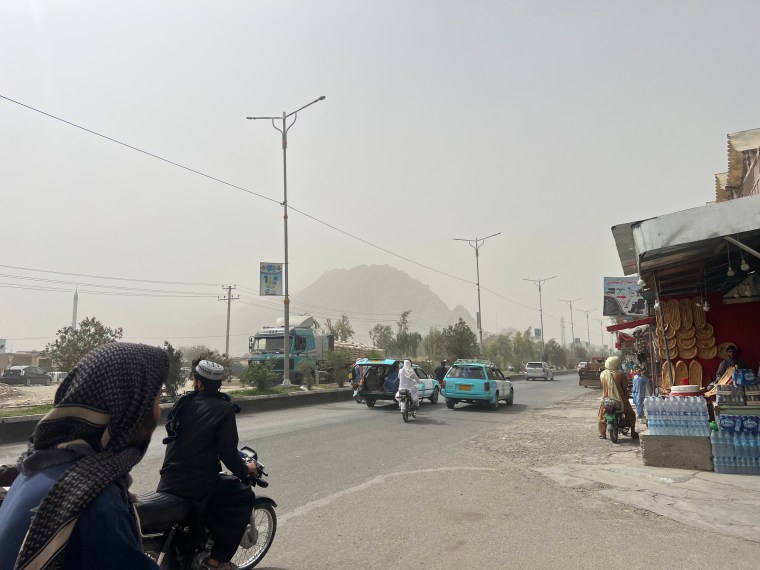
There are many levels in the debate over what is to blame for the Taliban ideologically. The first level is Islam, or at least radical Islam, since the Taliban claim to be embracing the truest form of Muhammad’s teachings. The next layer is Pashtun culture since the Taliban ideology is broadly a fusion of a strand of radical Islam and the most conservative elements of the Pashtuns. If you push down yet another layer, there are people who say it isn’t Pashtun culture to blame, but specifically the culture of the Durrani, a large Pashtun tribe that historically ruled Afghanistan going back to the 18th century.
Sometime in mid-1994, amidst the chaos of the Civil War and particularly the Pashtun south, a group of Durrani Pashtun Mujahideen gathered in Kandahar and agreed to form a new faction. These men held special authority among the Mujahideen because they were mullahs. They all taught at madrassas in rural Kandahar, thus making them sort of warrior priests. They called themselves the “Taliban,” which is a merger of an Arabic word adopted into Pashto and combined with a Dari (Persian) word, all of which combines to mean “Students,” as in “Students of Islam.”
Their stated aim was to restore order to Afghanistan. This was to be done by defeating the warlords and establishing a new government based on a strict, radically conservative implementation of Sharia law so Afghans would live as Mohammad did in Arabia 1,400 years ago. Non-Muslims, who would include Shias and insufficiently orthodox Sunnis (like Sufis) in their view, would be converted or driven from the land, along with communist and Western influences. Though the Taliban themselves would say that the prophet was their only guiding force, observers would claim that quite a bit of Pashtun and Durrani culture seeped into their guiding directives, particularly regarding their proposed legal structures and treatment of women.
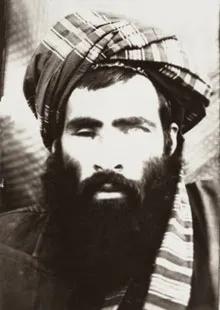
The leader chosen among the Taliban was Muhammad Omar Mujahid, henceforth known as Mullah Omar. Like the rest, Mullah Omar was born into rural Pashtun poverty and had almost no education beyond basic literacy and advanced Islam. He had fought as a Mujahideen, quite well by many accounts, and had lost his right eye in the process. He was said to be soft-spoken, shy, and an outright bad public speaker. By Rashid’s account, Mullah Omar was almost entirely chosen for leadership on the basis of his piety, rather than his intelligence or charisma. Surprisingly, this played to the Taliban’s advantage as Mullah Omar was able to situate himself as a lofty figure who could stay above the fray of Pashtun politics waged by his subordinates, and he could consistently operate as a unifying force for the entire Taliban organization. However, by Malkasian’s account, “original members of the Taliban often described him as a ‘simple man.’ A few went so far as to call him stupid.”
Rashid compares Mullah Omar’s leadership style to that of Pol Pot. Like the Cambodian communist, Mullah Omar was oddly shadowy and mysterious despite having tremendous personal authority in his political movement. He left almost all the day-to-day management of the Taliban to subordinates while he would hang out in the background and occasionally weigh in on contentious matters, using his reputation for flawless piety to sway the organization. He was said to be quiet and patient in meetings. There is only one known photograph of adult Mullah Omar, and he is a reported 6 feet, 6 inches tall. He didn’t have a central base; he constantly traveled between rural villages, and communicated with lieutenants via personal couriers who carried scraps of paper with his hand-written decrees. All of his underlings down to the lowest rank-and-file soldier knew who he was, but only his top lieutenants knew anything about him. To everyone else, he was this distant, aloof, mysterious entity who hovered above them all but didn’t dirty himself with grubby politics and warfare. Though one thing he did dirty himself with was financial management; the Taliban’s central treasury was literally a metal box filled with cash that Mullah Omar carried everywhere and usually kept under his mattress.
Even in Kandahar in 1994, there weren’t that many AK-47-wielding warrior priests; the Taliban leaders needed to recruit foot soldiers to wage their holy liberation of Afghanistan. They found their men (and they were exclusively men) in the form of the legions of young Mujahideen who had been raised in the Afghan-Pakistan border region and educated by Deobandi mullahs. In time, a pipeline was established to directly funnel a whole new generation of zealot warriors into the Taliban ranks.
In 1994, Kandahar City (the capital of Kandahar province) was under the reign of a particularly brutal Pashtun sub-warlord who was systematically stripping the city of every scrap of wealth, including selling off industrial equipment, to pay for the war effort. The various villages around Kandahar City were under the control of sub-sub-warlords who were doing the worst things imaginable.
In this context, the Taliban first appeared on the scene as vigilantes. They would receive reports of warlord wrongdoing, deploy a squad of fighters, usually kill a bunch of soldiers, capture the commander, and then publicly execute him and leave his body for all to see. The Taliban especially pursued purveyors of sex crimes, like commanders who kept stables of bacha bazi boys abducted from the locals. Punishments were Biblical (well, Koranic) – decapitations, cutting off hands, hanging bodies, etc.
While the Taliban took requests, they didn’t accept payment. They didn’t stick around either; they responded to calls, dished out justice, and then left the bodies behind. Rashid describes the Taliban as developing a Robinhood-esque reputation, but it was more than that. The Pashtun population living under the thumbs of the warlords were deeply religious themselves, and the Taliban swept in as a force promising divine retribution against the evilest men imaginable. It’s not hard to see how they developed a following.
However, the Taliban needed money to equip, house, and feed their growing army, and since they weren’t charging the local population and refused to engage in plundering like the rest of the warlords, they needed another revenue source. This was one of my biggest surprises in learning about the Taliban. A key player to the rise of one of the worst regimes on earth was… teamsters.
As mentioned, by 1994, the Afghan road network was thoroughly plagued by warlords and bandits preying upon the sparse traffic between major cities. This left the Afghan trucking companies dead in the water. Sometimes they could afford the dozens of extortion payments per route, or sometimes they could align with one warlord for ongoing extortion payments, but mostly the trucking industry as a whole shut down.
But in Kandahar, there were these new Taliban guys who seemed to be getting shit done. And unlike the warlords, they were honest in their dealings due to their deep religious convictions. So the truckers began contracting with the Taliban to protect their convoys or even clear the roads of bandits and checkpoints entirely. And just as with the vigilante raids, the Taliban turned out to be very good at this. Soon enough, trade was opening up in Kandahar, and then the surrounding provinces.
Eventually, another faction wanted in on the action… Pakistani teamsters. The much larger Pakistani agriculture and industrial producers had been effectively shut out of Afghanistan for two years. The Pakistani truckers initially tried to make a deal with Hekmatyar (the most powerful Pashtun warlord) to clear the eastern roads and let trade resume, but he was too busy fighting the Tajiks in Kabul to effectively respond. So through their Afghan trucker brethren, the Pakistani truckers made contact with the Taliban and set up contracts to clear the roads all the way from the Pakistani border, up through Kandahar, and ideally north through Herat to the Turkmenistan border. Once again, the Taliban soldiers descended upon the roads and cleared them out extremely effectively, and they were amply rewarded monetarily for their efforts.
All this came to the attention of the Pakistani government, especially the Pakistan Inter-Services Intelligence (ISI), which is sort of like a Pakistani CIA on giga-steroids to the point where it occasionally resembles a parallel government. These shady spooks were sort of on the backfoot at the time; they had played a major successful role in the defeat of the Soviet Union in Afghanistan, but they had also played a major role in creating this hellish humanitarian crisis next door that was spilling over into Pakistan. So ISI policy evolved: instead of funding all these disparate warlord factions, they would pick one horse and fund it until it conquered Afghanistan. Hekmatyar seemed like their guy at first since he was an Islamist Pashtun and therefore an ideological/ethnic ally. But with the Taliban coming on the scene, the ISI found a faction that was even more Islamist and Pashtun, and better yet, seemed to be way better at fighting. So the ISI brokered a deal with the Taliban and flooded the organization with a deluge of money and guns.
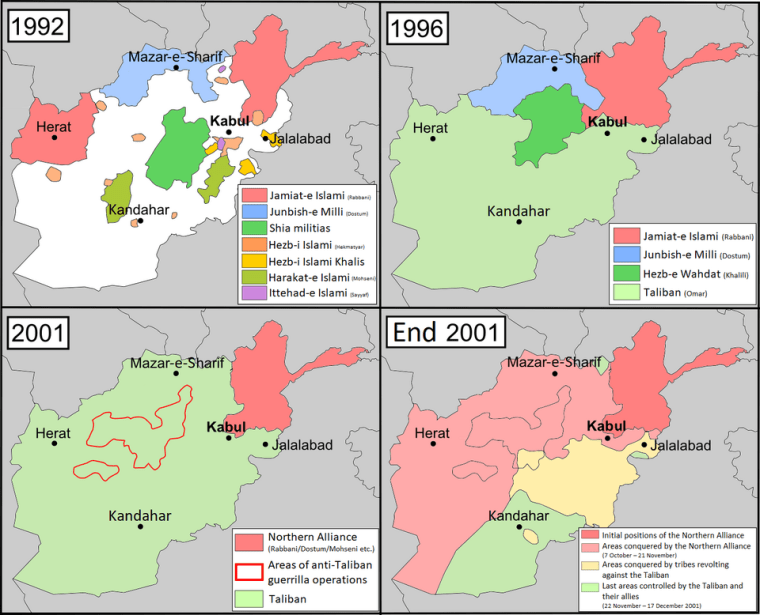
It took just over two years for the Taliban to form and gain enough strength to capture Kabul. A bunch of barely literate preachers from the poorest backwater of Afghanistan had amassed over 100,000 soldiers and beaten every warlord army in their path, including Massoud’s legendary 20,000-man elite Tajik army in the capital. And it did all that despite billions of dollars in money and weapons flowing into these warlord armies from Russia, the Stans, Iran, Britain, France, India, Saudi Arabia (which eventually switched sides from Hekmatyar to the Taliban), and other foreign powers. It seemed like god really was with the Taliban.
Mullah Omar cemented this perception in April 1996, about six months before the fall of Kabul, by standing on a rooftop in Kandahar before a mass of Taliban supporters and donning a cloak allegedly worn by the Prophet Muhammed himself. Mullah Omar declared himself Amir al-Mu’minin, making him not just the supreme leader of the Taliban, but the political and spiritual leader of all Muslim people. Reportedly, the roars of the crowd confirmed his claim.
(There are some fun Islamic theological debates about the legitimacy of Mullah Omar. According to a hyper-strict reading of the Koran and Sunnah, like the sort of interpretation championed by ISIS, the Amir al-Mu’minin title is close to the title of “Caliph,” which is reserved for the political-religious leader of the singular Islamic state that is supposed to rule all Muslims and eventually the whole world. However, the Caliph has a couple of requirements, including to be a member of the Quraysh, which was Muhammad’s tribe in Arabia, and to which the Pashtun Mullah Omar is obviously not related. The orthodox interpretation also says that the Caliph must have an entirely intact body, which Mullah Omar does not since he lost an eye in the Soviet-Afghan War. This is one of many reasons why ISIS eventually went to war with the Taliban.)
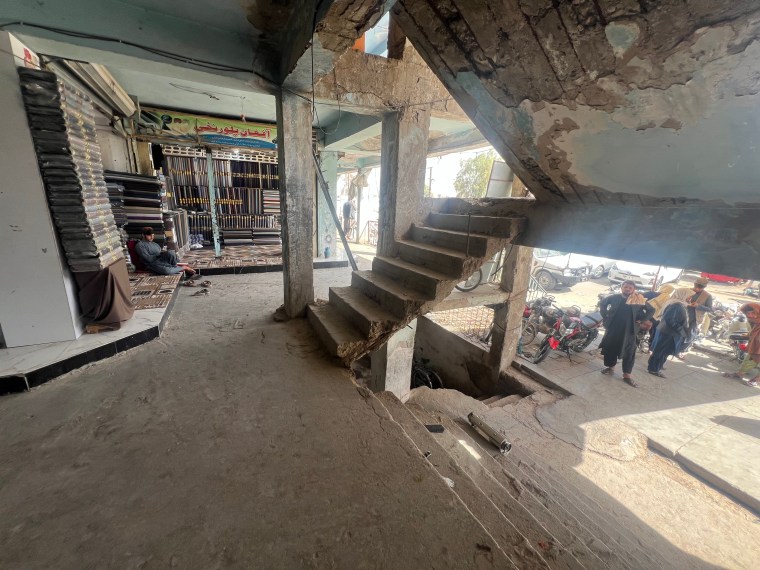
The military victories and religious rhetoric drummed up lots of support for the Taliban among the civilian Afghan population, but many people living in the Taliban-controlled cities quickly got buyer’s remorse. It turned out that these religious fanatic liberators really were religious fanatics. They took their faith very seriously, even by the standards of extremely conservative Pashtun tribal people. In Kandahar, Helmand, Uruzgan, Ghazni, and the rest of the provinces and cities in their domain, the Taliban instituted the Sharia regime that would bring them global infamy. And this was not done subtly or with a deft hand; when the Taliban seized a territory, they instituted a comprehensive top-down legal order immediately.
So, often literally overnight, these lands were transported from modern anarchy to the Islamic dark ages. Television, music, sports, and board games were banned. Women were ordered to cover their heads and faces in public, thrown out of schools, thrown out of work, legally required to be accompanied by a male relative or their husbands outside of their homes at all times, and turned into de facto property of their fathers or husbands. In some places, the windows of private homes were painted black to further shield women from the outside world. Men were legally required to grow their beards to at least the length of a fist and charged high taxes for their security. With what little manpower they could spare, the Taliban mustered squads of old men to roam cities and villages and harass civilians for failing to meet Taliban standards, usually with impromptu beatings. Stricter punishments were, again, straight out of the Koran; floggings, amputations, stonings, and beheadings were the norm for serious crimes like murder to mild crimes like theft to non-crimes like adultery. In ISIS territory, gays are thrown from rooftops, but the Taliban prefer to push brick or stone walls on top of them.
And yet, most of the population was loyal to the Taliban. Many chaffed under their new rulers, but still preferred them to the days of the warlords. Others hoped the Taliban would win the war and finally bring security to Afghanistan as they had already done to the southern roads (even future Afghan President Hamid Karzai backed the Taliban for a time for this reason). Another substantial minority of the population, particularly in the countryside, was enthusiastically pro-Taliban, seeing them as the ultimate manifestation of their brand of Islamism and/or Pashtunism.
Perhaps most importantly, by nearly all accounts, the Taliban were shockingly fair in their rule, at least by their own standards. Arbitrary abuse, pillaging, and rape were extremely rare, even at the hands of the ordinary Taliban soldiers, and especially compared to their warlord predecessors. As city-after-city fell to the Taliban, the inhabitants were stunned by the restrained conduct of their soldiers. The Taliban had the best-behaved army in Afghanistan.
(Caveat – Taliban soldier restraint began to seriously degrade later in the war, and there were instances of massacres and even sex slavery, but on the whole, Taliban soldier discipline was still far better than the warlord armies.)
This is one of the most fascinating aspects of the entire Taliban saga to me, and it’s worth its own aside.
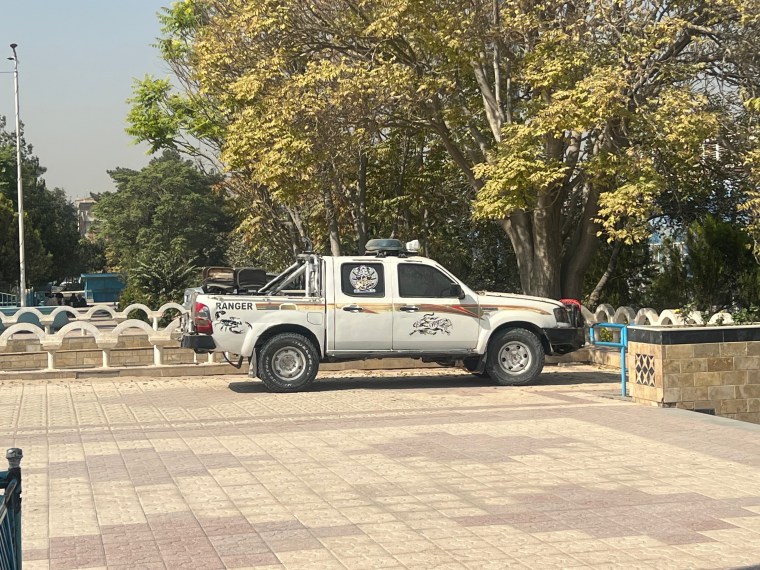
As long as there has been civilization, there has been war, and these wars have been overwhelmingly fought by young men. For some good and mostly ill, one of the core motivations of these young men has been women. Success in warfare might get a man the prestige and wealth required to get a good wife, but historically, warfare has also granted access to women in the forms of rape and slavery. This was, tragically, exactly what was going on in Afghanistan during the Civil War. Hundreds of thousands of Afghan troops had tyrannical power over the population by virtue of holding a gun, and they took what they wanted, when they wanted.
The Taliban army didn’t. It didn’t rape, it didn’t pillage. Yes, there were obviously exceptional cases, but it was more disciplined in its treatment of the civilians than any other army by an enormous margin. The vast majority of Taliban soldiers weren’t even paid, except in food. So how did the Taliban manage to gather the most well-behaved collection of tens of thousands of young men in the midst of the most violent, chaotic, and unjust era in the country’s history?
Part of the answer was that the Taliban rank-and-file were true believers in their brand of radical Islam, which, unlike the particular Islamic path preached by ISIS, didn’t proscribe sex slaves and allotted pillaging time for victors. But there have been plenty of pious armies throughout history that raped and pillaged, so there had to be more to it.
Part of the answer was that the Taliban’s leadership was super uber deadly-serious true believers in their brand of radical Islam. For all their incredible faults, the Taliban leaders were, and seemingly mostly still are, remarkably uncorrupt; even when they eventually won and took over Afghanistan, they led simple lives rather than amassing wealth like virtually every other conquering oligarchy in history. In the early days during the rise of the Taliban, the leadership enforced the strictest discipline they could on their own men, which included the same exact Koranic punishments as they doled out on the population, like the liberal use of executions and amputations. This was especially effective at striking discipline in new Taliban soldiers absorbed from the warlord armies.
In addition to these two points, and to extrapolate from Rashid, another theory to explain Taliban discipline goes back to those Afghan-Pakistan border towns. The core of the Taliban army from its start and through the civil war consisted of young men who were born in those towns or moved to them as young children, were educated in madrassas, and were thoroughly indoctrinated by these radical Islamist mullahs to the point of picking up guns and charging back to Afghanistan to fight for the Taliban. Of note, these towns had vanishingly few women, and what women they did have were living in Taliban-like conditions due to the mullahs and the Pashtun customs. And both in these towns and back in their home villages in Afghanistan, these families were extremely poor, with basically no access to foreign media through radios or TVs.
With this context, Rashid suggests that these young men grew up in just about the most sex-less and least feminine environment on earth, short of a monastery. They had barely ever seen adult women outside the veil, they had virtually no interactions with women besides immediate family members, almost none of them were married, and they had never turned on a television and accidentally watched an Elaine-centric episode of Seinfeld or some other corrupting Western media. And throughout their short lives, their mullahs had told them that though women had their function in Allah’s plans, they were also potentially evil distractions from a pious life that should mostly be kept out of sight and mind while the jihad was waged.
As a result, the Taliban had the least horny army in history. The rank-and-file soldiers literally didn’t know what they were missing out on vis-à-vis women, so they were less tempted to rape civilians. You could probably tell a similar story regarding the Taliban’s lack of plundering; those border towns were basically refugee camps where everyone was dirt-poor, so they were highly egalitarian societies, so there was little cultural understanding among the soldiers of the value of stealing wealth. Again, obviously there is some level of dark human impulses regarding lust and greed that can always break through, but the Taliban leadership seemed to do a remarkably good job at culturally suppressing these impulses in their army.
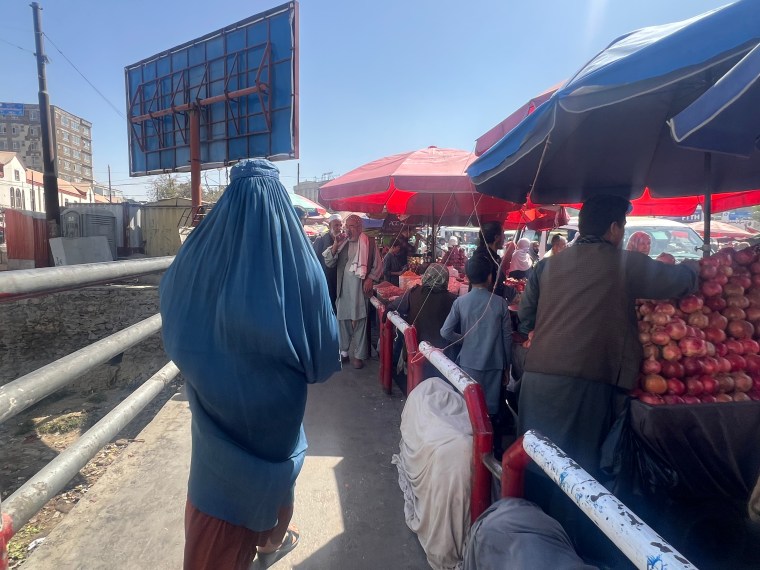
Women and Men
The Taliban are known in the West for lots of bad things – religious fundamentalism, medieval barbarism, supporting Osama bin Laden and Al Qaeda even after 9/11, etc. – but they are probably still best known for their ill-treatment of women.
The Taliban’s policies toward women come from the worst elements of radical Islamic doctrines and conservative Pashtun culture. I won’t pretend to grasp all the nuances of these views, and I seriously doubt the vast majority of Taliban have thought deeply about them either. My understanding is that the Taliban see women as occupying a very narrow role in a proper Sharia-based society; they should be children, then wives, then mothers, and then caretakers, and they should be almost nothing outside these bounds. They should not have jobs, they should not make art, they should not travel, and they should not learn more than basic literacy (if that) and a bit about the Koran. They should only leave the house with a male guardian. Once they are of age and married, they should not show their bodies, hair, faces, or any form of fashion, except to their husbands. They should live extremely simple lives and fit into extremely specific roles with extremely specific duties.
The Taliban, much like the Wahhabis in Saudi Arabia and elsewhere, would characterize this treatment of women as designed to protect and honor them. They would say that women should be spared from the drudgery of labor and commerce, from the temptation of sin, and from the burden of generally making decisions. I doubt they would use such terminology, but I’m highly confident that they would describe women as less intelligent, capable, and agentic by nature. They supposedly tend toward frivolity just as men tend toward lust.
The Taliban, and to some degree the Wahabis, also attach a bit of… I guess danger to the nature of women. It’s similar to how the Taliban view music, dancing, sports, board games, cinema, alcohol, drugs, etc. They see recreation and fun as a sort of soft betrayal of devotion to Allah. If you are truly a good, pious Muslim, then the glory of god should be all the enjoyment you need in life. If you want to have fun, you can read the Koran and bask in its beauty. If you’re intellectually curious, you can study Islamic theology. If you’re horny, you can have sex with your equally pious wife. You shouldn’t need to go outside these bounds to enjoy life. Music, dancing, sports, etc. are all distractions from a simpler, more pious life like the one Muhammad lived 1,400 years ago. It’s not surprising that infidels, such as Westerners and Hindus, so heavily indulge in these distractions.
Women are seen by the Taliban as sort of proximate to those fun-dangers. They aren’t just inherently lazy and frivolous, they also inherently offer sexual temptation, which is all fine within a proper Islamic marriage, but is an evil sin and distraction from Allah anywhere else. Without proper male/Islamic oversight that orders female behavior, women naturally become sin-inducing machines. Just turn on a Western tv and watch an episode of a show like Two Broke Girls and you’ll see what becomes of women without moral guidance.
A final possibly important ingredient in the Taliban’s view of women is that they can be considered dirty. Like a lot of the above, this sentiment exists more broadly in Islam but seems to be amplified in the Taliban ideology. According to most orthodox Islamic interpretations, when women are menstruating, it is forbidden for them to pray, read or touch the Koran, have sex, or enter a mosque. Note that Islam prohibits the consumption of blood, and as far as I can tell, at least some strands of Islam prohibit the consumption of animals that menstruate (such as rabbits).
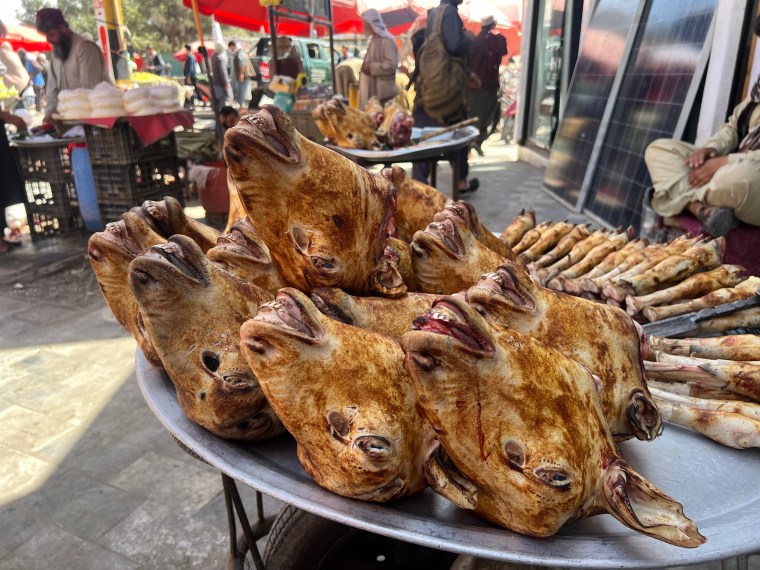
Across three weeks in Afghanistan, I had a conversation with one woman. She was an ethnic Afghan, but born in Sweden to parents who had fled Afghanistan during the Civil War. She saw me wandering around a mosque and we had an interesting conversation mostly about what it was like for her to travel in Afghanistan as a tourist. She said everyone treated her very respectfully, including the Taliban, who constantly reassured her that she was an honored guest. She wore a head cover everywhere, but her face was exposed and it was fine. She said that she encountered no trouble or discomfort talking to strangers, even men, though she did always have a male companion.
Aside from her, the only two women who talked to me across three weeks were beggars, one in Kabul and the other in Kandahar. Both held out their hands with the universal symbol of asking for money, said something to me I didn’t understand, and got the message when I turned away.
Aside from that, women never talked to me and rarely looked at me. They were out there, walking around on the streets, but there were definitely far more male than female pedestrians, maybe a 5:1 ratio. I walked by women all the time, sometimes brushed by them, but unlike the men who constantly stared at me and walked up to me and shook my hand and talked to me all the fucking time, the women almost always ignored me.
I never saw a woman older than 14ish without a head covering, but the extent of face covering was variable by city (and presumably ethnic group). For instance, in heavily ethnically mixed Kabul, I’d estimate that about 50% of women were completely covered, including the eyes. I’d say about a third of the women in Kabul had the bottom half of their faces covered but with eyes free. And I’d say the rest of the women had their faces completely uncovered. Of that final group, I’d say about 50% only had half of their heads covered. You can see all of these varieties except the last group in this picture:
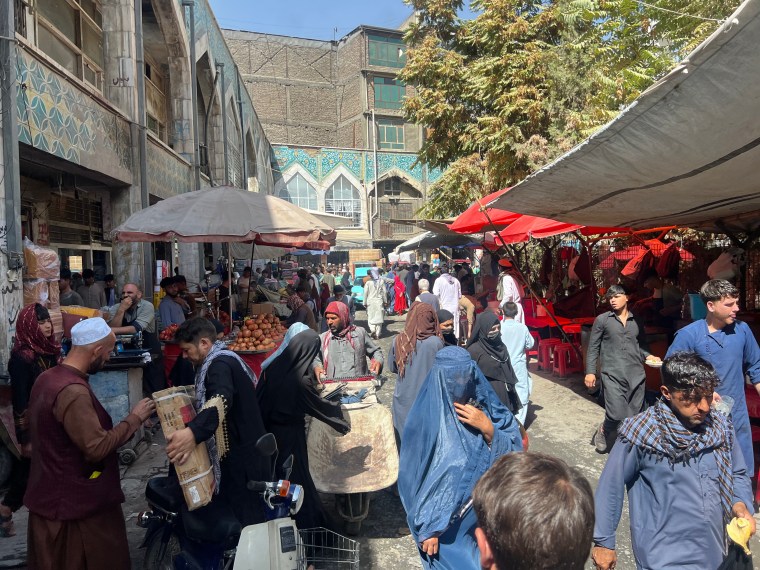
The variability in women’s covering was very interesting. To be transparent, the following is speculative based on what I witnessed and conversations with non-Taliban people. And since nobody seems to have a complete picture of Afghanistan, take this as an educated guess.
When the Taliban ruled Afghanistan in the late 1990s, all women were required to completely cover their heads and faces in public, and this was strictly enforced by the religious police, usually with corporal punishment. Under the revived regime that took power in 2021, I think that is still the official law, but enforcement is purposefully variable.
To me, it seems that the Taliban still strictly enforce the covering of at least half of a woman’s head, but beyond that, enforcement seems to be dependent on a mixture of geography and ethnicity. As I’ll describe later, Hazara women get far more leeway than other ethnic groups; the half-head coverings are very common in Hazara territory and the eye coverings are rare. Hazara women were also the only ones above age 14ish to look at me on the streets. Pashtun women seem to get the strictest enforcement; in Kandahar, I’d say 90%+ of the women had their eyes covered. Tajiks are in between, and I don’t think I saw enough Uzbeks to place them.
This ethnic-enforcement structure makes sense given the Taliban’s history. The Taliban came from the Pashtun areas, are strongly infused with Pashtun culture, and have the most Pashtun support, so the Taliban can get away with enforcing their laws most strictly on the Pashtuns. The Hazaras are the most culturally/religiously distant from the Taliban, the most opposed to the Taliban, and have had the worst conflicts with the Taliban, so at least for the time being, the Taliban seem to be taking a lighter approach to dealing with them. The Tajiks are inbetween on both counts, so they get the medium treatment.
You can see similar strategic enforcement when it comes to work. The Taliban do not want women to do any paid jobs at all, just to parent and maintain the household. Back in the late 1990s, the Taliban had no qualms about mass firings of women across all professions within 24 hours of conquering cities, with the notable exceptions of medical and NGO work, where women were so essential that the Taliban allowed some to maintain their jobs, at least for a time.
In 2021, the Taliban took over a country that had been officially governed by Western-ish laws for 20 years, so at least in the cities there were more female workers and professionals than ever. Once again, the Taliban forced the vast majority of them out of work, but they were a little softer this time. Today, women have some presence in Afghanistan’s medical and media industries, and ironically enough, education. I can also attest that they still work at the airport and for Afghanistan’s airlines, and in Hazara territory they can run shops.
I wish I had opportunities to talk to Afghan women, but they never arose, and I didn’t want to seek them out at the risk of getting myself or them or my guide in trouble. For what it’s worth, among the dozens of locals I talked to, there was widespread sympathy for women living under the Taliban. Granted, the Afghans who walked up to me to talk were disproportionately educated and liberal, but still, it’s worth noting how common it was for them to express concern and fear for Afghan women, to describe their pain when they were thrown out of school and work, and to worry about their future prospects. Afghanistan is a very rural, very conservative, and frankly, very backward country on the whole, but there is an educated urban elite with far more liberal proclivities, and it seems likely that 20+ years of Western-ish rule has inculcated at least some liberalism in the rural population.
Whether the Taliban will further liberalize their policies toward women or get stricter over time is one of the biggest questions of the entire Taliban regime (more on that later). In my personal experience, I found women to be slightly better treated than I expected given that many can get away with keeping half of their heads uncovered. But, then again, in 2024, the Taliban announced they were bringing back the punishments of public stoning and flogging for women, so maybe I’m being too optimistic.
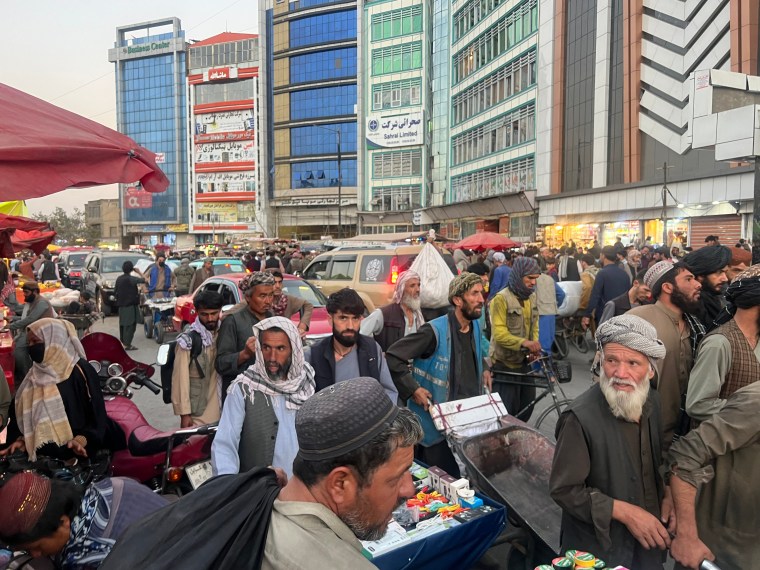
It’s worth pointing out that living as a man in Afghanistan isn’t a picnic either. Men are legally required to grow beards, and I’d estimate that 90% of men I saw had a beard that could be described as “bushy,” and about 40% of Afghan men had beards I’d describe as “epic.” However, it doesn’t seem like the Taliban still enforce the fist-length rule from the late 1990s, as young men especially tend to have shorter, more manicured, more fashionable beards.
I myself grew out a beard for the trip, though I doubt that I would be in any legal trouble for not having one. However, I’ve read about how US special forces used to be clean shaven, but when they were preparing to launch military operations in 2001 (or maybe before then?), they were given permission to grow their beards out because rural Afghans in particular see clean-shaven men as boyish or effeminate. I figured it was best to try to slightly fit in, though I do wonder if my beard provoked all the questioning about me being a Muslim.
I was also surprised to find so many people in Afghanistan wearing surgical masks, seemingly as a holdover from COVID-19. I learned that women sometimes wear them as their face coverings instead of traditional cloth set-ups (maybe it’s easier). A late-teenaged boy told me that the men wear masks after they shave so they don’t run afoul of Taliban rules; some guys perpetually shave to maintain a fashionable “European” look in private, even though it means always wearing a surgical mask in public.
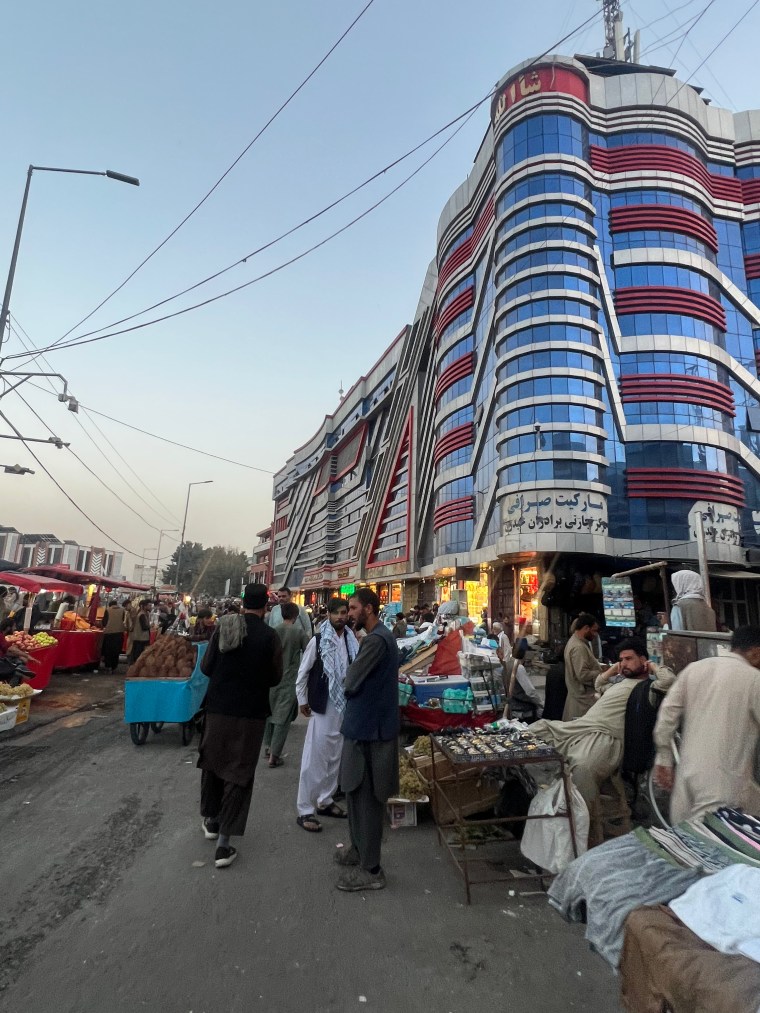
Day 2
Day 2 in Kabul started with a hotel breakfast of naan bread and scrambled eggs. Like most of the food in Afghanistan, it was very good (more on that later), but surprisingly, this quite-high-end-by-Afghanistan-standards hotel did not have coffee. Everyone, everywhere still drank tea all the time, and when they wanted a kick, they knocked back energy drinks (more on that later too), but coffee is relatively uncommon. Fortunately, my thoughtful guide knew I loved coffee, so he bought me a little jar of Nescafe that I would bring with me throughout the whole trip. In eight hotels across six cities, only three had their own coffee.
The day started proper with a longish taxi ride to the outskirts of Kabul to visit the Afghan National Museum. On the way, I marveled at the impossible work of the Afghan traffic police. I’m pretty sure these guys aren’t Taliban because they wear police uniforms, look the same in every city, and don’t carry guns. Their unenviable job is to control urban Afghan traffic, which they do by screaming at drivers who don’t thrust their vehicles through microscopic openings between other cars with sufficient aggression. On multiple occasions, I heard loud bangs which sounded kind of like gun shots, but were the traffic police smashing cars with their batons. I first heard it on my way to the museum, and my guide and taxi driver laughed their asses off.
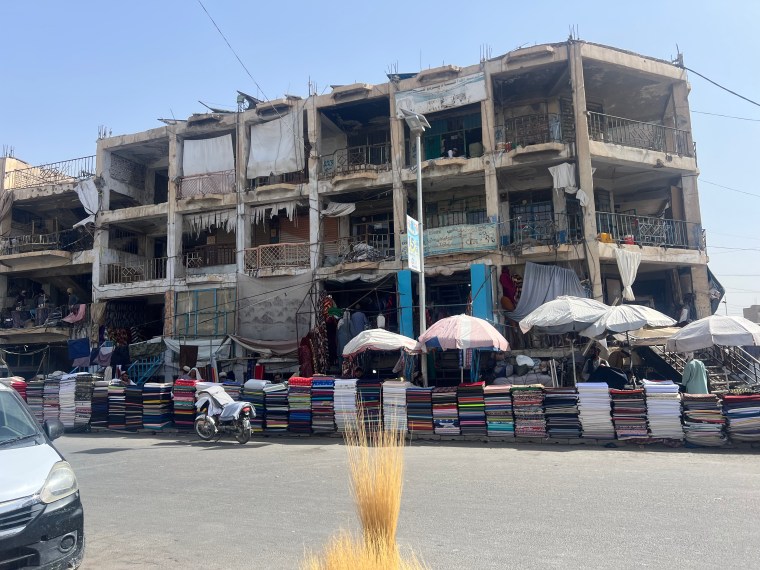
The Afghan National Museum is a pretty ramshackle building on account of a presumed lack of Taliban funding and it being bombed multiple times during the Civil War, but the collection was better than expected, with a lot of old weapons, furniture, treasures, etc. One thing that I learned, but that I should have expected, is that women are forbidden from entering the museum. A more unexpected thing I learned was that even in Taliban-ruled Afghanistan, diversity is our strength:
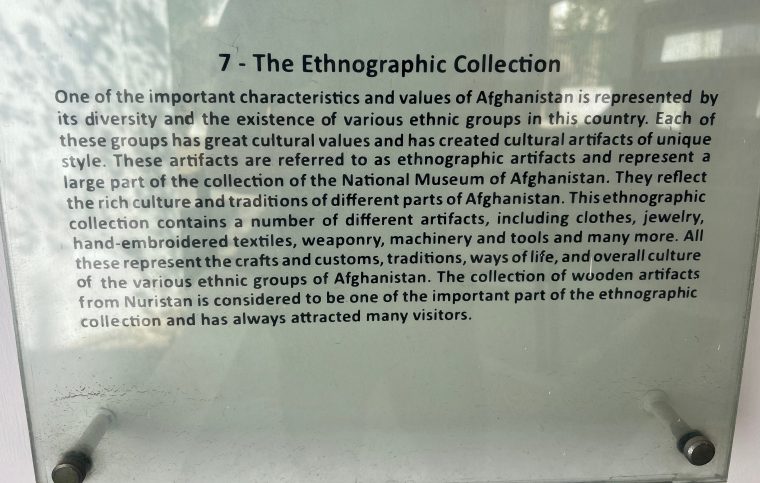
By this point in my life, I have seen many pottery shards in many museums, so I used the opportunity to talk to my guide more about his life and Afghanistan. He told me about how over the last few months, hundreds of thousands of Afghan immigrants had been kicked out of Pakistan (maybe Iran too?) due to rising tensions between the countries. He explained, as many Afghans would over the following weeks, that the Afghan economy had been abysmal since the Americans left. Nearly all the international aid dried up overnight, nearly every country in the world shut down international trade, and the Taliban are not good at economic management, though they are quite good at collecting their high taxes (he was paying about 33% on his tourism business’s profits). As a result, Afghans are begging to work abroad, but getting visas is extremely difficult and now that even Pakistan is off limits, the economy would get even worse.
When the topic of immigration came up, my guide asked me a bit about American immigration. First, also like many other Afghans to come, he asked about how Afghans could immigrate to America, and if there was anything I could do to assist any particular Afghan in that process. I told him I had no idea and no.
Then, presumably based on American media sources, he asked me if Americans hunt illegal immigrants. He knew there was a lot of anti-immigrant sentiment in the US now and that President Trump was going after them, so he wondered if lots of Americans were hunting them down. Like, not literally shooting them on sight, but pursuing and arresting them. I did my best to answer him.
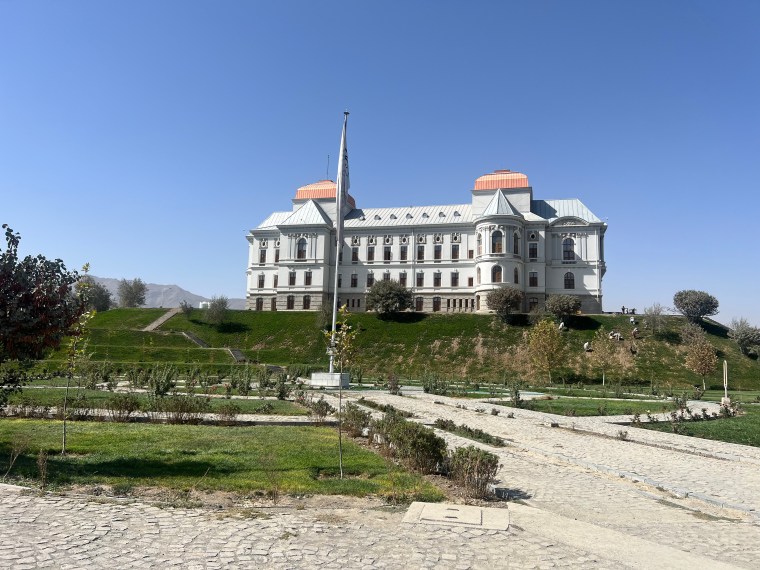
Next, we went to the Darul Aman Palace, which my guide said was where the Afghan president lived before the Taliban, which is false. The palace was built in the 1920s by the old Afghan monarchy, then it was set on fire by the commies in 1978, and then bombed a few times during the Civil War, but then rebuilt in the late 2010s and reopened in 2019. The following year, it was used as a COVID-19 treatment facility, and now that it’s a tourist attraction, women are forbidden from entering.
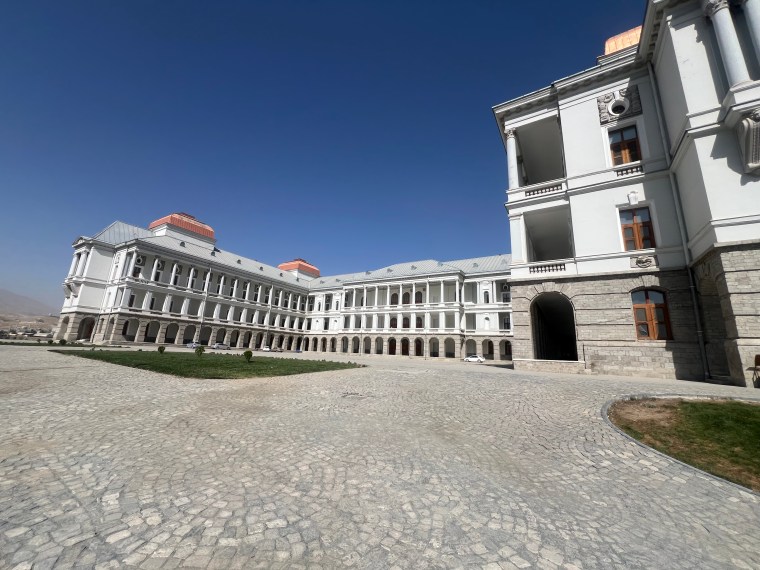
It’s a pretty cool building – a grand, gleaming neoclassical structure that could be at home in Austria or Hungary, but plopped on the outskirts of Kabul, surrounded by desert mountains. From the palace balcony, you can see the Afghan National Assembly building, which my guide initially misidentified as a mosque. It’s a massive and beautiful structure built at a cost between $90 million and $220 million, paid for by Indian taxpayers during the Western-backed regime, which now sits completely vacant. Afghanistan under the Taliban does not have a democracy and therefore does not have a legislative assembly.
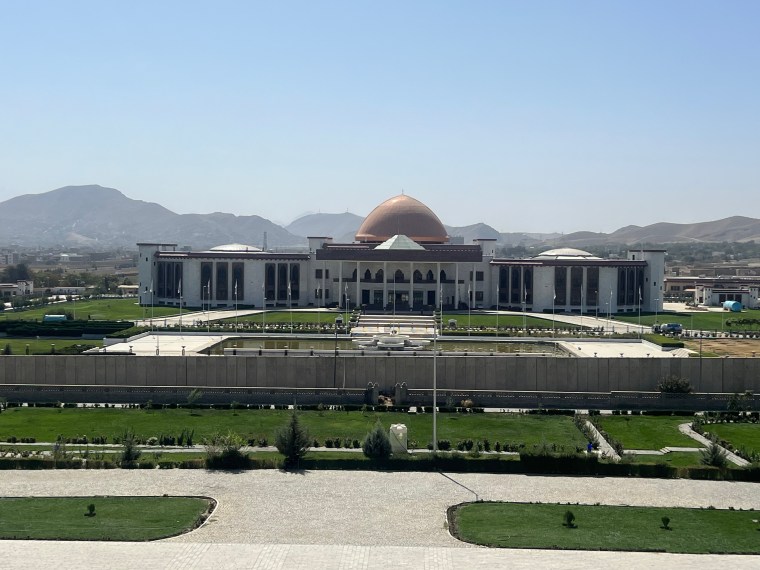
There was a Taliban checkpoint at the outside gate to get to the Darul Aman Palace’s exterior, and then another checkpoint at the building’s entrance. At the second checkpoint, after being patted down again, the Taliban guy used his walkie-talkie to call another Taliban guy, who took 20 minutes to come from somewhere else, and he turned out to be the nicest Taliban guy I had met so far. He gave me a free private tour of the whole palace translated through my guide. In the grand meeting room, he zeroed in on me, got serious but not threatening, shook my hand and held it for a solid minute, and spoke to me in Pashto. My guide translated that he was sincerely thanking me for coming to the palace and Afghanistan, that he assured me that Afghanistan was a truly safe country now, that the (Western) media told lies about Afghanistan to make people think it is dangerous, and that I should tell other Americans to visit Afghanistan. I thanked him for his hospitality and told him that Afghanistan indeed seemed very safe now.
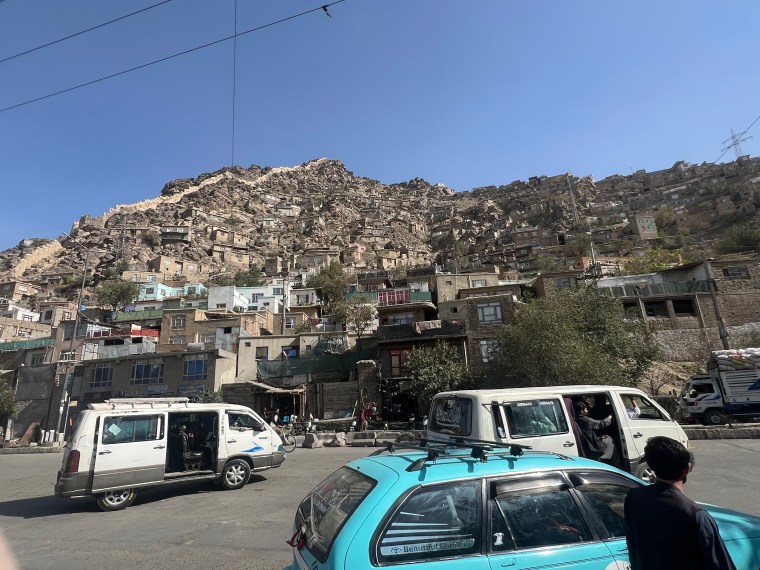
The next stop was Qargha Lake, which, according to Wikipedia, is a reservoir created in the 1930s by the construction of the Qargha Dam. In the 1950s, reformist then-Prime Minister Daoud turned the lake into a resort, which makes sense given its proximity to Kabul and the dearth of nearby water.
Today, I guess it’s still technically a recreational area, but, you know, a Taliban one. Which means that all the recreational things are closed and/or crumbling, and there’s a mostly abandoned amusement park, and women are forbidden. It’s a bit eerie to see those plastic swan boat things lined up and barely used: 
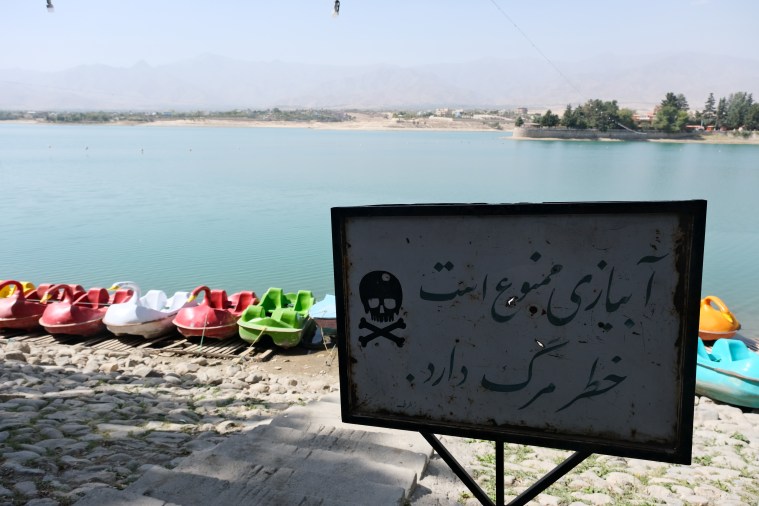
Sadly, I did not get a picture of the still functional bumper cars being ridden by a bunch of Afghan teenagers. Also, the reservoir appeared to be experiencing an algae bloom, which made it look disgusting and unswimmable. I doubt fixing that is high up on the Taliban’s priorities:
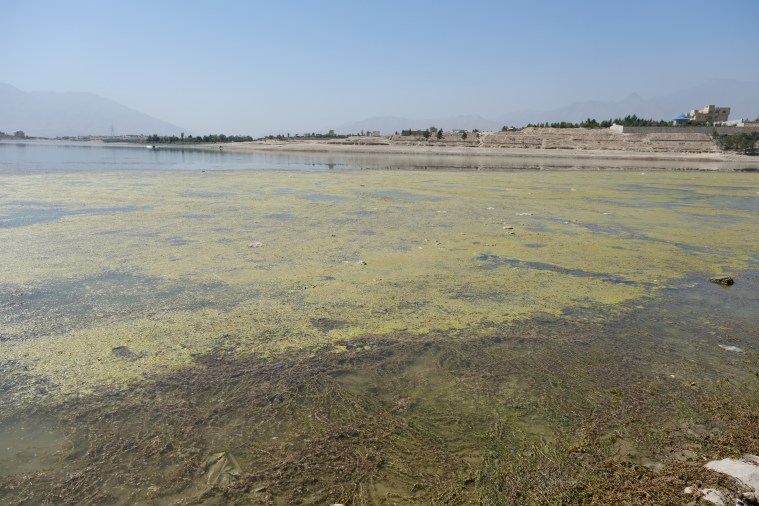
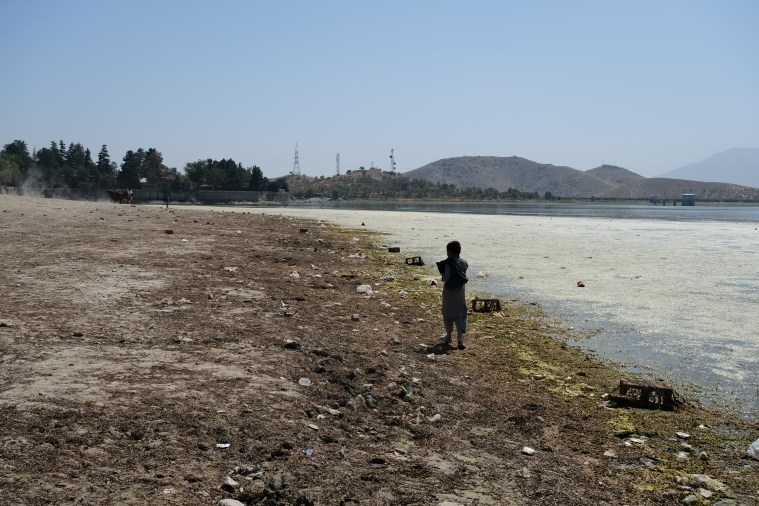
This was only Day 2 of my trip, and thus far I had spent every second outside the hotel with my guide, so I had been mostly spared from the many, many impromptu approaches by random Afghans on the street to come. But at Qargha Lake, I finally got a taste of it despite my guide’s continued presence.
There was a group of maybe a dozen kids with two or three adults, and they had four or five horses that they rented out for rides. I was not only probably the sole visitor at the lake that day, but likely the only white one, and so they mobbed me the second I got out of the taxi and didn’t leave me alone for the following 30 minutes as I walked around the lake, trying to get me to ride the horses. I’ve been in plenty of similar situations before while travelling, but I’ve never had locals repeatedly step their horses in my path, causing me to stop dead in my tracks and walk around the horses, all while they shouted at me over-and-over again with the two or three English phrases they know (mostly “hello” and “how are you?”). My guide tried to shoo them away, but they persisted until we left.
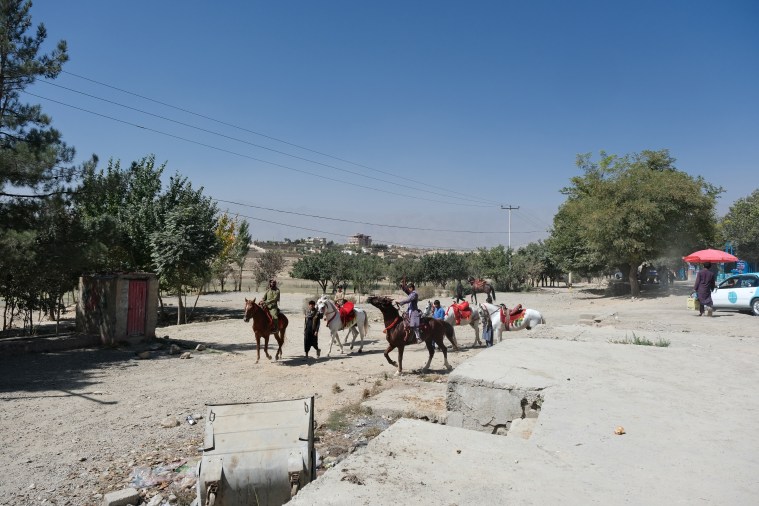
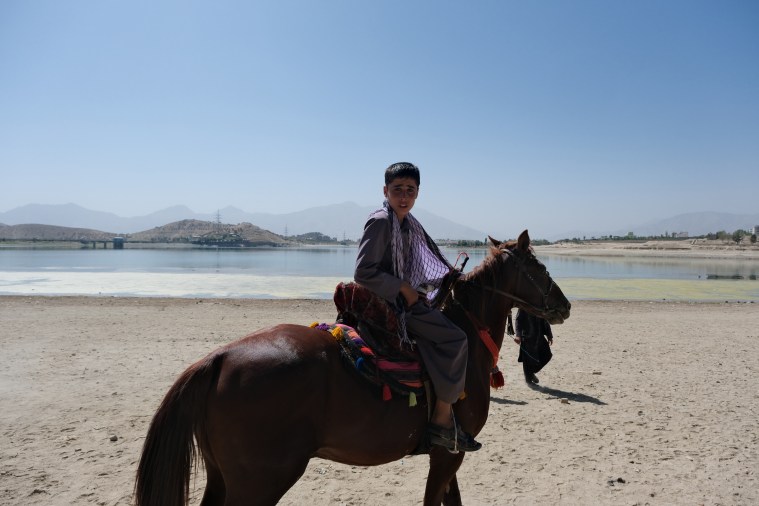
The last stop of the day was the Kabul Zoo, which I considered a daunting destination due to my experiences with zoos in poor countries. Sadly, they tend to be badly managed, underfunded, and the animals are often mistreated, usually by neglect, sometimes by more aggressive means. I hoped the Kabul Zoo would be a bit better due to being somewhat more well-known internationally. Back in 1978, a zoo in Cologne, Germany gave the Kabul Zoo a lion named Marjan who gained fame in Afghanistan and then globally by ruggedly surviving the communist era, the Soviet occupation, the Civil War, and the Western invasion, until finally dying of old age in 2002. He also survived… I’m just going to copy this part of Wikipedia:
“On March 27, 1995, a soldier sneaked into the lion’s den to show off his bravery to fellow soldiers. The man stroked Chucha, the lioness, who did not react, but Marjan attacked the man and killed him within minutes. The following day, the man’s brother threw a hand grenade in Marjan’s den in revenge of his death, seriously injuring Marjan. His eyes had to be removed by MDM, a PSF (Pharmaciens Sans Frontières) Logistics Officer who first called for help, MSF doctors and an Italian photojournalist, thus rendering him blind, deaf, and permanently disabled. Despite several operations, neither Marjan’s eyesight nor his mouth could be saved. He lost all of his teeth, making it impossible for him to eat boned meat. A ramp was also built for him to get back into his den, as he was seen falling a few times while trying to make it back inside.”
I was too late to see Marjan, but I saw his statue:
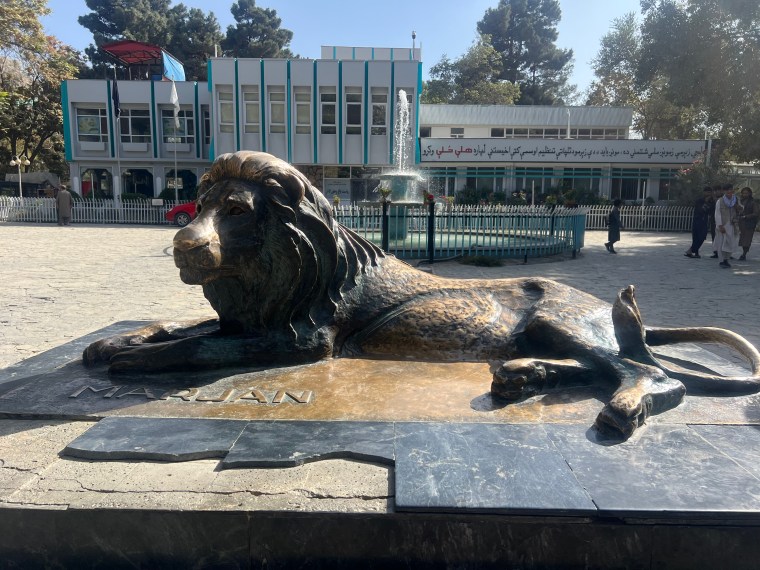
Aside from that, the Kabul Zoo was pretty bad by Western standards, but I’ve seen worse in other poor countries. There are lots of rough stone enclosures that are too small for large animals, and a lot of the creatures look ratty. Highlights included a pack of Afghan wolves (which look more like coyotes) and a leopard. The most confusing exhibit was “Dog.” By the look of them, I’m pretty sure they were Afghan hounds, which in the West, are a prestigious, expensive breed that often wins best-in-show awards:
Compare that to the zoo’s offerings:
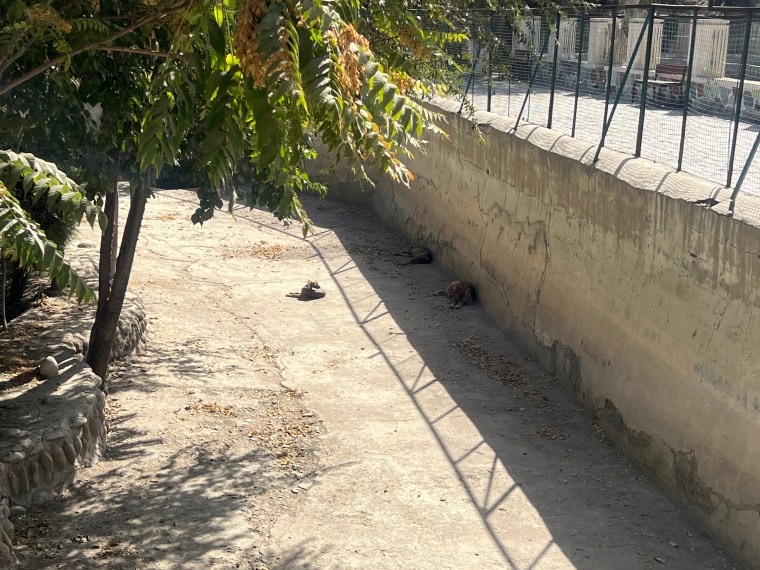
Other Kabul Zoo highlights were a monument to Mujahideen soldiers who died fighting the Soviets inexplicably built within the zoo’s confines, and an ice cream shop. I tried the ice cream, and it wasn’t the worst I’ve had in my life (that would be in El Salvador), but it was the most flavorless.
Also, as it should go without saying, women are not allowed in the zoo.
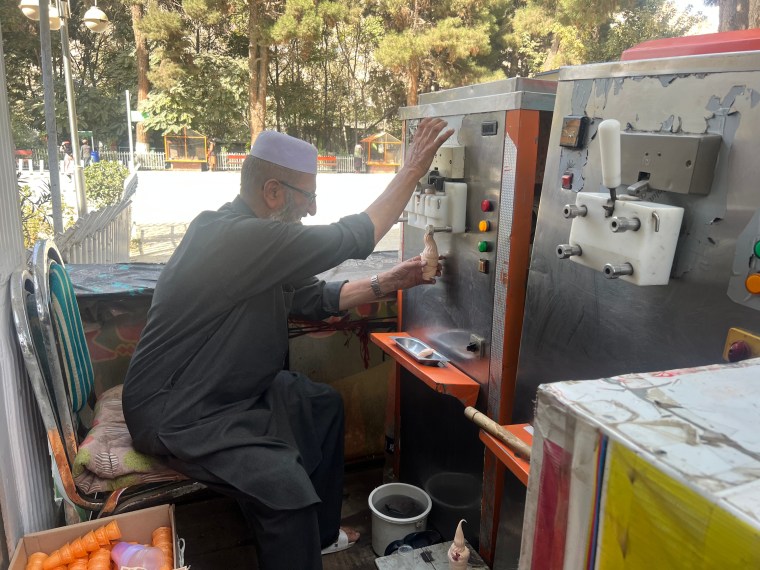
Permits
The worst thing about the Taliban is that they are religious extremist maniacs who want modern society to resemble 7th century Arabia, complete with the strict enforcement of medieval moral codes by horrifically brutal punishments, and they are willing to kill anyone in their path to realize this horrible vision. The second worst thing about the Taliban is that they are excruciatingly bureaucratic.
On the morning of my third day in Afghanistan and Kabul, I set out with my guide and his assistant (an even smaller man who spoke very little English) to get the permits I would need to travel throughout the rest of Afghanistan alone. Since I spent most of this saga in Taliban offices, and I, as a white American, didn’t want to be seen furiously typing notes on my phone, the following comes from notes I wrote that night recollected from memory, and I have to admit some fuzziness due to the sheer repetition and confusion of it all.
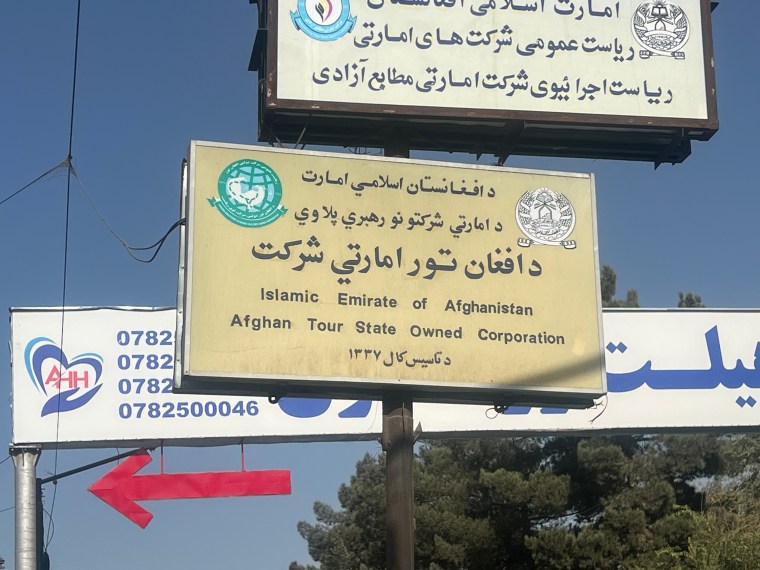
After breakfast, at 8:30 AM, my guide, his assistant, and I walked from our hotel to the Kabul office of the Afghan Tour State Owned Corporation. This destination was actually the result of an audible called late the night before by my guide. Since the Taliban had taken over in 2021, he had gotten tourist permits from the Ministry of Information and Culture, but within the last day or two, the rules had changed. The Afghan Tour State Owned Corporation had previously only managed tourist sites, but now it also ran the permits, so my guide’s preexisting contacts at the ministry were defunct. He had previously assured me that the permit process was easy, but now he had no idea what to expect.
We arrived at the office a little after 9 AM. It was four stories tall, looked like a commie block, and may have literally been built by Soviet money. We were waved through the first checkpoint outside the office, patted down at the second, and then shown into the building.
This was my first time in a genuine Taliban government facility in Afghanistan. Everyone walking around was a full-fledged Taliban and looked accordingly – long robes, turbans or just the little round hats, and absolutely massive luxurious beards. Aside from an occasional soldier passing through, there were no weapons. Obviously, there were no women.
We were directed to the second floor where a rug interrupted the tile floor a few feet from the stairs. Following the leads of my companions, before stepping on the rug, I took off my shoes and left them beside a bunch of sandals. All of the office rooms and the hallways between them were no-footwear-zones.
My guide politely spoke to a random Taliban guy in Pashto. That guy went into an office while we waited in the hallway, and brought back three more-official-looking Taliban guys. I will never forget one of them and I really wish I had somehow gotten a picture of him. I can only describe his appearance as fierce. To be cliché, he was right out of Hollywood central casting. Most of the AK-wielding Taliban soldiers in the street look pretty tough, but I have absolutely no doubt in my soul that this man used to live in a cave and has fired upon and possibly killed my countrymen. He had a reddish beard that sort of reminds me of Jaime Lannister’s hair in season 1 of Game of Thrones, where it’s intentionally made to look relaxed and natural, but the arrangement is impossibly perfect. But his most striking feature was his eyes, which had a positive canthal tilt and a permanent scowl.
Anyway, the fierce guy and the two other Taliban guys, all of whom looked to be in their 40s or 50s, all shook my hand, one-by-one. Then they spoke to my guide for about five minutes. I stood there in silence, politely smiling, not understanding anything except an occasional word like “American.”
Then one of the older Taliban spoke directly to me in excellent English. He explained that it was impossible for me to travel around Afghanistan without a guide. He very emphatically told me that since the Taliban had taken power, Afghanistan was safe, the cities and particularly the roads were secure, and that tourists like myself could go anywhere, but there were still uneducated people in rural Afghanistan who didn’t understand modern things, and they might be dangerous to me, so I need a guide to travel with me everywhere.
See if you can spot the contradiction.
I smiled and nodded. Then I tried to explain that I am an experienced solo traveller, and have done long trips through West Africa, East Asia, and most of the nearby Stans (though I didn’t call them that) and I assured them that I could safely travel around Afghanistan alone. I actually didn’t read Rory Stewart’s book until after this, but he found himself in numerous remarkably similar conversations back in 2001 where the locals kept insisting that solo-travel was too dangerous but he kept insisting that he wanted to do it anyway; though, in his case, Stewart really was risking his life while I was just being anti-social and thrifty.
All three Taliban guys, including the scary one, responded in slow but nearly perfect English, and reiterated their points without new content. I looked to my guide and he shrugged. I thanked the Taliban guys and told them that I would need some time to figure things out. They nodded and stood by while I sat on a bench in the hallway with my guide and his assistant.
I asked my guide if there was any way he thought I could get solo travel permits. He said no. I asked what I could do. He said I could take him with me for the next 18 days. I said I didn’t want to do that. He asked why, as he had multiple times previously during similar conversations. I repeated again the many reasons I prefer travelling alone (cheaper, control my own schedule, talk to more locals, etc.). But fearing that I had no options, I asked how much it would cost to travel with him for the rest of my trip. He said he would give me a discount and quoted a low figure, but when I factored paying for his room, board, and transport everywhere, the costs added up. He offered to give me an even steeper discount and let me bring his assistant, who barely spoke any English, but the costs still seemed high and then I’d be getting even less bang for my buck.
After ten minutes of circular discussion, I asked my guide if he was willing to try to convince whoever he needed to convince in the Taliban to let me have solo permits. My guide thought about it for a bit, shrugged, and said he would try.
My guide briefly spoke to the three older Taliban guys who had stood by the entire time. They said some stuff, my guide nodded, and smiled, and then the three Taliban guys walked back to their offices.
My guide, his assistant, and I then put on our shoes and walked up a flight of stairs to the third floor where we were told the higher Afghan Tour State Owned Corporation officials were. This floor had the same carpet deal, so we took off our shoes again. My guide talked to some random Taliban guy in the hallway who directed us to a specific office. Inside, there was an older Taliban guy sitting behind a desk, another Taliban guy sitting in a chair, and there were two big, fairly plush couches. According to Rory Stewart’s book, the Taliban didn’t use furniture in their offices during their first regime, so this was actually a progressive sight.
I nodded politely and said “salaam” to both of the Taliban guys, and then I sat down on one of the couches with the assistant, and my guide sat in one of the chairs. What followed would repeat in slightly different forms around half a dozen times over the next few hours. In Pashto, in an annoyed, slightly hostile tone, the Taliban boss would ask who I was and what I was doing there. My guide would explain. The boss would say something. My guide would explain that I was looking for solo permits. The boss would be annoyed and slightly hostile and say a bunch more stuff, presumably about how Afghanistan was simultaneously safe but also deadly to solo travellers, and my guide would politely smile and nod. Then my guide would say some stuff and a dialogue would begin, and over time, the boss’s expression and tone would soften, and he would even start to smile.
It was the same process my guide had gone through with the Taliban guy in the market who screamed at me for taking pictures. My guide was really good at this. He was a master at the soft approach, at showing just the right amount of deference to emotionally disarm an angry soldier or irritated bureaucrat, and then to earnestly press a case on my behalf, and he always won eventually.
At one point, the boss asked me in pretty good English where I wanted to go, and I listed off “Bamiyan, Ghazni, Kandahar, Herat, and Mazar-i-Sharif, and then back to Kabul.” I would also list this off about half a dozen times over the next few hours, and like every other time, the Taliban guy was somewhere between surprised and astounded, and made a comment like, “you will have seen all of Afghanistan!”
As with the Taliban guy in the market, I had no idea of the specifics of what was discussed between my guide and the boss, but they went on for fifteen minutes until my guide gave me a thumbs up. The Taliban boss wrote some stuff in Pashto on a piece of paper, signed it, and gave it to my guide.
The three of us got up, said thank yous and good byes, put our shoes back on, and walked down two flights of stairs to the building entrance while my guide filled me in a bit. He told me that he had convinced this Taliban middle manager that I was capable of travelling around Afghanistan alone without dying, and the middle manager said it was fine with him as long as someone further up the chain signed off on it. My guide said he thought he would be able to get me the permit now, and with a big smile, he said “anything that happens to you is on you, not my responsibility.” He was kidding, but not really.
We went outside the office building and walked about 100 yards to a tiny checkpoint-type building within the compound of the Afghan Tour office. There was a guy inside whom I paid 20 Afghanis (about $0.30) to make photocopies of my passport and the piece of paper the boss gave us after I signed it.
With new papers in hand, we went back into the building, back to the second floor, took off our shoes, and went into the office of one of the older Taliban guys from the initial group of three. I said hello, sat down on a couch, and my guide went through the same soft-talk negotiating which yet again softened up the irritated bureaucratic Taliban.
This time the talking went longer and I had about 30 minutes to silently kill. This gave me an opportunity to read and reread the numerous Taliban motivational posters hung around the room in the form of loose-leaf papers with single phrases on them and no pictures. They obviously weren’t mass-produced, but they had the same basic function and purpose as Office Space-style corporate motivational posters. Again, I couldn’t take pictures or take notes, so I ended up only remembering two out of the five or six, but I liked the one that said, “There are no savings in life, live it all.” That is, unironically, a pretty good “carpe diem” alternative.
The more worrying motivational poster read, “Laugh with everyone, but trust no one.” That was exactly the potential mentality that most concerned me about visiting Taliban-controlled Afghanistan as an American tourist. What if all the cordial Taliban in this building and the slightly less cordial AK-wielding ones outside it were laughing with me but harbored resentment? What if, at the opportune moment, or in response to some sort of likely Trump-induced international conflict, they stopped laughing, and they arrested me, and detained me, and held me as a political prisoner and eventually cut my head off? That was all unlikely, but still… I don’t think that’s a great poster to hang up in a government tourist office.
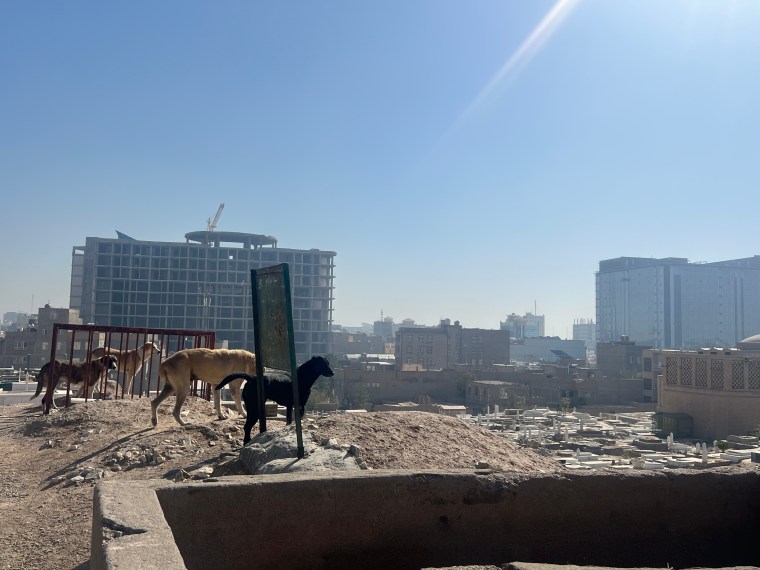
This Taliban boss also asked me where I wanted to go in Afghanistan, I told him, he expressed amazement, then he hand-wrote something in Pashto on another piece of paper and signed it, and then I signed it, and then we thanked him. Then we left the office, put on our shoes, walked up a flight of stairs, took off our shoes, and went to yet another office. But this one was bigger, and it had a bigger desk, and my guide told me that it held the head of the entire Kabul Afghan Tourist State Owned Corporation office.
Fortunately, the big boss was the nicest Taliban guy in the building. My guide didn’t have to go through the whole soft-play negotiation; he just introduced me and some hands were shaken, and then when I sat down, the boss began talking to me in the best English I had thus far heard in the country. He, like every other Taliban before him that day, welcomed me to Afghanistan, thanked me for visiting, and assured me that I was an honored guest who would be taken care of. Then he asked me some questions about my background and the US, which I answered, and I actually started to feel pretty comfortable. He asked me where I was planning to visit in Afghanistan, I listed off the cities, he said wow.
Then, without breaking his smile, he told me that my trip was impossible without a guide. He repeated the whole thing about Afghanistan being perfectly safe but also a tourist death-trap, but then added a new argument: it would be impossible for me to get around the country alone. I don’t speak Pashto or Dari. There was no way I could book or find hotels, use taxis or buses, or locate any tourist sites. I couldn’t even ask for help. He said sorry, but solo travel was simply impossible.
Clearly this man did not know that he was speaking to the legendary travel blogger Matt Lakeman. I cooly explained that through the use of Google Maps, Google Translate, and new AI-assisted technologies, I have travelled throughout West Africa, East Asia, the Indian subcontinent, the nearby Stans, parts of South America, and virtually all of Europe (I left out Ukraine during the war because that would make me seem CIA-ish), and could travel anywhere on earth alone. I thanked him for his concern and hospitality, and for the tea his assistant was in the process of delivering, but I assured him that I was confident in my ability to travel throughout Afghanistan alone.
He didn’t buy it. He smiled at me for a silent moment and then turned to my guide. Then I waited for at least 20 minutes while they talked, and I flipped through a Taliban travel guide on the table in front of me and tried to figure out what “cockroaches” is supposed to mean here:
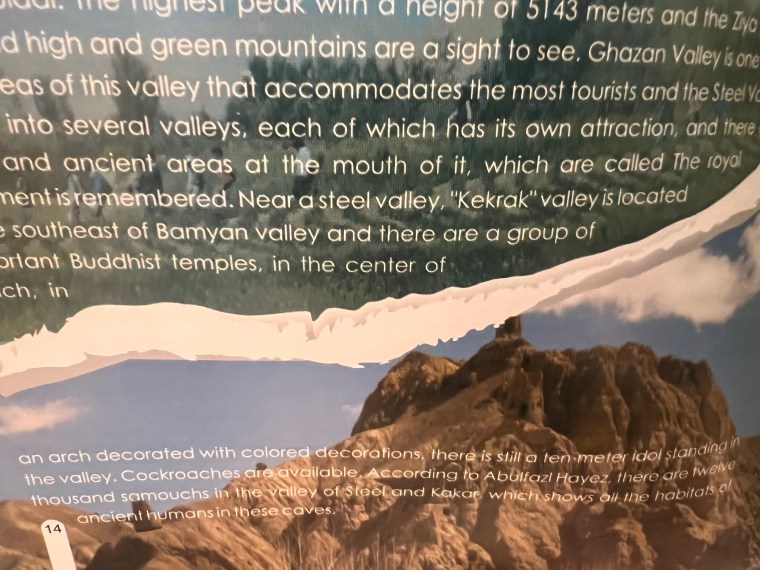
I looked up when I heard a natural pause in the conversation, and my guide was smiling with a big thumbs up. I looked at the big boss man and he smiled and said, “ok.”
During the brutal Afghan Civil War of the 1990s, Taliban supreme leader Mullah Omar famously commanded his entire military and civil organization by hand-writing notes on scraps of paper and having them hand-delivered by couriers to various generals and administrators throughout conquered Afghan territory. At this point, I had gotten my version of something like that – a piece of paper with official Afghan Tour State Owned Corporation letter-head containing a hand-written note from the head Taliban boss guy giving me permission to travel throughout six provinces – Kabul, Bamiyan, Ghazni, Kandahar, Herat, and Mazar-i-Sharif of Afghanistan – without a guide in contravention to the standard laws of the Emirate of Afghanistan as ordained by the Taliban. Or at least that’s what I assume it said, I can’t read Pashto.
I thanked the big Taliban boss profusely and gave him an even bigger handshake, and after we walked out of the room, I mega-thanked my guide and his assistant. They had done it. They had defied ad-hoc-two-day-old maybe official Taliban tourism policy and got me a solo travel permit. They were worth every Afghani I had overpaid them.
The guide was extremely happy for me, but he said we weren’t done here yet. In fact, in retrospect, we weren’t even half done. Admittedly, this is where my recollection and precise number of offices gets a bit hazy, but here’s my best recounting.
My guide, his assistant, and I put on our shoes, went down one floor, took off our shoes, went to the office with the motivational posters and spoke to that boss. He signed my permit. We left the office, put on our shoes, walked back up to the third floor, took off our shoes, went to an entirely new office, and got the permit signed by a new Taliban boss. Then my guide said we need to pay. I asked how much and began to get my Afghani out of my bag, but he told me to stop.
Instead, my guide waited in the office while he sent me with the assistant out of the office building. We put our shoes back on, walked down three flights of stairs, left the building, left the building’s compound, walked two blocks, and went into a bank. There, we spent 20 minutes muscling our way to the front of a “line” to the bank teller, and as per instructions given to the assistant, I paid 6,000 Afghani (~$92) or 1,000 Afghani for each province on my list. I’m reminded of my experience of getting a tourist visa for Liberia when I was in Guinea; they made me pay for the visa at a bank, I strongly suspect because the Liberian government doesn’t trust its own consulate workers not to steal visa fees.
The assistant and I walked back two blocks, into the compound, into the building, up three flights of stairs, took off our shoes, and went back into the same office where my guide was waiting. We gave the Taliban boss a bank receipt, and he signed my permit. The three of us left the office, put on our shoes, went down one floor, took off our shoes, and went to a new office which contained a Taliban boss behind a desk, another Taliban guy behind another desk, and a third Taliban guy sitting in a chair, and, as far as I could tell, the only other tourist in the building besides me (a Russian), as well as his tour guide. So, including me, my guide, and my guide’s assistant, there were eight people in the small office room. Needless to say, the couch was full.
This boss asked where I was from, what cities I was visiting, etc., and signed my permit. Then we sat in the room for a good thirty minutes while one of the Taliban guys behind a desk made 5,000 copies of my passport and permit. I chatted with the Russian and his guide and heard a bit about their trip. When the copying finally ended, I thanked and shook hands with five people, and then left. We put on our shoes, walked up a flight of stairs, took off our shoes, and went back to the room with the head Taliban boss.
He smiled and greeted me warmly with another handshake, checked that my permit had been signed by however many other Taliban people and that I had paid the fee, and then he chit-chatted with me for ten minutes about Afghanistan. He then explained to me (as my guide already had), that when I travelled around the country, I would have to stop at the Afghan Tour State Owned Corporation in all five other provinces I would be visiting (this visit counted for Kabul), show them this permit, and then get another permit specifically for that province. I said that I understood. The boss asked me how I would find the office in each city. I said that I would use Google Maps and ask people for directions because I am an experienced traveller.
He didn’t buy it, and this time, he was right. For some reason, none of the Afghan Tour State Owned Corporation offices are on Google Maps, and I would come to find that most Afghans don’t know the difference between the Afghan Tour State Owned Corporation and the Ministry of Information and Culture. The boss said he would get me the phone numbers of all five offices so I could call them upon arriving in each city and ask for an address. I thanked him, shook his hand again, and he wished me safe travels in Afghanistan.
We left the office, put on our shoes, walked down a flight of stairs, took off our shoes, and walked into the final office of the day. Sitting behind a desk, all alone in a fairly large room, was the fierce Taliban guy with the incredible beard I had met at the start of this journey, which was somehow about 3 hours ago by this point. He looked up at our entry with a gleam in his eye like he wanted to behead me, but I’m pretty sure that’s how he always looks. We said hello again, shook hands, and my guide explained that we were to be given the phone numbers of the bosses of the Afghan Tour State Owned Corporation branches in Bamiyan, Ghazni, Kandahar, Herat, and Mazar-i-Sharif. The fierce Taliban guy nodded fiercely.
There was no official process for this ad-hoc tourist assistance. The fierce Taliban guy took out a worn booklet, flipped around to a bunch of pages, and then wrote down all five cities and all five phone numbers on a Post-it note (three numbers on the front, two on the back). Despite his quite good oral English, I got the sense that he wasn’t used to writing English, as he seemed to put a lot of effort into every line of every letter. He handed it to me, shook my hand, and with perfect scowl intact, said, “welcome to Afghanistan.”
Me, my guide, and his assistant left the office, put on our shoes, walked down a flight of stairs, and left the Kabul office of the Afghan Tour State Owned Corporation.
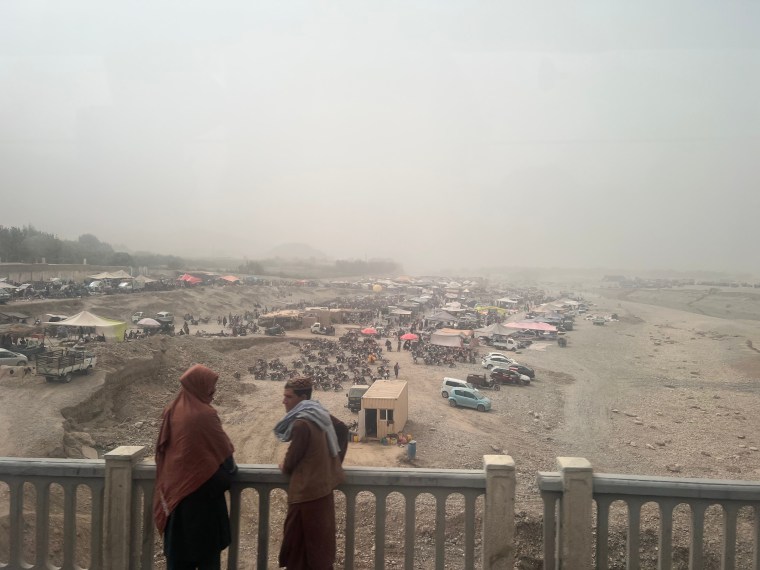
Dealing with the Taliban
In 2025 Afghanistan, the Taliban are triumphant. They won a big war and conquered Afghanistan again. And this time they didn’t just beat the other Afghan warlords, but the strongest military on earth. They are so proud of this that by Allah they fly their flag over every inch of Afghanistan they can:


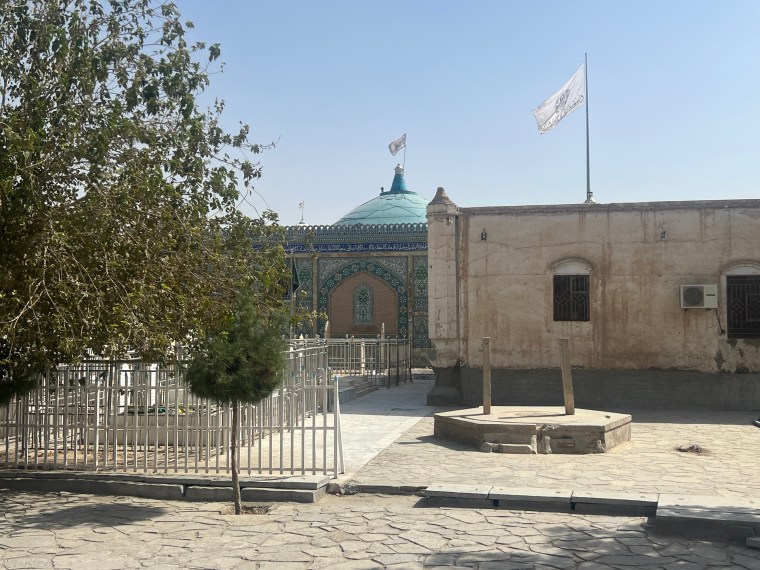
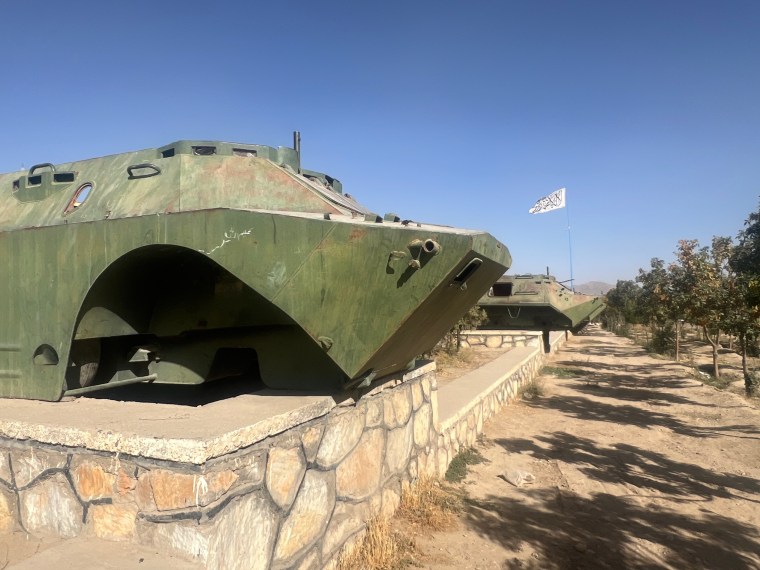

I even bought a Taliban fridge magnet:
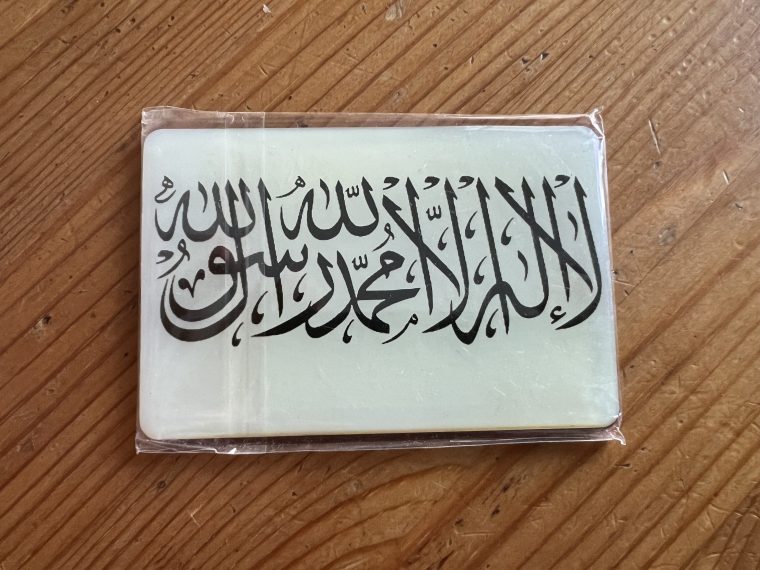
There’s a point of confusion that more than one person has asked me about and which I previously asked my guide about – what exactly is the Taliban now? Is it synonymous with the Afghan government, or is it an external entity that dominates the government?
My answer is that I’m still not entirely sure. But my best attempt at an answer it is this analogy – the Taliban is to the Islamic Emirate of Afghanistan what the Communist Party was to the Soviet Union.
Prior to August 2021, the Taliban was an organization, but also a general movement. In the 2010s, there were plenty of rural Afghans who described themselves as Taliban and fought against the government but had little or no formal connection to the organization structure led by Mullah Omar. After August 2021, the Taliban established the new state called the Islamic Emirate of Afghanistan. Sometime around that point, the Taliban tightened up its organization and even handed out membership cards (as one Taliban guard in Herat showed me).
However, in a Taliban office in Herat, I met a low-level government official who was not Taliban. Or at least that was what he told me. I’ve also read that in the immediate aftermath of the conquest, the Taliban retained almost the entire police force that had served the previous Western-backed government.
So the Taliban is generally but not entirely synonymous with the Afghan state. My guess is that even the Taliban recognized that they didn’t have enough qualified personnel to fill every government position, especially in the non-Pashtun provinces, and especially because the bulk of the Taliban consists of barely-literate soldiers. So, since 2021, my guess is that the government of the Islamic Emirate of Afghanistan consists mostly of Taliban (especially its military and central authority in Kabul), but there are plenty of low-level and provincial posts held by non-Taliban.

In the immediate aftermath of the Taliban’s re-conquest of Afghanistan in 2021, the big question was, had the Taliban changed? Sure, they had won the war and were triumphant, but they had gotten tens of thousands of Afghans killed in the process, and now they are ruling over an Afghan population that is used to 20 years of liberalish rule. Would the Taliban revert to their late-1990s form with the public executions of adulterers, or would they embrace a new moderate-by-their-standards form of rule?
As of writing this in late 2025, the Taliban have been relatively moderate. As with their initial conquests in the mid-1990s, when the Taliban re-took power in 2021, they did so with minimal friction and violence. Taliban troops were highly disciplined and not only engaged in remarkably little looting or revenge killing, but vigilantly prevented looting and killing by other Afghans. The Taliban leadership signed death warrants for a few high-level old government officials, but otherwise issued mass amnesty for everyone who had served the old state or supported the Americans. It really was a clean slate for the Afghan people.
Once firmly in power, the Taliban unveiled the same basic Sharia law structure they had used back in the 1990s, but some exemptions were carved out; for instance, women are permitted to work in a few industries (healthcare, education, airlines, etc.), young girls can go to school, women are permitted to have their faces uncovered, public executions are still done but are far less common, and in general, the Taliban has pulled way back on the old school Islamic punishments like cutting off hands and stoning. Thankfully for me, tourism is now permitted and encouraged. As I’ve mentioned and witnessed, there appears to be considerable regional variance in how strictly hardcore Sharia rules are enforced, with the anti-Taliban Hazaras getting the lightest treatment and the pro-Taliban Pashtuns getting the harshest. And at least according to some locals I talked to, the Taliban seem to be more ethnically neutral than before, as befitting their growth in non-Pashtun personnel over the last two decades.
Writing in the immediate aftermath of the reconquest, Graeme Wood didn’t buy this alleged moderation:
Yet those who wish to avoid being force-fed their own testicles should probably not read too much into the kinder, gentler Taliban initiatives currently being implemented in Kabul. The Taliban are cruel, but they are not fools, and magnanimity early in their rule does not mean that they will be any less vengeful than they were at the height of their power, in the 1990s and 2000s…
Indeed, the leaders of the Taliban show no sign of mellowing. Why would they? For the past 15 years, they have been unremittingly violent, and for this pitilessness they have only been rewarded. They played at negotiating, but dishonestly, and only to accept the terms of American surrender. Moreover, the current generation of leaders is simply meaner than its predecessors, and in some cases hardened by time in Guantánamo Bay. The first generation of Taliban focused on overcoming its Afghan rivals. This one has taken on those rivals—and NATO—and has now won decisively. An Afghan in Kabul who knows senior Taliban told me they are “much more strict, much more hard-line.”
I asked many local Afghans if they believed the Taliban would get more moderate or severe in the future, and most believed the latter. They tended to emphasize that the Taliban leadership is extremely genuine in their radical beliefs, that they would flip a switch and go back to 1990s-style rule if they could, but they are still figuring out basic statecraft. As evidence of Taliban sincerity, locals often pointed to examples of the modern Taliban doing obviously stupid things for the sake of their beliefs, like abusing international aid workers or shutting down the internet (more on that later). It was common for Afghans to tell me within 10 minutes of meeting that they want to leave Afghanistan due to Taliban rule, usually due to economic mismanagement, but also due to concerns that the screws could be tightened at any time and send the country back to the Dark Ages.
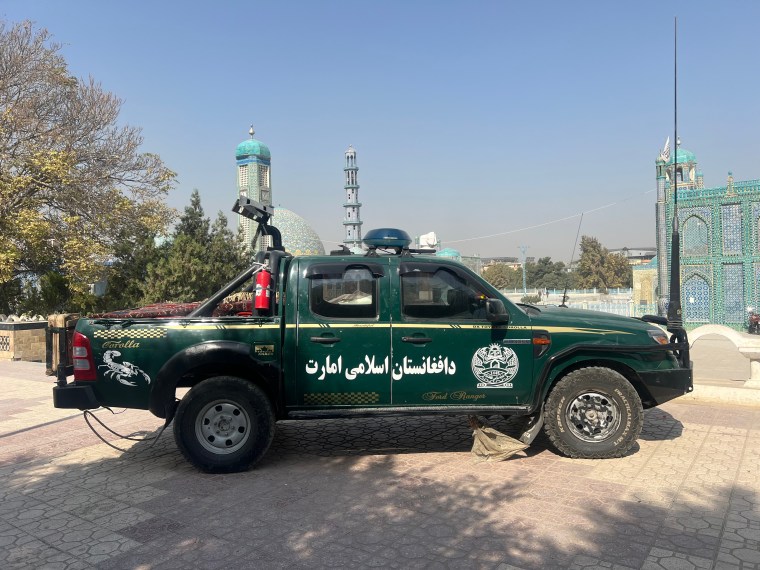
While I generally trust these judgements since they come from people with far more experience with, and knowledge of the Taliban than I possess, let me offer a few small optimistic counterpoints:
First, as already mentioned, the Taliban’s official policies and enforcement of Sharia law are at an all-time moderate period.
Second, the Afghans I talked to all spoke English to some degree, so they were disproportionately well-educated and liberal, and therefore prone to be suspicious of the Taliban (albeit for extremely good reasons).
Third, despite how incredibly poor Afghanistan is, it can’t be underestimated how much the country and world have changed since the late 1990s. Even in Afghanistan, which has arguably the second-lowest GDP per capita in the world, many people have cell phones with internet access. And while there are nominal blocks on websites put in place by the Taliban, any Afghan with a brainstem knows how to get around them to go on Instagram, Wikipedia, CNN, Pornhub, etc. And that goes just as much for men and women, millions of whom were educated under the old regime. The Taliban are willing to enact the worst violence imaginable to achieve their goals, and they currently have the strongest monopoly on force in their history, but they still have limits to their power. It’s plausible that the modern Afghan population simply won’t be as compliant as the old one, and thus the Taliban will strategically relax their rules to placate the populace.
And fourth, while I trust Wood’s sources that the Taliban leadership are as bad or worse than ever, I’m not sure the same can be said of the Taliban rank-and-file. In 2023, the Afghanistan Analysis Network published an article that went semi-viral. In it, five low-to-mid-level Taliban guys described the transition from the pre-2021 war, when they were running around Afghanistan shooting enemy soldiers, to the post-2021 era when they were given office jobs or guard duty in Kabul. Rather than revel in the glory and freedom of this new Afghanistan for which they risked their lives, the interviewees complain about how ugly Kabul is, its high rents, its traffic, the drudgery of their new jobs, working 9-5s, and general boredom. They missed the excitement of fighting, the brotherhood with their comrades, and the freedom of being in a revolutionary movement. Since they were teenagers, they lived and nearly died as heroic warriors; now they are boring bureaucratic drones in an ordinary government machine. Some day, some visionary filmmaker will make a post-2021 Taliban version of Office Space.
I witnessed a little bit of this myself. In Herat, I got lost looking for one of those fucking Afghan Tour State Owned Corporation offices, and ended up in a Ministry of Information and Culture office. I asked a Taliban guy behind a desk for help, and after he told me where the real office was, he asked me to have tea with him. On a whim, I said yes, and five minutes later, I was surrounded by seven or eight other Taliban guys, all in their early 20s, that the first Taliban guy had called in to meet me. Only the first guy spoke English, so he translated while each one asked me excited questions about my trip and the United States for the next hour. One Taliban guy asked if I could take him back to the US and the others laughed and said they wanted to come too. One kept showing me pictures on his phone of nearby landmarks and a cave that he saw on vacation. One asked if I wanted to spend the day with him walking around Herat and promised me that he would show me all the best spots in the city. They asked for my Instagram and were shocked when I said I didn’t have one.
Obviously, this is not scientific in the least, but I did not get the sense that these Taliban guys wanted to publicly stone adulterers to death or decapitate apostates or cut the hands off of thieves. I have zero doubt that every one of them had beliefs that the West finds abhorrent, but they did not strike me as consummate zealots, while the fierce Taliban guy and his comrades in the Kabul office actually did. I find it plausible that over time, younger Taliban will move up the ranks, and the sheer power of cultural modernity will have a moderating force on the Taliban.
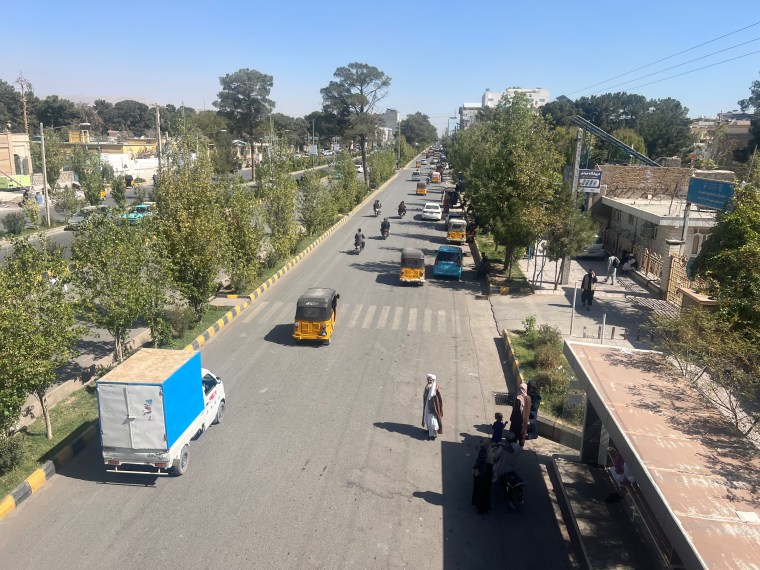
With all that said…
I very rarely watch traveller YouTube videos or read traveller blogs, but I did a bit before this trip to prepare myself. In a lot of post-2021 accounts, travellers say that the Taliban they encountered were extremely friendly. You can even find a lot of pictures with smiling Taliban soldiers, guns included. The often explicit sentiment is that the inherent hospitality of Afghanistan, combined with the Taliban’s need for tourist dollars, has filtered down to the rank-and-file Taliban, producing an exceptionally friendly modern Taliban.
This was not my experience. I found most Taliban to be somewhere between standoffish and rude, especially the AK-armed ones on the streets.
They weren’t outright hostile. Out of the maybe 30+ with whom I interacted, none of them threatened, intimidated, or insulted me, or made any aggressive comments about my Americaness, or made me feel like I was in any proximate danger. But most were curt and unfriendly in tone and body language. If I may be very slightly literary, I’d say that many stared at me with hardened expressions. While so, so, so many other Afghans immediately greeted me with smiles and friendliness, Taliban guys tended to be cold.
Somewhere, maybe on a podcast, I heard that the Taliban higher-ups had recently ordered their rank-and-file to stop taking pictures with foreigners. Maybe I happened to come to Afghanistan in the post-Taliban friendliness era. Fortunately, after being rejected thrice, I managed to get one picture of real, live, AK-wielding Taliban, two of them in fact:
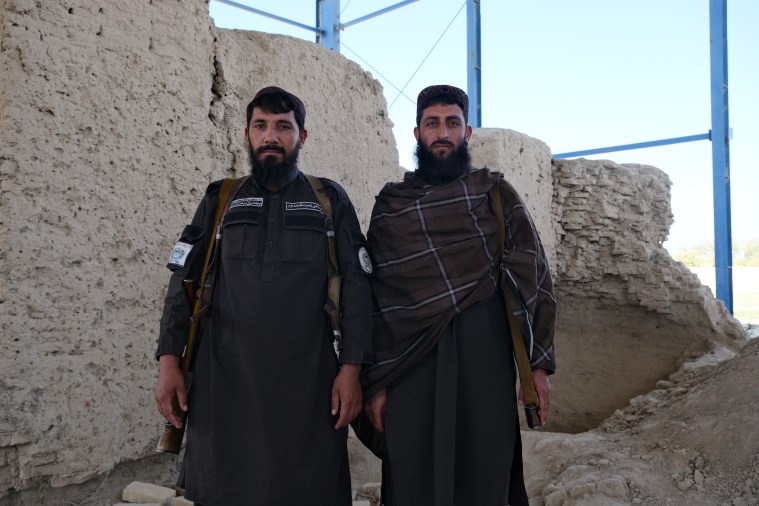
I’ll go through more Taliban interaction anecdotes in the sections ahead, but to make some generalizations, I will divide the Taliban with whom I interacted into two categories: office Taliban and soldier Taliban.
The office Taliban consisted of the Taliban at the Afghan Tour State Owned Corporation, at the offices in the other five cities, and a few other offices I incidentally had to visit. These guys were unarmed, usually older, were clearly better educated, and spoke mediocre-to-excellent English. They always offered me tea and usually some food. They always asked me questions about travelling around Afghanistan, but rarely about the US. They tended to be more polite, but a little annoyed at having to deal with me.
When interacting with the office Taliban, I always thought about the Afghanistan Analysis Network article about the ex-Taliban warriors-turned-bureaucrats. Maybe the article colored my perception, but that was indeed sort of the impression I got from the office Taliban I met. They seemed very bored. They often sat on their phones, especially the lower-ranking ones. They tended to be pudgy, which is pretty rare in Afghanistan. I’m serious about the Taliban regime being extremely bureaucratic, and the office Taliban bear the brunt of that. Each one of my visits to an office meant filling out a bunch of forms and getting them stamped and copying them and giving some to me and putting others in folders that go into filing cabinets, etc. After visiting the Afghan Tour State Owned Corporation in Kabul, I asked my guide if he thought all the Taliban I met there used to be fighters, and he said pretty much all Taliban everywhere were former fighters.
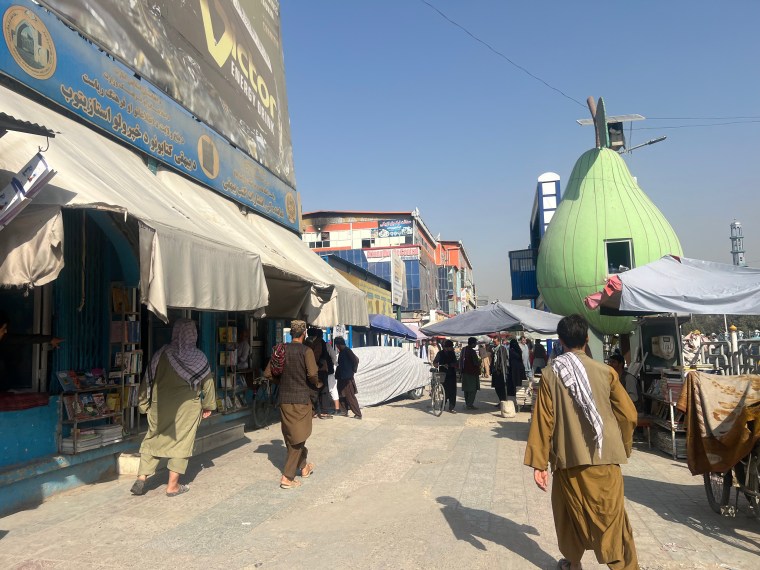
I interacted with just as many soldier Taliban as office Taliban. During my travels, it was very common for the former, who were armed and omnipresent throughout all the cities, to spot me on the street, wave or call (often by shouting) me over, and say something in Pashtun (or Dari). I learned to smile, say “salaam,” and dig my passport out of my bag, along with my local permit. They might ask me a question or two, which I wouldn’t understand, which I would answer by smiling and saying “American” or “only English.” They might ask some more questions, but eventually get the point, and then they would return my passport/permit, maybe give me a handshake and a farewell, and send me on my way.
Interestingly, the rate of this occurrence varied widely by region. In Kandahar, the ultimate Taliban stronghold, I’d say that 80% of random soldier Taliban on the street who saw me did a permit check, meaning I’d be stopped every 20-30 minutes. In Bamiyan and Herat, it was more like 10%, in Mazar-i-Sharif and Ghazni, it was probably 30%ish, and I can’t judge Kabul because I was almost always with my guide.
The soldier Taliban are clearly younger, gruffer, less educated, ruder, more standoffish, rarely speak any English, but are arguably equally as bored as the office Taliban. I was clued into this by a hotel manager in Kandahar who explained to me that I was usually stopped not because there is any specific regulation, or even for the sake of security, but because the soldier Taliban are curious about me. Aside from shooting at them, few if any of the rank-and-file Taliban have interacted with a foreigner. After hearing this, I noticed that during my permit checks, the soldier Taliban often pored over my passport, studying each line even though they almost certainly couldn’t read English. They just wanted to look at it.
1/16/26 EDIT – The BBC published an article about the Taliban two days ago (sent to me on email and in a comment on this essay) which is big news and relates to a bunch of things mentioned in this essay. See here: https://www.bbc.com/news/articles/cg7vdpy1l2vo
Essentially, there is a division within the Taliban between a “Kandahar group” led by Taliban Supreme Leader Hibatullah Akhundzada and a “Kabul group” led by a bunch of ministers. The Kandahar group is ultra-conservative and wants to bring Afghanistan back to the days of the Taliban’s rule in the late 1990s; the Kabul group is liberal-by-Taliban-standards, and wants to move closer to the Gulf State model by making some concessions on women’s education, clothing, foreign aid, foreign market access, etc. The article alludes to the uneven enforcement of laws I noticed being a product of this divide – the Kandahar group enforces Taliban laws strictly in Kandahar and the provinces it dominates, while the Kabul group purposefully has weak enforcements in Kabul and its territories (which presumably include Bamiyan and maybe Herat).
This perfectly explains the divide I kept hearing about in opinions on the Taliban regarding whether they will make laws stricter or more liberal in the future. If the BBC article is accurate, it also represents a massive development in Taliban politics. This is one of those “for all the Taliban’s problems, you have to give them credit for” things… the Taliban has been remarkably unified throughout its history. Revolutionary groups are historically extremely fractious and prone to civil wars and coups, but the Taliban’s leadership has always rallied behind a single leader unanimously. Perhaps that isn’t the case anymore…
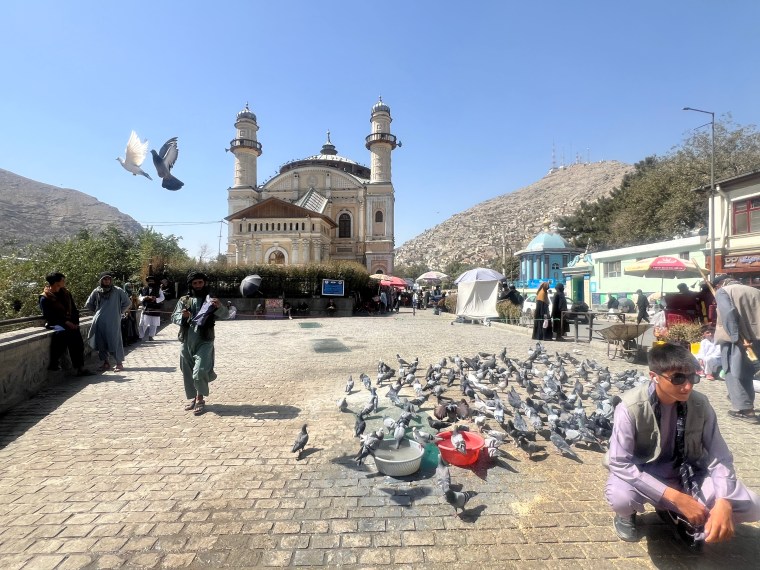
Day 3
After leaving the Afghan Tour State Owned Corporation office in Kabul, my guide took me by taxi to a hill overlooking the city. We couldn’t drive all the way up for some reason, so we had to walk part of the way, where I got to see some fun Taliban military billboards featuring more of my tax dollars:
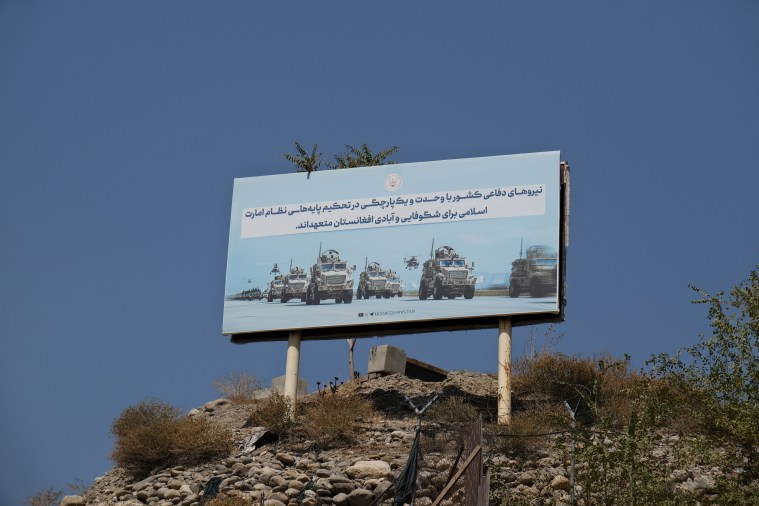
At the top, we went through another armed checkpoint and then saw the grandest display of Taliban triumph yet:
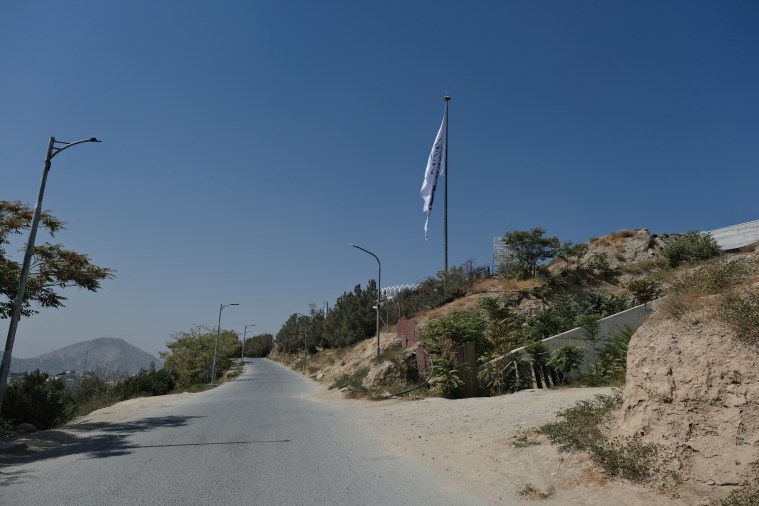
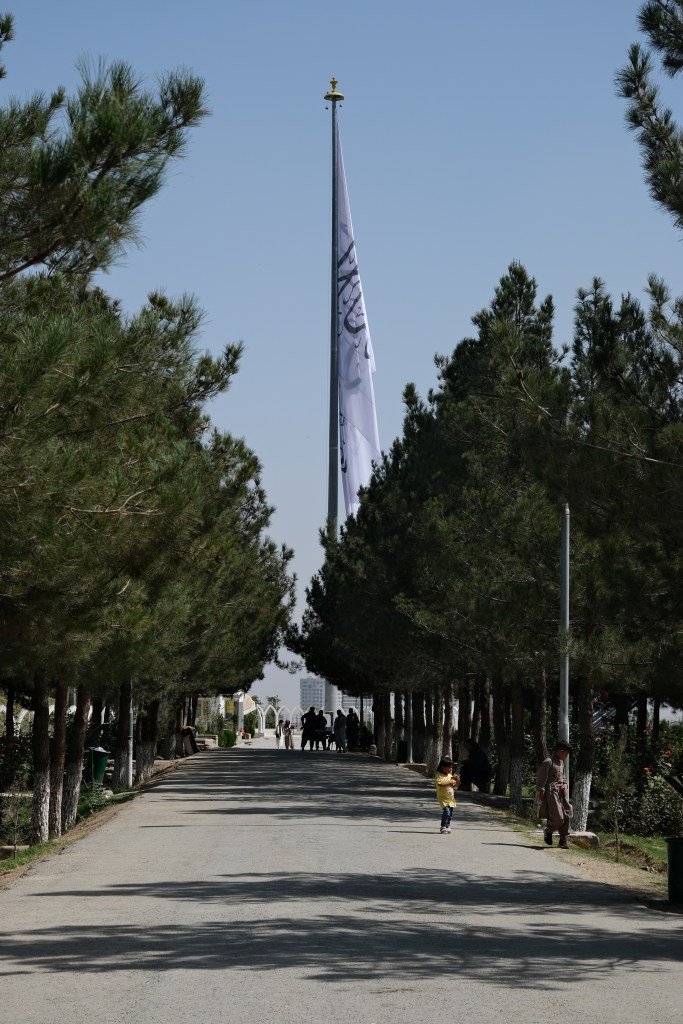
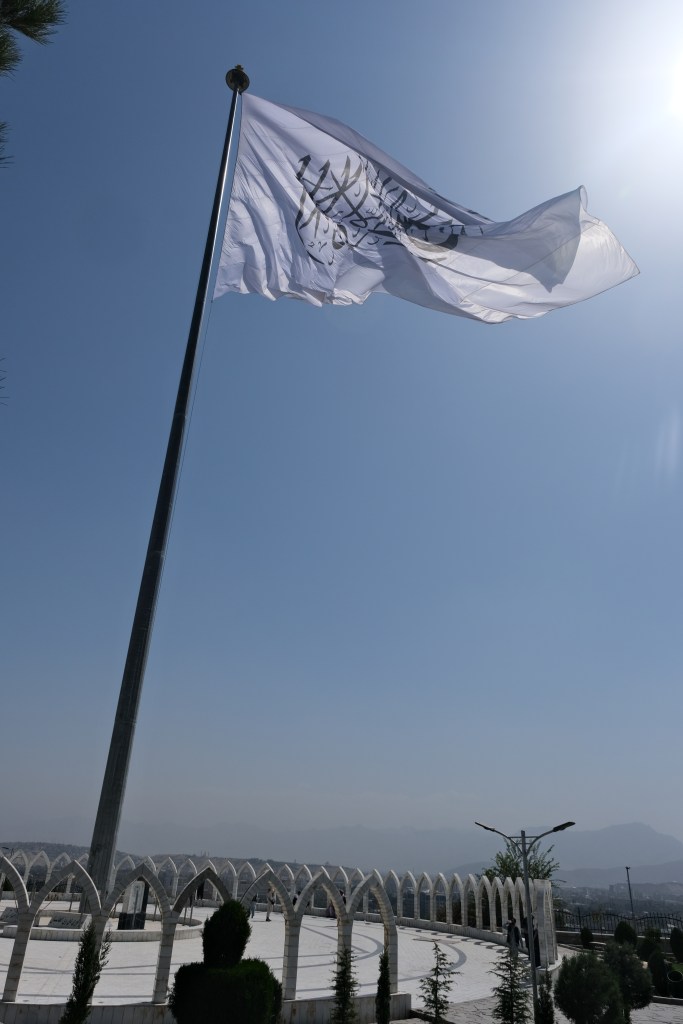
When travelling in countries like this with locals, I have to admit that I always try to play up my enjoyment for their sakes. I marvel at building and natural beauty and other sites a bit more than I truly feel; I say a lot of stuff like, “wow, that’s so beautiful,” “that’s amazing,” “I’ve never seen anything like that before,” etc. In this case, I said something to my guide about how huge the flagpole was, and he proudly asked me if it was the biggest I had ever seen. Uhhh, no, it wasn’t. I explained that I have seen the largest flag pole in the world in Saudi Arabia and the former largest flagpole in the world in Tajikistan, and he said “oh, ok,” and seemed disappointed.
Anyway, here’s what Kabul looks like from a high vantage point:

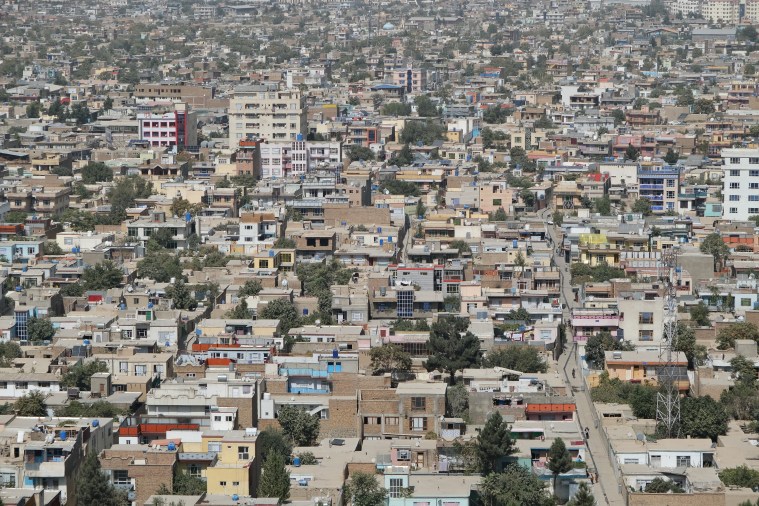
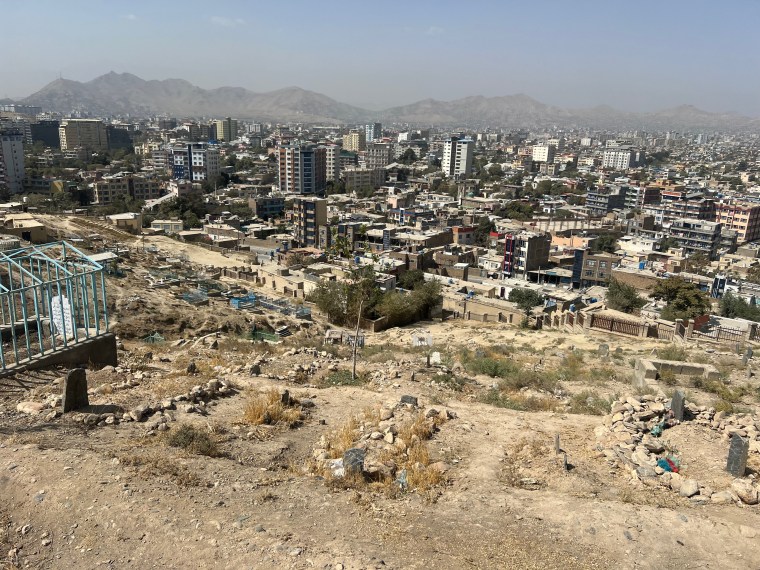
The other two interesting things on the hill are a surprisingly nice and well-maintained but strangely-placed Shia mosque:
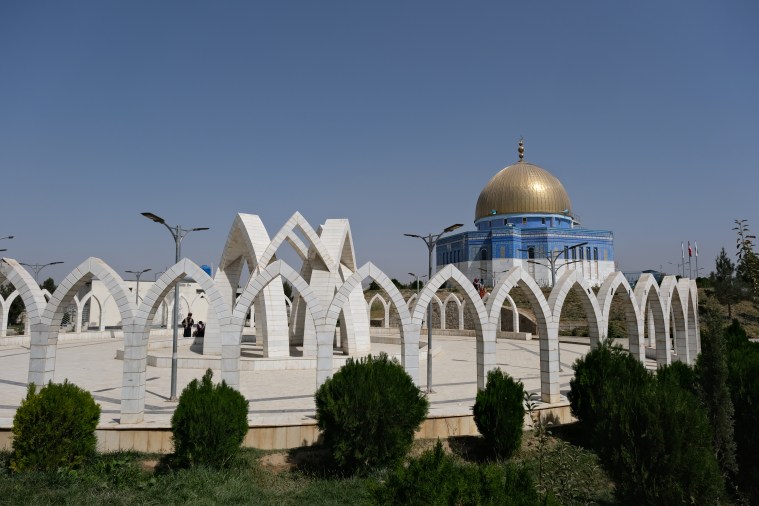
…and a presumably Soviet-built, now completely derelict, and even more strangely-placed Olympic swimming pool:
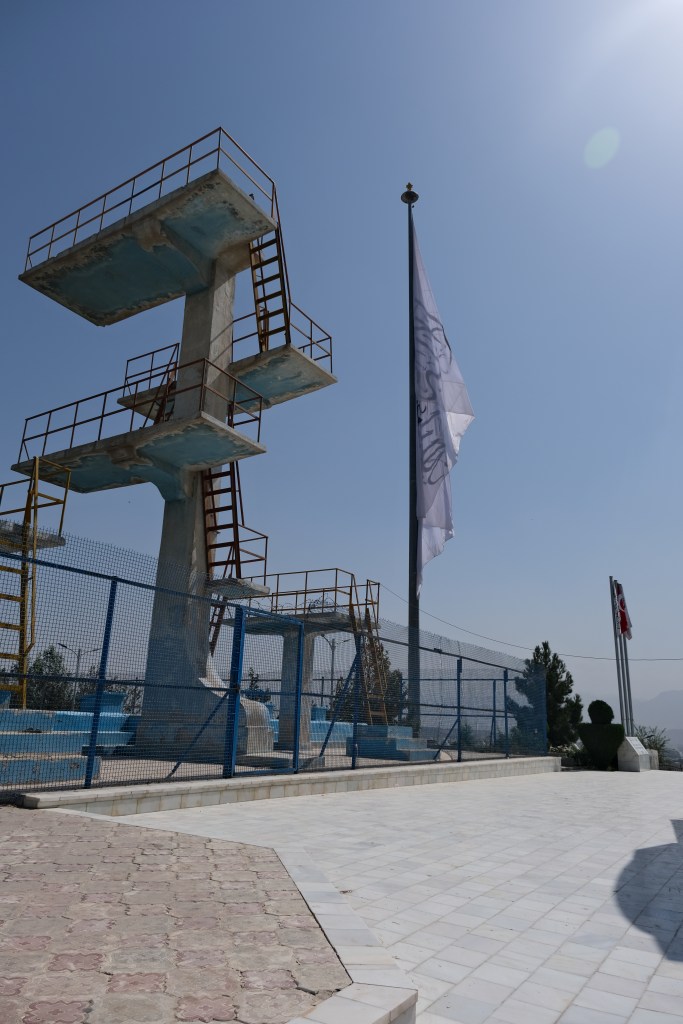
Next, my guide and I walked down this hill to another section of Kabul to see the British Cemetery, which was originally built for the British soldiers who died fighting in Afghanistan all the way back in the 19th century, but was later repurposed to hold foreigners from all over the world who fought and died in Afghanistan during the Western occupation. Frankly, I’m surprised the cemetery still exists under the Taliban. Maybe it’s too much of a hassle to dig up hundreds of bodies, even infidel ones.
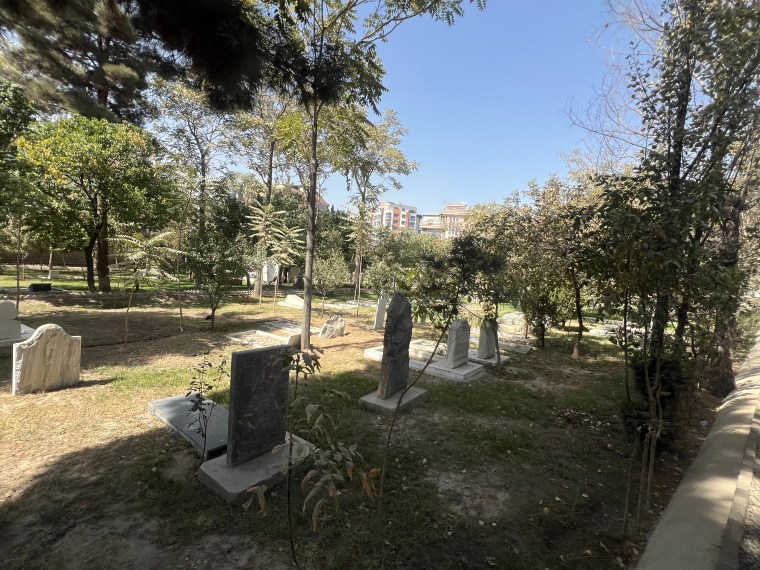
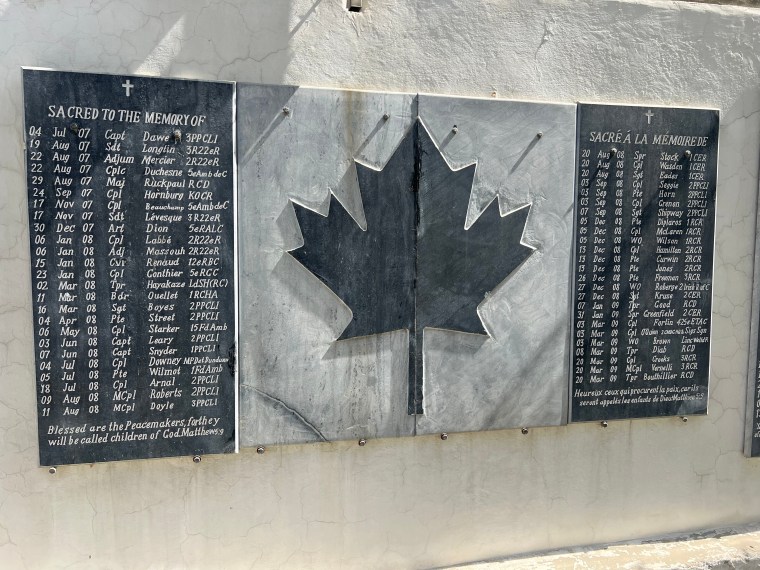
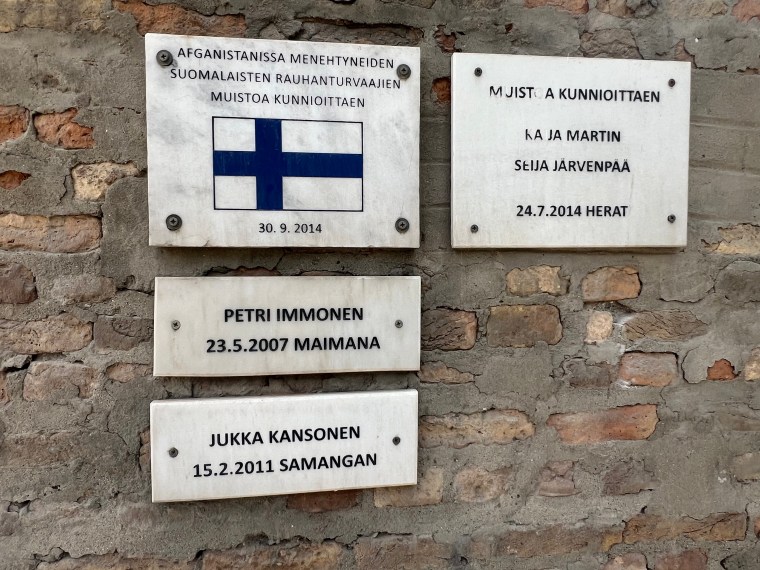
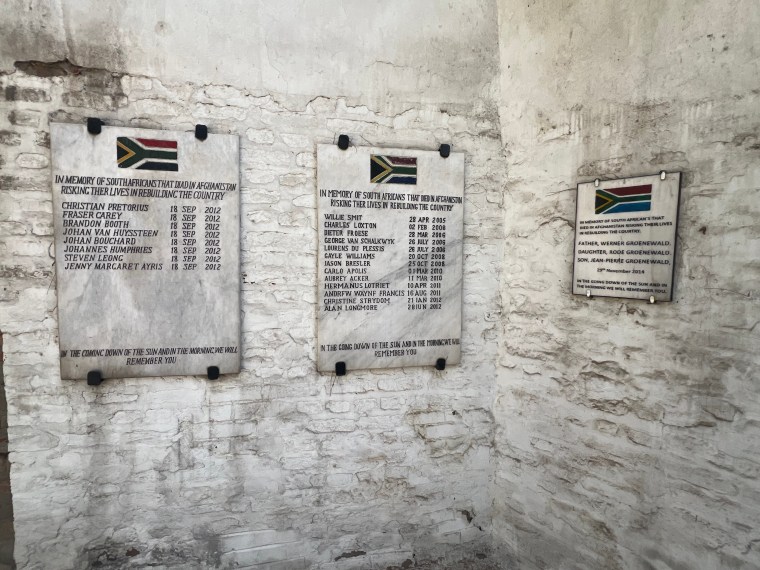
Much of the rest of the day was spent walking, which I love. My default travel plan in any city is to pick major or minor sites of interest on Google Maps and then walk between them, often up to an hour between each spot, often with random detours when I see something interesting. I’m not quite Chris Arnade but I think this is the best way to understand a city. I like that I can name just about any city I’ve travelled to and picture its streets in my mind, often with a loose mental map, even years since I’ve been there.
The hours of walking also gave me more opportunities to converse with my guide. We were getting quite friendly by then, especially after the permit thing, and he was starting to peel back a few layers about his life, his family, his plans, etc. He very much did not want to live in Afghanistan, nor did he want his children living here, particularly his daughters. He asked me many questions about the feasibility of him living in America, not just in terms of getting a visa, but how employment works, whether someone can make a living as a tour guide, education requirements, etc. He asked me about salaries for particular jobs, rents in major cities, food costs, whether one needed to own a car, etc.
We were discussing Islam, marriage, kids, lifestyles, etc., and I mentioned having a gay friend. He was curious and asked me a bit about it. He wasn’t offended or angry, just a little confused about how that worked or why gay men would ever get married since they can’t have kids. But when I told him that two women could get married in America, he was truly baffled. He did not understand. The idea that two women could be sexually or romantically attracted to each other had not occurred to him, and he found the idea absurd and funny. I assured him that it was a real thing.
A little while later in the conversation, my guide became nervous and seemed to work up the courage to ask me something. He said that on YouTube he had seen a video of men in Thailand walking down the street, talking to scantily-clad women, and then going with them to have sex somewhere. He asked me if this was real, if women in Thailand and other places would have sex with strangers like that, if it was that easy. I did my best to explain that these women were not going with these men for free.
I have talked to a lot of poor people in a lot of poor countries, and this conversation was a bit of a realignment for me. My guide had never left Afghanistan, but he was a tour guide who had worked with dozens of Westerners, Chinese, etc., and through our conversations, I considered him quite worldly by Afghan standards. And yet, he was not aware of the concepts of lesbianism or prostitution, I had to explain them to him. I guess there are places in the world that are so morally conservative that there are no prostitutes and the practice is unthinkable, like rural Afghanistan.
(Is it physically possible to get a prostitute in Taliban-ruled Afghanistan? Maybe in Kabul? Or in an ethnic enclave? I’m sure you can in somewhere like Saudi Arabia despite its laws due to its wealth, but I’m not sure about Afghanistan. Is this the least sexualized place on earth? Or at least the least female sexualized place on earth?)
(Due to the Thai context, I also explained to my guide what transgenderism is, but I didn’t expect him to know anything about that stuff. He expressed more bafflement at lesbianism, but only because, even after my explanation, I still don’t think he understood the literal physical nature of transgenderism.)
We talked about this stuff for a good hour, and I think it weirdly bonded us. We discussed a lot of concepts that were not entirely unfamiliar to him, but certainly taboo to discuss in Afghanistan, and illegal in certain contexts. I got the sense that he liked me more after the conversation, and though he was more confused by the West than ever, he also had an even stronger admiration for its freedoms. I mean, I don’t know, I’m not a mind reader, but I considered my guide to be very honest and that was my sense.
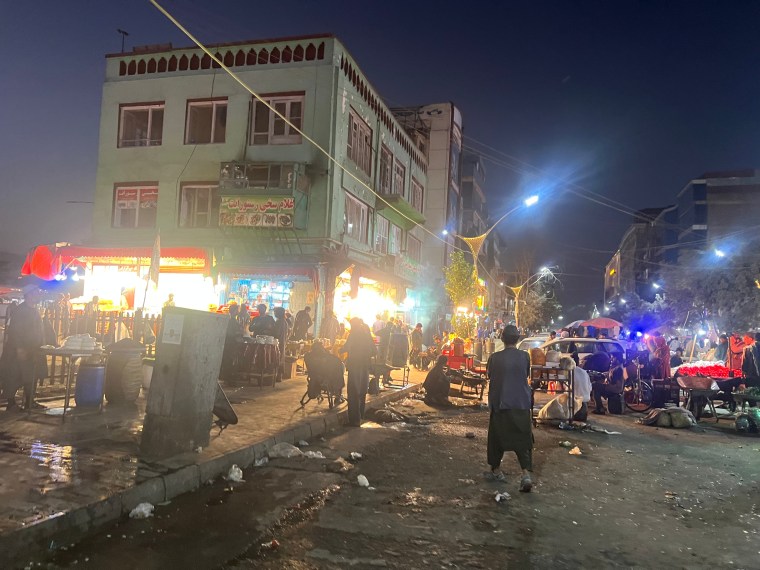
The Blackout
We took a break back at the hotel in the afternoon. I went to my room, power napped, and then loaded up good old Tubi, the streaming service that is most resilient to VPN issues. Two hours later, Tubi stopped working. After fiddling with it for a bit, I realized the hotel’s wifi wasn’t working, but that’s pretty standard in poor countries, especially with the periodic power outages. I went on my phone, and found that my cell data wasn’t working either.
For the first time, I tried watching TV in my room. There were only local stations, and I wish I had written them down, but a few were Islamic educational programs, one was a news channel that always showed Taliban officials discussing stuff, one was a game show with surprisingly unveiled female hosts and contestants, and one just read the Koran. One station was Voice of America, which is owned and run by the American government and broadcasts in the region out of Tajikistan; in my Kabul hotel room, the station ran an eerie 30 second loop with American graphics and the station name, like it was introducing a show or cutting between programs, but it just repeated over and over again. Presumably, it was being blocked by the Taliban or something.
I met back up with my guide around 5 PM and we walked around Kabul at night for about an hour. It’s a pretty dark city and people tend to go to bed early, but even in my limited experience, the city seemed a bit off. There was more movement than usual. The truth was revealed to me at dinner in a restaurant during a conversation between my guide and a waiter…
The internet was out. Everywhere. Across the entire country. No cell data, no wifi, no phone service, and as far as I could tell, there are no landlines in Afghanistan. Everyone was cut off from anyone else unless you happened to have a satellite phone like Starlink, which is, of course, illegal.
This was the first time the Taliban had completely shut down the internet in Afghanistan, but it wasn’t the first time that something like this had happened. A few weeks (maybe a month?) earlier, the government had turned off the internet across many of the northern provinces. In typical Taliban manner, their explicit reasoning for this was vague and either dishonest or moronic: something to do with combating immoral practices, presumably internet porn or Western media streaming. Maybe that was true, in which case the Taliban caused tremendous economic damage and political uncertainty to stop people from jerking off for a few days; or maybe the real reasons were more insidious, like interrupting rebel organization. Who knows?
But now the blackout was total. Our waiter was complaining to my guide that he couldn’t contact his mother in a western province. I saw other people in the crowded restaurant fiddling with their phones and looking annoyed. I asked my guide what he thought was going on. He shrugged. I asked him why the Taliban would shut down the internet. He shrugged and said he had no idea. I asked him if he was worried. He said he wasn’t. I asked if I was in any danger. He said (IMO, without proper justification) that I wasn’t. I asked how long he thought the blackout would last. He shrugged, said he didn’t know, but guessed about one day. I asked why he thought that. He said that the economy, government, and country can’t function without the internet, so it had to come back soon.
I was not entirely sold on my guide’s optimism. He certainly had more experience with, and understanding of the Taliban than me, but like many Afghans with whom I would speak about the internet blackout of the next few days, he was talking out of his ass. For all he knew, the Taliban could have shut down the internet to put out a dragnet and arrest every idiotic American tourist in the country because Trump made a Truth Social post about burning the Koran or something. Anything could be happening. We had no idea.
I had to decide whether to continue on with my trip in Afghanistan or to leave the country ASAP. Continuing with my trip would mean travelling to the geographic center of Afghanistan without my guide the next day, and then I would have no internet, no Google Maps, and no Google translate, which meant having massive egg on my face in the eyes of all those Taliban guys I tried to impress back at the Afghan Tour State Owned Corporation office. My other option was to get out of the country, but since the internet was out and the phones down, that would mean heading for a land border, the closest of which was with Pakistan, and which just so happened to host a Pakistani branch of the Taliban, which had recently launched terrorist attacks against the Pakistani government. And then even if I got out of Afghanistan, I would have to endure being in, at least temporarily, Pakistan.
I factored all that with some more reassurances from by guide and I decided to go on with my travels.
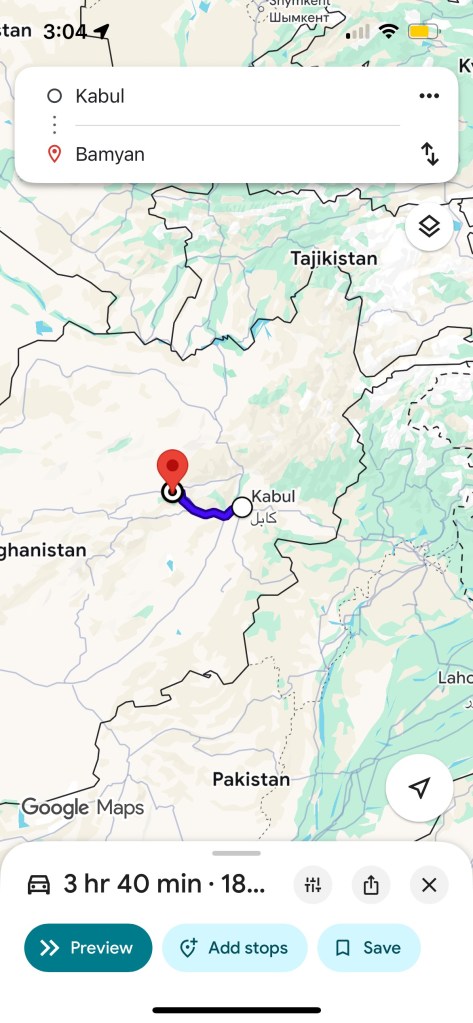
Day 4
I woke up the next morning, checked my phone, and saw the internet was still out. Damn.
I had breakfast with my guide, thanked him profusely, and we made preliminary plans to meet up when I returned to Kabul at the end of my trip. As his final act, he helped me get a 30 minute local taxi to the outskirts of the city where I would go to one of the taxi agencies to get to Bamiyan. As per his instructions, I paid 300 Afghani (~$4.50) for the first taxi and was supposed to offer no more than 600 Afghani (~$9) for the second taxi, which would be shared with other passengers.
Having travelled through West Africa, I’m used to this method of transport many times. The first taxi brought me to an enclosed space with about 100 parked taxis, most of which were waiting for enough passengers to go to destinations anywhere from one to 12 hours away. The instant my door opened, I was rushed by four or five guys trying to get me to their taxis, and the instant they saw that I was white, that number doubled. I identified one of the three guys out of the dozen who were going to Bamiyan, and asked for a price; he said 500 Afghani. I followed him to a taxi which already had four passengers and thus would leave soon. Luck was on my side.
Then luck turned against me as I was given the middle seat in the back, which, in my raucous childhood, was known as the “bitch” seat. My large backpack was put in the trunk, but I had to keep my small backpack between my legs as I smushed inbetween two guys in the backseat, both of whom marveled at me for about five minutes until they acclimated to my white presence. We left ten minutes later, and for the next thirty minutes, the one guy out of the four who spoke a little English asked me a series of questions that I would be asked roughly 100 billion times over the next three weeks in Afghanistan:
- Where are you from?
- What are you doing here?
- Are you alone?
- What parts of Afghanistan are you going to?
- What do you think of Afghanistan?
- How old are you?
- Are you married?
- Are you Muslim?
After each answer, the one guy who kinda spoke English translated to the others. I would later get annoyed by these questions, but this was my first time interacting with Afghans without my guide, so I was into it, and gave answers that were elaborate enough to be interesting but simple enough to be understood; plus, these guys would end up being very nice and helpful to me on the trip.
The journey out of Kabul went along a single two-lane highway lined by scattered homes and industrial plots, beyond which was nothing but arid dirt and desert. It took thirty minutes to reach the first of six checkpoints I was to hit on this 4+ hour trip. It didn’t look too different from the checkpoints in Kabul – a small white guardhouse with one of those posts that can lower to block the road, with two or three AK-wielding Taliban soldiers. They stood on both sides of the road and checked the licenses of the drivers of each car that passed through, as well as collecting a toll (a historical Taliban specialty).
At this first gate, the Taliban soldier on our side had his face covered by a scarf and his eyes covered by sunglasses, the latter of which was uncommon for Taliban. Our taxi stopped, the front passenger rolled down his window, the driver handed the Taliban guy his license and some money, and then the Taliban guy scanned the passengers. Of course, his gaze stopped on me. He maneuvered to the back window as the passenger next to me rolled down the window without being asked. The Taliban guy leaned down, stared at me through his sunglasses, and said something. It was a little more intimidating than usual since I couldn’t see his face or even his eyes.
I smiled, said salaam, and began digging into my backpack for my passports and permit, which felt like it took a long time in the silence. I handed him the stuff, he took them, briefly looked at them, and then looked back at me and said something. The guy in the car who kinds spoke English told me to take off my sunglasses.
Ooops, I didn’t think of that. I did so and smiled again. The Taliban guy looked at me, looked at my papers, looked back at me, and then said something to the driver with a hand motion. Without getting my papers back, the driver drove the taxi forward about 20 feet and pulled to the side of the road. After some more intra-car communication, I got out of the taxi and went over to the Taliban guy who was convening with another soldier. This one spoke a little English; he asked me where I was from, where I was going, etc., they talked to each other, they talked to the driver, they took pictures on their phones of my passport and permit, and I was back in the car ten minutes later.
It wasn’t a big deal. But I felt bad for the driver and the other passengers, especially since almost the same thing happened five more times during this car ride. The one who kinda spoke English assured me that the Taliban wouldn’t hurt me and that he and the other passengers were totally 100% ok with waiting for me to go through the Taliban bullshit since I was a guest in their country, and for that I was grateful. To repay them, I did my best to smooth out the process by taking off my sunglasses and having my papers ready whenever I saw a Taliban checkpoint coming up.
About two hours into the drive, we pulled over at a roadside restaurant. The interior consisted of one square concrete room for dining. There was no furniture, only two long rugs on the carpeted floor. After washing our hands, everyone from my car and maybe 20 people from other cars sat on the ground along both sides of the rugs and I joined my group. The guy who kinda spoke English very kindly handed me naan bread, ordered for me, and asked for utensils even though I didn’t request them. I thanked him for them but then ate with my hands like everyone else.
Most other people shared food bowls in groups of two but I was given my own for some reason. It consisted of an ENORMOUS pile of rice with a decent amount of DELICIOUS beef scattered within which you scoop up with hand-held naan bread and stuff into your mouth. I like bread and rice as much as the next man, but there is only so much I can consume in a single meal, so I targeted the meat chunks first with small pieces of naan and small scoops of rice; this resulted in me finishing the meat with ample rice and naan left over. The restaurant server responded by piling a second equally-large portion of meat on my plate, which no other people in the restaurant received, and for which I profusely thanked him.
After eating, I wandered around the outside of the restaurant for a bit to take pictures, and one-after-another, five diners walked up to me to shake my hand and ask questions. The last of them was the guy who kinda spoke English in my car, who explained that he was a university student (even though he looked about 30) and he was very thankful to practice his English with me. He asked for my WhatsApp number, and even though I didn’t really want to give it out, I did so because he had been a huge help so far.
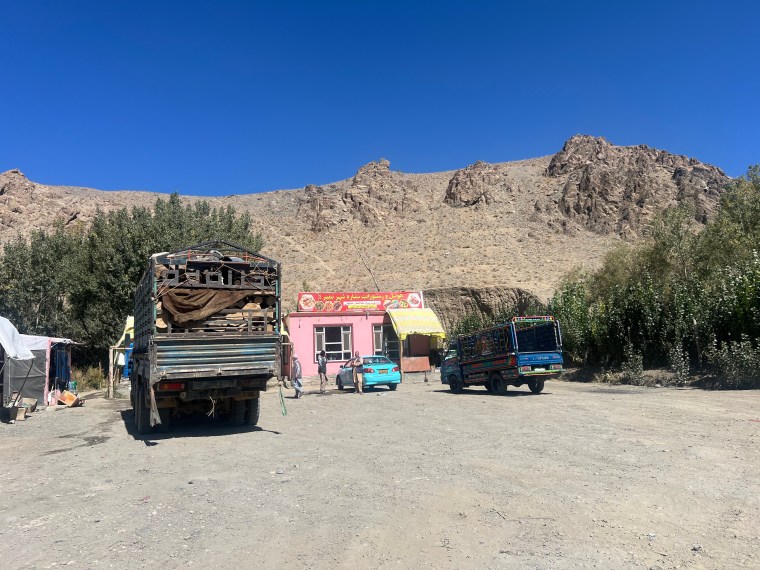
The final hour of the drive was beautiful. The consistent aesthetic was bare, sandy, rocky, brown mountains with lush, fertile, green valleys between. The road got narrower and bumpier, but the snaking between the mountains was fun. In typical poor country fashion, our driver took every opportunity to blast around cars going slightly slower than we were, thereby putting our lives at risk from smashing into unseen traffic coming around blind turns, but we never died, so it’s alright.
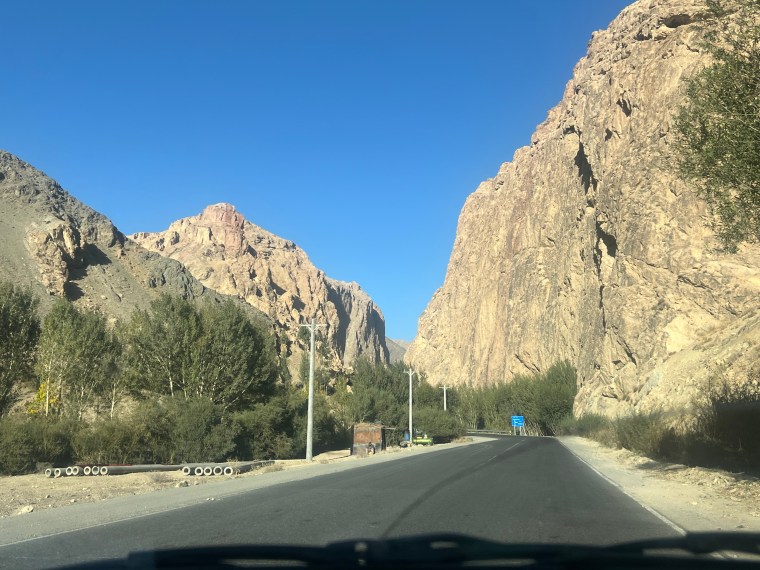
The trip finished uneventfully until we arrived in Bamiyan, the capital of Bamiyan province, the motherland of the Hazara people. It’s not a city, just a town consisting of two store-lined mainstreets surrounded by scattered farms. Aside from being, IMO, the most nature-beautiful part of Afghanistan, its claim to fame is the practice of carving holes in the sides of its mountains, many of which are thousands of years old. Even today, thousands of Hazaras still live in these caves, while other caves are used for storage or are abandoned but still visible. Of course, the most famous caves are those of the mostly destroyed Bamiyan Buddhas, which I’ll get to later.
I don’t have any good pictures of Bamiyan caves.
I was actually the only one in the taxi getting out at Bamiyan (the capital) while the other passengers were going on. We stopped in the middle of mainstreet, I smiled and said lots of thank yous and handed the driver 500 Afghani. He didn’t take it. He said something to the guy who kinda spoke English. He told me that the driver wanted 700. I told him that we had agreed upon 500. He told this to the driver, the driver said something back, and the translator told me that now he wanted 700.
I go back and forth on how to deal with these situations, but in this case, I paid the 700. This left me in a bad mood, as dealing with lying, cheating, conniving fraudsters always does, but my mood quickly recovered as I would soon be dealing with, IMO, the politest people in all of Afghanistan, and I would soon become a big fan of the Hazaras.
This is a good place for me to elaborate on my thoughts on…
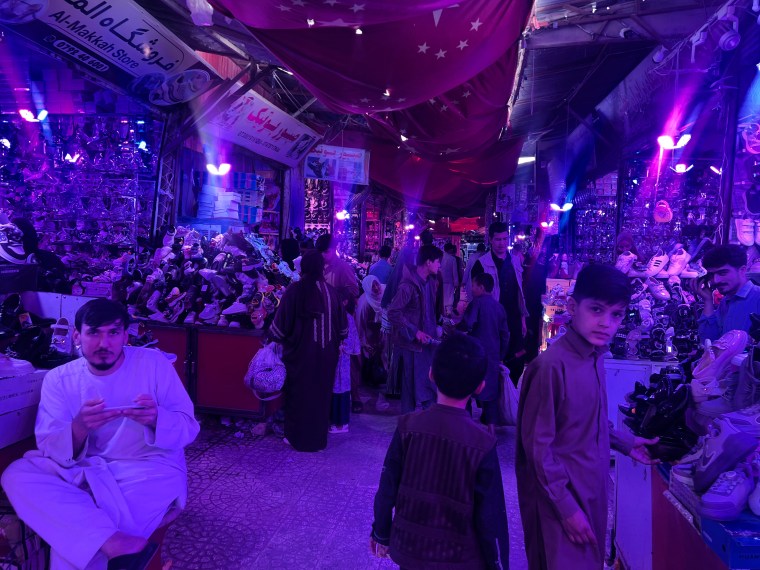
Politeness, Friendliness, and Sovereignty
All the way back in my Notes on Nigeria, I had a section called, “Are Societal Friendliness and Politeness Inversely Correlated?,” which has generated among the most commentary of anything I have written.
I pointed out that, in terms of moment-to-moment personal interactions, a lot of the least friendly countries are excruciatingly polite (like Japan, Britain, and Scandinavia) while a lot of the friendliest countries are quite rude (like Nigeria and India). For instance, in Nigeria, it was common for complete strangers to walk up to me in public with huge smiles on their faces, welcome me to Nigeria, invite me to hang out with them, and generally act like we were good friends; if I did that to a random person in Finland, they would think that I was literally insane. On the other hand, every interaction I had with a stranger in Finland had “pleases” and “thank yous,” and there was excellent customer service and I believed the odds of me being tricked or defrauded in any given monetary transaction were practically zero; in Nigeria, customer service is garbage, people scream at each other at the slightest disagreement, and 90% of the people who talked to me wanted my money and would try to get it either through trickery or begging.
I posited that this trend has something to do with societal individualism vs. collectivism. Individualistic societies have more default respect for other individuals rather than rely on group-based dynamics to ascertain pro-social leanings. So, a random Nigerian will be extremely friendly to me because he sees me as a white tourist Westerner, and therefore assumes that I am honest and rich; he assumes little individual variation between people in my group, but has a high default opinion of my group. Meanwhile, a Finn treats a stranger with respect because a Finn respects every individual by default, but a Finn isn’t friendly with a stranger because a Finn doesn’t assume that any random individual has more social value than any other based on his group characteristics.
Of course, there is a ton of ambiguity and variance and exceptions to the above. On the national societal level, Americans are individualistic, but both friendly and polite. Japanese are highly collectivistic, but are high in politeness. Every country has lots of different people with lots of different world views, so of course I’m speaking in generalizations, etc.
My travel experiences since then have helped me clarify and develop this model a bit.
Prior to a few months ago, the friendliest country I had experienced was Iraq. On a daily basis, at least one Iraqi would introduce himself to me, shake my hand, initiate some basic chit-chat, and within five to 15 minutes, he would offer me anything I wanted – company, food, guidance around the city, guidance with his friends or relatives around other cities, a ride, a place to sleep at night, money, etc. And by my judgement, these people were genuine. They really, really wanted to make me feel welcome in their country, and unlike in India, Egypt, West Africa, etc., where people were also friendly but not THAT friendly, Iraqis never tried to scam me or ask me for money.
Granted, a massive amount of friendliness I experienced in Iraq and elsewhere has to be couched in the proper context of me being a foreigner, and a white Western one at that. Iraqis are obviously not that friendly to random other Iraqis. Islam, Arab Culture, and Iraqi culture all place moral emphasis on hospitality toward strangers, and white people, though provoking some level of suspicion in the abstract, are considered trustworthy and exotic in a fun way on a personal level. So I’m not saying that my experiences represent the ordinarily level of societal friendliness in Iraq and elsewhere, but I still think they correlate with ordinary societal friendliness levels. Meaning, for instance, the friendliness discrepancy between Iraq and Finland is partially explained by the cultural premium put on hospitality in the former compared to the latter, but also indicates a more general friendliness differential between the two.
Even with all that accounted for, Iraqi friendliness levels can push human interactions into some very weird places by Western standards. In Karbala, this random older Iraqi security guard at an important mosque approached me, smiled, shook my hand, and started talking to me in Arabic, which of course I didn’t understand, so I just shrugged and said I was American. He hand-signaled for me to wait and took out his phone and fiddled with it for a good five minutes. As seemingly the only white guy at this extremely crowded Shia mosque during a major Shia holiday, I thought I might have been in trouble, but then he started a video call with a much younger Iraqi guy who told me that he was the security guard’s son living in Michigan. We chatted for five minutes and then he told me that his father would not only be honored to give me a tour of the mosque, but also take me out to dinner that night. I went with the flow and said that sounded great, and thanked him profusely.
So we took 15 minutes to wordlessly walk around the mosque, and then through hand gestures, I agreed to meet the security guard at a group of motor bikes outside the mosque nine hours later at 8 PM (Iraqis eat late). It was only while shaking his hand and walking away that I realized how fucking awkward this was going to be… this very kind security guard did not speak a word of English. And given his age, presumed education level, and how long he took to call his son, I presumed he was not technologically savvy enough for a smooth conversation via Google translate (this happened before the modern AI era). I was not looking forward to a long meal in awkward silence.
But I showed up anyway, shook his hand, said salaam, etc., and then got on the back of a motorbike, and he drove me for 30 fucking minutes through Iraqi traffic to what I can only describe as a standard middle-class Iraqi restaurant, which, like all other middle-class Iraqi restaurants, serves pizza, pasta, hamburgers, and fried chicken.
And then, indeed, we ordered and ate in almost complete silence for a good 40 minutes. There were some very brief attempts to communicate, but they began and ended with confirming that he lived in Karbala and I lived in America, though I did learn he was technologically savvy enough to take a selfie of us together to send to his son in the US. Then I hopped on the back of his motorbike again, went through 30 minutes of Iraqi traffic in the dark, and was left at the mosque with much smiling and handshaking and thanking, and then I never spoke to or saw the security guard again.
I cannot fathom attempting to have this sort of interaction with a fellow American, or a European visitor to America. I could imagine meeting a tourist and inviting them to have lunch or coffee, but nothing as remotely complex or multi-tiered, especially when we can’t even communicate. It’s no wonder that non-Westerners often see Westerners as cold and standoffish.
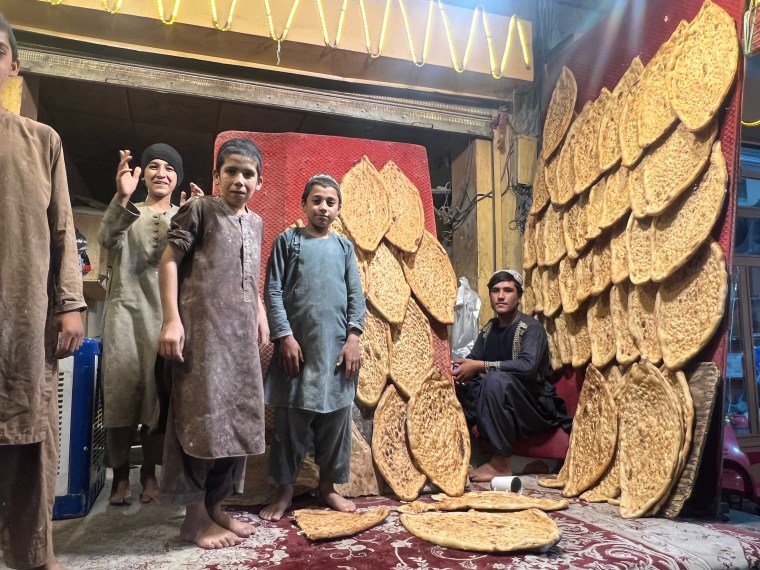
It is with this contextual experience that I went to Afghanistan and I now declare it to be the friendliest place on earth, supplanting the previous champion, Iraq. All the stuff in Iraq – the approaching and striking up conversations and handshaking and offering food, transport, place to stay, etc. – all of that occurred in Afghanistan, but far more often, and with even greater intensity. If it was once or twice per day in Iraq, it was 5-10 times per day in Afghanistan. And in Iraq, it was usually the owner of the restaurant I was eating at, or a store owner, or a taxi driver, but in Afghanistan, these people could come from anywhere at any time – sitting next to me on a bus, another customer in a restaurant, a random pedestrian, etc. More than one car stopped in the middle of Afghan traffic so the driver could talk to me and the passengers could look at me, and one time in Kandahar it nearly caused a full-fledged car accident. I never had an uninterrupted meal in a restaurant. I just assumed that I would have to make the rounds and have some sort of interaction with every person in every taxi and most people on every bus.
And it’s not just the friendliness, it’s the attention. I got stared at everywhere all the time by everyone. Again, I’m used to this sort of thing. I’ve been to countries like Bangladesh and Mali where random lone white guys are basically aliens and get a lot of attention, but Afghanistan was more intense than any of those or anywhere else I have ever been.
This really surprised me at first. Weren’t tens of thousands of American, European, and ANZAC soldiers stationed in Afghanistan for 20 years until 2021? Shouldn’t Afghans be used to white people by now?
No, they’re not. My guide explained to me that the Western soldiers nearly always stayed on their bases, or sometimes deployed to the remote countryside, but rarely ventured into Afghanistan’s cities. It wasn’t like the Vietnam War where the American soldiers would mingle with the local merchants and prostitutes; the most the average Kabuli saw of the Americans were occasional tight Humvee convoys speeding by. The average Afghan probably never saw a single white Western soldier in person throughout the 20 year occupation.
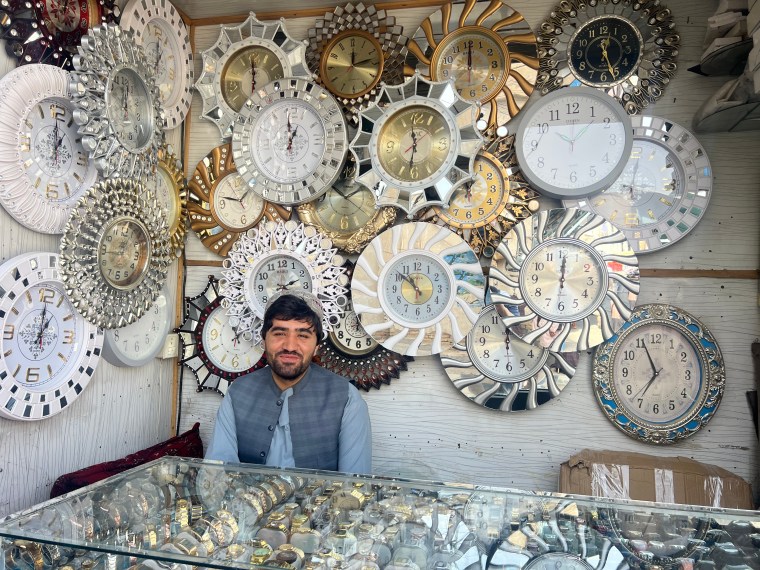
The typical Afghan who approached would stare at me first, then come up to me with a big smile and hold out his hand for a shake. There would be a greeting, then the basic questions, then after a mere 30-60 seconds, he (and it was always a he) would almost always attempt to convert the stop-and-chat into a full-on meet-and-greet. This could take many forms, but it invariably involved tea, usually something like, “come to my shop and have some tea.”
In Kandahar, there was this cook in my hotel’s restaurant who came out to talk to me in his borderline non-existent English during all four meals I had there. In Bamiyan, a man approached me on the street, introduced himself, explained to me that he had known many Americans during the occupation, and then in about 30 seconds of knowing him, he invited me to have dinner (and tea) at his house with his family that night. In Herat, after talking to me for two minutes, a mechanic standing in front of his store brought out a car seat, set it on the sidewalk, brought out a tray with tea, and then ordered some nearby child to go to a nearby store for biscuits, which he did and they were delicious. More questions would follow, and more often than not, more people would follow, sometimes forming small impromptu crowds of Afghans who wanted to speak to me, or ask me questions through translators, or at least just look at me.
In Ghazni, I stayed at this hotel that doubled as a relatively nice restaurant (or maybe it was the other way around), and I asked the front desk guy for directions to the fucking local Afghan Tour State Owned Corporation office, but he spoke 0 English, so he directed me to this young guy sitting at one of the restaurant tables with two friends, and the next thing I knew, two hours had passed of tea and conversation where I learned this guy’s life story of growing up in Western-occupied Afghanistan, admiring the Americans, going to university to study English, having the university shut down when the Taliban took over in 2021 and then reopening under Taliban control, and now he spends every day watching what he says lest he run afoul of his new overlords.
On three separate occasions, I accidentally caused what I’ll call a picture chain. The first time was also in Ghazni. While walking down one of the main avenues, these two guys walked up to me, both in turbans, both I surmised by their appearances and dress to be from the countryside where white people were even more elusive, and after shaking my hand and talking to me in Pashto which I didn’t understand, they used miming to ask me to take selfies with them. I said sure, and so we did. But by the time we were done with their selfie, another guy approached and asked to take a selfie with me. I said sure, and then sure enough, another guy came, and so on until I cut it off at four selfie groups and I profusely apologized to the three or four people waiting for their own selfies, and said I had to go.
I am 100% sure that I could have travelled throughout Afghanistan without booking a single hotel or paying for a single bus or buying a single meal; I easily could have relied entirely on the kindness of strangers in Afghanistan for my material wellbeing. By the estimation of myself and ChatGPT, If I had accepted tea from every Afghan who offered it to me throughout my trip, I would at least be rendered anemic due to tannin-induced iron malabsorption, or more likely be dead from liver failure or tannin-induced GI distress.
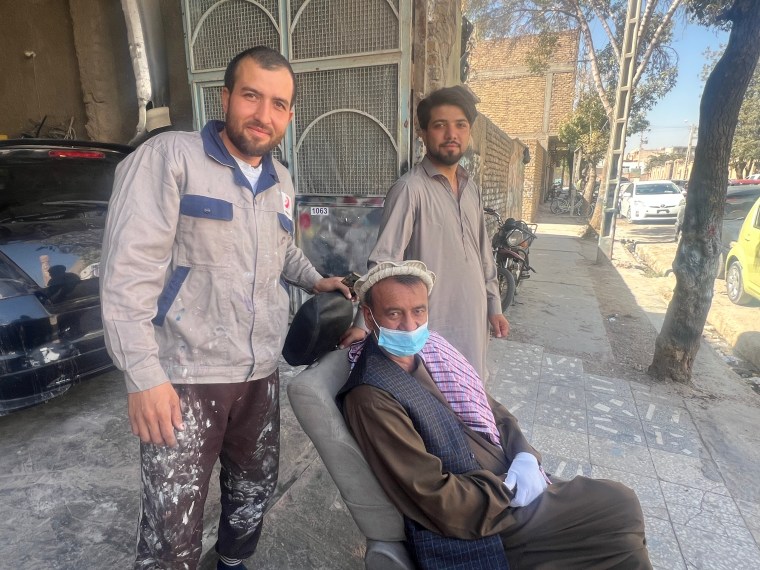
And it was within that contextual experience that I went to Kandahar, and I now declare it to be the friendliest place in the friendliest place on earth. This makes sense because Islam has strong hospitality norms, Afghanistan has strong hospitality norms, and Pashtuns have strong hospitality norms, and Kandahar is the Islamiest, Afghanistaniest, Pashtuniest place in the world. The level of friendliness in the Taliban’s home province is staggering. It’s overwhelming. It’s suffocating. When walking around crowded markets, it was common to have these impromptu friendly encounters with strangers 5+ times per street. Everyone wanted to talk to me. Everyone wanted to know about my life. Everyone wanted to be near me. I got more attention in Kandahar than in India, Bangladesh, Egypt, China, West Africa, or anywhere I have traveled to in my entire life.
I tried to think of analogy to explain what it feels like to walk around Kandahar. It’s probably a little like being a Hollywood celebrity or a beautiful woman, but I think the best comp is famous politician. This is partially because I constantly had to smile and answer polite questions about the Western world and ask polite questions about Afghanistan and make polite excuses to leave so I wouldn’t have my fourth cup of tea for the day, but also because Afghans love shaking hands more than any people on earth. Every encounter starts and ends with a handshake. I saw shop owners and customers shake hands. In Taliban offices, I saw co-workers who saw each other every workday greet each other in the morning with handshakes. I saw good friends shake hands and then hold each other’s hands for minutes while talking. I shook dozens of hands every single day for 21 days. In a place like Kandahar, I walked down market streets shaking hands with strangers often every few seconds, either because they reached out to me, or because I offered it to them because it felt weird and psychotic to pass so many people looking at me without acknowledging them, and if I was going to acknowledge them, I might as well do so in a friendly manner, and in Afghanistan, that means shaking fucking hands.
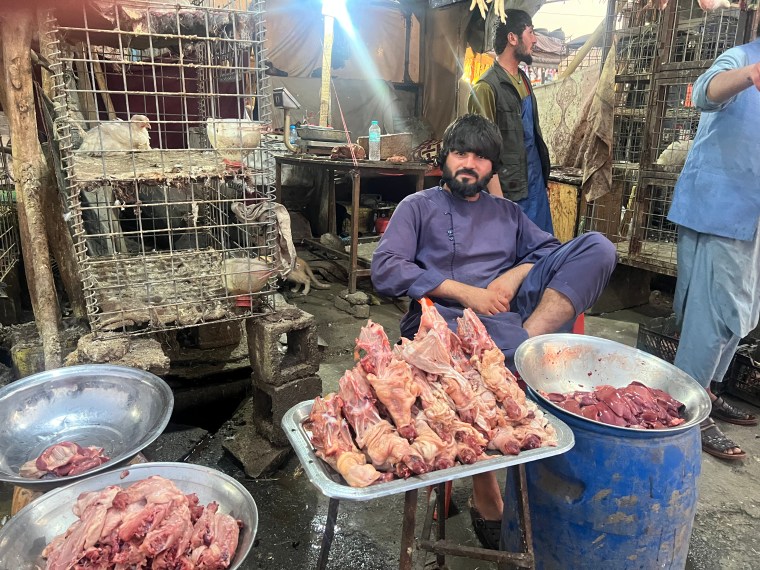
With the exception of some taxi drivers and store owners who were badly concealing their salesmanship behind a veneer of hospitality, 99% of the adults who approached me to talk in Afghanistan were perfectly cordial. They really were just friendly and curious. Compared to the average Afghan, they were disproportionately more likely to be university-educated, liberal, and English-speaking, and they generally wanted to talk to me to practice their English, meet an exotic foreigner, and extend Afghan hospitality to give me a good impression of the country. I could and did get very annoyed with having to deal with these Afghans constantly, but I always reminded myself that their motives were pure and this is simply the nature of being a stranger in this strange land.
I can’t say the same for the children. Afghanistan has the worst-behaved children on earth, and it’s not even close to anywhere else:
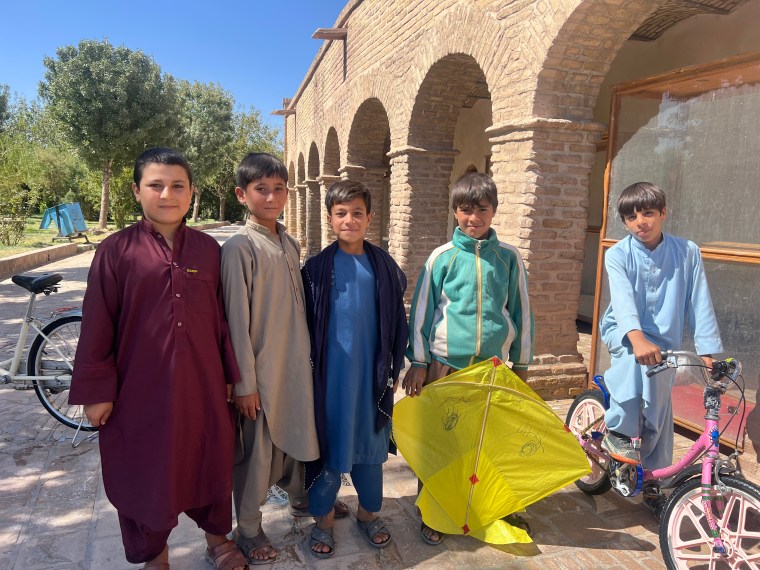
- Groups of small children (roughly ages 5-10) would gather around me in mobs and follow me for five, 10, 20+ minutes, nearly always while using the universal rubbing-their-fingers-together symbol for begging for money. But because foreigners are so rare and thus begging is so rare, they don’t fuck off even when you verbally tell them to fuck off. Also, through some sort of cultural/linguistic osmosis, it was common for them to know the phrase, “how are you,” which they would repeat over and over and over and over and over again. Some would say “America” or “Joe Biden” or “Donald Trump,” and one I’ll never forget said “fuck you” three times with a big smile while I walked by him on a busy street in Kandahar.
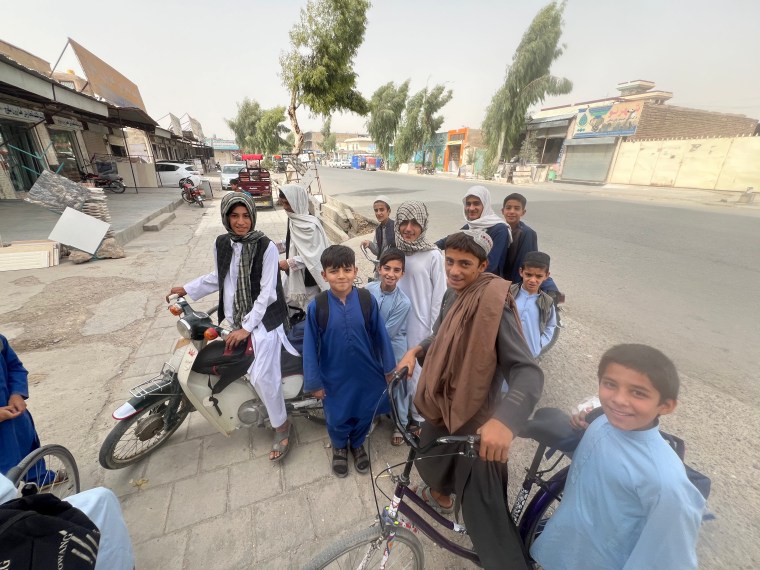
- Groups of slightly older children (roughly ages 11-15) were more variable, ranging from the best kids to the worst. The best were the very sweet ones who had learned a bit of English in school and nervously walked up to me to practice. Or in Ghazni when two boys on bicycles followed me for, I shit you not, a good 5 miles, occasionally asking me questions, which I always fully answered, and in turn, they answered questions about their lives and gave me directions around the city. The worst were the ones who found the idea of harassing a foreigner incredibly funny. This happened on a few occasions, like the aforementioned horse-kids at the lake in Kabul, but the most memorable experience was in Kandahar where a group of about 8-10 kids on bikes surrounded me, rode circles around me, blocked my path numerous times while laughing, and shouted at me. The one who spoke the best English in their group asked me, “do you know that they are making fun of you?”
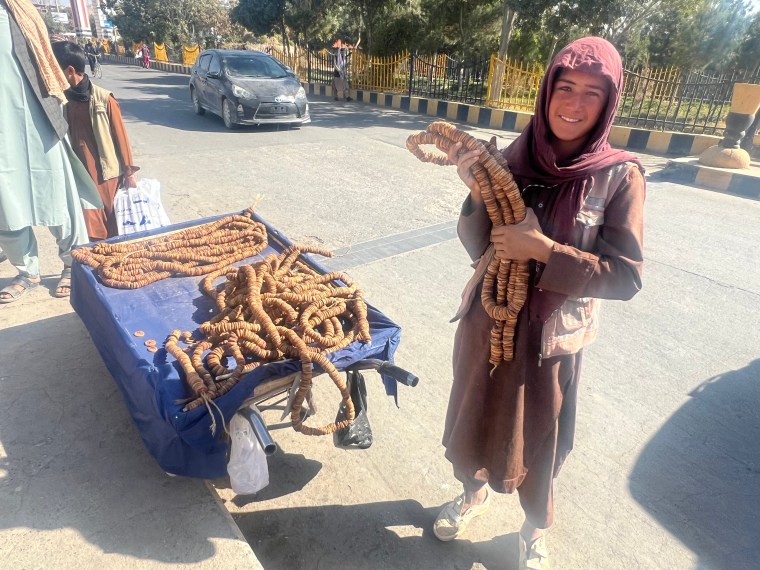
- The older kids (roughly 16-18) were chiller, but also annoying. They were more likely than probably any other demographic group in Afghanistan to ask me for a selfie, undoubtedly to show their friends and/or put on Instagram. They usually made the requests in a dull, subdued manner. Dare I say that I felt objectified. But then again, I asked for and got pictures of tons of Afghans for my own tourist amusement, so we’ll call it even.
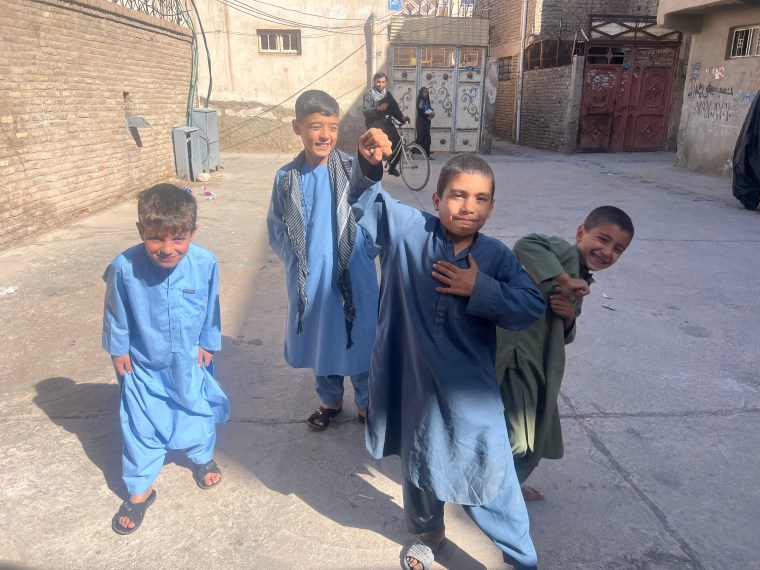
As you can probably tell, it’s difficult to discuss these sorts of things without revealing a bit of personal psychology. I am highly introverted. I am mediocre at talking in general and bad at talking to strangers in particular. So Afghanistan was stressful travel. Individual social encounters weren’t as annoying as in India or Egypt where everyone is trying to scam you or beg, but the quantity and relentlessness of encounters was exhausting. I have to admit that I spent significantly more time in my hotel rooms than normal while travelling because I needed to get away from it all. I needed some Tubi to unwind. I asked hotel staff to order me meals so I could eat them in my hotel room so I didn’t have to go to a restaurant and have a conversation with the guy at the counter and the server and at least one customer while trying to eat some rice and beef after walking around a city for seven hours that day.
The experience made me reflect on the nature of friendliness and politeness. I’ve always used the terms in a general sense, but Afghanistan has sharpened my conceptual senses a bit.
With the exception of many of the children, the Afghans who approached me were overwhelmingly friendly in the sense that their intention was to offer value to me, both social and material. In one-on-one conversations, they were also exceedingly polite, with all the pleases and thank yous and cordial offerings that I would expect of the Finns or Japanese or any of the other uber-polite people in the world.
However, I couldn’t help but think that both the friendliness and politeness of the Afghans sometimes lacked a sense of sovereignty. Or rather, they often failed to project a sense of sovereignty onto me. That is, they failed to comprehensively model me as an individual with his own wants and needs and goals, and to fully incorporate those factors into their friendliness and politeness.
If I saw a person walking down the street who fascinated me (for whatever reason), I might be tempted to approach them out of curiosity. But if I saw every other person looking at them, and I saw multiple other people approach them, and I saw them wave off those people politely and continue trying to walk down the street, I would not approach this person because I would be cognizant of his sovereignty and recognize that he doesn’t want to be stopped by me for a conversation any more than he wants to be stopped by any other random person on the street. The same goes for interrupting this fascinating individual while he’s eating in a restaurant, or sitting on a bus with his headphones on, or after he’s already taken selfies with four other groups of people, etc.
Also, I understand that these Afghans are fascinated by me as an exotic Westerner, and particularly an American, but it makes me feel weird that they are so friendly to a complete stranger. I don’t think that I’ve earned the privilege of being driven around a city and sleeping at a person’s house and being given a free dinner, all by a person I met five minutes ago, just because I’m a white American guest to their country. I think politeness should be a default given to all friends or strangers, but I think friendship should be earned. I think you should be materially and socially generous to people who have proven their social value and virtue, not random strangers from far away places.
But that’s just me. This trip has further clued me into the fact that I am very Western. I prefer the Scandinavian/Swiss model of sociability where you are polite to everyone but friendly only to your friends.
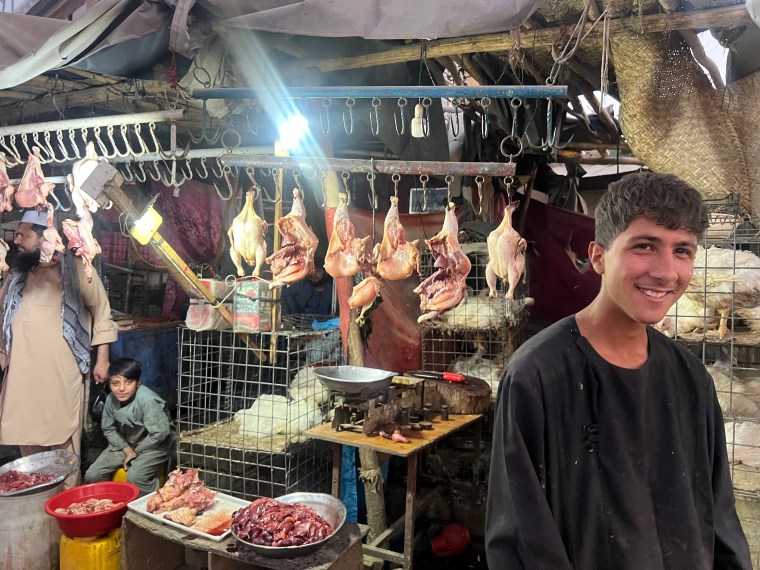
To wrap around back to the original model of the inverse relationship between politeness and friendliness… I think it’s notable that most of the friendliest and most culturally hospitable countries I have been to also have recent and distant histories of brutal tribal warfare. Iraq, Nigeria, Afghanistan, etc., are all countries where in the recent past, otherwise friendly people butchered their ethnic or religious neighbors in the streets.
I’m not entirely sure of what to make of this trend, but I think there is something to the idea that being – by Western standards – overly friendly and hospitable to strangers is indicative of a collectivistic and tribalistic mentality that in extremis leads to terrible conflict, often intranationally. In contrast, for however much the Scandinavian states fought each other, or England fought France, or the north and south Italians despised each other, or the American immigrant groups battled each other in the 19th century, there was never anything close to the level of ethnic/religious animosity between groups in these societies as there were between tribes/ethnic groups in Iraq, Nigeria, and Afghanistan.
In other words, my experience in Afghanistan helped solidify the views I expressed in Notes on Nigeria. I think individualism breeds politeness, but has a neutral-to-negative effect on societal friendliness, especially toward strangers. In contrast, collectivism breeds friendliness as long as the marked individual is within the collective group’s categorization of being worthy of friendliness. So I, as a white American, received extreme friendliness in all parts of Afghanistan, but I may not have if I presented as obviously atheistic, Jewish, Israeli, gay, trans, etc., and prior to the unifying conquest of the Taliban, I may not have received much friendliness if I ran afoul of ethnic tensions; for instance, by being an ethnic Hazara wandering around Kandahar. In fact, my failure of these collective judgements may have rendered not friendliness or politeness, but outright hostility from strangers despite the hospitable pretenses of Islam, Afghanistan, and the Pashtuns in particular.
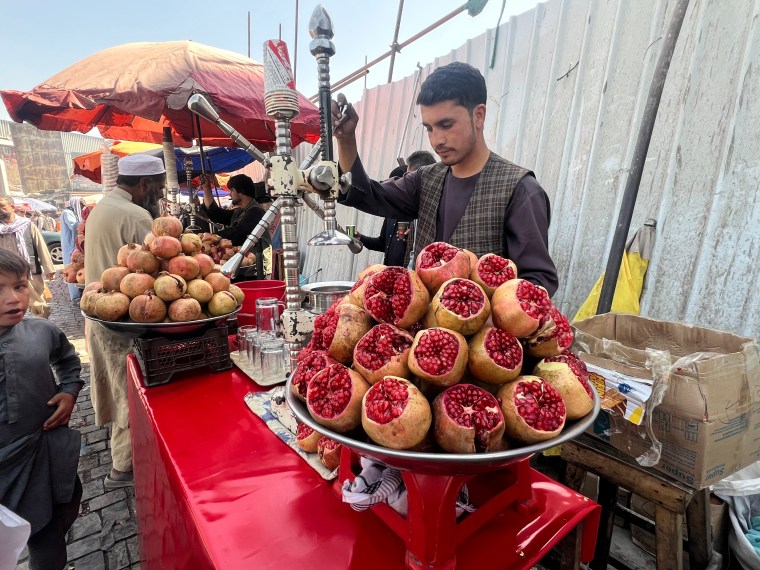
With all these criticisms said… everything has tradeoffs. I was overwhelmed by the attention I received in Afghanistan, and at times, I retreated to hotel rooms to avoid it, but… I also met incredible people who made my trip to Afghanistan one of the best travel experiences of my life. It seemed like every Afghan who knew a shred of English (and quite a few who didn’t) flocked to me on sight and wanted to tell me about their lives, and as a result, I learned far more about Afghanistan, Afghans, the Taliban, every major city, the Afghan economy, Afghan job prospects, Afghan visas, Afghan travel, Afghan culture, Afghan everything than I ever would have otherwise.
And as much as my Western senses make me naturally recoil somewhat against the Afghan sense of hospitality, I have to admit that there is something remarkable about being the recipient of so much sheer goodwill. I’ve explained all the exceptions and caveats above, but aside from them, the Afghans who approached me really did seem to want the best for me, and they were willing to make sacrifices to provide it, mostly of their time, but potentially of their convenience or money. I could say this about a relatively wealthy (French-speaking) Afghan I met in the nice hotel in Kabul who wanted to take time out of his day to show me around the city, and I could also say it about two pomegranate juice salesman who, after standing around in the sun all day grinding pomegranates and shooing away flies, still wanted to give me my drinks for free.
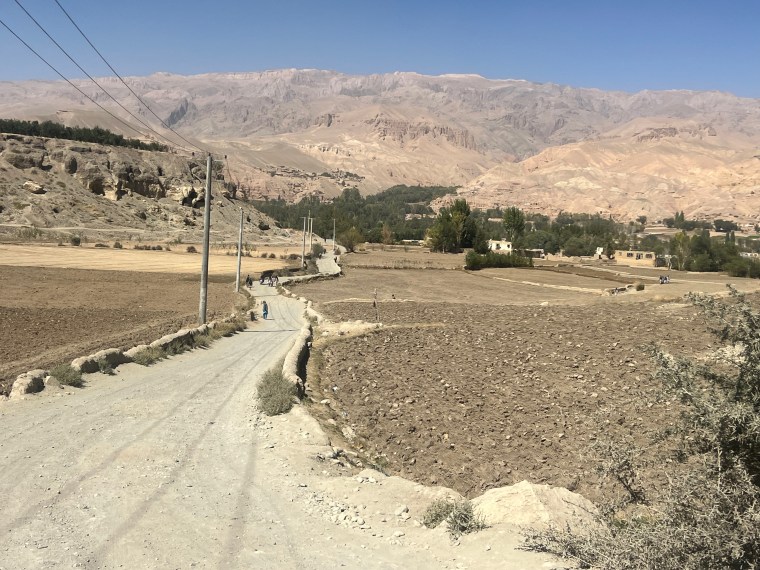
Bamiyan
With all of the above as context, my favorite people of Afghanistan are the Hazaras.
As stated, the Hazaras are (probably) the descendants of the Mongols who invaded modern-day Afghanistan in the 1200s. Unlike the Pashtuns, Tajiks, Uzbeks, and other smaller Afghan ethnic groups, the Hazaras look distinctly East Asian, and they have a history of oppression over the last 150 years in part because they are almost all Shias. Also unlike the rest of the Afghan ethnic groups, while there are pockets of Hazaras in Australia and a few other countries, the overwhelming majority of Hazaras on earth live in the middle of Afghanistan, in Bamiyan province, where they have developed a culture that is simultaneously liberal by Afghan standards and understandably insular.
The social differences between the Hazaras and the rest of the Afghan groups became apparent to me within five minutes of arriving in Bamiyan. I got out of my taxi, dealt with the stupid taxi driver extortion bullshit, and then tried to figure out where my hotel was. Normally this would be a matter of typing it into Google Maps, but of course, there was no internet in Afghanistan. All I had was a partially pre-downloaded map of Bamiyan city and a blue dot representing my current location.
After about two minutes of looking at my phone, I was approached by the first of many Hazaras over the next few days. It’s difficult to explain what made their approaches different from the average approach of the other Afghans, but it was softer, more polite. The Tajiks and especially the Pashtuns would often walk right up to me with an outstretched hand, or stare before an approach, or interrupt my meals, but with the Hazaras, they were more likely to say “excuse me” or non-verbally signal that their approach risked interrupting whatever I was currently doing.
While standing on the sidewalk with my backpacks and staring at my phone, the first Hazara guy to approach did so with an “excuse me” and the non-verbal signaling, and then in pretty good English, he asked if there was anything he could do to help me, almost like a hotel concierge. I told him the name of my hotel. He said something in Dari to a few nearby onlookers, one said something back and pointed, and then he pointed in the same direction, said the hotel was over there and offered to escort me to it. I thanked him, said the escort wasn’t necessary, shook his hand with a smile, and went on my way.
Again, it’s subtle, but even the offer to bring me to the hotel added an extra element of politeness to the conversation. In my experience in most of Afghanistan, the average Afghan would simply assume that I would want an escort, and we would have to go through a little back-and-forth rigamarole until I convinced him that I preferred to be alone. The Hazaras just had a little bit more respect for my sovereignty.
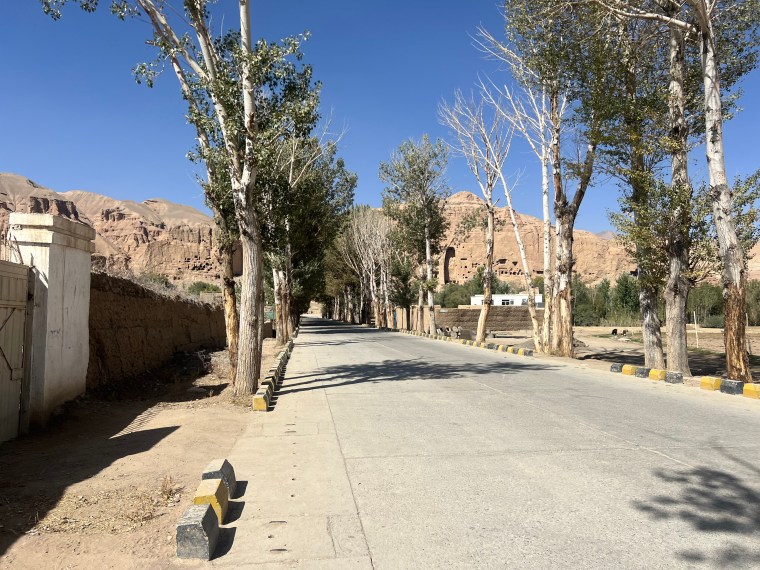
The walk to the hotel took less than ten minutes. A guard let me in the front door without asking me about a reservation, probably because I’m white, into a presumably Soviet money-built two-story structure that I would soon learn was 95%+ empty. I met the hotel owner, and then as per the instructions of my guide back in Kabul, I rejected his quoted price and bargained it down about 30%, to about $30. Then, me, the owner, and three other people who worked at the hotel spent about 15 minutes trying to figure out where Bamiyan’s Afghan Tour State Owned Corporation office was on my frozen Google maps, and they eventually settled on somewhere vaguely to the north. After putting my bags in my room, that is to where I set off.
I made it about 10 feet outside the hotel gate before another extraordinarily friendly/polite Hazara approached me and asked if he could be of assistance. I told him where I was trying to go and he seemed to have a marginally better sense of where it was than the hotel workers, and he happened to be travelling in the same direction, so this time I accepted an escort. I felt a little bad that he had to hop off his bike and drag it to walk beside me, but I figured he found the sacrifice worth it since he was a university student learning English. He ended up walking with me for about 15 minutes, during which time he told me that he used to be really into judo, but the Taliban had closed down all the local judo schools, presumably either out of typical fun police impulses or because they didn’t want young Hazara men practicing how to throw Taliban soldiers across the room.
After the judo guy went his own way, I hitched a ride on the back of a motorcycle from a kid who couldn’t have been more than 14 years old, and finally found the Afghan Tour State Owned Corporation. It was the first one I visited outside of Kabul, so I was a bit nervous, and became even more nervous when the one-floor, roughly 5-room office building was completely empty. But I soon found the group of Taliban workers in an adjacent orchard harvesting some sort of fruit. The head Taliban guy was annoyed to be interrupted, and even more annoyed that I didn’t speak Pashto, but he signed a random piece of loose-leaf paper that was to serve as my permit for the rest of my time in Bamiyan, so it went fine.
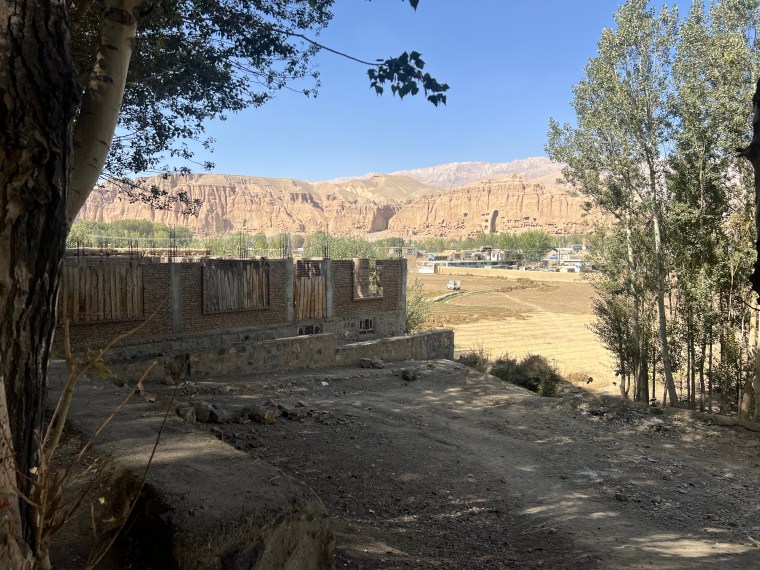
After wandering around Bamiyan for another few hours, I came to the city’s/province’s/Afghanistan’s most revered tourist site: the Bamiyan Buddhas. Or lack thereof.
The original two Buddhas – standing at heights of 125 and 180 feet – were built back in the 500s and 600s AD before not only the spread of Islam to Afghanistan but even before the birth of Muhammad. They survived a bajillion Islamic and military conquests until 1998 when during the Afghan Civil War, the Hazara militias were beaten by the Taliban after a long and brutal siege in which thousands starved to death, and Bamiyan came under Taliban occupation. The Taliban were immediately hostile toward the Buddhas because:
- Despite the Hazaras being Islamic, they considered the Buddhas to be part of their homeland’s cultural heritage. The Taliban had a grudge against the Hazaras due to their Shiism, bad dealings during the Civil War, and general social liberalism.
- Like the Saudi Wahhabis, the Taliban considered it to be haram (forbidden) to create visual displays of any human being since that constitutes a sort of false pretense at wielding Allah’s power of creation.
- Also like the Saudi Wahhabis, the Taliban put extreme emphasis on the oneness of their god, and any other physical displays of divine reverence, even Islamic displays, constitute a sort of polytheism by implying that Allah’s power can be divided. Thus, representations of Buddha are haram instances of idolatry.
So in their minds, the Taliban had a lot of reasons to destroy these 1,500 year old priceless monuments. Immediately after the conquest of Bamiyan, the local Taliban commander took it upon himself to do so, and drilled holes in the statues to plant dynamite, but Mullah Omar intervened at the last moment to stop him, possibly for the sake of tourism dollars. Nevertheless, random Taliban soldiers shot up and blew up pieces of the Buddhas over the following year even though Mullah Omar kept ordering them to be preserved. In March 2001, Mullah Omar reversed his policy as a complete ban on human images was announced, and a few days later, both Buddhas were demolished. According to one seemingly knowledgeable Afghan I met, this had the unintended effect of utterly sabotaging the then-burgeoning diplomatic/economic relationship between Afghanistan and China. Anyway, this is how the larger Buddha site looks today:

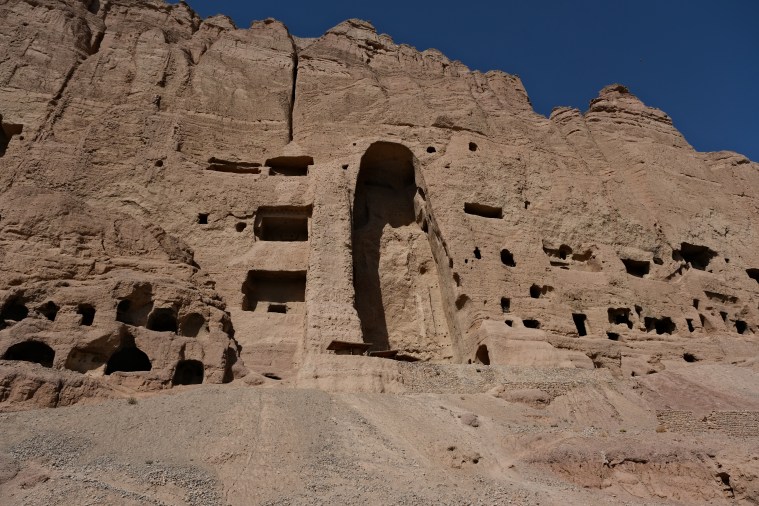
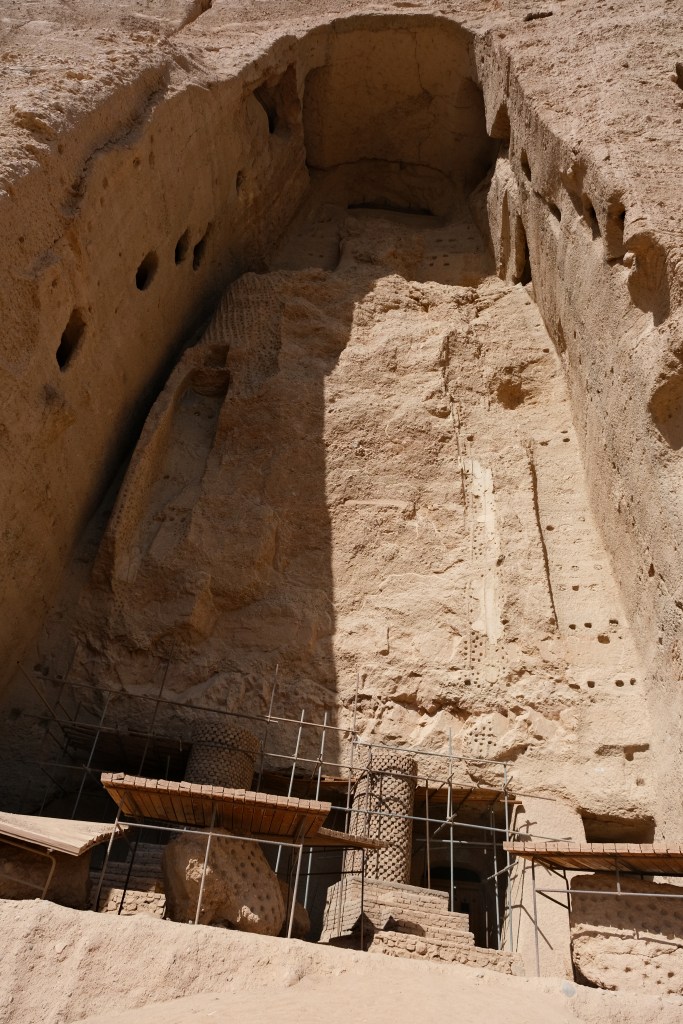
Believe it or not, the Taliban are not very good at setting up tourist infrastructure, and the Bamiyan Buddhas are a perfect case study. There is no entrance to the Buddha gap – no building, no gate, no marked path – there’s just random farmland between the road and the Buddha. So, I naturally crossed this random farmland to the Buddha and nobody stopped me, though a random Hazara teenager followed me. He and I walked around the empty Buddha area and we got as close as we wanted:
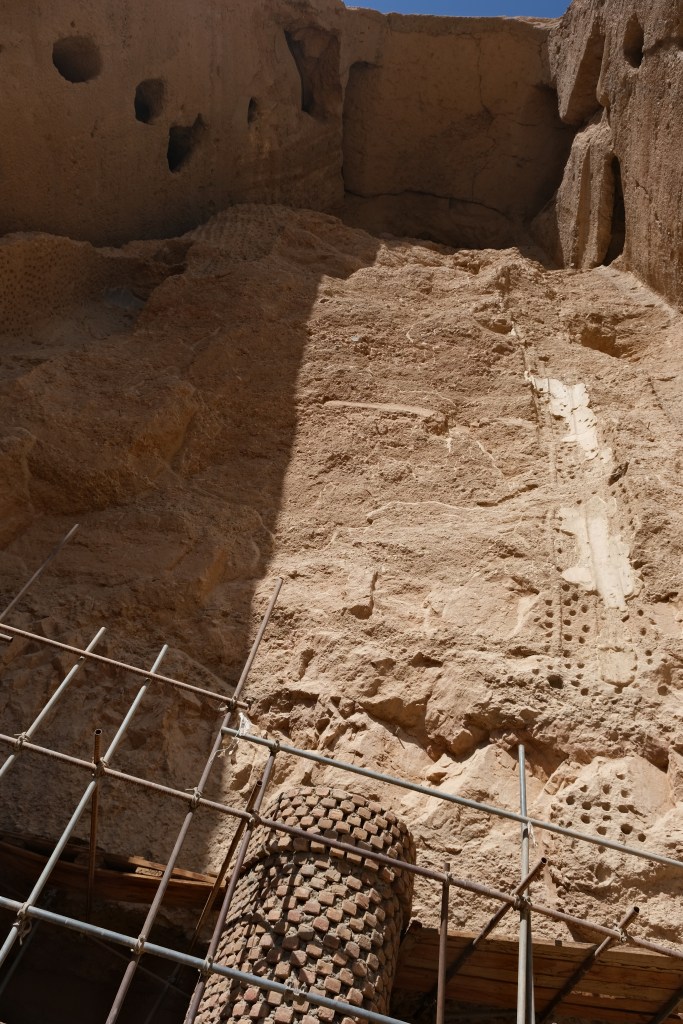

It was only when I was leaving that I discovered I was improperly trespassing. An AK-armed Taliban guy approached me as I was walking down the Buddha’s hill, and through his very meager English, I deduced that he was asking me for a ticket. I told him that I didn’t have one. He shrugged and through his very meager English, he told me to get one. I asked how to do that. He shrugged and I didn’t understand enough of his very meager English to deduce anything. Then he let me go.
I took a long, circular route back to the hotel that took me through Bamiyan’s mainstreet. Compared to other Afghan cities I later visited, the Taliban presence was far lighter, maybe two or three armed guards spotted in an hour of walking. This is where I first noticed that Hazara women were more liberal than women elsewhere in Afghanistan. They all wore veils, but often with the tops of their heads exposed, and almost never with their faces covered. Some worked in shops, which I never saw in other cities. Most notably, Hazara women looked at me on the streets, which also almost never happened elsewhere. Some made brief eye contact with me, and some were pretty cute.
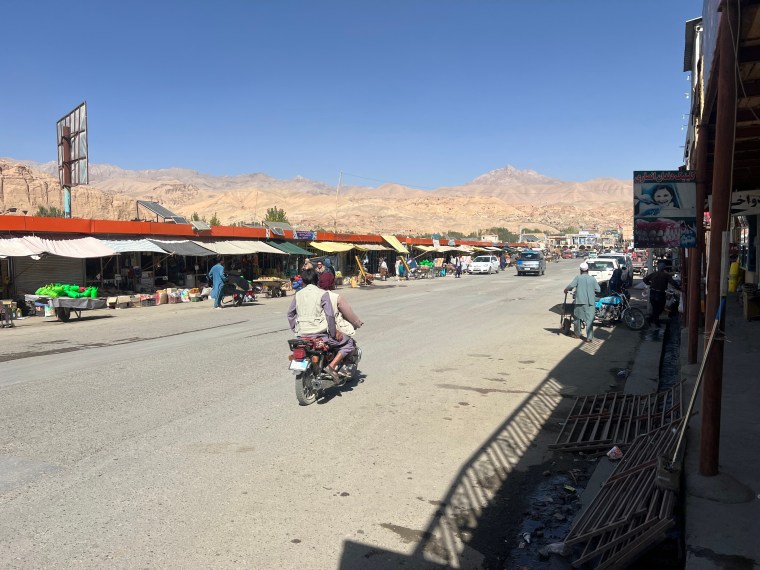
My favorite part of Bamiyan wasn’t the Buddhas or the cute girls, it was a guy working at the hotel that I’ll call Hotel Kid. He was maybe 17 or 18 years old, spoke nearly immaculate English, and in our first conversation, he told me that he was planning on getting a tattoo. I asked him if it was legal for Afghans to get tattoos – he said the Taliban outlawed them, and that’s why he wanted to get one.
The Hotel Kid has to be one of the most Zoomerfied individuals in all of Afghanistan, but in a good way. He had a fashionable haircut, wore sleek Western clothes, shaved his face clean every day, learned English partially in school but mostly by consuming enormous quantities of American media, (allegedly) maintained reasonably popular Instagram and TikTok accounts, claimed to be an aspiring rapper, and abso-fucking-lutely hates the Taliban.
He also is, undoubtedly, at least partially, completely full of shit. He bragged about having had dozens of girlfriends whose pictures he showed me on his phone, he bragged about everyone in Bamiyan knowing and respecting him, he claimed to manage one of his family’s factories part-time and was working on launching his own shoe factory (or something), and I can’t remember the other 90% of the other highly suspect shit he claimed about his life and reputation.
But he is a unique, fascinating individual, especially for an Afghan. He’s funny, loquacious, generous, makes rapid-fire cultural references, and is painfully aware of the social/political/cultural limits of his life in Afghanistan. He is an example of a small, but cutting-edge segment of the Afghan population that is young, heavily-online, highly socially liberal, heavily immersed in Western music and movies, completely in love with Western culture, and completely disdainful of both Afghan culture and his Taliban overlords. And whether due to my Americanness or sterling personality, the Hotel Kid took a liking to me.
I first learned the above info about him and so much more when I got back to the hotel from the Bamiyan Buddha excursion, and he invited me to accompany him on numerous errands in town. He proceeded to give me a half-highly informative tour of the city, including which restaurants sucked, which would give me food poisoning, which people would give me free things from their shops, which Hazaras were part of the (alleged) local mafia, and which shops I should run to if I got in trouble with the Taliban. His (alleged) errands included buying a ring from a jeweler and buying smuggled Iranian cologne from a small shop being managed by a girl the Hotel Kid (allegedly) used to date.
He also took every opportunity to proclaim how much he hated the Taliban, but in refreshingly liberal terms. He hated their restrictions on music, on Western media, on social media, on women, on any hopes and dreams an ambitious young Afghan might have. I asked him how he planned to walk around with visible tattoos (he wanted them on his arms) when the Taliban deemed them illegal, and he said that the Taliban wouldn’t mess with Hazaras like him over something like that, a claim that I deem at least directionally true based on everything I learned on my trip. I asked him what he would do with $1 million, and he said he would move to New York City. I asked him what he would do with $1 billion, and he said he would buy an army and liberate Bamiyan from the Taliban to form the first free Hazarastan. He offered to buy me a ring in the jewelry store, and I turned him down, in part because I suspected he didn’t have much money and was trying to show off to me, but I accepted his offer to buy me a Hazara-style hand-made turban hat.
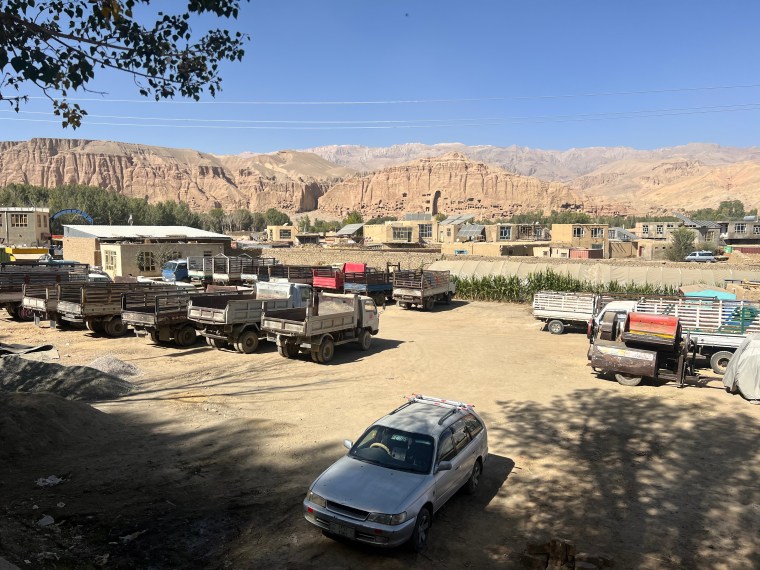
When we got back to the hotel, I was exhausted, so I took a power nap. When I woke up, I had nothing to do. I had already walked around all of tiny Bamiyan, it was too late to go on an excursion to another major site, and the fucking internet still didn’t work anywhere in the country. Fortunately, while sitting in the lobby and staring at my phone to will my email back to life, the Hotel Kid yelled to me, “hey! Play this stupid phone game with us!”
“Us” was him and two of his similarly-aged friends, one of whom worked at the hotel. Since I was one of only four guests at the hotel and none of us had internet, they were also bored out of their minds.
We proceeded to spend the next three hours lying on a carpet on the ground in the dining room, hunched around a single phone, playing some sort of off-line 4-man dice game. The other two hotel workers spoke a little English, but nowhere near as much as the Hotel Kid, and it took me until half-way through the first game to figure out that a lot of the Dari talk between them and subsequent laughter had been a result of them conspiring with each other to keep me in 4th place in the game.
At one point, Hotel Kid nudged me and asked, “do you know why the Taliban shut down the internet?”
I said, “no.”
Hotel Kid gestured to one of his friends and said, “because he won’t stop looking at gay shit on Pornhub.”
Some human experiences are truly universal.
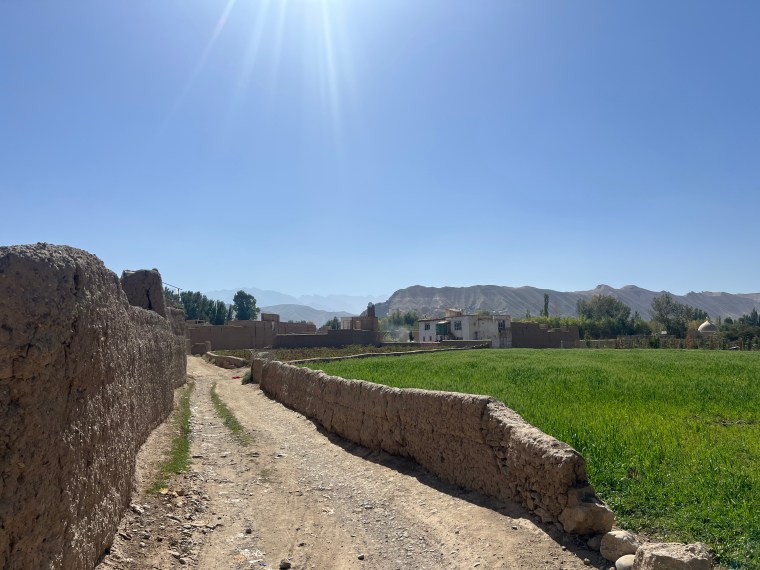
By that night, I was getting pretty worried. The internet had been out across Afghanistan for over a day and no one had a clue what was going on, but from talking to random people, I learned that just about every Afghan thought they knew what was going on. The Hotel Kid, the hotel owner, the guy who sort of spoke English in the taxi, and almost a dozen other Afghans in Kabul and Bamiyan all confidently told me why the internet was out and how long it would be out. While I always appreciate local expertise, the problem was that none of these people said the same thing. Paraphrased answers included:
- “The Taliban is cracking down on rebel groups in the north, but my cousin in the Ministry of whatever told me the internet will come back on Friday.”
- “The Taliban are cracking down on internet porn, but a Taliban I know told me it will be back on Sunday at the latest.”
- “The Taliban are doing some sort of internet revamp, and it will be back tomorrow or the next day.”
- “The Taliban are just trying to prove they have power over Afghanistan, but there’s no way they won’t turn the internet back on by Thursday.”
- “The Taliban have no clue what they’re doing, but the internet has to be back by Saturday or else the Afghan people will revolt.”
And so on. I think the most honest answers I got came first from a pair of Swiss tourists and then a German tourist, all of whom said they had no fucking clue what was happening or when the internet would come back.
Then there were the rumors. Some people said that all transport in and out of Afghanistan was closed, some said that just the land borders were closed but not flights, some said vice versa. Hotel Kid confidently told me that the Pakistani land border was still open, but the rest of the land borders were closed. Some said that the Taliban was implementing its own version of the Great Fire Wall, one guy claimed that the Taliban was going to start doing random phone checks of people on the street to make sure they weren’t using VPNs. Whenever pressed about the sources of any of these claims, it was always someone they knew or someone they knew that knew someone, usually connected to a local government or sometimes the Taliban.
My concern was escalated by the already greatly escalated concern of the two Italian tourists staying at the hotel in Bamiyan with their guide. The four of us got together that night and traded idle theories and speculation about whatever the hell was happening. Maybe the Taliban were rounding up foreigners and using the internet blackout to trap us, maybe the Pakistani military had invaded in response to the Afghan Taliban’s support for the Pakistani Taliban, maybe Kabul had been bombed, maybe Kabul was under siege, maybe Trump had done something idiotic, maybe there were public executions going on across the country and the Taliban were trying to stop it from being filmed. Maybe we could reach out to a guy who knows a guy who knows a guy who knows their guide who has an illegal Starlink set-up and can ask the outside world.
The one bit of legitimately comforting speculation came from their guide – he assured us that if we hadn’t been arrested by now, we were definitely safe.
It’s a truly difficult political/cultural/religious challenge to model Taliban behavior. By straightforward, ordinary, modern statecraft standards, the Taliban’s decision to indefinitely shut down the internet across the entire country with no forewarning or indication of an endpoint was incredibly moronic. Afghanistan’s GDP was not only bleeding by the day, but by future potential since no business or country in its right mind would want to invest in an economy that could randomly and indefinitely lose internet access at a moment’s notice.
Without internet and phones, people can’t talk to loved ones, businesses can’t function, trade can’t function, and even government offices can’t function. Only the Taliban with their well-established network of short-wave radios can function. But still, if the internet remains off long enough in Afghanistan, the country’s economy and society may very well collapse. Afghans couldn’t get money from banks. Soon enough, would food stop being delivered to cities?
What could possibly be worth all this to the Taliban? Yes, I know they are crazy religious fanatics, I know they are willing to sacrifice thousands or millions of Afghans for their religious goals, but still… it’s difficult for me to come up with an equation where the Taliban gain more than they lose from an indefinite internet shut down even by their own standards.
The only clue we got from the Taliban itself came after about an hour of fiddling with the hotel lobby TV when we finally found CNN. It was the first news we had heard from the outside world in over a day, and we were thrilled to find out that World War III hadn’t started. After watching random news stories for 30 minutes, there was a brief section on the internet shut down that provided no further context to our situation whatsoever. But then we switched to an Afghan news station and got the hotel owner to translate an official statement from the Taliban.
He said that it basically says that the Taliban were shutting down the internet to crack down on moral violations, with no further specifics given. So maybe it was gay shit on Pornhub after all.
Regardless, the Italians were freaked out enough to decide to prematurely cut their trip short. Their new plan was to leave Bamiyan the next morning, go to Kabul where there would hopefully be a bit more info about what was happening, and then likely try to leave through the Pakistani land border near Jalalabad if that was possible. I asked their guide why they didn’t head due south to the closer Pakistani land border, and he said that even during normal times, that border was extremely dangerous due to Pakistani Taliban military activity.
The Italians invited me to go with them and I strongly considered it. As they reminded me, I would look and feel like a complete fucking idiot if I voluntarily went to Afghanistan as an American tourist and then stayed in the country during a national emergency and was subsequently arrested or killed. Just a complete idiot. I would almost certainly be mentioned in international news for my stupidity.
But fuck it, I decided I would stay in Bamiyan for at least half a day more, see if the internet came back or more news filtered in, and then make a decision whether to meet them at a particular hotel in Kabul.
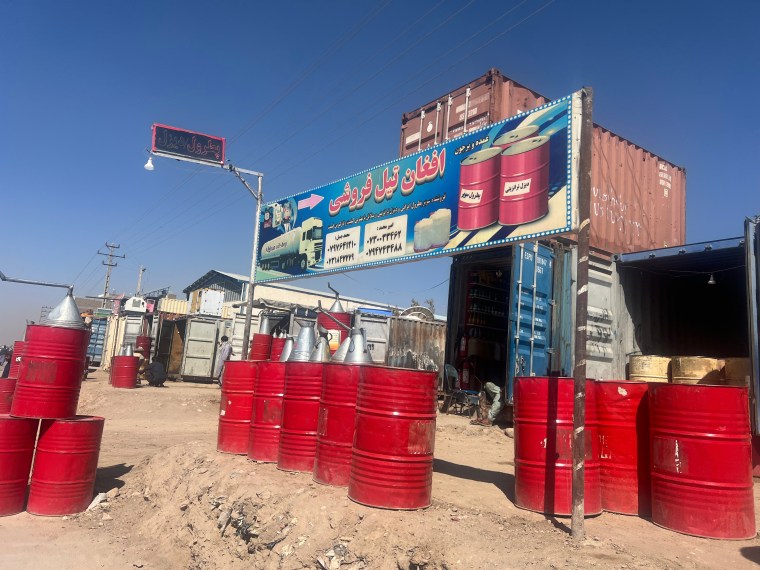
As per my arrangements with the hotel owner, I got up early the next day to take a taxi to Band-e-Mir National Park. Minutes before leaving, the hotel owner hoisted one of the hotel employees on me to be used as a translator. I told him that wasn’t necessary. He insisted. I said I didn’t want to pay. He said that I didn’t need to pay. That was fine with me, so I accepted.
I’m glad I did, more for the employee’s sake than mine. Though he grew up in Bamiyan, which was only about an hour away from Band-e-Mir, he had only been there once about a decade ago as a child, so he was basically getting a one-day paid vacation by going with me. He also helped translate a bit of conversation with my taxi driver, including most crucially, the driver telling me about his wife and then taking a phone call with his girlfriend, making Afghanistan roughly the 1,000th poor country I’ve been to where a local told me about his infidelity with no prompting (ex. Tajikistan and all of West Africa). The taxi driver also told me that he used to drive supply convoys for the Americans and that he was positive the internet outage wouldn’t last more than a week.
The drive was fairly slow because I kept asking to stop to take pictures and because the taxi was a 50 year old piece of shit. When we pulled up to the front gate of the national park, which of course was staffed by two armed Taliban guys, the taxi driver told me through the translator hotel employee to be quiet. I asked why. The hotel employee translated that if the Taliban found out that there was a foreigner in the car, I would have to pay a 300 Afghani (~$4.50) entry fee, but if the Taliban guys thought we were all locals, we would only have to pay 50 Afghani (~$0.75). Before I could argue that I really, really did not want to gamble on tricking the Taliban for that price differential, especially with the ongoing internet blackout, we arrived at the gate. One Taliban guy came up to the car, the driver said something, handed him some money, got a ticket in return, and we were waved through. As we drove off, the driver turned to me with a big shit-eating grin.
Five minutes later, we approached a second gate with armed Taliban. I preemptively told the driver that I didn’t mind paying the extra Afghani, but both he and the hotel employee assured me that it would be fine, we could totally pull this off. Unfortunately, this time, the AK-armed Taliban guy took two seconds to look into the taxi, noticed the white guy wearing Western clothes, and then asked me in Pashto or Dari where I was from. The jig was up, but I guess failure to pay proper national park fees isn’t a crime outlined in the Koran, because I just paid the 250 Afghani I owed and they waved us through.
In the park, I encountered the aforementioned German tourist travelling with his own guide. I approached him and asked if he knew anything more about the internet blackout. He said he didn’t but that when he had arrived in Kabul two days ago, there were at least a dozen armed American soldiers in the airport with what looked to be an official US government convoy. I had no idea what to make of that at the time, but my mind went to the best and worst possibilities. Maybe the soldiers indicated a diplomatic parlay between the US and the Taliban? Or maybe they were part of an aggressive bid for Bagram Airbase?
(When the internet eventually did come back and I did some Googling, I inferred the soldiers were almost certainly part of the US government’s successful diplomatic mission to retrieve an American citizen who had been held in Afghanistan for nine months.)
Regardless, Band-e-Mir National Park is beautiful, and I would have spent a lot more time there if I wasn’t worried about the internet outage. Some pics:
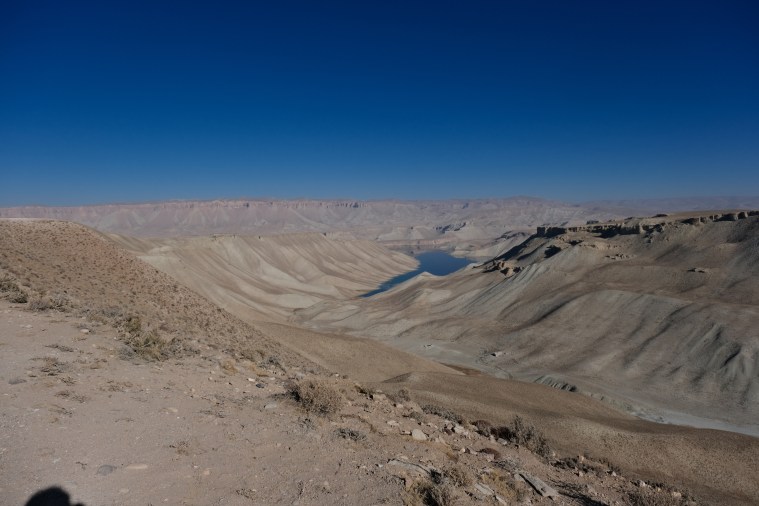
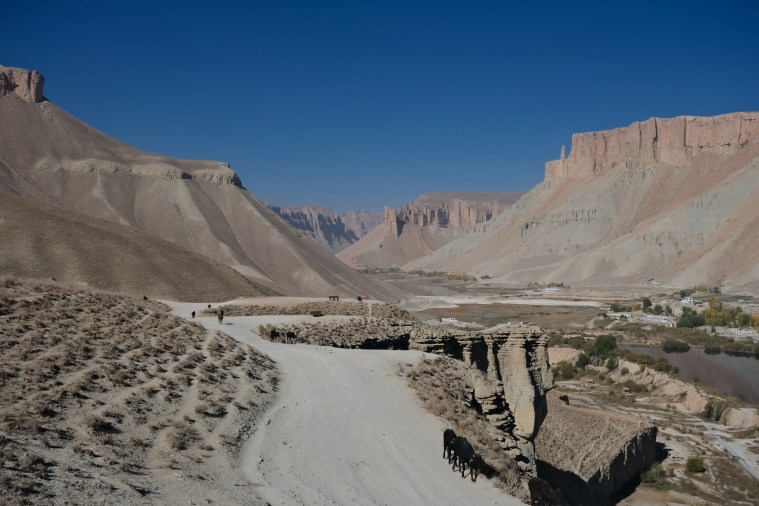
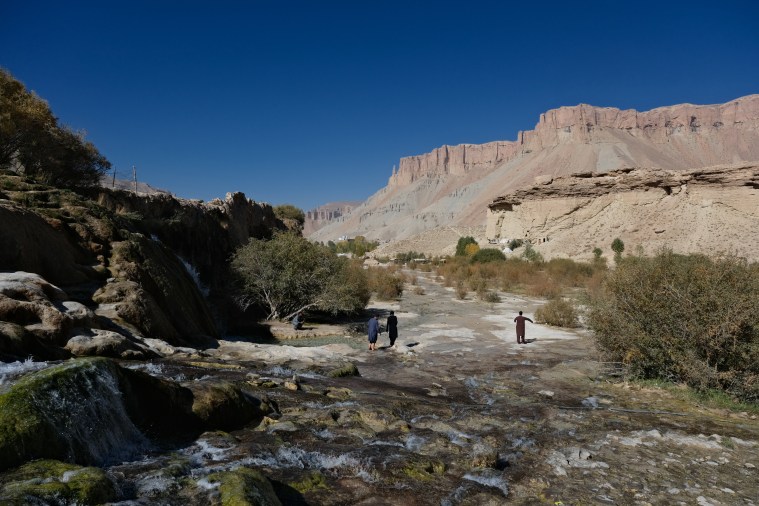


Three notable events occurred on the drive back to Bamiyan, two of which were car accident-related.
First, there was a car crash in the middle of the road, causing a minor traffic back-up as cars coming from both directions slowed to get around it. When we got within 20 feet of the crash, we could see a group of maybe a dozen men standing around two men yelling at each other. My driver slightly pulled to the side of the road, stopped, got out of the car, and joined the men to listen. This not only made the traffic jam worse, but didn’t seem to help resolve the situation at all. He listened to the argument for 15 minutes and occasionally spoke to one of the screamers or the other while we waited in the car, and then came back and drove us away with no apparent resolution. Like rampant infidelity, this sort of busy-body bystander interjection into affairs is very common in poor countries in my experience (see the section on Sierra Leone in Other Notes on West Africa).
Second, we slowed down as we passed yet another car crash. This one was a flipped car off the side of the road. There was another group of a dozen people around the car, including one guy, maybe in his early 20s, who was absolutely bawling his eyes out and screaming in agony. Whether by obvious speculation or because he could understand what he was screaming, our driver said the guy’s father had died.
Third, on approach to a Taliban checkpoint, I think we nearly got in trouble for blasting Rihanna’s “Diamonds,” but the driver turned it off just in time.
I originally planned on staying in Bamiyan for at least one more night, but by the early afternoon, the internet was still out, now going on about two days, so I decided to go back to Kabul to meet up with the Italians at an agreed-upon hotel, and maybe make a break for the Pakistani border. I quickly visited a ruin near Bamiyan city, said goodbye to Hotel Kid, his friends, and the hotel manager, and then went to the big taxi area to get a ride back to Kabul.
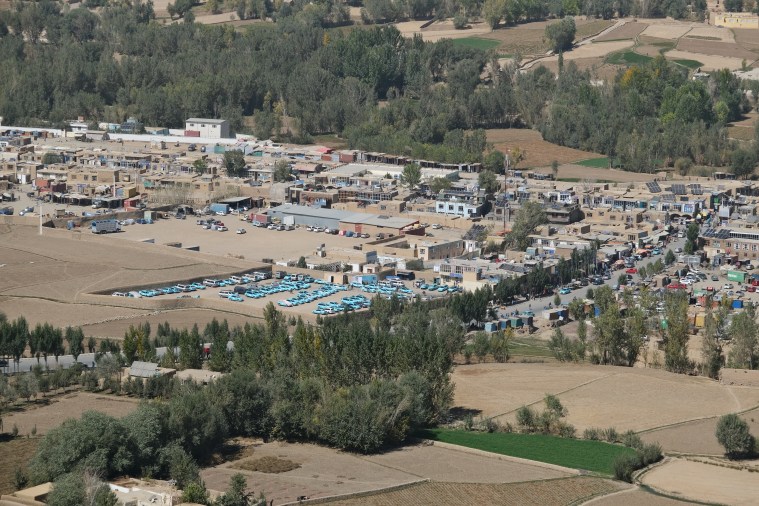
In addition to rampant infidelity and busy-bodyness, another big thing I learned from traveling through West Africa is to take shared taxis over long distances whenever possible. Not only is it a great way to get a visual/geographic sense of a country, but it’s one of the best possible ways to randomly meet fascinating people. The ride back to Kabul from Bamiyan is a perfect example.
I wish I could remember the name of the guy who sat next to me, but he was a Hazara, maybe mid-40s, chubby, and he spoke excellent English due to years of working with international NGOs. He was easily the most knowledgeable and articulate Afghan I met on my trip when it came to my usual topics of interest; he taught me more about Afghan politics, Afghan economics, Afghan culture, Afghan history, the Taliban, and the Western-backed government than anyone else by a decent margin, except maybe my guide back in Kabul. And perhaps most remarkably, he talked about a wide range of topics in a self-aware manner, repeatedly noting that his views were couched from a politically-aware Hazara perspective, which was very refreshing to hear. Also, he was funny and constantly made jokes about how much he hated the Taliban.
In sharp contrast to my Kabul guide, the Hazara guy insisted that the Taliban did not treat the Afghan ethnic groups equally. He considered the Taliban’s oppression of the Hazara back in the 1990s to be a form of genocide and he was in contact with prominent Hazaras who had fled to Australia and were trying to get international support against the Taliban. He acknowledged that the Taliban’s post-2021 treatment of the Hazaras was far better than in the late 1990s, but his judgement was that the Taliban were biding their time, consolidating their power, and getting ready to tighten the noose and go back to the old ways. He deemed the ostentatious appeals to moderation as nothing more than a smokescreen, and he feared for the safety of himself and his family in Bamiyan. All of this talk was constantly interjected with his insertions about how the Taliban were the worst thing to ever happen to Afghanistan and he hated their fucking guts.
On my taxi from Kabul to Bamiyan, our car had been stopped six times at Taliban checkpoints to look at my permit and take pictures and whatever. Oddly, on this trip back to Kabul from Bamiyan, we weren’t stopped once. The Taliban checkpoints kept waving our taxi through.
It wasn’t until we got to the outskirts of Kabul that we figured out why. The Hazara guy gestured to the man sitting in the front-passenger seat – a serious guy with a big beard, maybe in his early 30s. “He’s Taliban. I think he’s an officer.”
“Are you serious?” I asked.
The Hazara guy said he was pretty sure that we got through the checkpoints easily because the Taliban soldiers saw this guy.
I pointed out that we had been insulting the Taliban in the backseat for hours.
The Hazara guy laughed and said, “I don’t think he speaks English. If he did, we would be in big trouble.”
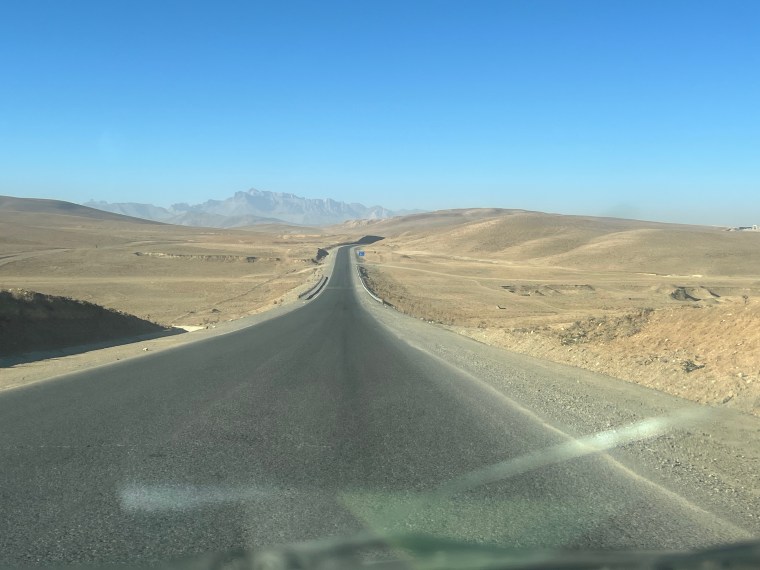
The Hazara guy asked our taxi driver to stop before we got to the taxi station, and while I started to say goodbye, he told me to come with him, that there would be far less traffic if we got a private taxi here. I said that sounded good, so I got out, got my bags with me, and said my goodbyes to the driver and the apparent Taliban officer (who gave me a slight nod). We then got in another shared-taxi, with me and the Hazara guy packed into the back seat next to a third guy + the driver and a front seat passenger, to get through the final hour of Kabuli traffic to get to the city center.
It was on this last leg of the journey that something magical happened. We were sitting in bumper-to-bumper traffic and in a combination of Pashto/Dari and occasional English translation for my benefit, everyone in the car chatted about the internet outage, with all the usual speculations about why it happened, what the Taliban were planning, how long it would last, etc. And then…
All five of our phones went off at once with different rings and buzzes that carried on for a good 15 seconds. There was a slight gap between the start of the rings and the realization of what was happening, at which point everyone in the car shouted and laughed in celebration. There was pure, unadulterated joy in the air, and we could look out the car windows and see other people in other cars and on the sidewalks feeling the same thing. It was beautiful.
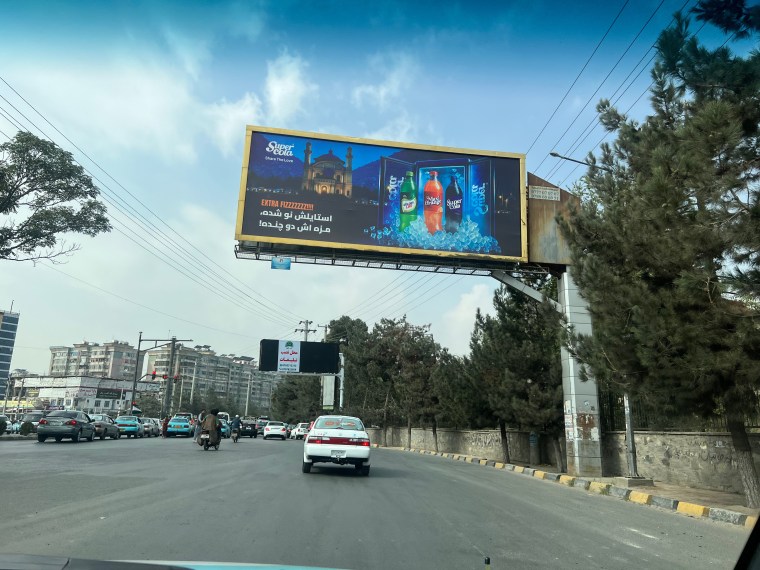
So why did the Taliban shut down the internet throughout all of Afghanistan for about two days? The official explanation was confusing and contradictory – sometimes the Taliban said it was to restrict unspecified immoral activity, and sometimes they said it was due to a national upgrade to fiber optic cables. I’ve never heard any definitive explanation.
1/16/26 EDIT – This BBC article – https://www.bbc.com/news/articles/cg7vdpy1l2vo – revealed that the internet was shut off by Hibatullah Akhundzada, who is both the Taliban Supreme Leader and the leader of the Kandahar group, and he absolutely despises the corrupting influence of the internet. It wasn’t clear what his end-game was, but he seemed to be shutting the internet off indefinitely in Afghanistan… that is until, for the first time in the history of the Taliban, a group of ministers (from the Kabul group) disobeyed direct orders from their Supreme Leader and turned the internet back on. Again, this is a massive development in the inner-workings of the Taliban. Perhaps the ministers will be demoted/fired/exiled/executed, or perhaps the ministers will slowly take more power and the Supreme Leader will become a figurehead, or perhaps there will be a civil war. Only time will tell.
It was annoying that the internet blackout had caused me to cut my time in Bamiyan short and make a needless trip back to Kabul, but I decided to use the detour for a break day before continuing on to Ghazni. I booked a night at the Italians’ hotel, one of the fanciest in all of Kabul and Afghanistan, for about $80, which could be paid with credit card. I paid $5 for an enormous and delicious meal, laid in a comfy and clean bed, and utterly indulged in wifi, filling my brain with pointless email, YouTube, Reddit, etc. bullshit, glad to be back in the modern world. And of course, for the sake of being a hardcore adventurous traveller, I checked whether Pornhub works in Afghanistan. It does not (without a VPN).
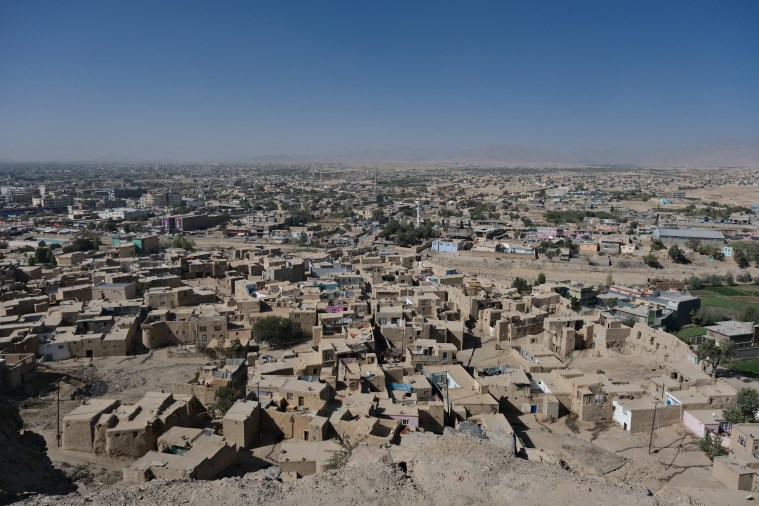
Ghazni
Note – This essay will go on forever if I keep describing my trip at the same level of detail for the remaining 16ish days, so I’m going to cover the other major cities in bullet points to provide a general description and note the most interesting events that haven’t already been mentioned.
- The shared taxi from Kabul to Ghazni took over 3 hours. It was supposed to cost 300 Afghani (~$4.50) but me and the guy sitting next to me each agreed to pay 450 Afghani (~$6.80) to keep the bitch seat empty for our comfort. The guy was a university professor who spoke good English. He was fairly pro-Taliban, said Afghanistan was better than it has ever been in terms of safety, also commended the Taliban for road construction, and had qualms about the economy but believed it would turn around once the Taliban got more mining operations going with the Chinese.
- About thirty minutes into the drive, we were gently rear-ended by the car behind us. Our driver looked out the window, yelled, got out, checked the bumper, apparently didn’t see any damage, yelled again, got back into the taxi, and then we drove away.
- The taxi stopped at four checkpoints because of me. The last checkpoint took a long time and involved asking me for multiple phone numbers and the Taliban soldier calling his boss for something, etc. The professor sitting next to me was extremely helpful in translating and getting me through the process; at the end of the drive, he gave me his phone number and offered me a place to sleep, to show me around the city, etc.
- Like in Kabul, the shared taxi stopped in a depot on the outskirts of the city, so I had to take another taxi to get to my hotel in the city center. The second taxi driver was extremely talkative despite pretty bad English. Like every other taxi driver in Afghanistan, he used to be a soldier for the old government, and he was outspokenly anti-Taliban and wished the old regime were still in power. He tried to heavily sell me on hiring him to show me around Ghazni, but after repeatedly turning him down, he settled on giving me his phone number on WhatsApp.
- My hotel was basically a restaurant with four rooms to rent out. Like in Bamiyan, I negotiated the price down about 30%, also to about $30. The room was mediocre but the internet was excellent.
- I arrived in Ghazni on a Thursday, but the Afghan Tour State Owned Corporation office wasn’t open until Saturday, the day I was planning on leaving, so I wouldn’t have a local permit for the next two days, so I wasn’t sure I was even allowed to walk around Ghazni. I texted my Kabul guide to ask what to do, and he told me I should walk around the city and give him a call if any Taliban gave me trouble so he could explain the situation.
- As a city, Ghazni is nothing special, but it was an interesting experience for me to explore my first real Afghan city on my own (as opposed to Kabul with my guide or tiny Bamiyan). I got far more attention on the streets from locals (most of whom were Tajiks or Pashtuns), including multiple cars stopping in the streets so the drivers could talk to me. This is where I first developed the walking-around-cities tactic of never backtracking or looping through a street too often, because when I did so, it caused the locals to become emboldened and approach me more often, either because they thought I was lost or because they had worked up the courage to approach me only on the second time they saw me.
- Ghazni is fairly ugly, but it’s cool that I can walk around some old citadel ruins on a hill at the city center without tickets, permission, oversight, etc.
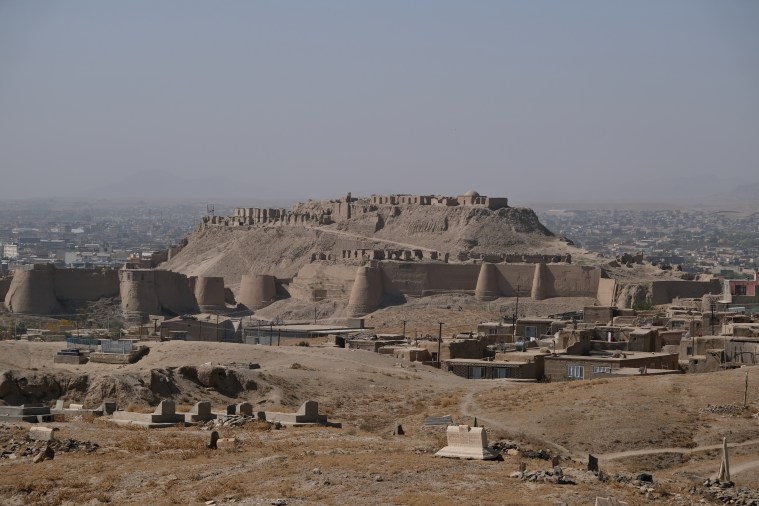
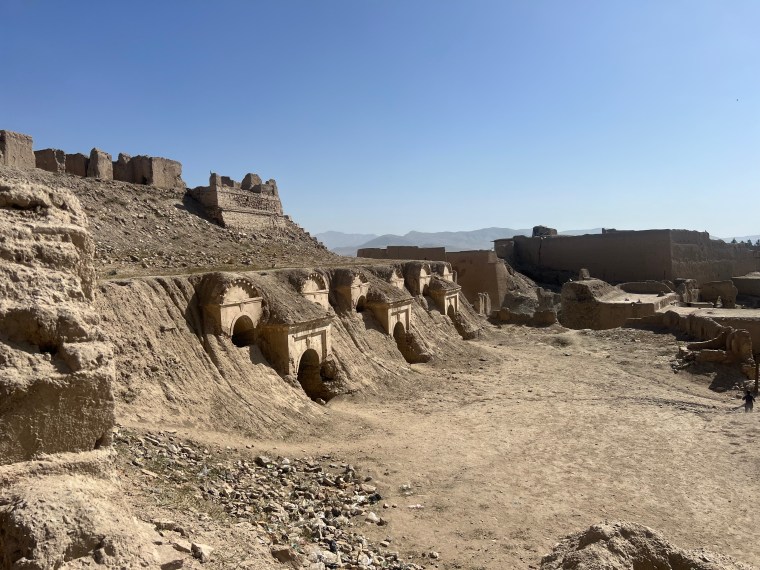

- The main tourist attraction in Ghazni is the Ghazni minarets, which are distinctive less for their actual structures than for being weirdly alone in the middle of a field:

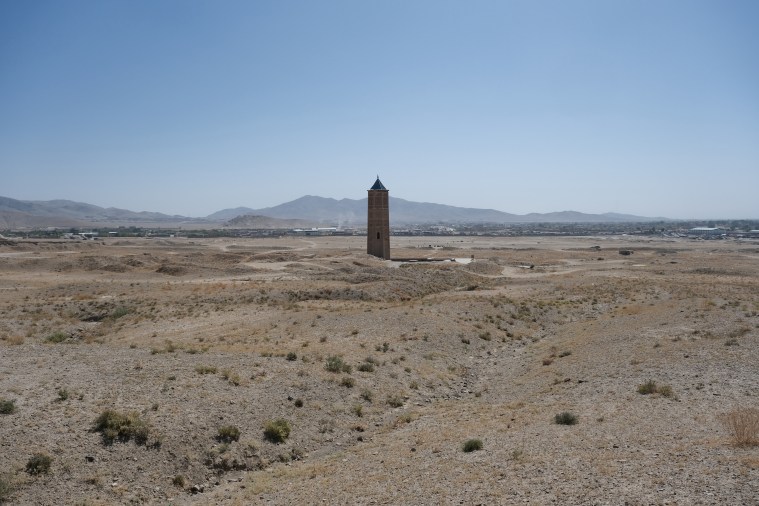
- The final cool site is what is listed on some websites as a “military museum” but is really just a surprisingly long line of dozens of helicopters, tanks, artillery pieces, and armored personnel carriers left behind in Afghanistan by the US government. It’s very much worth a stroll-through, but be warned that going anywhere near there as a white guy will result in you getting mobbed by curious onlookers:
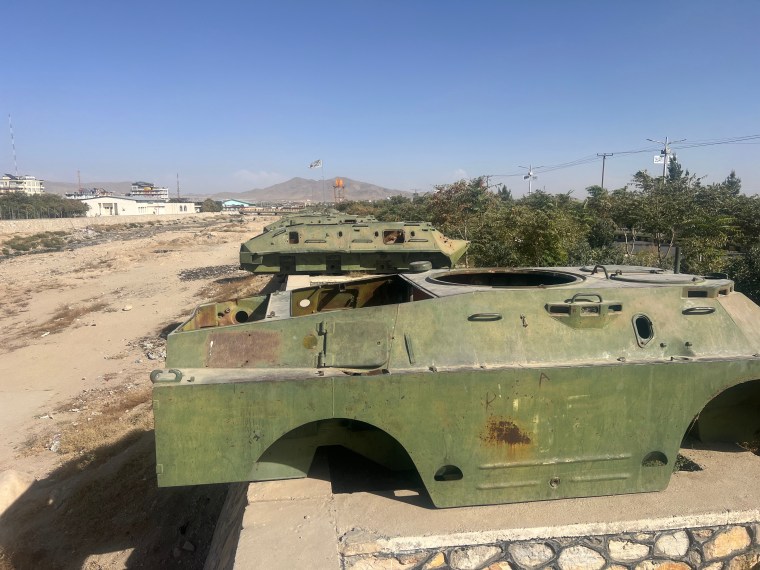
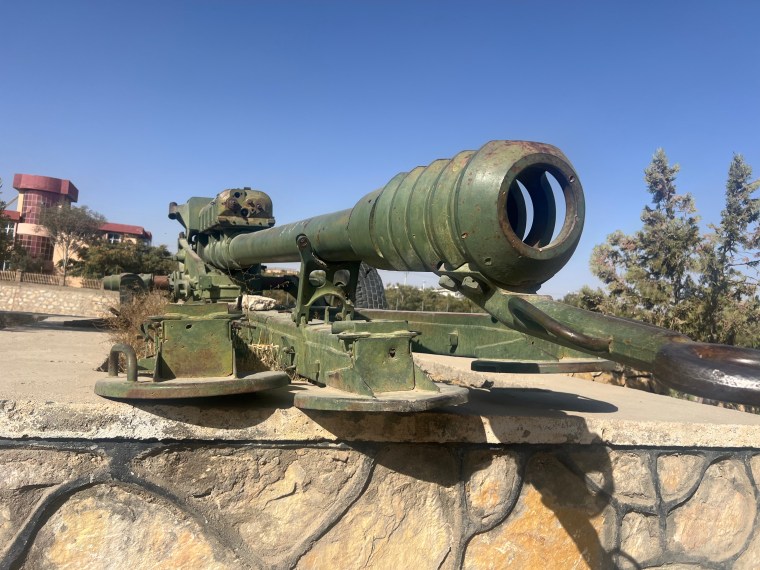
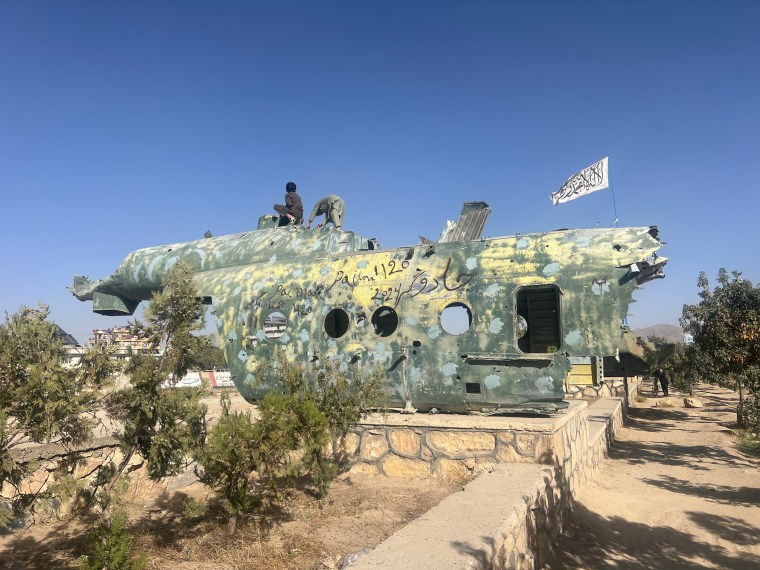
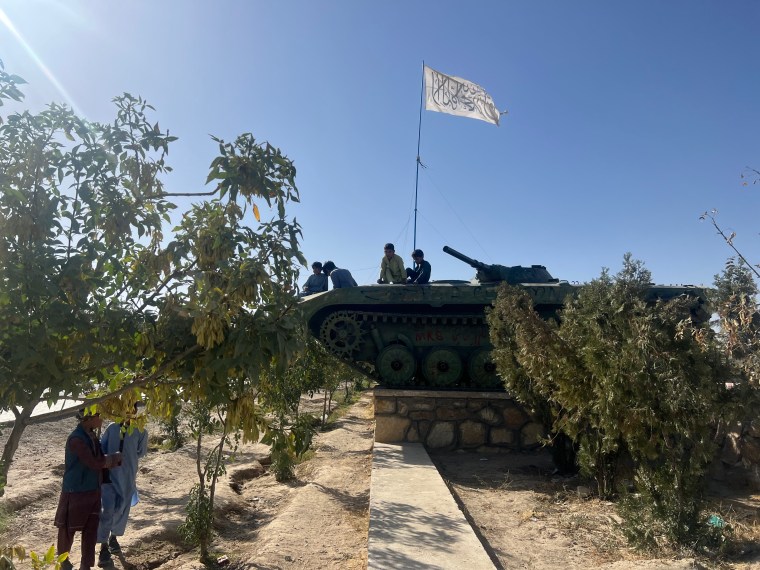
- When I finally made it to the Afghan Tour State Owned Corporation on Sunday, the office Taliban were very polite, probably the nicest of any Afghan Taliban I met. They gave me tea and candy, and told me that Ghazni gets 40-50 tourists per month, with a high-end of 70.
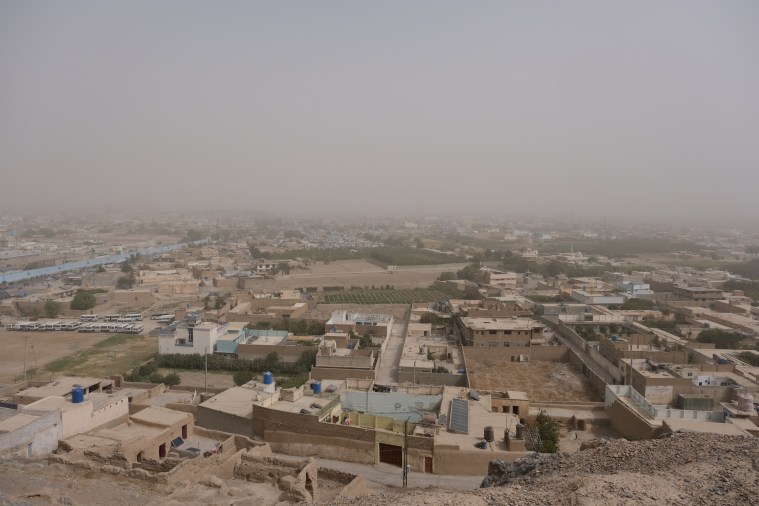
Kandahar
- As far as I can tell, there are few-to-no shared taxis from Ghazni to Kandahar because it’s about an eight hour drive. The Ghazni hotel owner arranged for a local taxi to take me to the bus station on the outskirts of Ghazni, but it took about three times longer than it should have because the taxi driver had no idea where to go and had to ask for directions from random bystanders five times. He eventually took me to a gas station where the bus stopped.
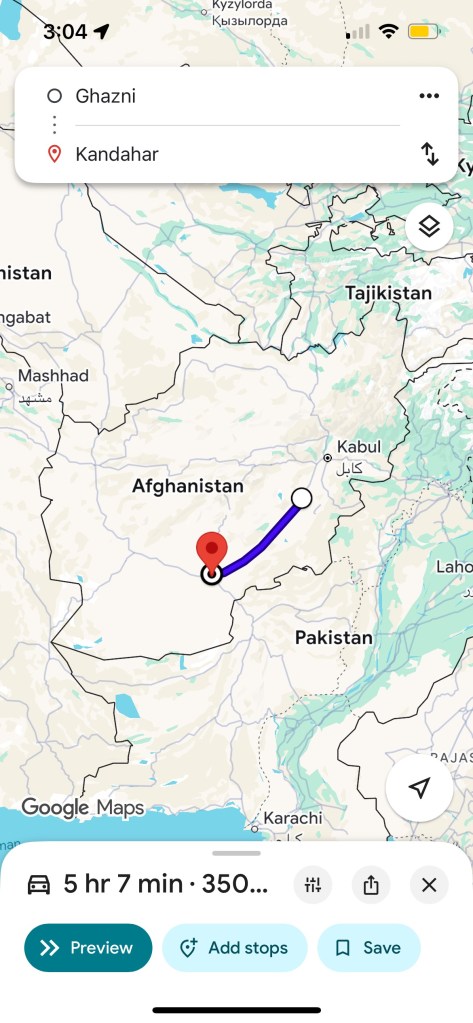
- I have been on many busses in many poor countries, but I have never been on one with less leg room. I thanked Allah every second that I sat in the very back with the literal only free seat in the entire bus right beside me, which let me turn my body sideways rather than contort into a yoga position for the entire eight hour trip.
- Three hours into the drive, I saw two completely totaled cars that had crashed into each other head-on.
- The drive from Kabul to Bamiyan was beautiful; the drive from Kabul to Ghazni was geographically meh but had some small towns to see; the drive from Ghazni to Kandahar was boring as hell. Just endless flat arid or desert expanse.
- I chose a decent-looking hotel in Kandahar based on Google Maps. When I arrived, the hotel manager said it would cost $80 per night, about the same as the very fancy hotel in Kabul. I assumed this was a negotiation tactic, so I pled poverty and offered $25. It took a while for me to understand the hotel manager’s response through his mediocre English, but he eventually explained that the electricity was out in much of the city, and the only way to give me a room with heat and hot water was to turn on the generator, and I would be the only guest in the entire hotel, so they would need to charge me for the fuel. That was fair, but $80 was too much for me, so I went elsewhere.
- In retrospect, I should have paid the $80. At my new hotel, I first saw a cockroach come out of the shower drain, and then found a dead cockroach rolled up in my blanket.
- The hotel manager at the second hotel seemed very nervous to host me. He asked me to personally tell him whenever I left the hotel and as soon as I arrived back, and he took my picture when I first arrived and left. I couldn’t tell whether there were extra restrictions on foreigners in Kandahar, or if this was his own initiative. But aside from that stuff, he was very nice and gave me lots of directions around the city.
- Kandahar is the second-biggest city in Afghanistan at around 650,000 people. The city center, where my hotel was, is bustling, with a huge extended market area, and abysmal traffic. As a 99% Pashtun population and the birthplace of the Taliban, there are Taliban soldiers everywhere and I was stopped constantly to show my permits. The city itself is pretty ugly, typical central Asian concrete buildings with little color besides brown and yellow. Some of the market area buildings are basically concrete husks that look like they’ve been bombed.
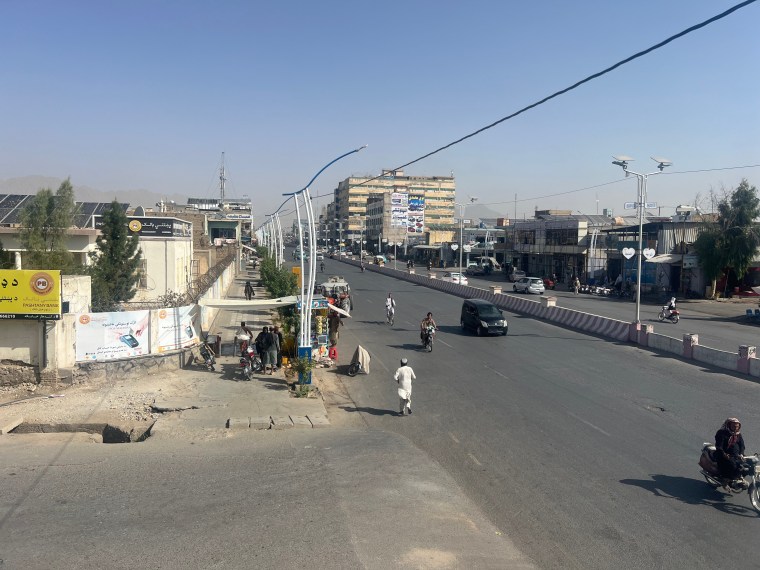
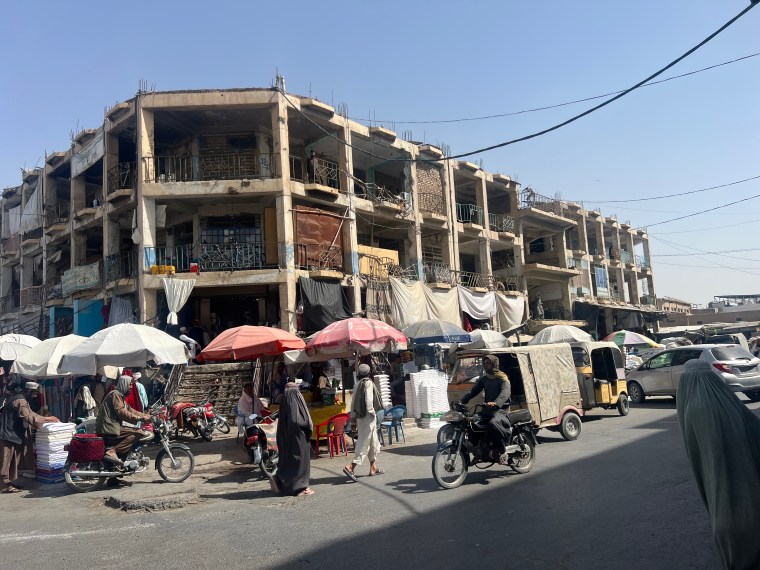
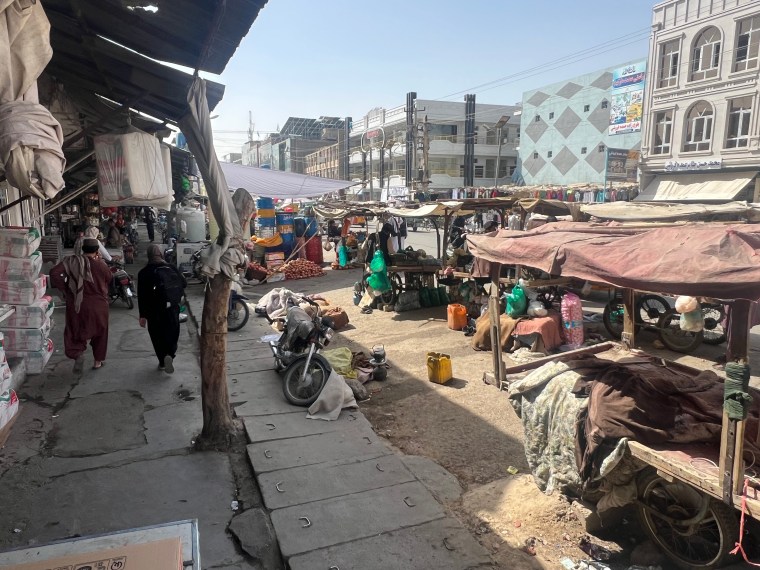
- A highlight of Kandahar was visiting an abandoned amusement park. This was not a rare sight in and of itself; Afghanistan’s cities are full of them. Presumably, they were built during the Western occupation and shut down after the Taliban took over in 2021 under the general anti-fun policy. But while most of the other old parks are closed off, this one was repurposed into, I guess, a regular park that happens to be full of rusting rides.
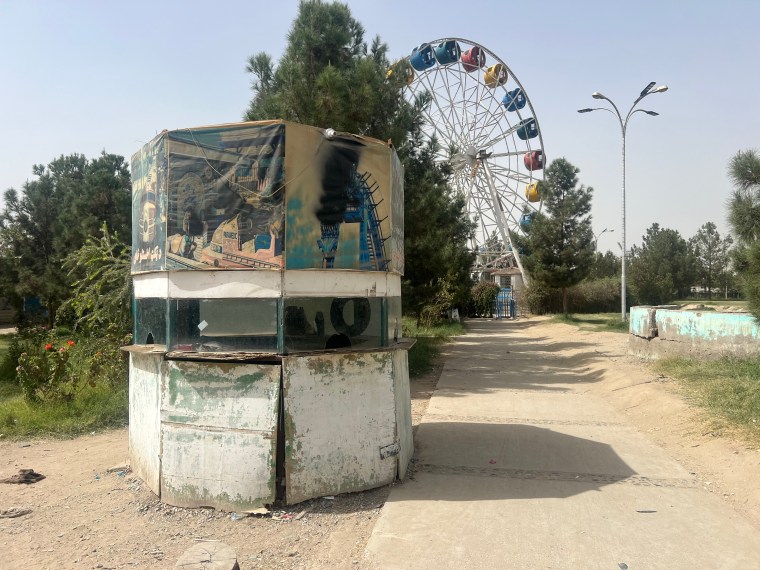
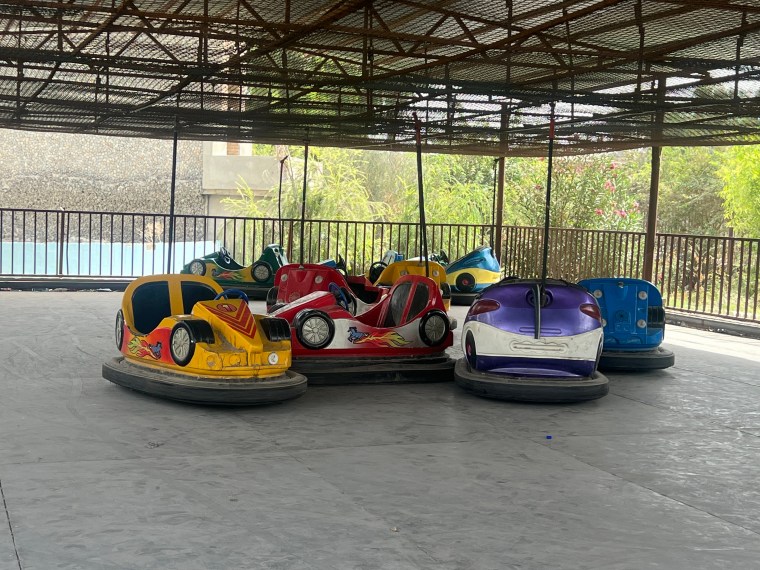
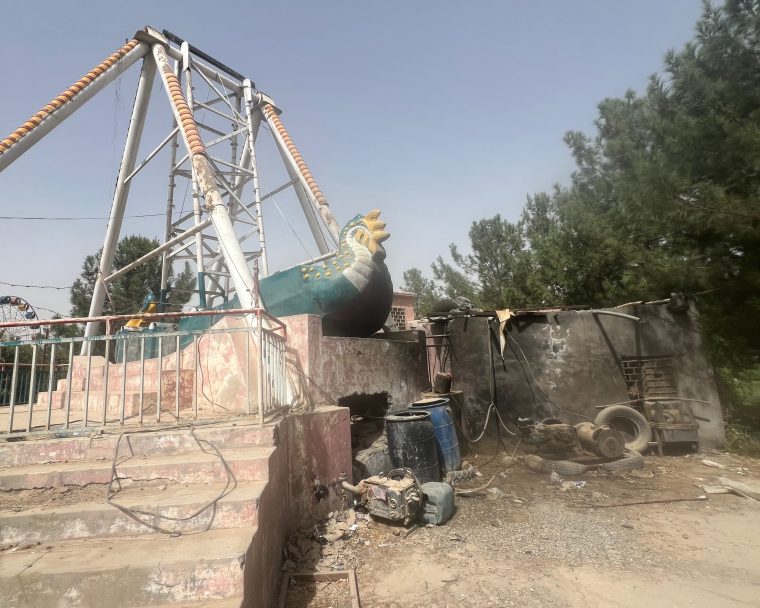
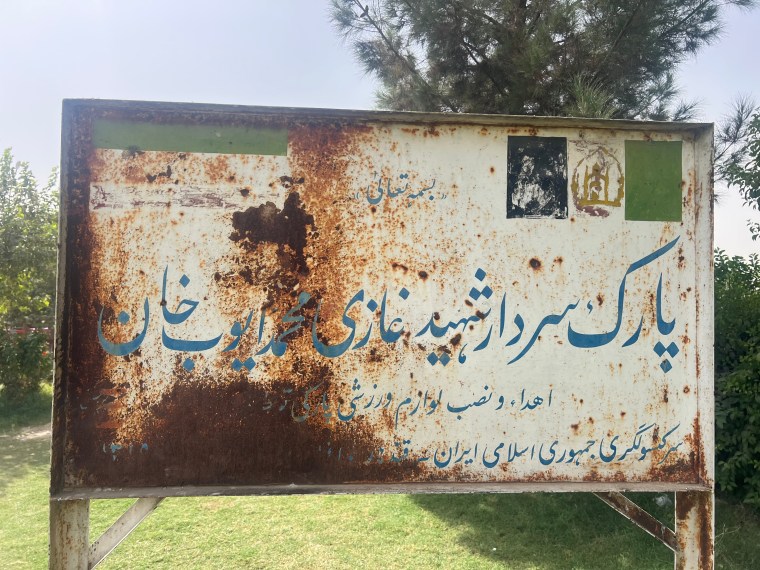
- The main tourist site in Kandahar is the Kirka Sharif, a mosque that holds a cloak (allegedly) worn by the Prophet Mohammed, the very same one donned by Mullah Omar in 1996 when he declared himself the head of the Islamic Emirate of Afghanistan and sort of all Muslim people.
Entering the mosque complex was a more complicated process than most Afghan tourist sites. I had to talk to multiple Taliban soldiers, show passport + permits multiple times, etc. This procedure was encumbered by a mob of at least 15 children who surrounded and shouted at me when I was going between three different Taliban soldier checkpoints.
Eventually, two Taliban guards brought me to a final checkpoint behind a gate and they shooed the children away. Yet another Taliban guy came over to talk to me, but this one didn’t have a gun. He sat down with me, and in pretty good-but-not-great English, interviewed me for about 10 minutes, with questions about America, what part of America I’m from, my job, my family, what I’m doing in Afghanistan, etc.
Eventually, he asked me if I was a Christian. I said yes (a lie). He asked me why I was Christian. I didn’t want to get into a theological debate with a member of the Taliban, so I said something about my family being Christian and it being the faith I was raised in. Then he said something that I didn’t understand in broken English, and rather than ask him to repeat himself, I did the thing where I just vaguely nod and say uh-huh and hope to move on.
Suddenly, the Talban’s eyes lit up, and he asked in clarification, “you are open to Islam!?”
Oh, oops. It instantly clicked in my mind that he had just asked me if I was open to the possibility of converting from Christianity to Islam, and I had nodded in assent.
I apologized for misunderstanding him, and then further apologized, and said sorry, but no, I will remain a Christian.
A wave of disappointment fell over his face. I think this guy thought he was going to win Taliban of the Month for converting a white Western foreigner on-the-spot, but then I snatched the opportunity from him. He took it like a champ, asked a few more questions, and then finally let me visit the mosque with the Cloak of Muhammad.
And by “visit,” I mean that they let me walk around the outside of the shrine since infidels like myself aren’t allowed inside. It looks like this:
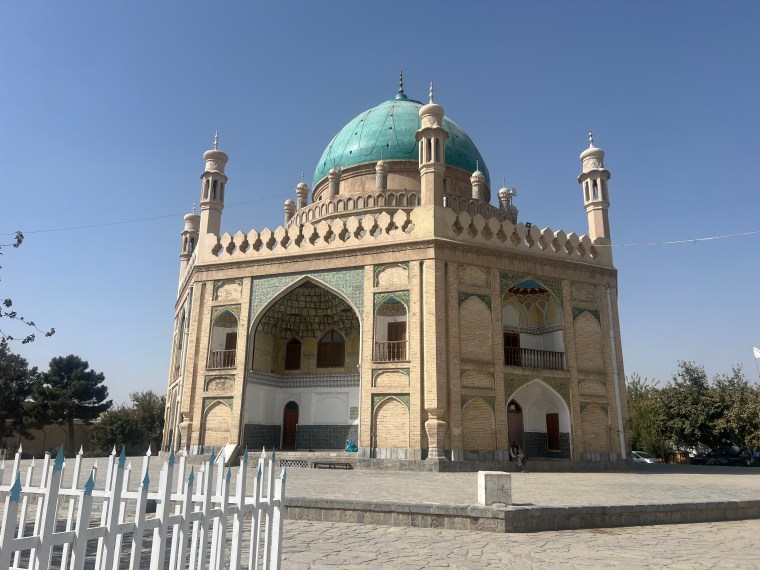
- The other big tourist site in Kandahar is Chili Zena, which is a little hard to explain. On the outskirts of Kandahar, there is a small mountain/large hill with a staircase built into stone that ascends to a small cave, which used to house a carved inscription in both Greek and Aramaic from 200 BC. Now it’s a dangerous staircase in a decrepit/barely maintained park staffed by at least a dozen Taliban soldiers who feel the need to interrogate the extremely occasional tourist who comes through + play with his camera and sunglasses without permission.
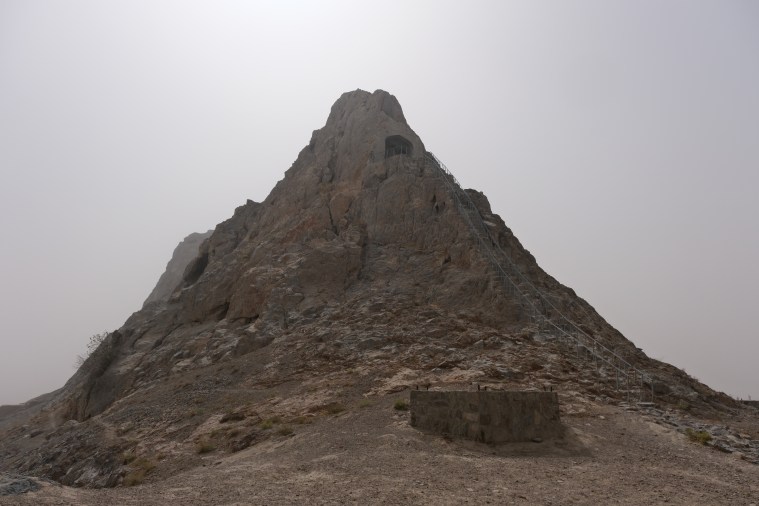
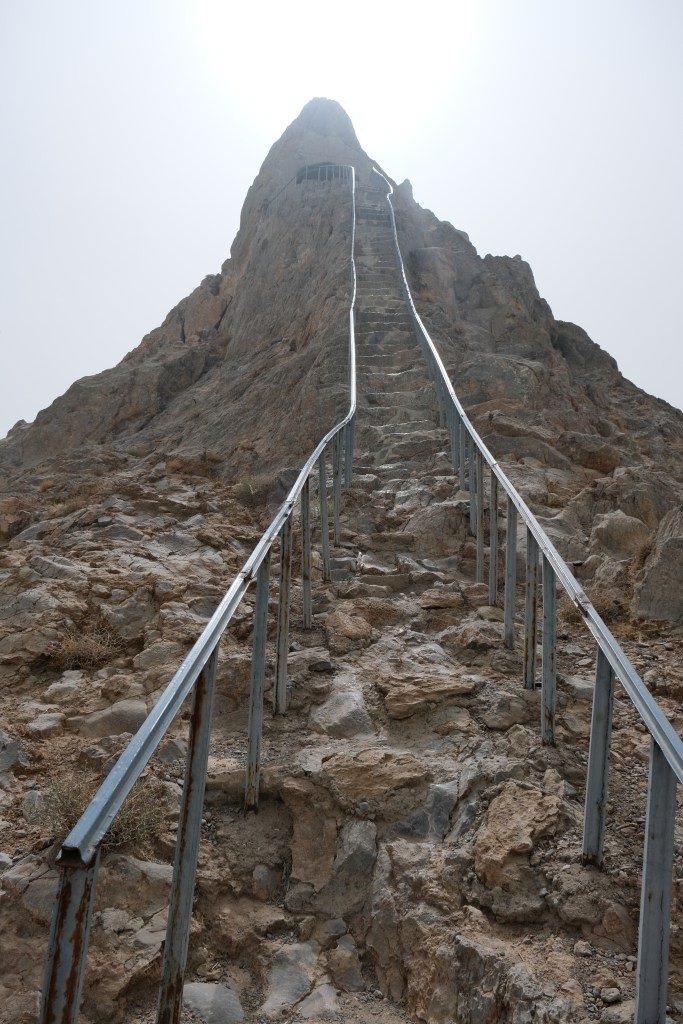
Chili Zena reminds me of a commonality between my travel experiences in Afghanistan and Rory Stewart’s in The Places In Between – Afghans do not understand the desire to walk. The hotel manager, the hotel cook, two hotel guests, four Taliban, and three or four other pedestrians who approached me were all astounded when I told them that I chose to walk three miles to Chili Zena. They could not believe it. They all repeatedly offered me rides or to call me a taxi and assured me that walking was not necessary. I tried to explain that I liked walking in cities when I traveled, but I don’t think they bought it.
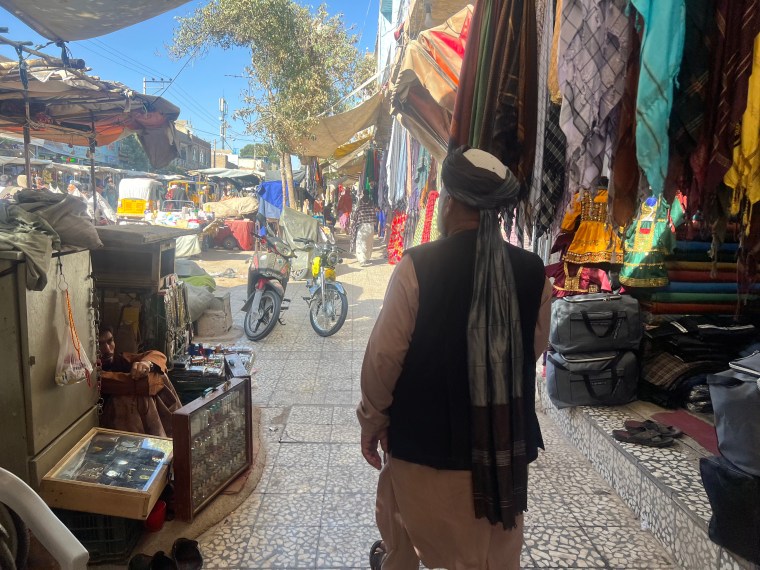
Herat
- I had to take another bus from Kandahar to Herat, but this one was far nicer. For the 12 hour ride, I paid 1,000 Afghani (~$15) for a single seat no adjacent seat) and ample leg room. Very worth it. Unlike the previous bus, shoes were not allowed on this bus; the driver gave me a bag to hold them in. My only complaint about the bus is that it left three fucking hours late.
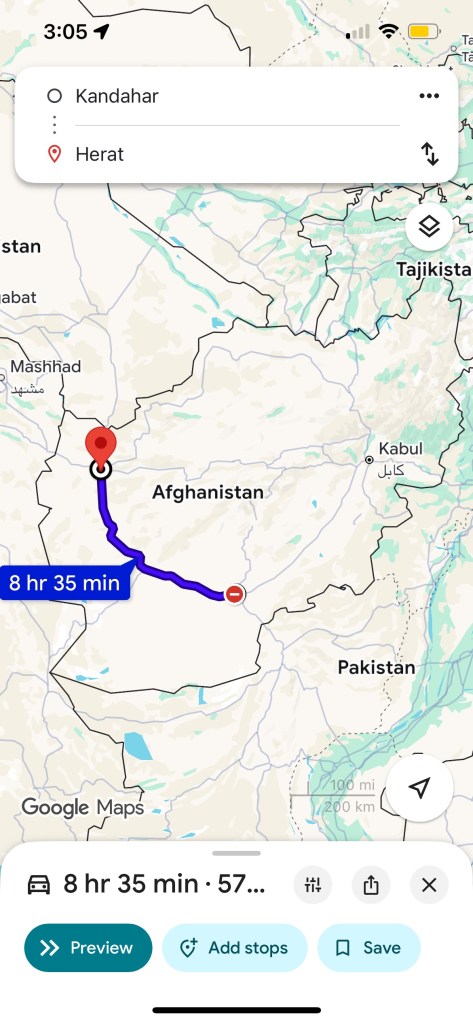
- I listened to Ahmed Rashid’s Taliban: The Power of Militant Islam in Afghanistan and Beyond on the bus ride, and basically rode through the part of the country where much of the action takes place – the rural countryside surrounding Kandahar, where the Taliban were formed, started operating, and from where they burst forth to take over the country. It’s really ugly, more packed dirt desert, with a weird layer of fog everywhere. I didn’t see any poppy fields, but they must have been out there somewhere.
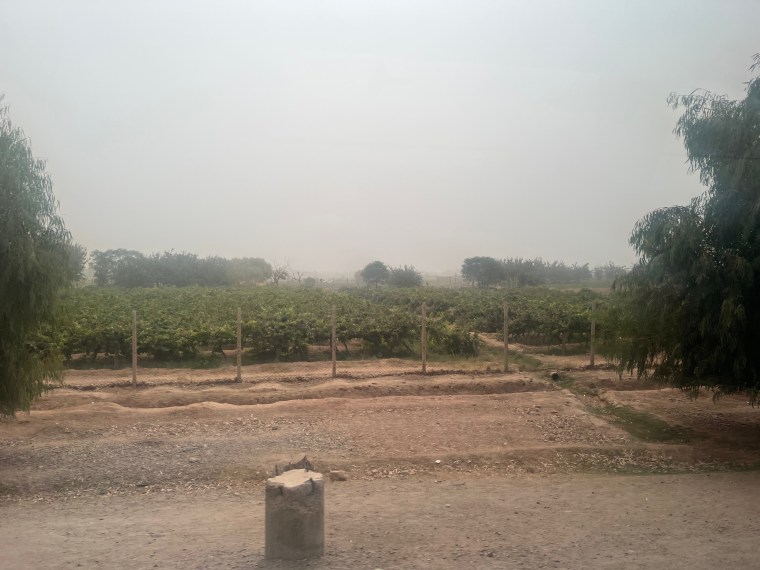
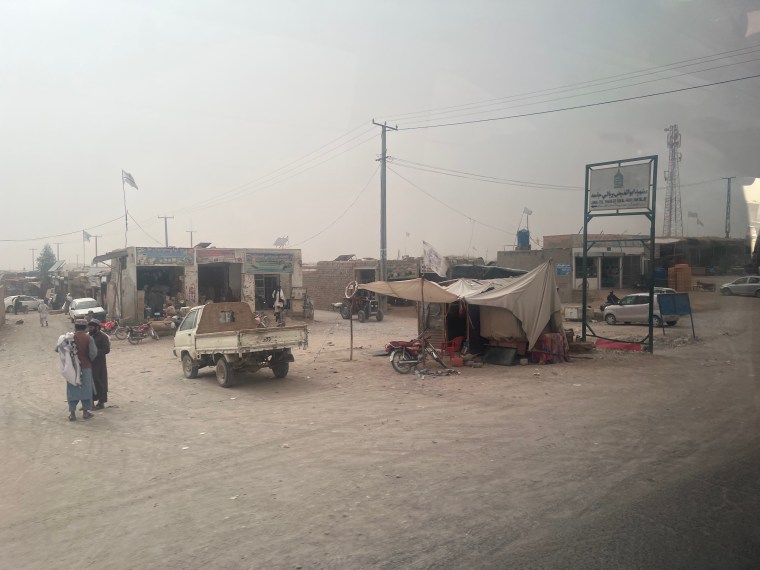
- There was a university student on the bus who tried to talk to me despite my having headphones in. I was bored and didn’t mind. He was studying Turkish and planned on attending an engineering school in Turkey next year. He was very pro-Taliban despite having an Instagram + TikTok and seeming quite secular; he praised the safety they brought to the country. He asked if I was a Christian, I said I was, and he assured me that Christians were respected in this country and that no Muslim or the Taliban would harm me. He was also the third person in Afghanistan to ask me if I played PUBG.
- Halfway to Herat, the landscape changed and became beautiful again. It looks like the surface of the moon with hills jutting out in the flat landscape and spectacular sunsets. Unfortunately, I don’t have great pictures:
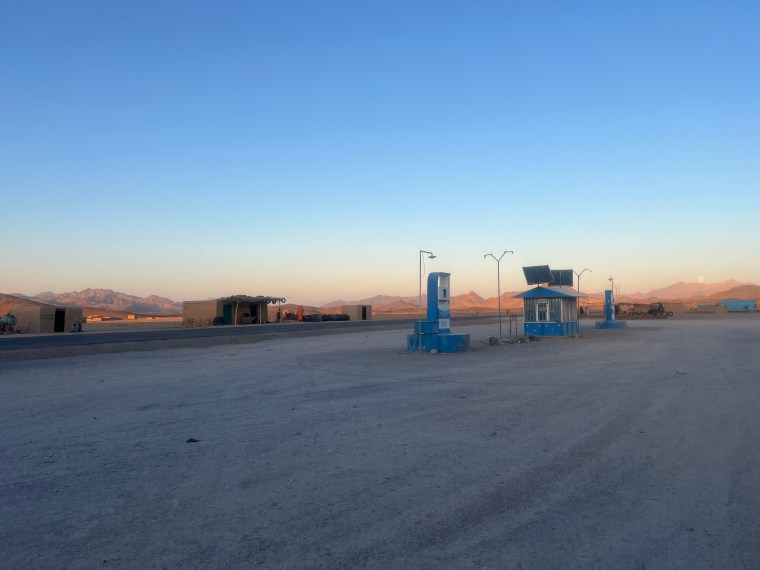
- The Herat Star Hotel was my favorite hotel in Afghanistan. It was spacious, comfortable, clean, had an extremely friendly and polite staff, and best of all, there was literally no one else staying there for the first four of my five days. The staff essentially became my dedicated servants. They brought me tea, food, medicine (more on that later), changed my money, and washed my clothes at a moment’s notice. They set up an entire breakfast spread every morning, even though I only ever had an Americano and some bananas. It was awesome.
- The hotel served an Iranian “non alcoholic malt beverage,” and I saw something similar in a high-end grocery store in Kabul. I’m surprised the Taliban lets that stuff in.
- Herat was my favorite city in Afghanistan. It’s a majority Tajik city known for having a more genteel and refined Persian culture, as opposed to the tribal Pashtuns and Uzbeks. I could sense this just from the interactions with the locals; not only were random encounters less common, but far more polite on average. The Taliban street presence was very light and I heard a lot of resentment of the Taliban from the locals. The city itself was also better laid out, cleaner, with more geographic diversity, better construction, and more variety of buildings, with even some western-style business complexes and homes. I made a trip to the outskirts and found the Afghan approximation of suburbs. Overall, Herat is easily the most walkable city in Afghanistan in terms of ease and enjoyment. Some pictures:
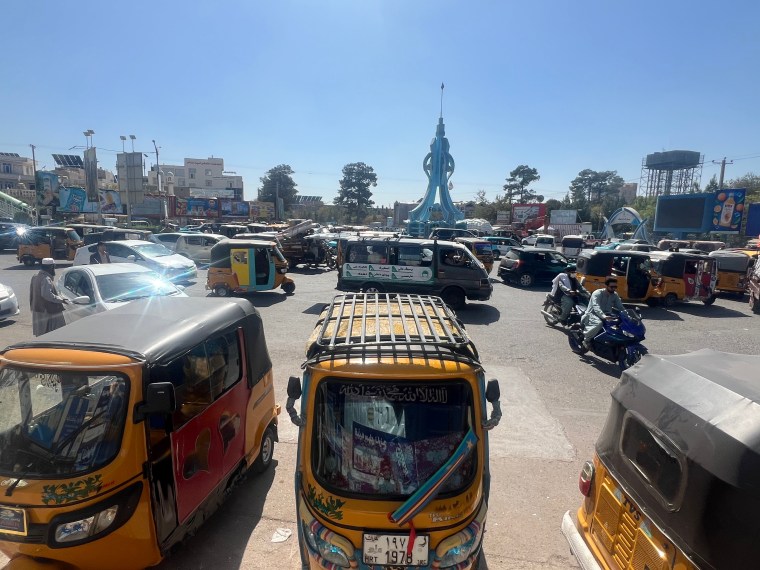
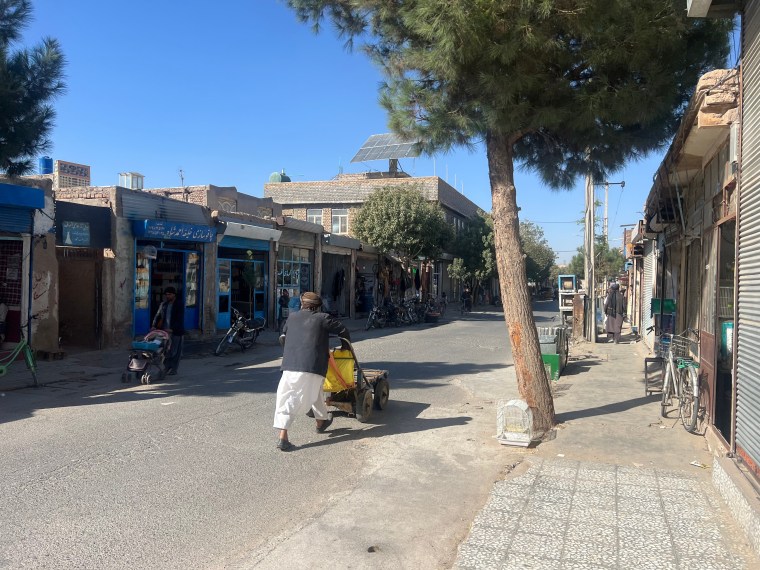
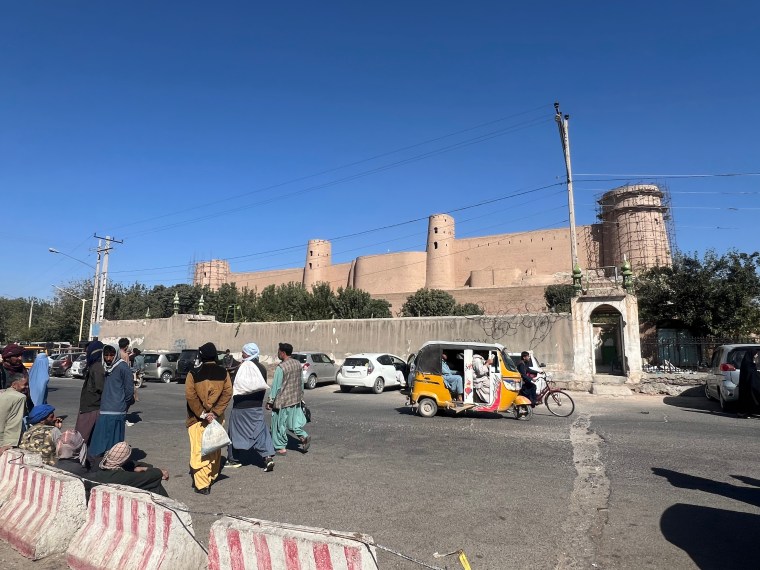
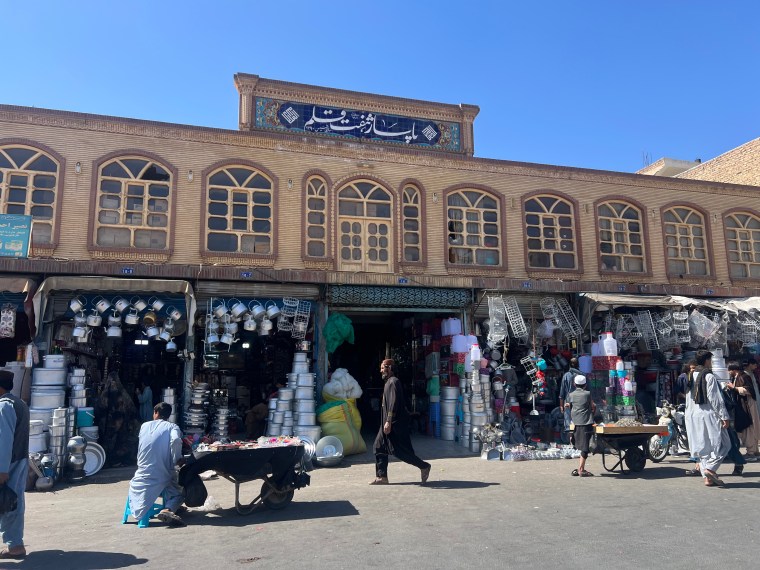
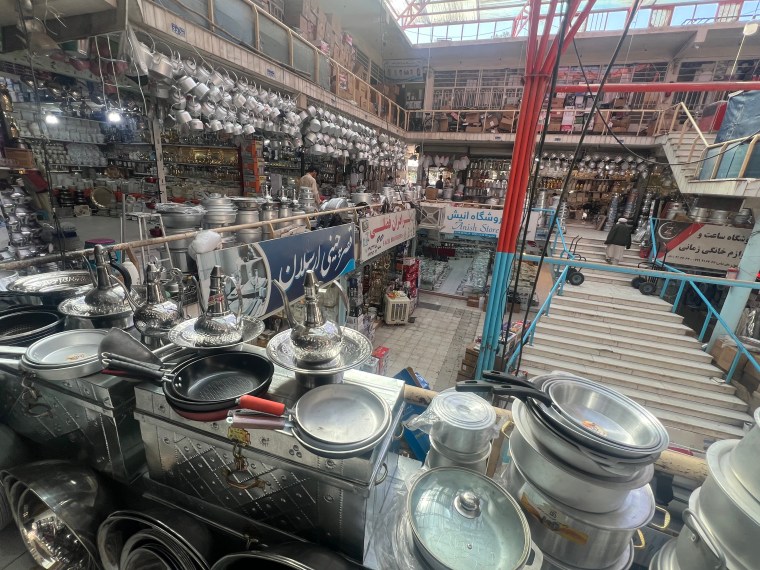
- Though, of course, central Herat’s traffic is epic:
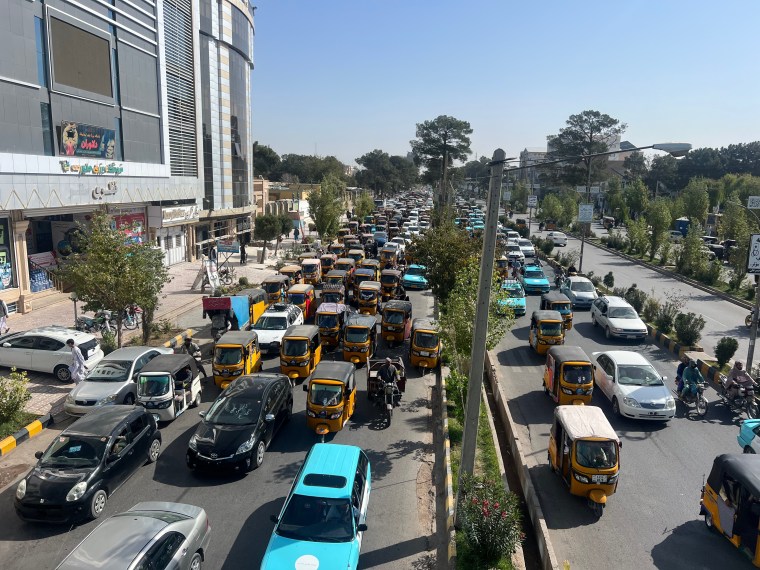
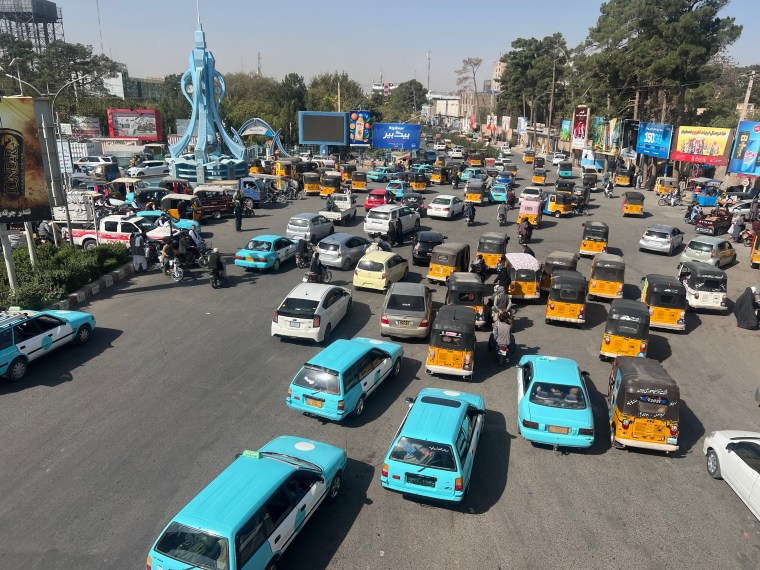
- On the first day of walking around, I had two encounters with friendly university students. One told me that his university had a beard length requirement, and anyone who failed to meet it would be thrown out. The other immediately invited me to come to his home and have lunch with his family, but was polite about my rejection. As we parted, he said that he really really wanted the Americans to return to Afghanistan, and at least hoped they would retake Bagram Air Base.
- I found the Yu Aw Synagogue on Google Maps and decided that I had to see it. Unsurprisingly, it is no longer in religious use (are there any Jews left in Afghanistan?), but it is being used as a bath house. The operator brought me in and gave me a quick tour even though he didn’t speak English.
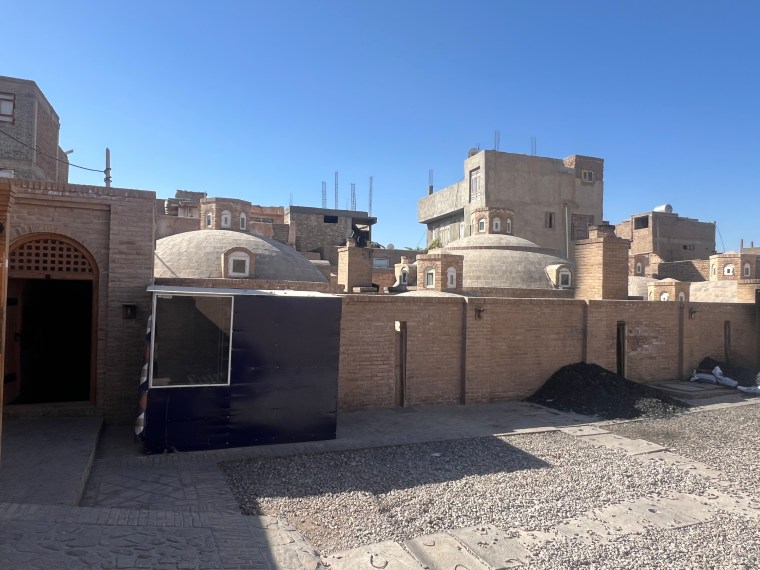
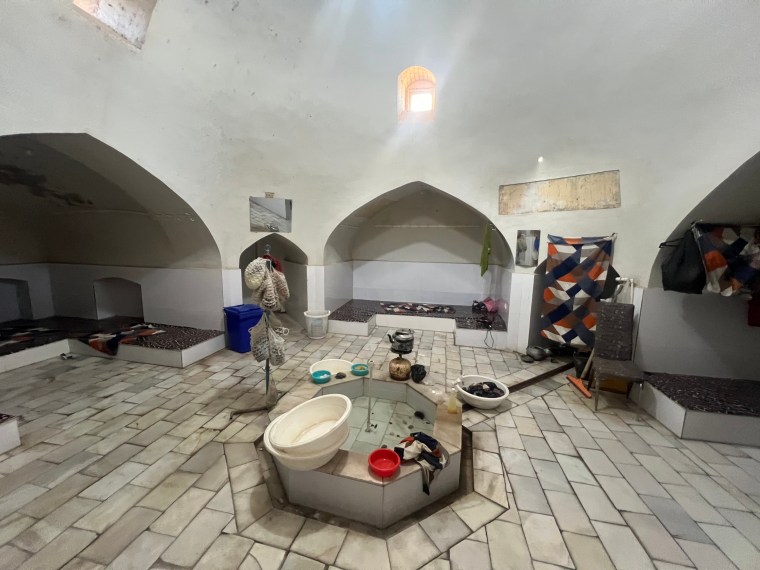
Then he showed me the hellish room where he personally shovels coal into a furnace to heat the baths:
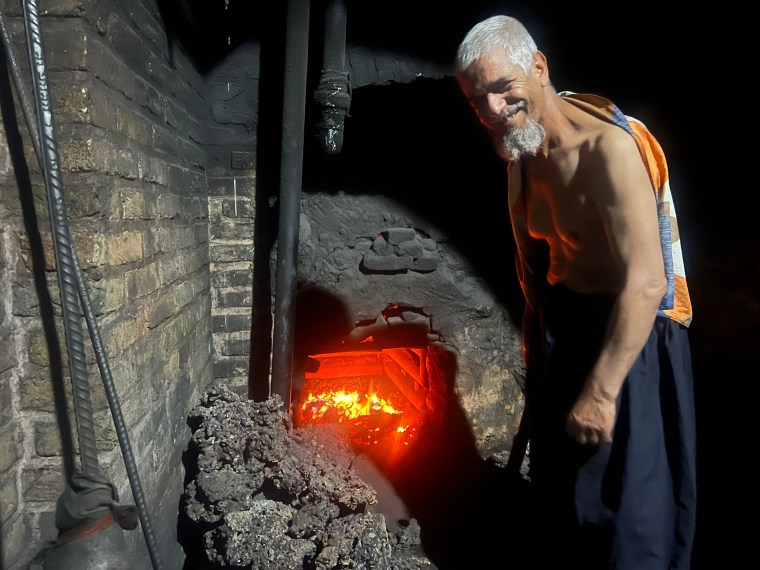
He was a cool guy:
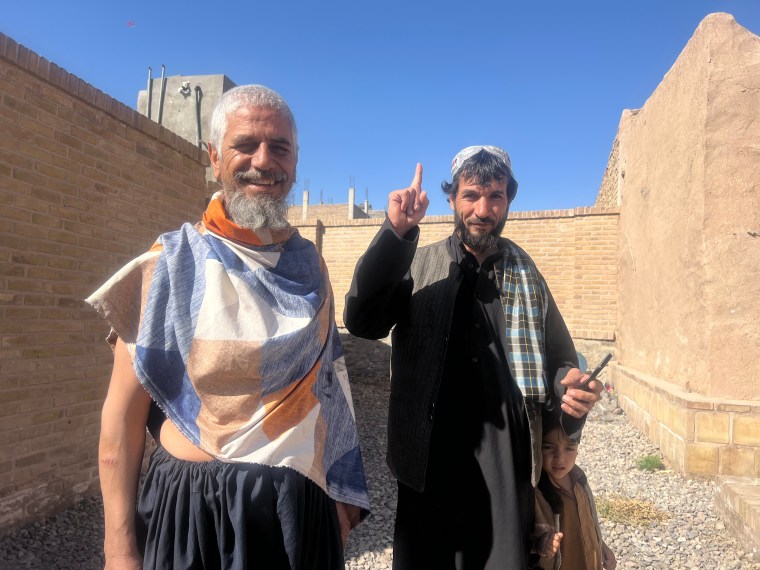
Through various miming, the operator offered to show me a nearby abandoned church, but when we got there, the gate was locked. Through more miming, he offered to get his Taliban friend to unlock it for 2,000 Afghani (~$30), but I turned him down.
- The main tourist site in Herat is easily the best-maintained tourist site anywhere in Afghanistan – the Herat Citadel, which was expertly restored in 2011 with my and German tax dollars:
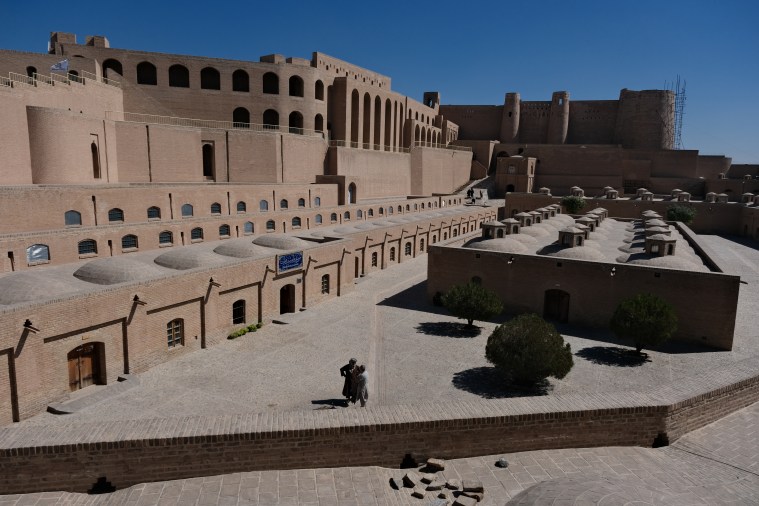
The museum section was alright, the university students on the wall who took a bunch of selfies with me were alright, but the best part was the guy in one of the side rooms. He was an artist and art teacher who specializes in teaching painting to Afghan women. I bought four pieces off him for a combined $50, and turned him down for one piece (my favorite) that cost $300. I asked him if it was legal for women to make art in Afghanistan now, and more importantly, if it was legal to buy it or if airport security would indefinitely detain me for having all this stuff. He assured me that it was legal to make and sell as long as it was sold and displayed privately… but the Herat Citadel was public.
I don’t know. I never got in trouble and the things I bought were beautiful and are all hanging up in my home, so I can’t complain. I considered that there was a small chance that he was full of shit, that none of this stuff was made by Afghan women, that this was a story he told to a white Western tourist like myself to drum up business. But I don’t think Afghanistan gets enough white Western tourists for a scammy merchant to be so well practiced; this isn’t Thailand.
- On the outside of the citadel, there is a small craft merchant area. One store had the only other female salesmen I saw in the country, though they were both young girls. Another store had a hunchback glass blower from whom I bought a vase, a cup, and ironically, a shot glass.
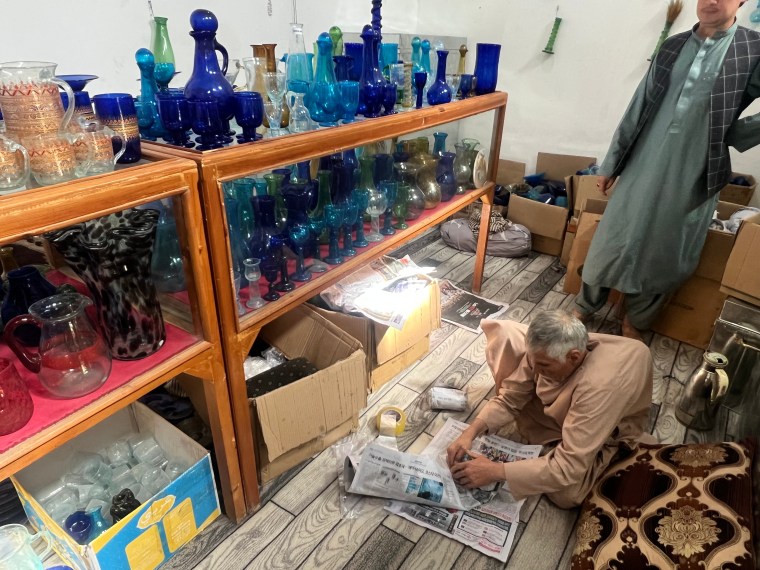
- I took a random detour to a large mosque, shrine, and cemetery, which was beautiful, and I’m surprised it’s not on Google Maps:
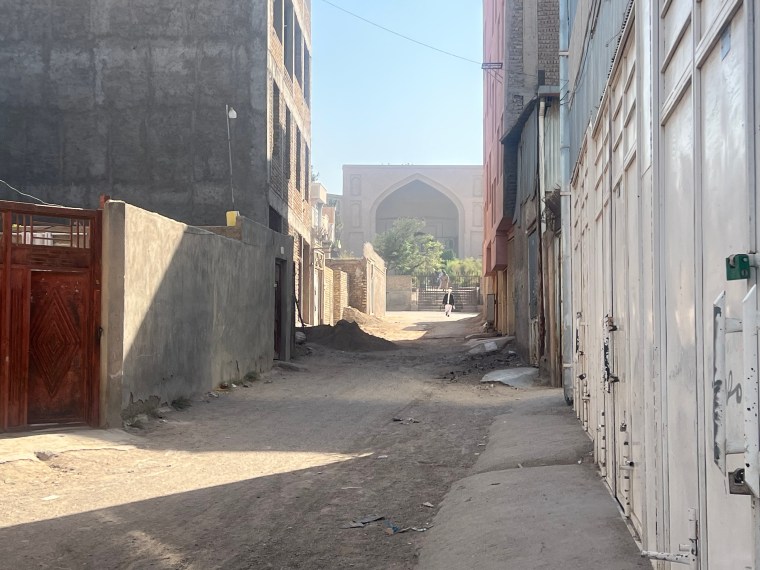
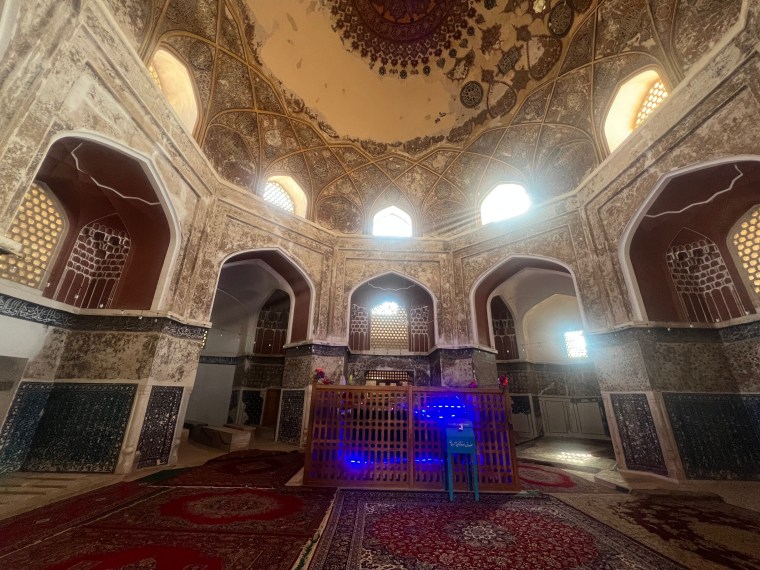
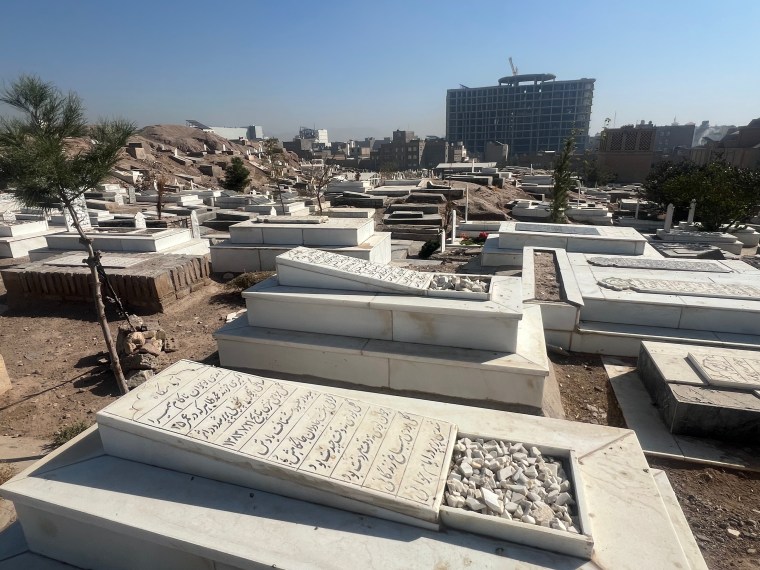
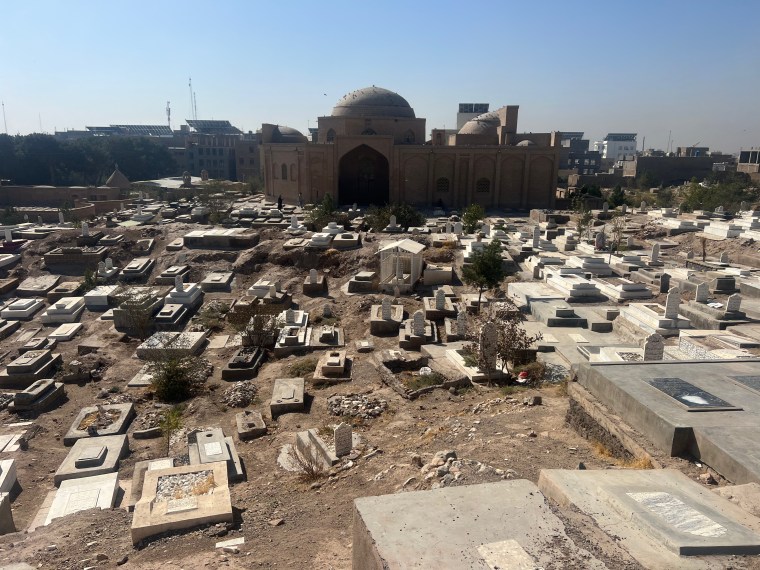
This is where I had my single conversation with a woman throughout the entire three-week trip – the aforementioned mid-20s tourist who was born in Sweden to Afghan parents who fled during the Civil War. She was there with her aunt who spoke no English, but said something to me at the end of our conversation. The Swedish woman translated that the aunt urged me to donate money while I traveled in Afghanistan because I am rich and Afghans are poor. I responded that I optimize my charitable giving by exclusively buying mosquito nets for Nigerians would.
- I encountered occasional begging in Afghanistan, but nowhere near West Africa/Egypt/India levels until I got to a different mosque in Herat. A man called me over as soon as I entered the outdoor complex; he spoke pretty good English and introduced himself as an out-of-work economics professor. He gave me tea and we briefly chatted until it became clear this was someone who was far more interested in talking than listening, mostly about the terrible state of the economy since the Taliban took over in 2001. After 15 minutes, I began to make a polite exit; he not only asked for my WhatsApp, but in an Afghanistan first, asked for my email. I correctly wrote down my WhatsApp number on a piece of paper he provided but, purposefully misspelled my email.
About one hour later, the guy sent me a long text on WhatsApp that I can put here verbatim:
Dear Brother
This is [HIS NAME], the person you met today at the shrine. It was a great pleasure for me to see you and speak with you.
I felt sorry that I could not be of any service to you today. Please know that I am always ready to help – even by giving my own blood if needed.
I hold a Master’s degree in Economics (Finance and Administration), and I have over 15 years of professional experience working with both national and international organizations. I am fluent in Pashto, Dari, English, and Balochi.
Unfortunately, I have been unemployed for the past four years, and I am currently facing very difficult living conditions. Life has become extremely hard for me and my family. As a fellow human being, I humbly request your kind help – for the sake of friendship, humanity, and compassion. My children are hungry, and I am struggling to provide them with even the basic needs of life.
Please, I ask you in the name of God and humanity, do not let me lose hope. Help me as much as you can, so that my children will not go to bed hungry tonight.
I am reaching out with hope and faith. Please do not turn me away. You are my only ray of hope at this difficult time.
Thank you sincerely,
[HIS NAME]
I didn’t respond.
58 minutes later, he wrote: “Brother, whenever you are online reply,” and then he sent three audio messages urging me to reply.
After I didn’t reply for 15 minutes, he sent this message:
Dear and most respected brother, I am very happy to have found a brother from your country.
I have written this message with heartfelt pain and deep emotion. Please do not make me lose hope – I truly hope I am not causing you any inconvenience.I am an educated person and I know the ways of politeness, but I am in a very difficult and painful situation.
Please, do not take away my hope.
I swear to you by all that is sacred – please read my message to the very end, read it with your heart and soul. I beg you, please save me.
When I didn’t respond for another 50 minutes, he spent a message saying simply: “I think you are busy or”.
When I didn’t respond for another hour and 30 minutes, he called me and I didn’t answer, and then he sent a message saying: “I think you are busy or [insert three paragraph breaks] Sorry for bothering”.
After another 57 minutes of me not answering, he sent a message saying:
“My brother
Is not answer
I hope you are doing well”
And then I blocked his number on WhatsApp.
I’ve encountered plenty of aggressive beggars around the world, but this one was unique. Given his oral English level and strong articulation, I think he probably was telling the truth about his education level. Given how rare white Western tourists like myself are in Afghanistan, I’m guessing this wasn’t some sort of con job. I think he probably was a desperate man who fell from a higher station in life, who speculated that by virtue of my presumed wealth and education, I would especially sympathize with him and provide him with charity. Or maybe he was just a con man improvising. I don’t know.
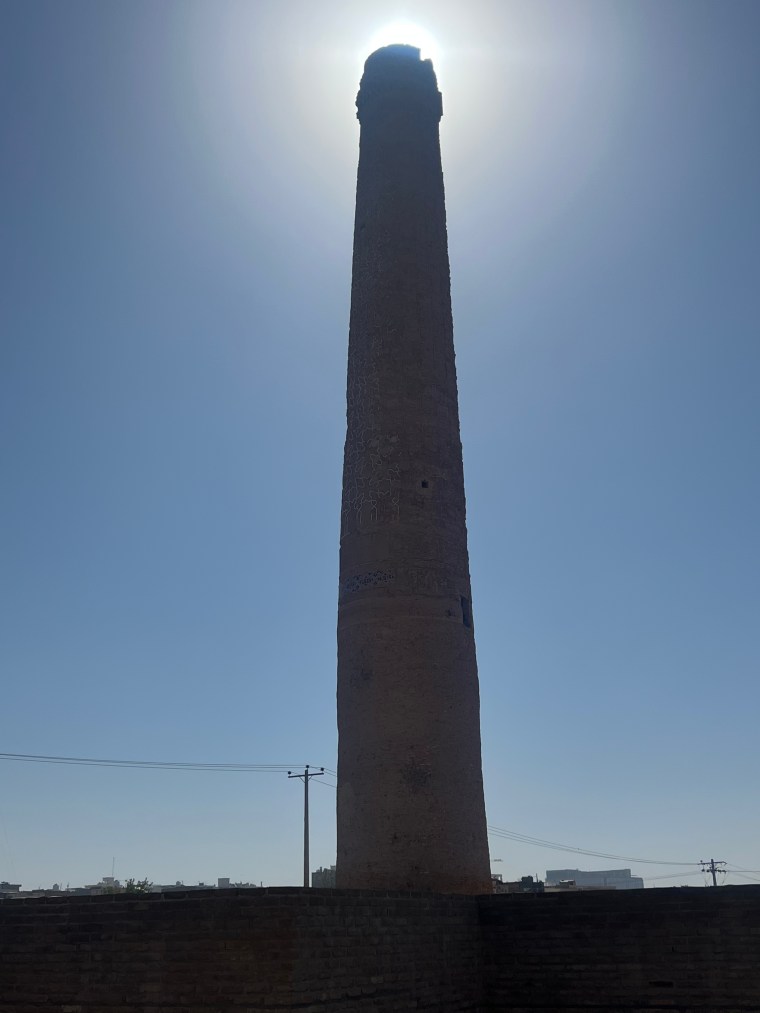
- Oh yeah, I forgot to mention that during much of this travel time, the Afghan-Pakistan border was closed because the Taliban and Pakistani military had a series of deadly skirmishes. On October 9, Pakistan did a full-fledged airstrike on Kabul and a few other cities. This amazes me – it’s the new frontier of warfare. If, in 1913, the French military had lobbed artillery at a German city, that would become a full-fledged war between two countries. But in our enlightened age, countries can launch military attacks on each other repeatedly and never go to war. Progress?
- I walked to the outskirts of Herat to a partially abandoned amusement park. There were two guys at the Ferris wheel, and I have no idea if they owned the place or ran it or what, but they let me ride it for $2:


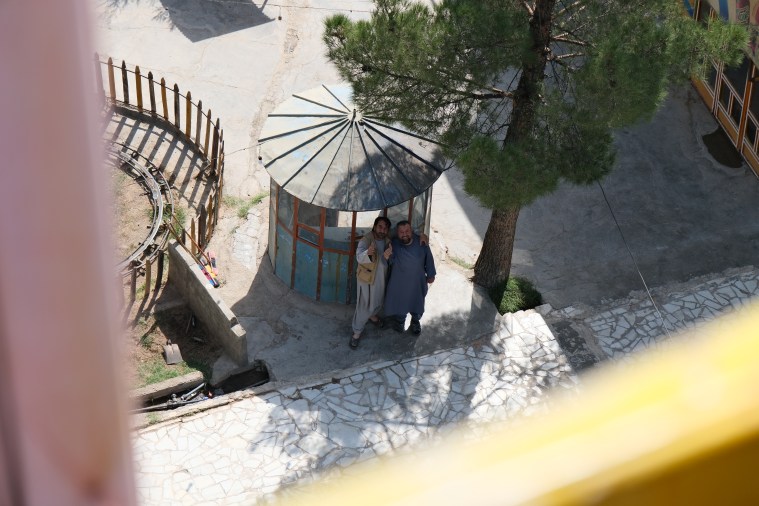
- Then I walked up a hill to this cool-looking building that didn’t even appear on Google Maps. I still have no idea what the building is (maybe a conference center):

It was occupied by five Taliban guys who, after checking my permit, invited me in for tea and asked me a bunch of questions about America. They also let me take pictures inside the building of paintings that had their human figures rubbed out – an undoubtedly Taliban-induced trend I saw a few times in Afghanistan:

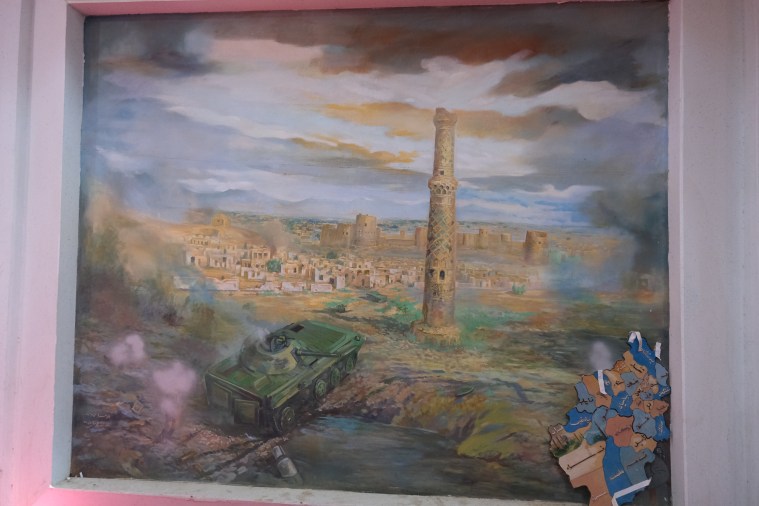
I wish I had seen more of Herat, but I was waylaid by…
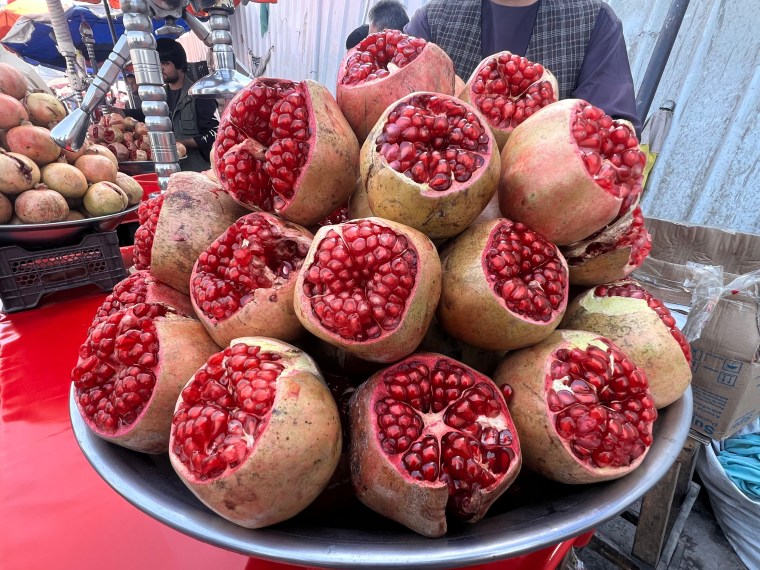
Food
I am not a food person. I’ve never cared about food, I don’t think much about food, I don’t appreciate food. I am a culinary barbarian. I usually make a bee-line to McDonalds when I travel, in part for Chris Arnade reasons (having a cultural common denominator lets travellers identify cultural differences), but mostly because it’s always clean, affordable, and reliable.
But with that being said, Afghanistan had shockingly good food, among the best on average per meal of any country I’ve been to. Standard meals consist of beef, chicken, or sheep slathered in some sort of sauce in an ENORMOUS pile of rice with naan bread. Utensils are usually available, but not used by locals who prefer to scoop with the naan and shove whatever they’re holding into their mouths. I’m an especially big fan of mantu, which is Afghanistan’s version of dumplings. Did you know that roughly 150 countries have their own version of dumplings? Did you know that perogies are just Eastern European dumplings? No one explained this to me when I was growing up.
Anyway, Afghan food is amazing but has a few hazards. Afghans often eat on the floor or on raised platforms without chairs, for which my poor Western back is not equipped. Also, like Italians, Greeks, many poor countries around the world, etc., Afghans have a habit of trying to shovel as much food as humanly possible upon guests like myself, and I always felt rude to refuse. It got to the point where for at least a week, I purposefully went down to one meal per day so I wasn’t eating too much.
But of course, the biggest hazard of Afghan food is that it’s served in Afghanistan. It was a miracle that it took me so long to get sick, but when I did, it hit me like the bubonic plague.
I never understood why so many non-American bathrooms don’t have enclosed showers (either by curtains or glass doors) and often put a drain in the middle of the bathroom floor, thereby turning the entire bathroom, including the toilet and sink, into a giant shower. I hate having to negotiate wet floors or wear sandals every time I go to the toilet. It’s a hassle with absolutely no upside.
Or so I thought. When I got extreme food poisoning for five days in Afghanistan, I learned the value of those drains. If you find yourself in the unfortunate position of sprinting to the bathroom and not knowing whether the food you ate thirty minutes ago will be coming out of one end of you or the other, then having a drain on the floor in front of the toilet is a godsend.
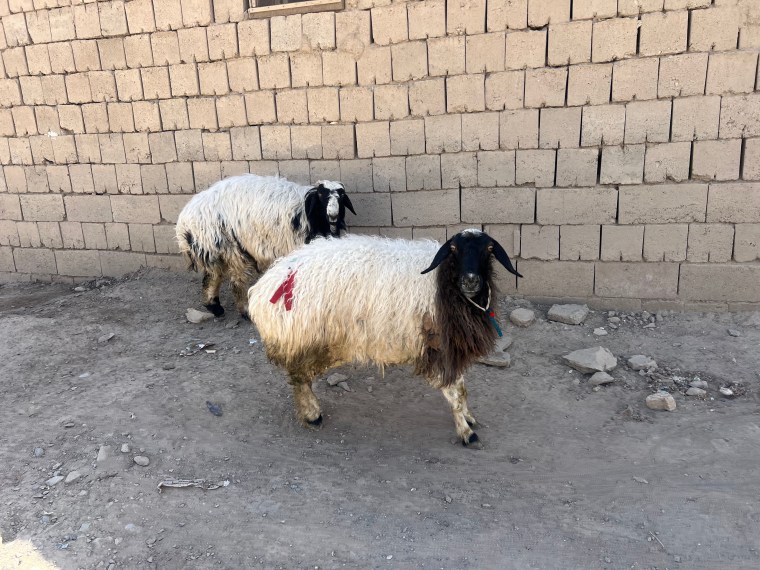
Anyway, after a few days of that, I had to say goodbye to Afghan food for the rest of the trip. I hobbled my way to the closest equivalent to an Afghan supermarket in Herat, loaded up on potato chips and digestives, and ate nothing but that for the remaining week of the trip.
My total weight loss on the trip, even after leaving Afghanistan and eating nothing but McDonalds for three days in Kuwait, was about 12 pounds.
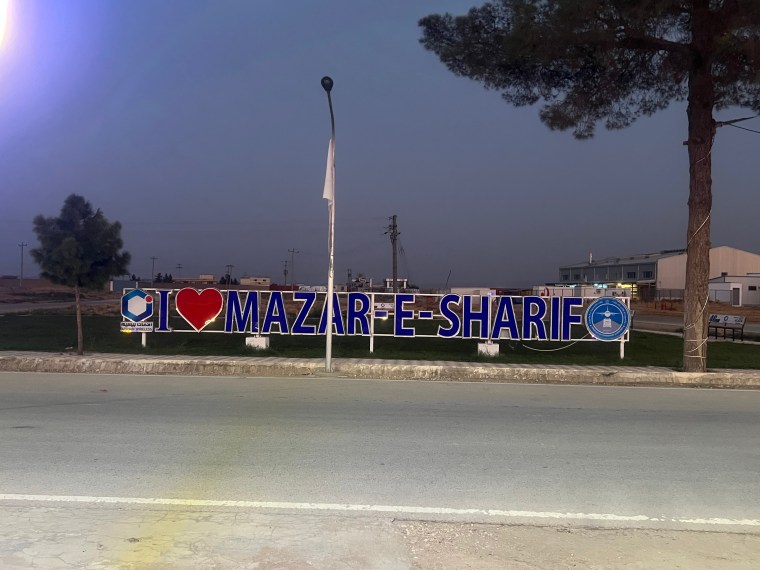
Mazar-i-Sharif
- Sometimes it’s written as “Mazar-e-Sharif” and sometimes as “Mazar-i-Sharif” and sometimes as just “Mazar.”
- Everyone I talked to said not to go from Herat to Mazar-i-Sharif by land. It’s far and the roads between them are terrible. I was gearing up to do it, but then got sick, and I did not want to be trapped in an Afghan bus or shared taxi for a 24+ hour ride, so I chickened out and took a Kam Air flight.
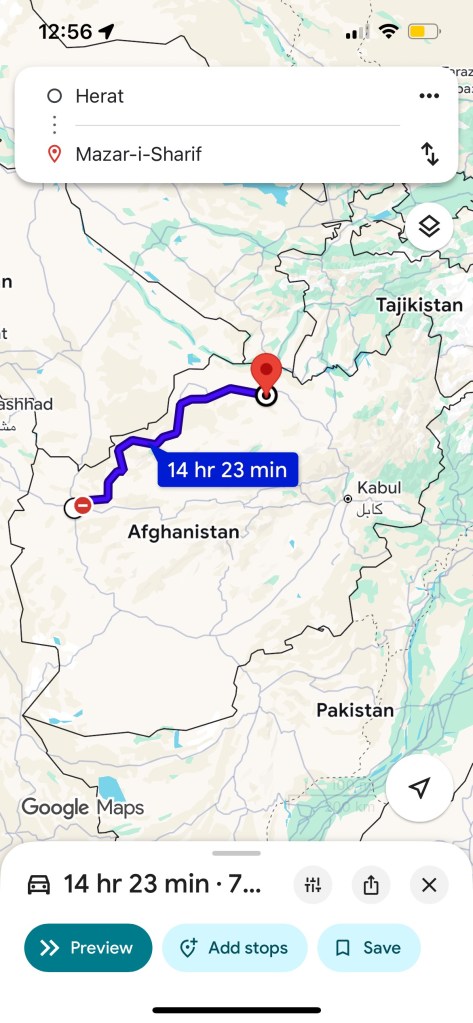
- Even in Dari, I can’t imagine this name rolls off the tongue:
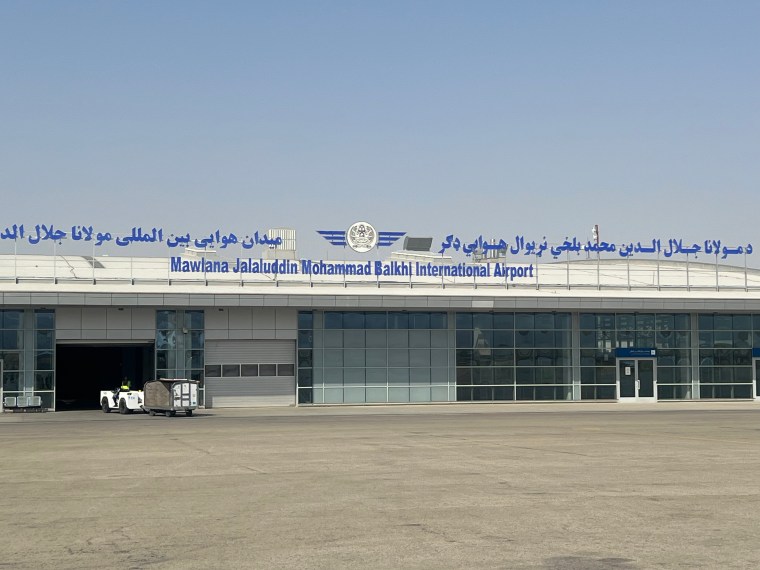
- TIL about Kam Air – it doesn’t allow hoverboards on its planes. I wish I had gotten a picture of the relevant sign.
- Regional Afghan airports are as tiny and ramshackle as you’d imagine, but the two flights I took through them left on time and were totally fine.
- The taxi driver who took me from the Mazar-i-Sharif airport to my hotel spoke mediocre English but loved to talk about politics, and he gave me a long, partially-understood monologue throughout the 40 minute drive. From what I could gather, he hated the Taliban, wished the Americans were still here, hoped the Americans would retake Bagram, and wished Tajik warlord Ahmad Massoud (AKA the “Afghan Napoleon“) was still alive and had conquered Afghanistan, or at least Mazar-i-Sharif.
- Mazar-i-Sharif was a bit disappointing as a city. It has played an important role in modern Afghan history as the sort of anti-Taliban capital. It’s the largest Tajik city, and was the center of the fiefdom of eccentric warlord Abdul Dostum during the Afghan Civil War, during which time Mazar enjoyed ample alcohol imports and the most liberal laws in the country, while the rest of Afghanistan was being conquered by the Taliban. Today, Mazar is a pretty ugly city, with little to see. After Kandahar, I got the most attention from locals here, and the politeness norms were on the low end. Granted, I went to Mazar at the end of my trip, and I was still sick, so maybe I wasn’t in the best of moods. Some pictures of the city:
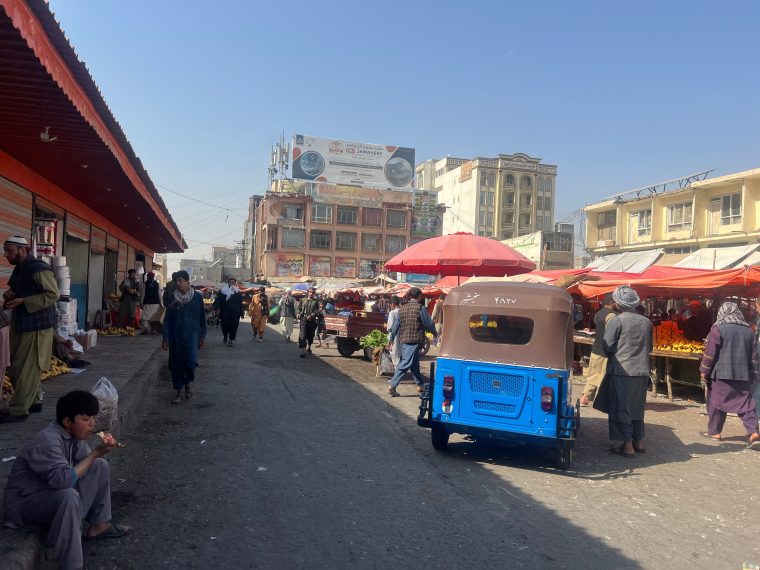
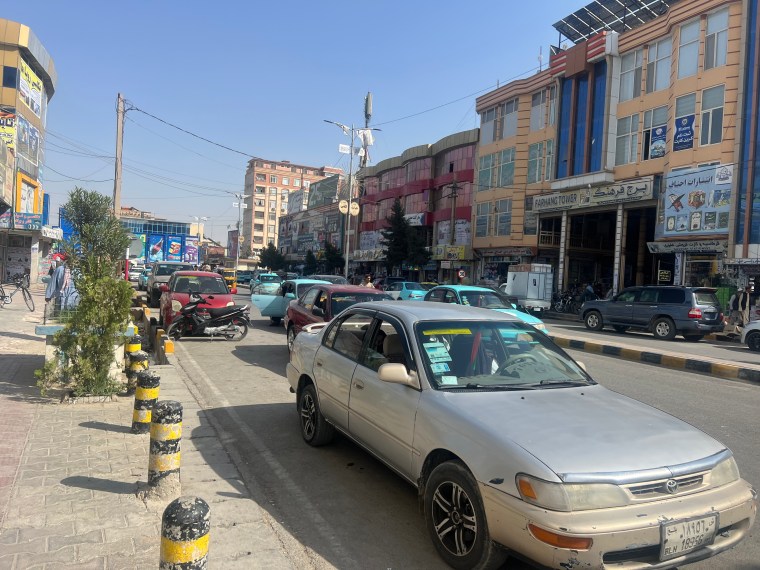
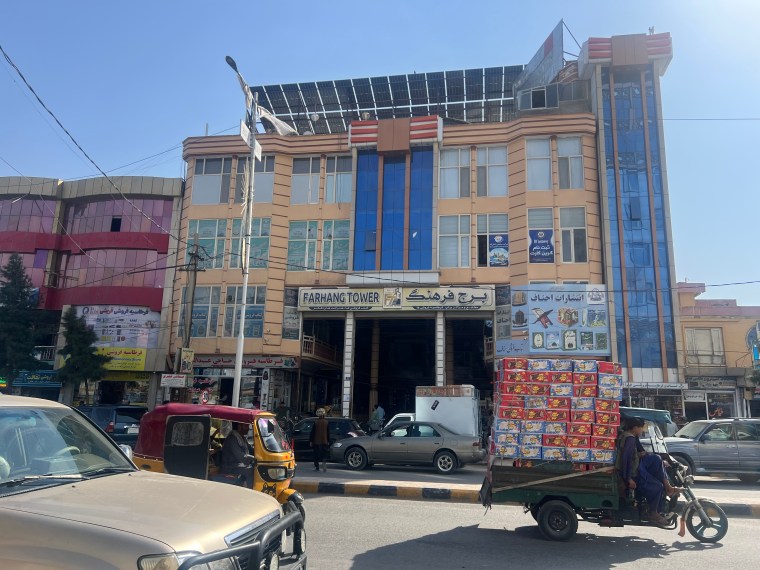
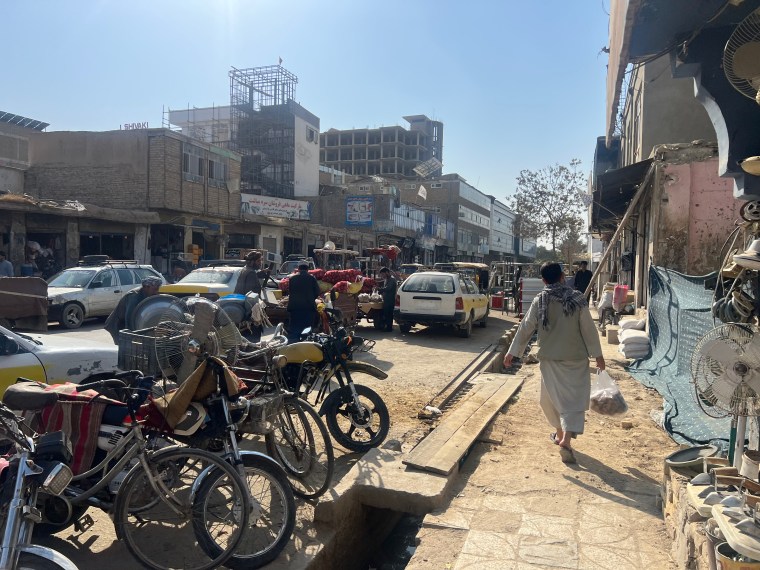
- The major, and really only tourist site in Mazar-i-Sharif is the Blue Mosque. Earlier, when talking about Kabul, I said that Shias have better mosques than Sunnis, but by this point in my trip, I had to amend that assessment. Shias have better mosques on average, but for as beautiful as the turquoise is, it does get repetitious. Sunnis have boring standard mosques, but better mega-mosques. This one in Mazar-i-Sharif has an adjacent tomb which allegedly holds the body of Ali, the man who is more-or-less the fracture point between Sunni and Shia Islam (though he is revered in both strains). The mosque and tomb are beautiful, but also look just like the ones I saw in Kabul and Herat:
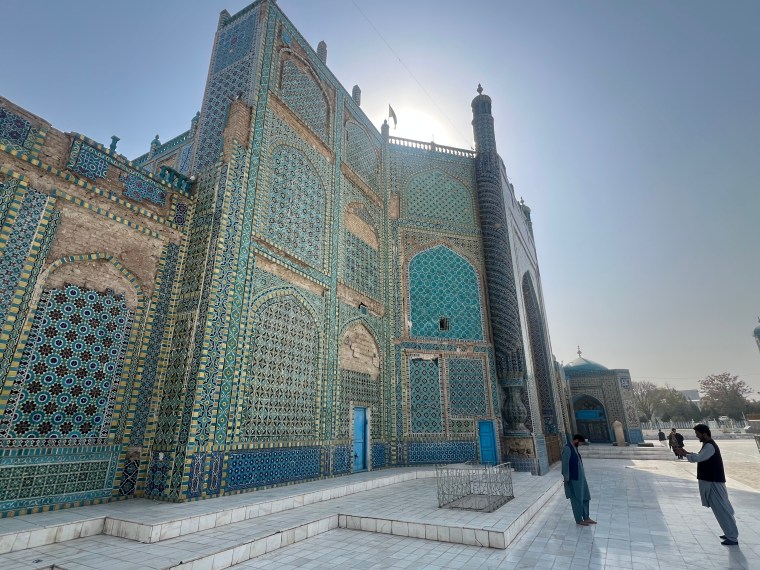
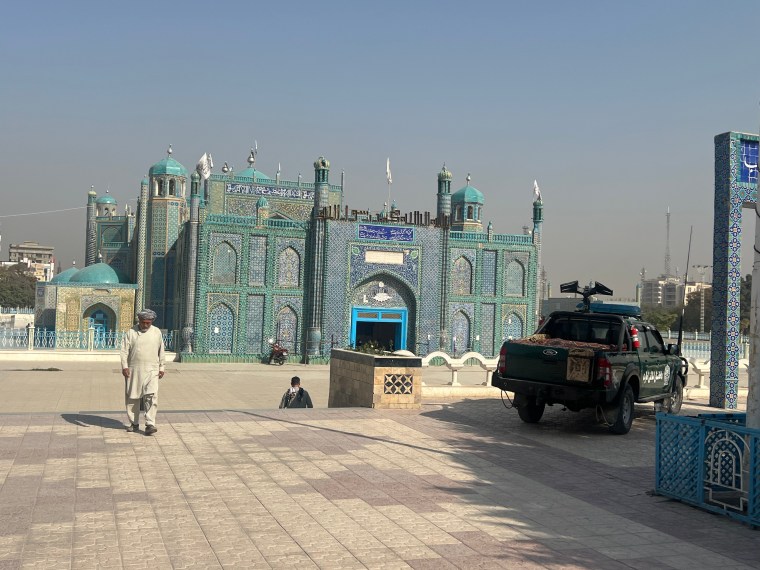
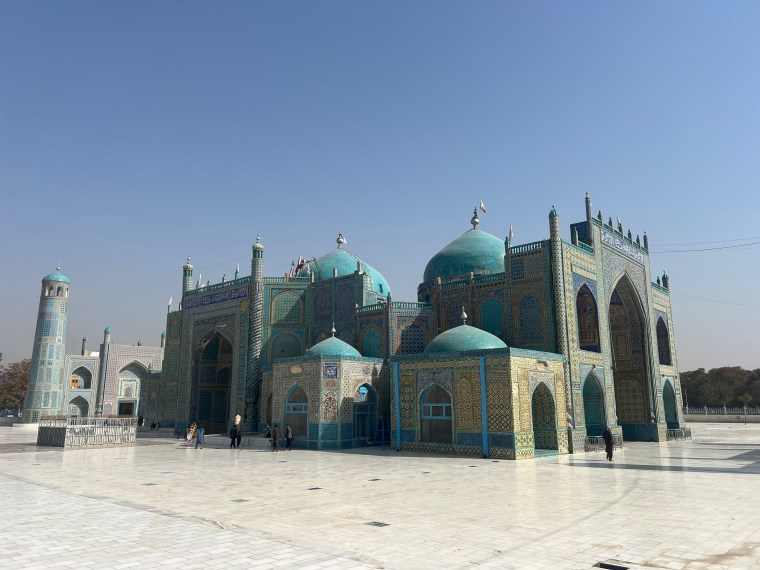
Two interesting things happened in the mosque complex. For the first time, a Taliban guy approached me just like any other Afghan would. He didn’t want to see my permit or pat me down (that had already happened when I entered the mosque complex), just to chat with me and share some tea. Unfortunately, he barely spoke any English, so I didn’t learn much about him or the Taliban, though he did show me his official Taliban ID card, which I didn’t know existed.
Second, there is a part of the complex that houses a massive pigeon coop. A kid who seemed to maintain it walked up to me, nudged me, and then gestured for me to follow him inside:
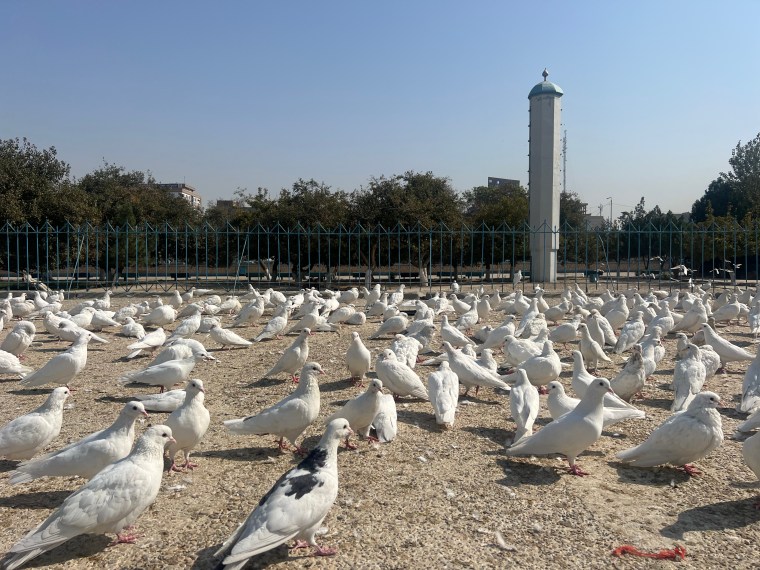
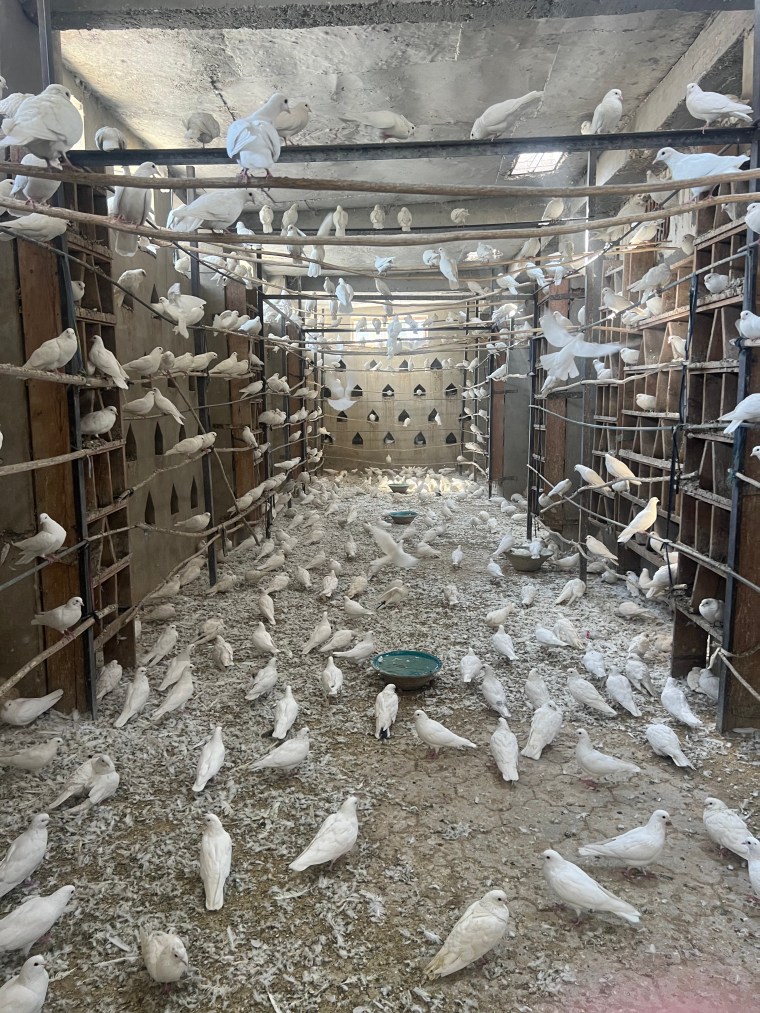
After I had seen it all, he gestured for money, and I happily paid him 100 Afghani (~$1.50), for which he was pleased. He earned it.
- Outside of Mazar-i-Sharif is the town of Balkh, which contains numerous quite old archeological sites dating back to the 4th century AD. I intended to hire a taxi to take me to the sites, but I hit an annoying roadblock. My hotel owner claimed that I was legally required to have a Taliban escort to visit. I was skeptical of this claim since people had been telling me that I can’t do anything in Afghanistan without a guide or escort, but it never actually seemed to be true. But I asked someone else in Mazar and they corroborated this. And then I texted my Kabul guide and he corroborated this.
So with guidance from the hotel owner, I went to a local Taliban military facility of some sort:
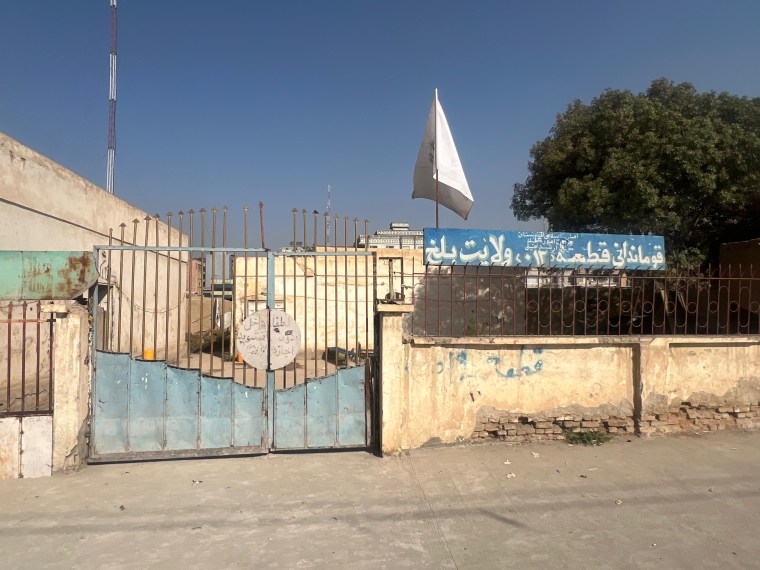
It contained a dozen Taliban soldiers lounging around mostly-empty rooms drinking tea. They looked at me with the usual cold weariness but also nodded and replied to my “salaams” with their “salaams.” I spoke with the one Taliban soldier who kind of spoke English, and he said that he would arrange for one of his men to accompany me tomorrow.
The next day, I arranged for a taxi to drive me to and around Balkh for about $25, but first, we went to the Taliban facility and I got my very own AK-armed Taliban soldier escort who shook my hand and said “salaam.” He did not speak a word of English, and over the next 2ish hours I spent with him, he never smiled, seemingly didn’t have a phone, and barely said a word, unless the driver said something to him, to which he would quietly grunt back. He spent almost the whole time sitting silently in the back seat of the taxi, though he did follow a distance behind me when we got out at sites.
At the final archeological site, an ancient, crumbling temple of some sort, there was a group of Chinese who had their own Taliban escort. Using miming, I asked both Taliban escorts for a photo, and this was the one time I successfully took a picture of Taliban on my whole trip.
Balkh turned out to not be very exciting, just a bunch of old mosques and stuff. But there was one part where I climbed on to a little ridge overlooking a town:
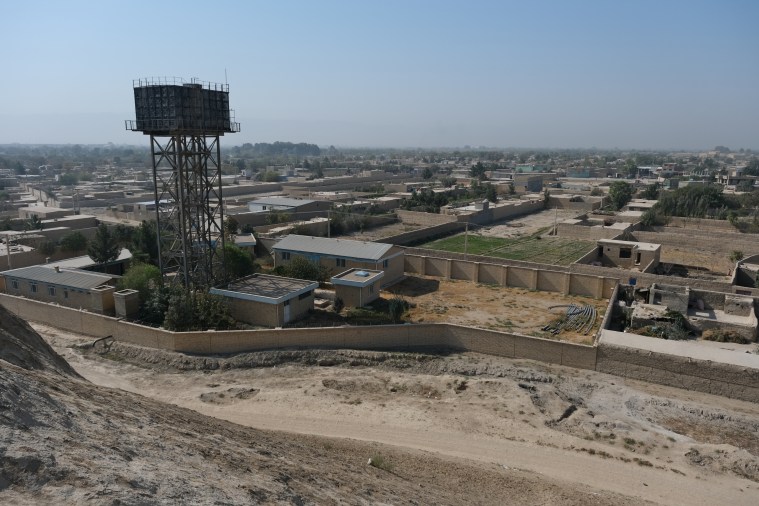
These two university students approached me and explained that they were studying English in school and then politely asked if they could practice their English with me, to which I consented. After 15 minutes of usual chit-chat, they told me about how they had stood on this ridge in 2021 and watched the Taliban military take over Balkh, literally seeing pick-up trucks full of Taliban soldiers drive in, deploy, and spread out. The Taliban also invaded a nearby military base, and then they invited the locals to tear it apart for scraps. The two students told me that they were terrified when the Taliban first arrived, but they have been very happy with their rule due to the safety they provide. The students even said they agreed with almost all the laws the Taliban had implemented since taking over, with the exception of barring women from education.
Another small fun aspect of Balkh was the presumably accidental use of trans flag colors to block off access to an ancient mosque:
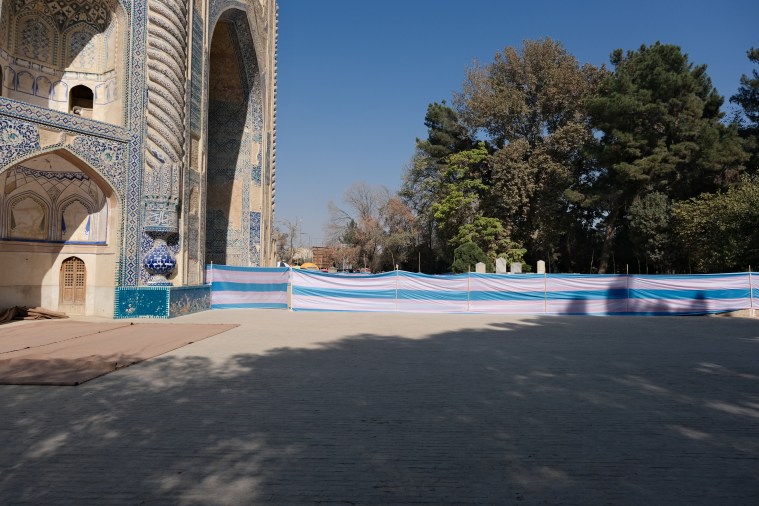
When we – me, the taxi driver, and the Taliban escort – returned to Mazar-i-Sharif, I was in for one more surprise. I had to pay the Taliban guy. No one told me about this in advance. In fact, I thought the hotel owner had told me it was a free service for tourists. Maybe it was and this particularly Taliban guy was taking advantage of me. Or maybe the entire requirement to have a Taliban escort was just a money-making venture since, as far as I could tell, there was no particular danger in Balkh compared to anywhere else in Afghanistan. If so, that was a smart rule, because I wasn’t going to start shit with the Taliban. I gave my Taliban escort guy about $15, shook his hand, and said good bye.
- There’s not too much else to say about Mazar-i-Sharif. I spent a lot of the first few days in my hotel room, still recovering from my food poisoning, and after that, I did a lot of wandering around the city to soak it all in. I had initially planned to make my way back to Kabul for my flight out of the country by a beautiful 12+ hour bus ride, but the one road between the cities had some sort of disaster and was blocked for days, so I ended up flying out.
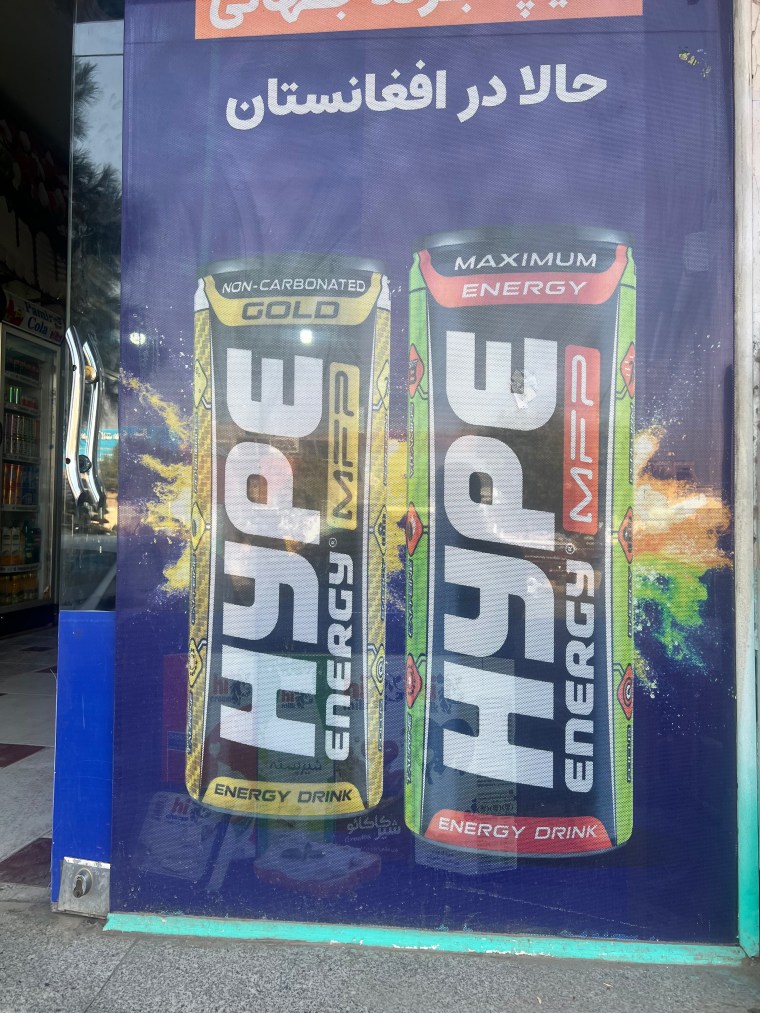
Energy Drinks
This essay has been eternally long, but I have to mention one final oddity about Afghanistan.
Afghans fucking love energy drinks. They go shit house for them. Can’t get enough of them. When I played the phone game with the Hotel Kid and his friends in Bamiyan, the prize for each match was an energy drink. I was watching Afghan tv, and I saw some sort of meeting of a dozen Taliban officials all sitting on the ground around a low table, and there were at least 20 cans of Red Bull at the center of it.
Every convenience store, grocery store, food stand, hotel, and nearly all restaurants in Afghanistan sell energy drinks. They sell Red Bulls, Monsters, and dozens of Russian, Iranian, and Indian brands I’ve never heard of. I think I even saw a few cans of Thunder Muscle.
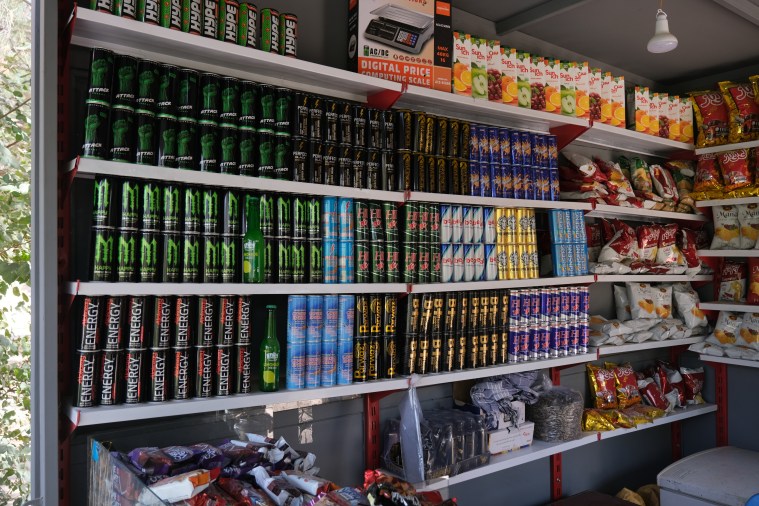
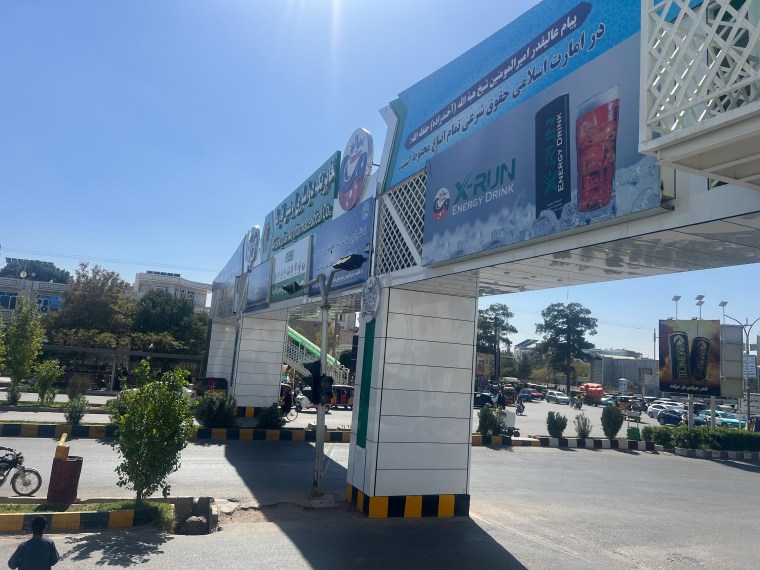
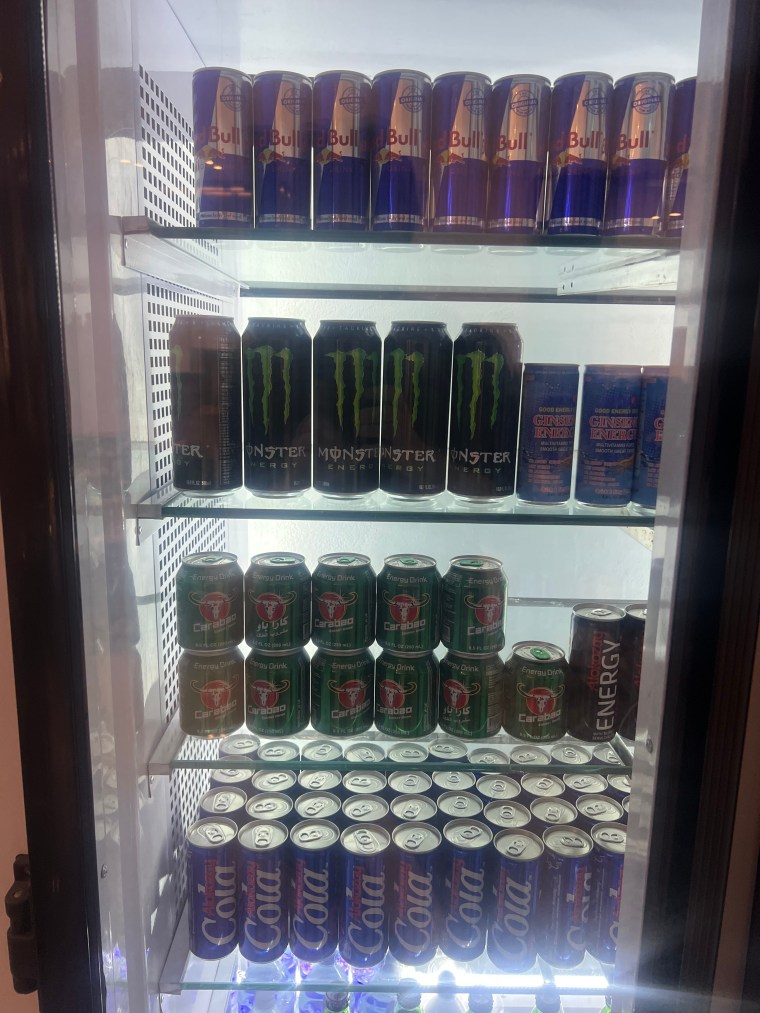

I can’t think of any explanation for this except that the Taliban obviously ban every narcotic substance, so energy drinks might be the only legal thing Afghans can consume to get something of a rush (more so than tea or coffee). It’s not like the Koran says anything about combining huge quantities of caffeine and Vitamin B12. Just like life, modern society finds a way.
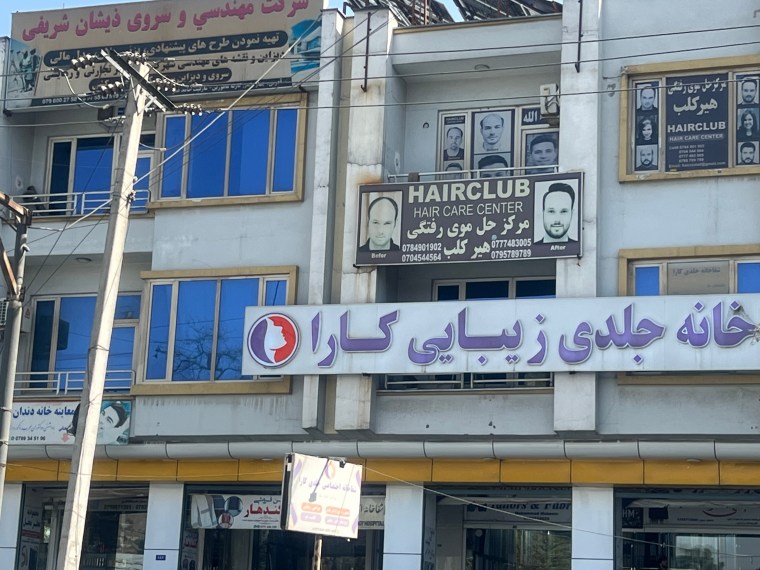
Miscellaneous
- I wrote 80% of this essay while listening to the Tron Ares soundtrack on loop, so now Tron and the Taliban are forever linked in my mind.
- Like the fake malt liquor, you can also find some alcohol-free beer in Afghanistan. This was in a high-end Kabul grocery store:
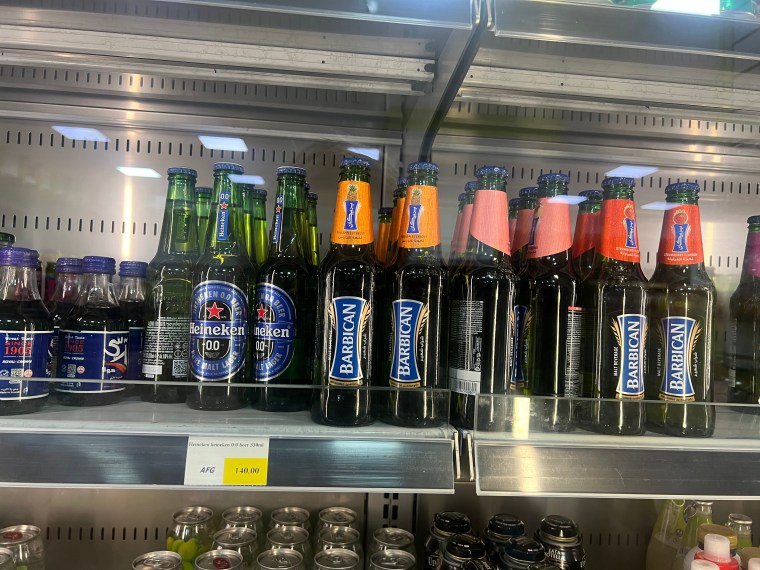
- I like this particular bit of Afghan IP theft:
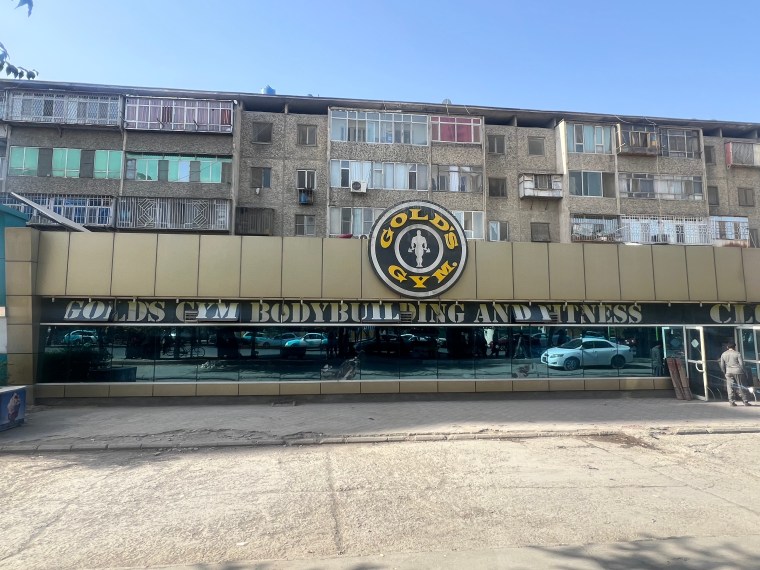
- Nearly every Afghan who spoke to me said something about how terrible the economy is under the Taliban, and many expressed very understandable fears that the Taliban would waste what little money the government had. During my long taxi and bus rides, I noticed a ton of surprisingly nice and seemingly brand new mosques throughout the countryside. For instance:
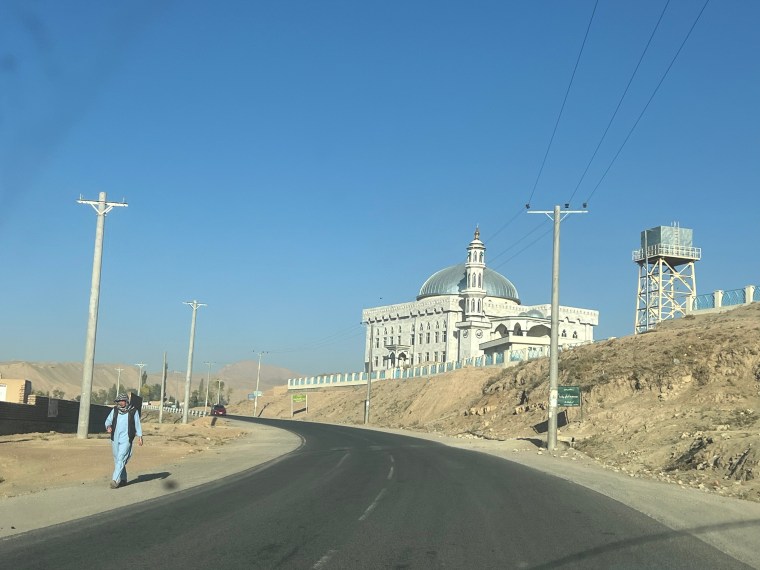
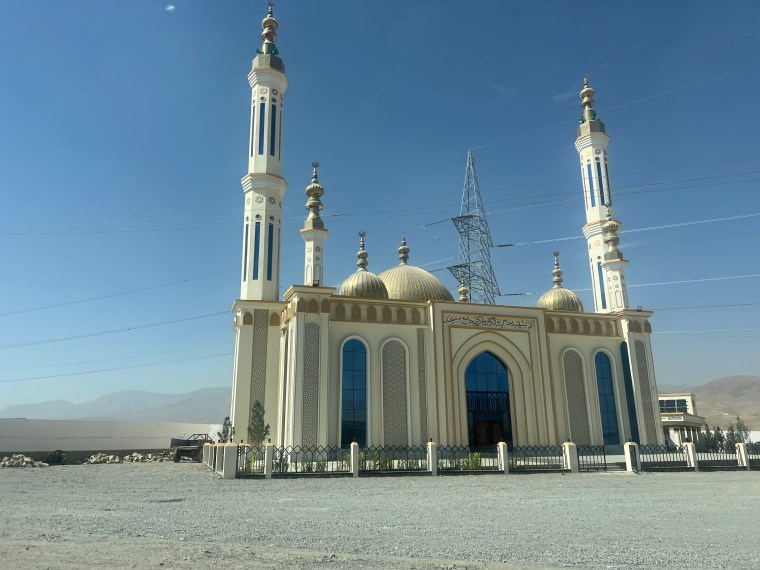
- According to three different locals, the average salary for a Taliban soldier is $50 per month + room and board.
- Of course I’ve read the Kite Runner, but sadly, according to one local, the Taliban banned kite flying. I only saw one kite during my whole time in Afghanistan (in Herat), likely due to the Taliban’s uneven fun police enforcement:
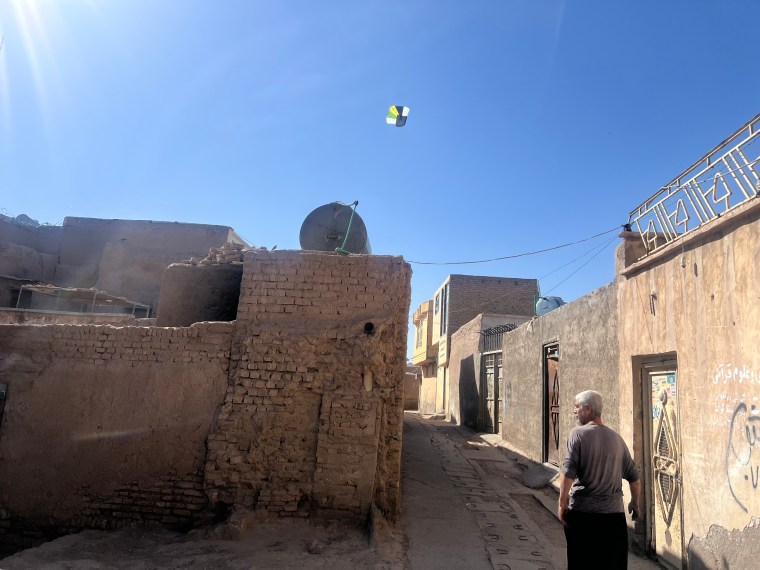
- I might be the first person on earth to recognize that Yunus Qanuni, an Afghan politician who ran for president in 2004, looks exactly like a combination of Nathan Fielder and Reid Scott (prob best known as Dan Egan from Veep):
+
=
 Matt Lakeman
.png)
*2021, I think you mean
LikeLike
Fixed, thanks
LikeLike
“In Fall 2025, I spent three weeks in Afghanistan”
Wow I had to do a double take when I read that!
If you were born 500 years ago in Iberia, you definitely would have been one of the conquistadors. Maybe not Cortes or Pizarro, but still one with a Wikipedia page 😉
Very excited to read the whole article and hats off to your spirit of adventure and courage.
LikeLiked by 1 person
Great post, these are always great to read.TIL:> “Men are legally required to grow beards, and I’d estimate that 90% of men I saw had a beard that could be described as “bushy,” and about 40% of Afghan men had beards I’d describe as “epic.””
LikeLike
Fantastic article, one of your best, thank you! I’d love to travel to Afghanistan someday.
LikeLiked by 1 person
Always a good day when I see a new “Notes…” post in my RSS feed. This was another great one.
LikeLiked by 1 person
This was an utterly fascinating read, thank you!
LikeLiked by 1 person
“are there any Jews left in Afghanistan?” Not any more, the last one left after the Taliban took over in 2021, which is fair enough. Interestingly at one point there were only two Jewish people in Afghanistan. They both lived in the Kabul Synagoge and hated each other. As in they’d rat each other out to the original Taliban regime.
I think a Broadway play was made about them, and the below video is them arguing
https://www.youtube.com/watch?v=b4fx6BjWEqk
Great article, always look forward to these.
LikeLiked by 1 person
Very cool article, great insights and your writing style and interleaving of history and experience made this far more readable than a ~45,000 word travelogue has any right to be!
Some typo nitpicks:
Duplicate “for”s in “(from which he was first removed for for allegedly kidnapping and torturing a political rival, but later returned to become Vice President)”
I think its suppose to be 2021 in “having the university shut down when the Taliban took over in 2001 and then reopening under Taliban control,”
LikeLike
Fixed, thanks
LikeLike
“Abazi” on that sign is ab-bazi: water-play. I don’t know spelling well enough to know if the sign is wrong or Google Translate missed it.
LikeLiked by 1 person
This is a wonderful addition to the Notes. It’s always a delight to read a work of the legendary travel blogger Matt Lakeman 🙂
LikeLiked by 1 person
Extremely fascinating. Thank you. Have you published anything like this on your India visit?
LikeLike
Never wrote about India, it was some of the best and worst travel I’ve done. Massive hassle of a country with so many incredible things to see.
LikeLike
YOU SHOULD WRITE ONE SOMETIME.
LikeLike
Hey Matt, I’ve been reading your blog for a few years and it’s always fun to see a new post come out. I literally laugh out loud reading these on the train. They definitely pique my curiosity about countries I know almost nothing about.
There’s a few sentences with possible typos:
LikeLiked by 1 person
Fixed, thanks.
LikeLike
I’m a quarter of my way through this but must comment now. I’m a ex soldier from a western country and did two tours in southern Afghanistan in 08-9 and 10-11. Having left the Army a bit later I worked there as a civilian for four and a half years (Apr 2013 – Nov 2017). It gave me unforgettable (and mostly terrible) experiences, including being face to face with death more than once as Kabul really descended into hell.
In my later life I also spent three years in Nigeria, a country I would rate as very close to being even more nuts overall than Afghanistan and which produced on this very blog one of the best reads I’ve ever seen on the internet. To read these blogs is honestly like a sort of therapy. A thousand thank yous.
LikeLiked by 1 person
I’m halfway through now. You’re at the British Cemetery. I visited there too. I don’t know what state it’s in these days but I’m hopeful, primarily because the caretaker type guy there told me that it was always well kept, even when the Taliban were in charge first time. On one wall there were entries for all the Brits over many years, both military and civilian, who’d died in Kabul, ranging from a diplomatic family in the 1930s who died in a crash on road along the pass to Jalalabad to a ex Special Forces fella in peak fitness who dropped dead on a treadmill aged 42. He was a friend of a friend. Anyway I had the notion from time to time that because alliances and enemies have often been so temporary and fragile in Afghan culture that the feeling is that no-one really means it personally, and this dude trying to kill you will probably be on your team next week, so what results is a kind of honour amongst fighting men. I will never want to enact this experiment, I suspect that if I told some Talibs in Kabul that I used to be a NATO soldier and I tried to kill them and they tried to kill me, but hey fellas let’s shake hands and drink tea, they would be quite happy.
Swimming Pool Hill is located very very close to where the Green Zone used to be, on its northern perimeter. The Green Zone compound I lived and worked in was separated from the hill only by the gridded streets of the ‘upmarket’ area called Wazir Akbar Khan. Dostum had a mansion there. Taliban 1.0 used to push ‘criminals’ of the high diving board to their deaths in the empty pool beneath. On the subject of flagpoles, Swimming Pool Hill also featured a massive one flying the flag of the Afghan Republic (who can even remember what that looks like anymore?). There was a Lebanese restaurant called La Taverna in W.A.K. One night in January 2014 I remember a huge bang and then gunfire. It was the Taliban suicide bomber at the restaurant, then follow-ups who killed umpteen westerners, the Lebanese owner and staff. Kabul had escaped the worst of the insurgency up to then, but this was the opening attack of a period in which the city was in hell. Constant bombings, shootings, a suicide bomber detonated outside my house (inside the Green Zone), a massive truck bomb at the edge of the Green Zone blew me off my feet and destroyed my house. That was March 2017, and the point when I decided to leave. One day there was a Swedish journalist – for some reason I remember he was called Nils Horner – standing harmlessly waiting for a car on a street in W.A.K. Someone came up behind him and shot him in the back of the head. Any westerner was fair game back then. The Taliban in that period attacked every western compound and govt target in the city. I exaggerate, but not by very much at all. It is amazing to me that it’s tolerant of western tourists now. When I was in Kabul 2013-17 if you’d told me youtubers would be making travelogues in the 2020s I’d have thought you were mentally ill. I have about five hundred stories from those four years, all of them bad.
A brief story about attitudes to women. One of my colleagues used to organise an occasional low-key social event in one of the Green Zone houses occupied by my organisation. I went along once or twice. It was a thoughtful thing for him to do because the idea was to give Afghan staff the chance to speak freely and have a smoke or a beer outside the crushing confines of their culture. Once or twice I remember their general demeanour if any woman/female related subject came up, and their tittering low-grade puerile sense of humour. Eight year old boys in the west are more developed. It was honestly no better than ‘tee hee hee, boobs, bottoms! toilets!! girls! kissing!! ha ha!!’ But the point is that these particular Afghan males were relatively elite, with postgrads or even PhDs from universities in the UK, US, Canada etc. It really was pathetic. I think an understudied question, connected with some of what you discuss concerning the Taliban’s lack of horniness, is the connection between sexual repression and extremist behaviour, especially in the Islamic world.
I will now read the second half.
LikeLike
Do you explain somewhere why you have such strong opposition to giving money to beggars? Especially in that story about the professor. Do you have a principle against it?
LikeLike
I wouldn’t say I have a strong opposition to beggars, but I do dislike begging on principle. In most cases, it’s an attempt to use one’s need to extract value from others. There are contexts with begging-ish behavior where that doesn’t apply, like a friend being in need or an emergency, but most beggars I encounter when I travel don’t know or care about me; they just see me as a walking/talking money source.
I say the above while having enough empathy to recognize that poor people from very poor countries have extremely different life experiences from me and value systems, and so I usually don’t morally begrudge the beggars that approach me, but I still dislike the behavior.
As a somewhat related example, I respect the kid who took me on a mini-tour of the pigeon coop and then asked me for money. He provided me with something of value and then asked for payment. Ideally, he would have bargained with me on a price first, but due to language limitations, I understand why he didn’t. In contrast, I think the professor in particular just tried to overwhelm me with pity to get money, and he would have done the same to anyone he suspected had money.
Also, I made an Effect Altruism joke in the post, but I agree with their basic principle that if you are going to be charitable, you should do so efficiently. While travelling, I constantly encounter beggars, and I doubt giving them money is more efficient that going through EA systems.
LikeLike
OK, I still see things quite differently, but thanks for taking the time to reply in detail. (And to reiterate what everyone else here is saying – love your writing and am excited every time a new post drops.)
LikeLiked by 1 person
It took me three days to read this garangutan piece and I couldn’t think of anything else. Barring the “izzat” subplot (which upon further digging took me to a racist post on kiwifarms) I enjoyed everything.
Wish that you could do this full time, I didn’t want this piece to end. I always reread your “Notes on” series and they also inspire me to travel and dream of foreign lands. You are after all the legendary travel blogger Matt Lakeman. Would like to support your travels somehow.
LikeLiked by 1 person
though, in his case, Stewart really was risking my life while I was just being anti-social and thrifty. (my -> his?)
Wow, thanks for another epic piece, legendary travel blogger Matt Lakeman.
LikeLiked by 1 person
In fact, the Taliban is fighting a terrorist groups that is attacking Western countries (groups -> group)
but had understandably gotten barely any customers since the Taliban took over in 2001 (2001->2021)
I was briefly annoyed at my guide for not intervening more quckly, but as I was to learn, this was a deliberate and well-crafted strategy. (quckly ->quickly)
Even in Dari, I can’t imagine this name roles off the tongue (roles -> rolls)
LikeLike
Fixed, thanks.
LikeLike
Another great article! Those always make my day (and often parts of my nights as well).
Hmm… lore-wise this is more or less the time when Ocelot spend time in Afghanistan. Coincidence? 🙂
LikeLiked by 1 person
I’m halfway through now. You’re at the British Cemetery. I visited there too. I don’t know what state it’s in these days but I’m hopeful, primarily because the caretaker type guy there told me that it was always well kept, even when the Taliban were in charge first time. On one wall there were entries for all the Brits over many years, both military and civilian, who’d died in Kabul, ranging from a diplomatic family in the 1930s who died in a crash on road along the pass to Jalalabad to a ex Special Forces fella in peak fitness who dropped dead on a treadmill aged 42. He was a friend of a friend. Anyway I had the notion from time to time that because alliances and enemies have often been so temporary and fragile in Afghan culture that the feeling is that no-one really means it personally, and this dude trying to kill you will probably be on your team next week, so what results is a kind of honour amongst fighting men. I will never want to enact this experiment, I suspect that if I told some Talibs in Kabul that I used to be a NATO soldier and I tried to kill them and they tried to kill me, but hey fellas let’s shake hands and drink tea, they would be quite happy.
Swimming Pool Hill is located very very close to where the Green Zone used to be, on its northern perimeter. The Green Zone compound I lived and worked in was separated from the hill only by the gridded streets of the ‘upmarket’ area called Wazir Akbar Khan. Dostum had a mansion there. Taliban 1.0 used to push ‘criminals’ of the high diving board to their deaths in the empty pool beneath. On the subject of flagpoles, Swimming Pool Hill also featured a massive one flying the flag of the Afghan Republic (who can even remember what that looks like anymore?). There was a Lebanese restaurant called La Taverna in W.A.K. One night in January 2014 I remember a huge bang and then gunfire. It was the Taliban suicide bomber at the restaurant, then follow-ups who killed umpteen westerners, the Lebanese owner and staff. Kabul had escaped the worst of the insurgency up to then, but this was the opening attack of a period in which the city was in hell. Constant bombings, shootings, a suicide bomber detonated outside my house (inside the Green Zone), a massive truck bomb at the edge of the Green Zone blew me off my feet and destroyed my house. That was March 2017, and the point when I decided to leave. One day there was a Swedish journalist – for some reason I remember he was called Nils Horner – standing harmlessly waiting for a car on a street in W.A.K. Someone came up behind him and shot him in the back of the head. Any westerner was fair game back then. The Taliban in that period attacked every western compound and govt target in the city. I exaggerate, but not by very much at all. It is amazing to me that it’s tolerant of western tourists now. When I was in Kabul 2013-17 if you’d told me youtubers would be making travelogues in the 2020s I’d have thought you were mentally ill. I have about five hundred stories from those four years, all of them bad.
A brief story about attitudes to women. One of my colleagues used to organise an occasional low-key social event in one of the Green Zone houses occupied by my organisation. I went along once or twice. It was a thoughtful thing for him to do because the idea was to give Afghan staff the chance to speak freely and have a smoke or a beer outside the crushing confines of their culture. Once or twice I remember their general demeanour if any woman/female related subject came up, and their tittering low-grade puerile sense of humour. Eight year old boys in the west are more developed. It was honestly no better than ‘tee hee hee, boobs, bottoms! toilets!! girls! kissing!! ha ha!!’ But the point is that these particular Afghan males were relatively elite, with postgrads or even PhDs from universities in the UK, US, Canada etc. It really was pathetic. I think an understudied question, connected with some of what you discuss concerning the Taliban’s lack of horniness, is the connection between sexual repression and extremist behaviour, especially in the Islamic world.
I will now read the second half.
LikeLiked by 1 person
Excellent comment.
LikeLike
“But still, I never felt any particular resentment toward me as an American, not even from the soldier Taliban who stopped me for permit checks.”
Have you been to VietNam yet? Much the same there.
I really enjoyed your trip. I was in Afghanistan (Herat-Mazar-Bamiyan-Kabul-Pakistan) for a month back in 1976 and my memories are dimmed by time. Thank you for giving me a trip down memory lane.
LikeLike
I went to Vietnam years ago, and yeah, zero resentment of the Americans, actually very pro-American usually, more so than Afghans.
LikeLike
Ouch.
Clashes between residents and gold mining company kill 4 in Afghanistan | AP News
LikeLike
Great as always! Your Hotel Kid reminds me of Aizen from the Kerning Cultures podcast — an Afghan teenage refugee who was so westernized that he was actually…easternized, I guess? and a huge anime fan.
I wonder what the Swedish tourist was going to see given that it sounds like every tourist site bars women? Not that the tourist sites themselves seem to be much to look at.
LikeLike
The Swedish tourist was mostly visiting her relatives living in Herat. And I guess she could at least visit mosques and shrines, of which there are many, but yeah she’d be pretty limited. The Herat Citadel is by far the biggest tourist attraction in the city and one of the biggest in the country, and I doubt she’d be allowed in.
I’ve never heard of the podcast, I’ll check it out.
LikeLike
I wondered if it is weird to get unjustifiably excited for a travel blog in 2025 A.D. With a frown, I ask myself, “is this a nostalgia driven interest? Do I yearn for simpler times of more choice and freedom, or is this a wretched parasocial anachronism?” In these moments of doubt I retreat into the workshop for introspection and consultation. Inside, alone, I approach the glorious Matt Lakeman shrine— adorned with all manner of long form travel blogging memorabilia. It is here, as ever, that all doubt is cast away. Go forth, anon, and read the post.
All that is left is for the universal holy text. Write the book.
Cheers,
Anon
LikeLiked by 1 person
> ” But if I saw every other person looking at them, and I saw multiple other people approach them, and I saw them wave off those people politely and continue trying to walk down the street, I would not approach this person because I would be cognizant of his sovereignty and recognize that he doesn’t want to be stopped by me for a conversation any more than he wants to be stopped by any other random person on the street.”
True, but then again maybe those people exist there as well and you didn’t meet them?
LikeLike
Undoubtedly true. Or they approached me during calmer times. I had plenty of extremely polite interactions in Afghanistan, though they were swamped by the sheer deluge of more mixed politeness/sovereignty-respecting interactions. It was an overwhelming process and I’m still not sure if I described the balance and nature of it accurately enough.
LikeLike
Unbelievably interesting and engrossing writing. These travel blog posts are some of the best writing on the internet.
LikeLiked by 2 people
I enjoyed reading this very much, especially the somewhat philosophical discussion on politeness and friendliness. I think it is always especially interesting when one is able to be able to make more higher level analysis about human behavior from just day-to-day social interaction.
I wonder if there is a way to measure the relative inherent niceness of people to foreigners, and how much of this is connected to socioeconomic disparities between countries? Maybe one could compare, between countries, how economic improvement and increased tourism changes how human interaction takes place.
In any case, I think your diverse travel experiences afford you with a great wealth of particular knowledge to be able to make such judgments, and I hope you consider including any more thoughts you have on human behavior in future work!
I was also particularly amused by the dig/shout-out at effective altruism.
LikeLiked by 2 people
Such a fantastic trip report! I honestly would have been thrilled if you had gone into the same level of detail for every day of the trip, as your writing style is thoroughly engaging.
I visited Afghanistan (as a tourist) in March 2021 (yes, barely 6 months before the Taliban took over). Due to the security situation, I basically only got to spend time in Kabul & Mazar (plus an unplanned, incredibly scary/dangerous drive between the two cities). It was amazing to be able to read about parts of the country that I could only have dreamed of visiting at the time. I’d love to return some day, as I suspect that even the places that I did get to visit have changed considerably (in ways both good & bad) over the past ~5 years.
Again, thanks for the write up!
LikeLiked by 2 people
Re: the guide seeming to understand transgender identity better than lesbianism- Afghanistan has a tradition called bacha posh where, as far as I understand it, certain girls take on the social role of a boy for some of their childhood, so there’s a similar framework to link it to.
LikeLiked by 1 person
This probably isn’t too important, but the Energy Drinks thing might have been come from the American soldiers that used to be in the country. Energy drinks like Rip Its and Wild Tiger were always popular with them, and just like American SPAM in various Pacific islands, or French coffee & baguettes in Vietnam, a little of the occupiers might have rubbed off on the locals. Perhaps the same way driving Humvees and wielding M4s rubbed off on the Taliban, even — I wouldn’t be surprised if abandonded stockpiles of energy drinks were part of the piles of stuff America left behind when it evacuated. Like sitting at desks & doing paperwork, it (guzzling energy drinks like the good old days when you were a real soldier and needed the sugar, not a glorified office worker putting on weight) might be another American import that not even the Taliban could resist.
LikeLike
This is a really cool thesis, makes a lot of sense.
LikeLike
I like the thesis, too, but noticed the energy drink thing everywhere in the Gulf – Kuwait, Bahrain, Oman…. My thinking before the Afghanistan article was that there are so many Indian guest workers and Indians love energy drinks, too. We need to keep investigating……
LikeLike
I haven’t been to Oman or Bahrain, but I didn’t notice an unusually high amount of energy drinks in Kuwait, but then again I was mostly in malls and walking around outside. But if there is a lot of energy drinks in very Muslim countries, I think that’s evidence for my original thesis – narcotics are banned, alcohol is banned or very hard to get more most people, but caffeine is allowed, so energy drinks are the closest to a buzz these places allow.
Maybe a good investigation would be to see if there is a lot of energy drinks in places like Somalia that are Muslim but have rampant khat usage. I also recall hearing that meth is rampant in Sudan among soldiers.
LikeLike
I’m pretty sure it is possible to download Google Translate dictionaries ahead of time to your phone, so that you can translate freely even when internet is down.
LikeLiked by 1 person
I wouldn’t be comfortable with the level of danger you take but I’m enjoying reading about it. In some ways you are the closest thing to a gladiator in the modern world, risking life and limb for our entertainment.
Your remark about Afghans not understanding “the desire to walk” was funny because I had the same experience with your compatriots. Back in the day I would walk maybe 45 minutes each way to get my weekly groceries, much of it through a nice park, and my colleagues were all flabbergasted and offering to drive me. Those weren’t couch potatoes, they would have thought nothing of taking a 3-hour run around the same park. But walking? Alien.
LikeLiked by 1 person
I think this is one of those things were Westerners/East Asians are the weird ones compared to the rest of the world. In a lot of poor countries, walking is vaguely associated with being poor and everyone would be driven or at least drive everywhere if they could.
LikeLike
Nice job. Learned far more about Afghanistan from this piece than I did in the 20+ years of US “adventuring” there.
LikeLiked by 1 person
This BBC article provides some background on the Internet shutdown: https://www.bbc.com/news/articles/cg7vdpy1l2vo
LikeLiked by 1 person
Or Oman. That’s where you should have gone. Totally underrated. Yes, mussie but well off enough to not give a care about any gringo like you or me-NO ONE hassles you like in Tangier or Cairo. Did it 2 years ago. 5 full days. Rental car a must. Major roads are insanely great. Once outside of Muscat on the freeways there is ZERO traffic BUT speed cameras every couple of miles AND your rental car company will send you a measly $20 fine-fight back & ignore it-they did nothing. The Grand Canyon of the region, Jebel Shams is amazing for a hike. Misfah is nearby-overnight here-lovely old ancient village. Head next to Nizwa-the fort is lovely. Then to a wadi then overnight in Wahabi Sands. Muscat is very nice but not all that interesting but right on the sea so a great setting. Finally make sure you try camel curry.
LikeLike
I’ve heard nothing but good things about Oman, will have to do a trip there + Yemen (if possible) at some point.
LikeLike
Thank you so much for this lengthy report. Lying in bed sick this is the most exciting thing that happened to me in a while. On a technical note, I exported the entire page to PDF with Safari / MacOS and it ended up being 513 MB large. I guess the pictures are very high-res? I downloaded one as a test and it was 16 MB large. Not sure if this is intentional, that’s why I mention it. Thanks again.
LikeLike
I think it’s because most photos are direct form my camera, and some from my iphone. Idk, I’m bad with technical stuff.
LikeLike
Hello, love the blog.
One comment about the ““the desire to walk””
“Afghans do not understand the desire to walk. The hotel manager, the hotel cook, two hotel guests, four Taliban, and three or four other pedestrians who approached me were all astounded when I told them that I chose to walk three miles to Chili Zena. They could not believe it.”
“They could not believe it. They all repeatedly offered me rides or to call me a taxi and assured me that walking was not necessary.”
I believe this is more meant to be courteous as in they were shocked nobody had offered you a ride in doing so (or that you possibly were too afraid to seek out one?)
They then tried to offer you rides out of hospitality and to generally have you feel more comfortable.
Keep up the great work Matt!
LikeLiked by 1 person
Greatly enjoyed reading this, just like I did the previous Notes. Took me about 2 weeks of reading bursts. Btw I think the link for the Afghan Napoleon’s wiki page goes to his son instead of him (both interesting to read about though).
LikeLiked by 1 person
Fixed, thanks.
LikeLike
Fantastic, as always. A couple of days read but totally worth it 🙂 If you plan to visit Yemen, I recommend to go to Socotra island.
LikeLiked by 1 person
Can you email me a printable copy of the document without the photos?
LikeLike
For future travels, i recommend that you use an app like locus maps, which allow you to download maps onto your device and as a result still use them in event of an internet shutdown.
LikeLike
Fantastic post as always! Your travel and the reading and preparation you do to understand the history and political context is exactly the same way I’d like to travel if I could devote more time and money and adventurous spirit to it, so I’m super grateful to get to live vicariously through you.
I have some thoughts re: this though
I’m not sure if I can agree here that ethnic/religious animosity between groups in Western Europe was never anything close to the level in tribal ethnic groups in Iraq, Nigeria and Afghanistan. IMO the horror of the 30 years war and the constant religious strife in the centuries that preceded it were the drivers of a movement toward liberalism and enlightenment that have finally managed to tamp down on this strife, and I think that movement is why we see lowered religious/ethnic tension there today.
When it comes to the link between being overly friendly / collectivist / tribal and having extremely terrible intranational conflict, the way I see it, they are both downstream of the rugged tribal nature itself. From a tribal mindset, you see yourself not as an individual but as a representative of your tribe, and the person you are helping as a representative of their tribe. Then there is actually tremendous rational value in being extremely overtly kind even at immediate personal cost and without any expectation of individual gain, because this will improve the prestige and reputation of your tribe and the likelihood that, if someone from your tribe needs support from someone of their tribe in the future, it will be provided. On the other hand, it also means that if you commit any slight or injury, you have also performed it as a member of your tribe and that makes all members of your tribe fair game for retaliation, who will also remember every last slight or injury committed against them, leading to terrible blood feuds. And maybe, the risk of slights cascading into terrible blood feuds leads to overly friendly norms to maximally prevent any risk of such a misunderstanding taking place.
Of course, I’m not saying that individuals are making such rational calculations every time they offer you over for tea and to spend a day with you showing you around, just that these types of social norms arise for rational reasons in this type of tribal-oriented environment.
Also, I think that rugged geography tends to create both tribal behavior (tribes as a form of social insurance and mutual aid in a harsh environment where it is difficult to defend yourself, so you need to band together and maintain the constant threat of maximum retribution to any slight since otherwise you’ll be taken advantage of) and strong hospitality norms toward strangers, since rugged geography leads to greater vulnerability for travelers/strangers, and a stranger is simply a tribe you haven’t yet interacted with; if you can begin the interactions on a strong positive footing you might be securing yourself and your tribe a valuable long-term ally.
As an aside, re the representative of your tribe point, I’ve felt this as a Korean-American myself, growing up I was always reminded to be on my best behavior because I’m representing Koreans more broadly, and then to other families who know my family personally, I am representing my parents and my family. If I misbehave, I was always told that my parents would lose face because it will be seen as their failure to raise me right. I think this is a milder form of the type of cultural mindset that in extreme, drives this type of behavior, and that is largely absent in non-tribal societies.
And a nice video that talks more about the tension between the tribe and the state: https://www.youtube.com/watch?v=3RD72deHti0
LikeLike
Thanks for engaging me on the politeness/friendliness thing, I haven’t had much of a chance to discuss it with people.
I admit that I’m going on vibes here based on limited global historical knowledge, but my sense is that Europe was relatively untribal throughout its history, which is a big reason why liberalism arose there. The Roman Republic/Empire and then Christianity were culturally/politically unifying forces that did their best to transcend tribal boundaries (by absorbing everyone into one giant tribe). A similar case could probably be made about China where the dynasties were transcendent/unifying forces (there were still tons of war and bloodbaths, but generally not along tribal lines).
I guess this could also come down to subtly different definitions of “tribal.” I think of tribal (in this historical conflict context) as groups with deep ethnic/geographic lineages that intertwine to some degree with religion and ideology. So, for instance, I’d call the conflicts in Nigeria between the Hausa, Yoruba, and Igbo to be predominantly tribal, but I wouldn’t call the Cold War tribal (more ideological and geopolitical). By extension, I’d even say that the 30 Years War in Europe was only partly tribal, but largely ideological and geopolitical, as evidenced by the rapidly shifting (and often ideologically cross-sectional) alliances and the recency of the theological divisions.
On the other hand, I fully admit that I don’t have a deep enough understanding of global history to compare latent tribal violence levels in Dark Ages modern Germany vs. India or whatever, I’m very open to being corrected.
I think I’m in complete agreement with the rest of your post, good insights. I think one of these days I just need to straight up ask an Afghan or someone in one of these extremely friendly foreign countries why they are being so friendly to me and see how much their answer aligns with your Korean experience.
LikeLike
I don’t really like travel writing but this was amazing. Best thing I’ve read so far in 2026. I read it bit by bit over 6 days.
I’m too scared to go to Afghanistan but honestly the scariest thing you did was ride the ferris wheel.
You said you’re bad at talking to strangers, but I envy your ability to have interesting conversations with people when you travel. I’m too reserved to prompt them in interesting directions most of the time, and I also get bored by a lot of conversations and bail too early for them to go anywhere. In Afghanistan I think I’d be afraid to ask people how they feel about the Taliban.
A lot of the pictures look like they could be from India. If you presented them and asked me to guess where they were from I probably would have said Pakistan.
My travel formula seems more or less the same as yours. I star a ton of things on google maps (shops, restaurants, markets, heritage buildings, museums, movie theaters, etc) and then walk as much as I can from star to star, and take random detours wherever they look interesting.
You didn’t mention the (discredited, but why let that ruin the fun) theory that Pashtuns might be one of the lost tribes of Israel: https://en.wikipedia.org/wiki/Theories_of_Pashtun_origin#Israelite_theory
I’ll see your “Taliban Office Space” movie and raise you a “Taliban discovers they’re Jewish and moves to Israel” movie.
I haven’t seen any Afghan films, but I have seen a great documentary called What We Left Unfinished. It collects footage of some unfinished films from the communist era and interviews the filmmakers. I found it super interesting and loved seeing the footage of these films, which were in surprisingly good condition. The action thriller looked awesome. I’m not sure if the documentary will interest you, but you will get a kick out of looking up the director! Here’s the trailer: https://www.youtube.com/watch?v=RHcGv9fsB_U
There’s also a Hindi (“Bollywood”) film I loved called Kudah Gawah which was shot in Afghanistan in the early 90s and can be described as kind of like a Pashtun western. It may not be your cup of chai, but I’m a fan. From wikipedia: “extensively shot in and around the cities of Kabul and Mazar-i-Sharif in Afghanistan as well as Nepal and India. Then-Afghan President Mohammad Najibullah, a fan of Bachchan and his allied leader, Sayed Mansur Naderi of Kayan Valley provided security from the Afghan Air Force during the 18-day shooting of the film in 1991. Amitabh Bachchan was also hosted by Sayed Mansur Naderi in his stronghold Kayan Valley and was gifted a rare horse.” Don’t expect cultural authenticity, but it does stress Pashthunwali (Pasthuns are known as Pathans in India, and though I haven’t seen the film in over a decade and don’t remember much of it, I distinctly recall numerous lines of dialogue like “I must honor my word, I am a Pathan!”). I suspect watching it in Afghanistan will get you beheaded. Apple has a good quality trailer: https://tv.apple.com/au/clip/khuda-gawah/umc.cmc.4gprlkcgbmu1zhb8op30wuw46?targetId=umc.cmc.60jcw2oygpmpv9h5zzvv1jyh7&targetType=Movie
As a soundtrack to the post and for the rest of my week, I typed “Afghanistan” into the Youtube Music search and found a bunch of old albums collecting music from Afghanistan. Wonderful stuff:
Music of Afghanistan
Teahouse Music of Afghanistan
Afghanistan: Music During the Civil War (1979–2001)
Afghanistan: The Traditional Music of Herat
Sample song titles from the first album: Lovers’ Meeting, Lovers’ Desire, Tall Girls, Red Cup of Wine. A lost world…
LikeLiked by 1 person
Thanks for the comment, will look into the movie + music recs.
Honestly, I rarely asked people about the Taliban, they very often wanted to talk about them and brought them up without prompting.
Lol, love it.
LikeLike
I just saw that an Afghan rom-com is playing at the Berlin film fest. Interesting read:
https://www.theguardian.com/film/2026/feb/12/no-good-men-berlin-film-festival-shahrbanoo-sadat-afghanistan-romcom
This was shot in Germany but the director’s earlier films were shot in Afghanistan. They look good!
LikeLike
LikeLiked by 1 person
LikeLiked by 1 person
Thanks for the reply!
As far as the framework goes, I think things look nice on mobile. It’s readable and easy to use, and the scroll-to-top issue has much more to do with iOS than any particular website. There might be some CSS to prevent this, but nothing I’ve looked into deeply, and it’s definitely not anything widely implemented. (Some CSS I’ve researched for this issue has been unsatisfactory.)
Otherwise, automatic table-of-content functionality at the top of the post could mitigate the issue, so that when someone does scroll to the top, there are links to the sections headings that they could tap to take them back to where they were. More modern WordPress block editor setups (FKA Gutenberg) may have a “Table of Contents” block you can put at the top of each post. It should fill out automatically based on the content headings so you don’t have to go back up and maintain it while writing.
WordPress is actually about 80% of my job so I’m happy to help out in any way or answer any questions you may have.
Also, I hope you are staying safe. Not sure where you are now, but it seems like that area is a little more “hot” as of late.
LikeLike
I think based on this feedback and stuff I’ve seen elsewhere, I’ll incorporate some sort of table of contents into my next long post. I used one years ago on the K-Pop article. No need for assistance, but I appreciate the offer.
LikeLike
This is me who just left that last comment, I didn’t want to leave it anonymously.
Signing in feels broken on your site right now, but I signed into WordPress.com separately now and hopefully this will put my name.
LikeLike
Sorry for the comment spam, but now I’m actually logged in. I remember this being easier.
LikeLike
amazing as always, thank you for documenting your journeys with so much precision and detail for the rest of us who can only daydream!
fascinating discussion on politeness/friendliness. As someone from a “friendly” country who now lives in a “polite” country, your observations were spot on, and you’re also correct that your white American-ness played a large role.
However specific to Afg, it seems Indians are treated with similar amounts of love. @WanderDa a youtuber documented this
LikeLiked by 1 person