
I wrote about the Spanish conquest of the Aztecs five years ago during the early days of this blog. The conquistadors have since remained a fascination of mine, but I haven’t had a chance to go back to them until recently when I read Bernal Diaz’s The Conquest of New Spain and then The Last Days of the Incas by Kim MacQuarrie. My goal was to get a thorough understanding of the two major Spanish New World conquests and how small Western military forces achieved such stunning successes over gargantuan native empires.
In the case of Hernan Cortes, about 400 Spanish soldiers (later increased to over 1,000) subjugated the Mexican Empire of about 6 million inhabitants. In the case of Francisco Pizarro, about 180 Spanish soldiers (eventually rising to over 1,000, but with rarely more than 500 ever concentrated in one place) conquered the Inca Empire of maybe 10 million inhabitants. In both cases, the Spanish invaders had almost no understanding of the local politics, geography, culture, religion, or people they were invading. In both cases, the expedition leaders deserve a ton of credit for extraordinary leadership and competence while leveraging a technological imbalance to achieve a staggering military force and diplomatic multiplier.
Since I already wrote about the Aztecs, this essay is primarily focused on Pizarro’s conquest of the Incas, which, as a reader, I found no less insane, exciting, ridiculous, and fascinating based on MacQuarrie’s fantastic The Last Days of the Incas. I want to present the most straightforward account of what happened and why with enough detail to get a sense of the difficulty and enormity of the conquest, but pared down enough to make the story digestible. I’ll also intersperse some of the most interesting points I learned from The Conquest of New Spain, which is translated from a first-hand account of one of the conquistadors present at the invasion of the Aztec Empire. At the end, I reflect a bit on why I find this stuff so interesting and can’t stop thinking about it.
The Incas
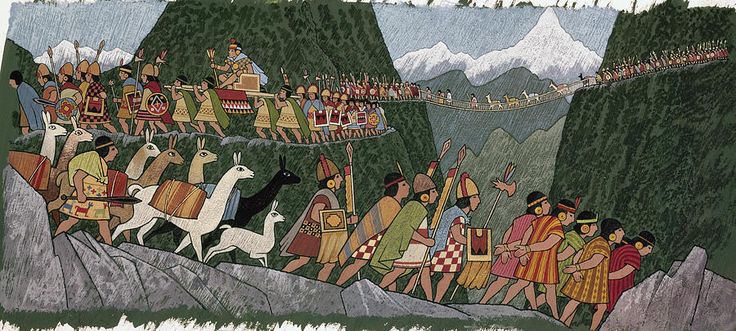
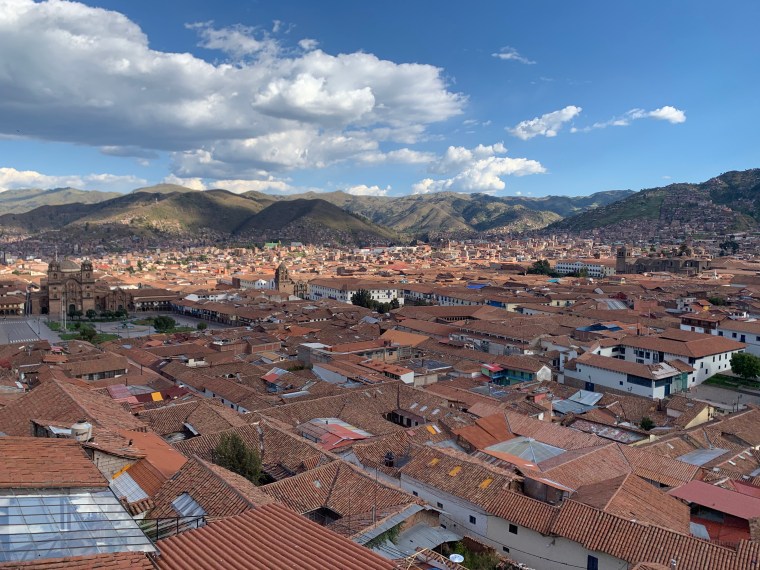
The Incas were/are an ethnic group based around Cusco, a city that sits at an elevation over 11,000 feet (3,300 meters) in what is today inland Peru. At the height of their power, a mere 100,000 ethnic Incas dominated an empire of 8-10 million inhabitants stretching from southern Colombia to northern Chile, from the edge of the Amazon rainforest, over the Andes, and to the Pacific coast. In the 16th century, Cusco’s population may have been as large as 200,000, making it comparable to Paris at the time. They called their country/nation/state/whatever you want to classify it: Tawantinsuyu.
When Francisco Pizarro first arrived at Incan land in 1528, the Incas had only expanded outside the Cusco valley for about 200 years, had only been a genuine empire for about 100 years, and had conquered most of its territory over about the last 60 years. Their expansion stopped not due to any failings on the Incas’ part, but because they had beaten every significant civilization in their vicinity, and all that was left on their borders were small villages and disorganized nomads in dense tropical jungles or sparse mountain ranges.
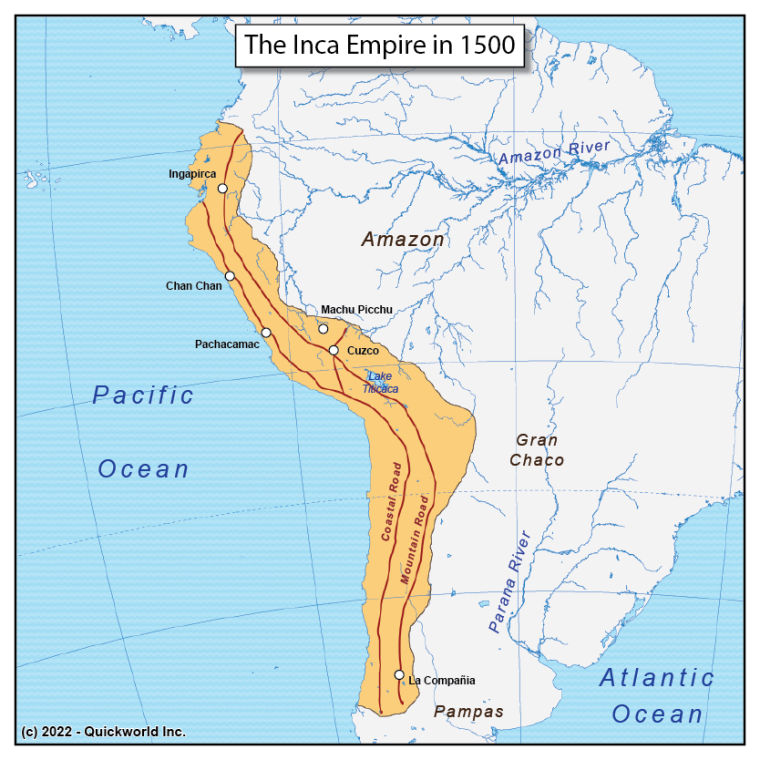
If there was a secret sauce that gave the Inca an edge over their neighbors, it was probably organization. Their civilization was based in fertile valleys nestled between some of the tallest mountain peaks in the Western hemisphere. They got good at terrace farming, roads, transport, communication, infrastructure, and other logistics that permitted the formation of larger armies than their competitors.
It helped that the Incan conquest modus operandi was relatively indirect. The standard procedure was to bribe, threaten, or fight rival city-states into submission, then decapitate or co-opt the leadership, and then install Incan governors while keeping much of the prior state apparatus intact. The Incas preferred to harness long-term productive yields from populations in new territory rather than indulging in plunder. In lieu of taxes, every able-bodied adult male in the Incan Empire was legally required to work for the state for three months per year, or at least send their wives or children in their stead. This mass of labor, which eventually reached into the millions, produced potatoes, meat (llama or alpaca mostly), wool (same), gold, and other goods for the state, as well as building its palaces and extensive road system. Seemingly much more so than the Aztecs and comparable civilizations, the Inca understood that their power was based in its people and their production.
There is a part early in Conquest of New Spain when Bernal Dias describes walking into a village and finding a pile of disemboweled native bodies that had been recently ritualistically sacrificed, and then Dias says that such sights were so common in so many villages that he is going to stop describing them, but that the reader should just assume that the Spanish always encountered such spectacles in every single Mesoamerican village or city they entered.
The Incas also did human sacrifices, but nowhere near to the same extent. MacQuarrie mentions it a few times but there were no piles of mutilated bodies in every town. However, the Incas seemed particularly fond of child sacrifices through a practice called capacocha. Like the Aztecs, the Incan leaders demanded periodic tributes from each region of the empire, though giving up a child to be sacrificed was considered a great honor.
I don’t have a great sense of the technological differences between the Incas and the Aztecs, but for a few points of comparison:
- The Incas had better infrastructure, most notably their road system which ran at lengths estimated between 14,000 miles and 37,000 miles, snaking through the aforementioned mountain ranges, rainforests, deserts, etc. The Inca government developed a crazy messenger system where runners trained at high altitudes ran relays to deliver messages across the empire at the maximal speed of human beings on foot. There was also the qullqa system of warehouses that stored the surplus wealth of the Incan government. MacQuarrie describes endless piles of gold and cloth and food stacked in these buildings.
- Unfortunately, one of the reasons the Incas had to stack their wealth in buildings was because they had no monetary system. The Aztecs hadn’t quite figured out a centralized currency, but a few common goods like cocoa beans emerged as de facto currencies in their marketplaces. It’s almost kind of more impressive that the Incan empire of maybe 10 million people got by on the barter system.
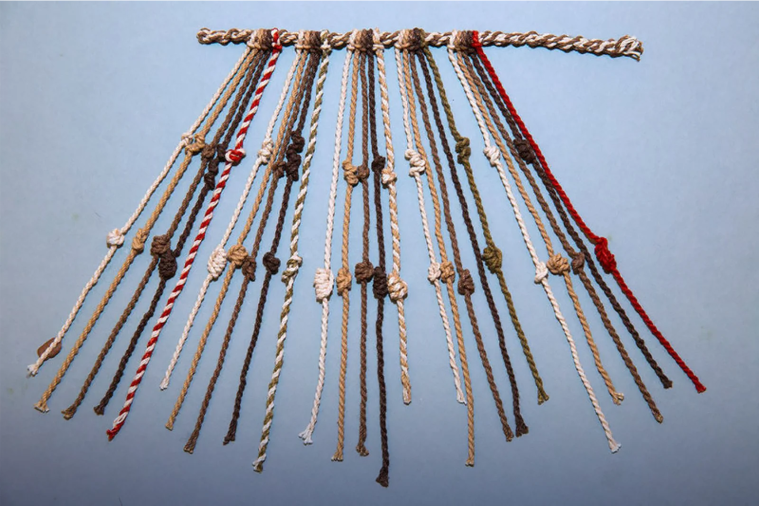
- Likewise, the Incas were behind the Aztecs when it came to writing. The latter hadn’t developed a formal writing system, let alone an alphabet, but they had a pictographic language and paper to put it on. The Inca had no writing system nor paper; they relied on quipus, or “knotted cords,” that they tied in certain ways to record numbers, which at least permitted some basic accounting.
- Metallurgy was a slight edge for the Incas. Neither civilization had iron, both had copper, but the Incas used it more widely than the Aztecs. Most notably, the Incas incorporated bronze (a copper alloy) in their weaponry, though to a relatively small extent, like bronze-tipped spears. The Aztecs only used copper for civilian purposes and stuck mostly to the extremely sharp but brittle obsidian for their weaponry.
- I’m not sure who had the edge in engineering. No city in the Western hemisphere coming close to the size and sophistication of Tenochtitlan, but the Incas managed to carve, lift, and transport colossal stones to the top of mountains to build Machu Pichu and other sites.
- The Incas were ahead in animal husbandry with domesticated llamas and alpacas used for meat, clothing, and material transport (though, sadly, llamas are not big enough to be purposefully ridden). The Aztecs had domesticated turkeys, ducks, and dogs, but there were no tamable large mammals nearby.
- While it’s more subjective, I’d also give a slight edge to the Incas in terms of government organization. The Mexican Empire was basically a city-state (Tenochtitlan) with two junior allies (Tetzcoco and Tlacopan) forcing a cluster of nearby city-states to pay tribute. The Incan Empire, while decentralized by contemporary European standards, had a more integrated national government with Incan elites deployed across the lands to oversee territories as governors.
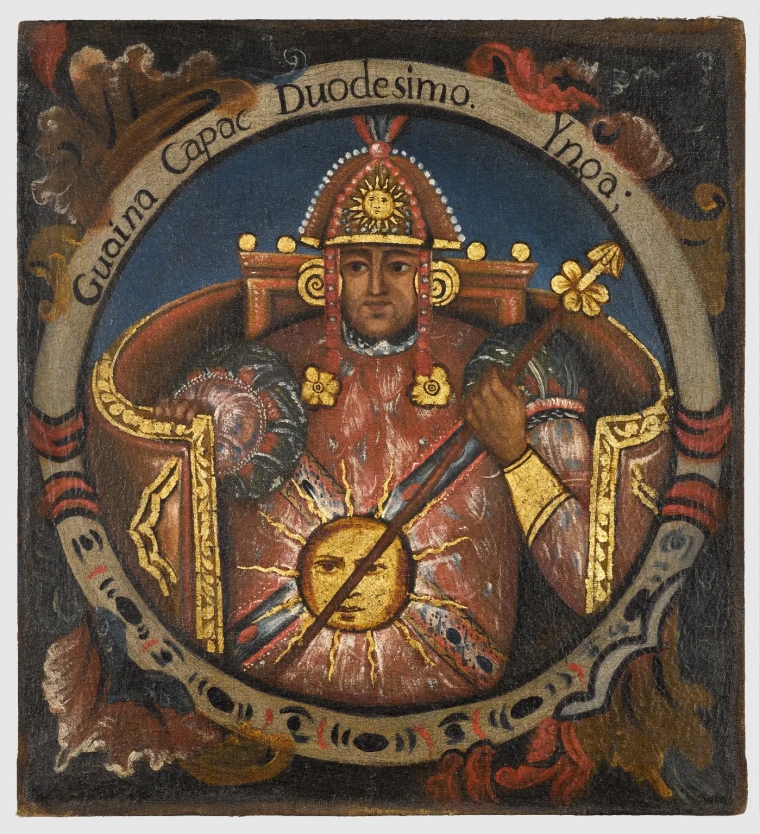
The Incan Empire peaked during the reign of Huayna Capac (who is well-known as objectively the best leader in Civilization IV due to his combination of Financial and Industrious traits). Huayna Capac ascended to the throne at age 5 in 1493, at which point the Incan Empire’s borders had almost reached their peak. Throughout his 34 year reign, Huayna Capac was mostly focused on consolidating gains into a lasting legacy, which is no small feat for 100,000 Incas trying to control a territory larger than modern Mexico. His successful efforts in formalizing the Incan government structure and improving the empire’s infrastructure made Huayna Capac a legendary figure during his time and afterward, sort of analogous to Caesar Augustus in ancient Rome.
Little did the Inca know that the end of Huayna Capac’s reign was the beginning of the end of the Inca Empire. In 1528, Francisco Pizarro discovered the Incas while on an expeditionary sailing venture south from Panama. Some of his men briefly went ashore at the city of Tumbes in northern Peru where they learned that the Incan Empire was a thing and that it was ruled by the mighty Huayna Capac. Pizzaro’s expedition then turned around and went back to Panama so Pizarro could prepare a proper invasion expedition and ask the King of Spain for permission to do so. Weeks later, Huayna Capac died of smallpox, which originated in Spanish settlements along the north coast of South America and tore its way north-to-south. The total estimated death toll in the Incan Empire was around 200,000.
Incan succession was similar to Mexican (Aztec) succession. Both governments were monarchies, but both the formal and informal rules around which son inherited the throne were a lot more fluid than in Europe where by that point, most states had primogeniture, or a system where the oldest son inherits most or all of his father’s titles.
In the Inca Empire, it was more complicated. The Incan Emperor, like all Incan men, could have multiple wives and concubines, all of whom might produce heirs. But the first wife was given special status and only her children were considered to be of full royal blood. Thus it was from her children that the emperor was expected to choose a son to succeed him. However, the legitimacy of a given heir was more of a sliding scale. The son of the first wife chosen by the Emperor had the most legitimacy, but every other son of the first wife also had some legitimacy, and every son of every other wife and concubine also had some, albeit less, legitimacy.
So, what ultimately decided the matter of succession? As with the Aztecs and Ottomans, it came down to warfare and intrigue. The most ambitious heirs were expected to form alliances with weaker sons and then fight each other in civil wars or murder each other covertly until there was one viable heir left. According to MacQuarrie, “the difference between European and Inca versions of monarchy… was that among the Incas bloody dynastic struggles were expected.” They saw it as a meritocratic process for finding the best heir.
(Incidentally, brother-sister marriage was illegal throughout the Incan Empire but was considered a divine practice for the Incan Emperor, so a lot of the heirs involved in these struggles were inbred.)
On his deathbed, Huayna Capac designated his oldest son, Ninan Cuyochi, as his heir to a group of leading nobles. Huayna Capac succumbed to smallpox, the nobles went to Ninan Cuyochi, and found he was also dead from smallpox. Fortunately, Huayna Capac had designated a second heir, Huascar, though he didn’t seem like the smartest choice. MacQuarrie says he “had little interest in military affairs, drank to excess, commonly slept with married women, and was known to murder their husbands if they complained.” Also, his mother was his aunt.
A pretender immediately rose up in the form of another son, Atahualpa, who had accompanied his father on numerous military campaigns and took a liking not just to warfare, but command. He was known to be severe and haughty even by Incan noble standards. He launched his insurrection from Quito in the poorer north and controlled less territory than Huascar, but had more of the military and the senior command staff on his side. The lackadaisical Huascar set himself up in the capital of Cusco and launched his armies north to capture or kill Atahualpa, thus starting another Incan succession war.
Fighting lasted for four years with Atahualpa gaining the upper hand, pushing his armies south while eliminating pockets of pro-Huascar resistance, and finally cornering Huascar in Cusco in 1532. Huascar was killed and the civil war ended only a month or two after the second arrival of Francisco Pizarro and the Spanish expedition.
The Spanish
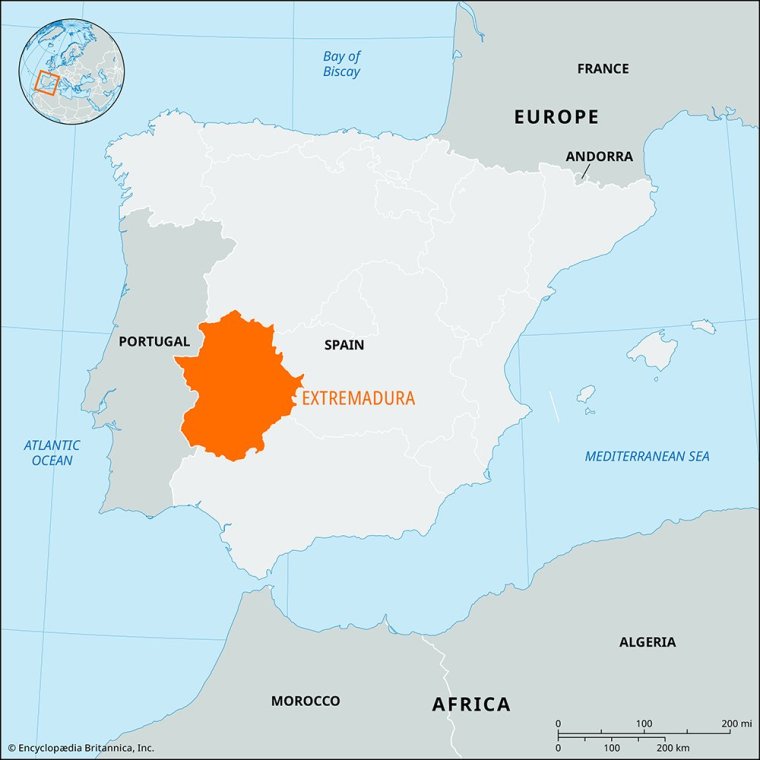
In 1478, Francisco Pizarro was born in the city of Trujillo, in the region of Extremadura, which was the poorest part of Spain (and it still has the lowest GDP per capita on the Spanish mainland). His father was a low-tier noble and his mother was an unmarried commoner, making Pizarro a bastard. Like most of his future expedition members, he received little-to-no education and was a life-long illiterate.
At Pizarro’s age 15, Christopher Columbus returned to Spain from the Americas. Generations later, many of the early settlers of Jamestown and other colonies in North America were the second sons of nobility and noble bastards who grew up close to wealth but knew they would never have their cut of it due to their circumstances at birth. Likewise, hundreds of similarly-positioned Spaniards found the New World frontier to be a high-risk, high-reward shot at glory and wealth. At age 24, Pizarro was one of the “impoverished, illiterate, and title-less” adventurers who signed up for an expedition to the Caribbean in the name of the Spanish King.
Pizarro spent the next 25 years adventuring throughout Central America in an impressive display of avoiding death by disease or violence. At first, he bounced around as a man-at-arms for any expedition that would take him, and he cut his teeth killing/enslaving natives on Caribbean islands and the South American coastline. His first claim to fame was being part of Vasco Nunez de Balboa’s 1513 expedition which discovered the Pacific Ocean by crossing Panama on-foot. He then established himself as a member of the governor’s administration in Panama, later participated in a coup to overthrow the governor, and then leveraged his elevated post to organize further excursions mostly into South America.
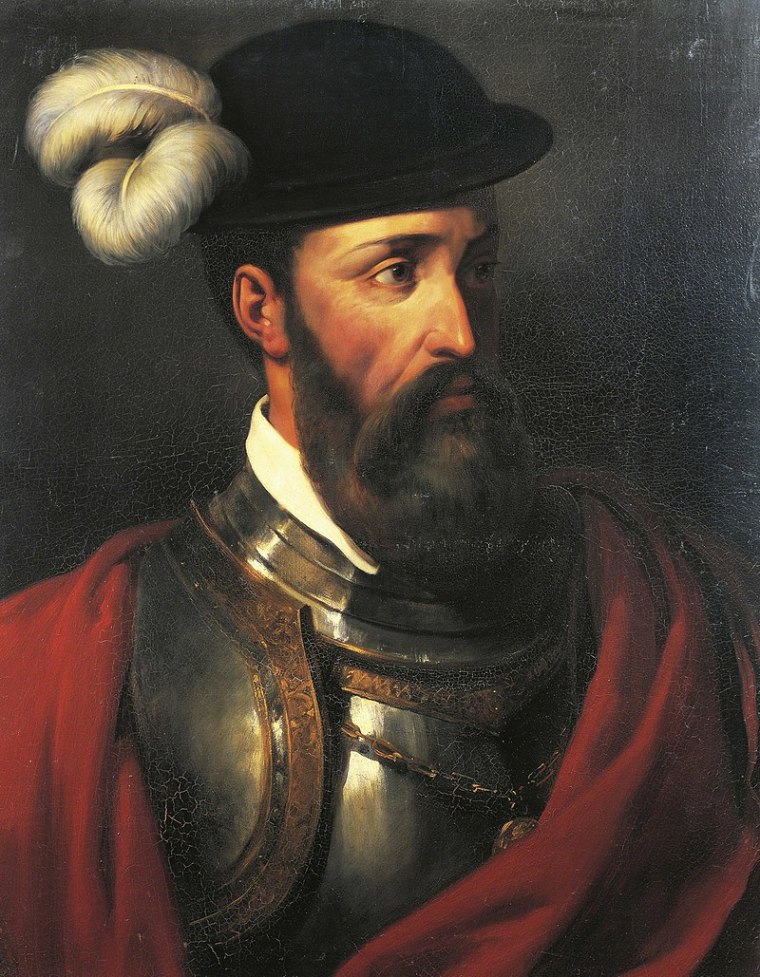
By all accounts, Pizarro was highly competent and quite good at conquistadoring. MacQuarrie describes him as “brave, firm, ambitious, cunningly diplomatic,” and “as brutal as the situation requires.” He was also “quiet, taciturn,” and generally “did very little talking but was strong on action.” However, he was good at making speeches when one was called for, including both in battle and diplomatically. Physically, he was “tall, sinewy, athletic, with hollow cheeks and a thin beard,” and he resembled Don Quixote (though the story was not written until after his death). Pizarro was a very good fighter, but a mediocre horseman, and so, unlike most elite conquistadors, he preferred fighting on foot.
And yet, for all his talents, after 25 years of conquistadoring, Pizarro had never quite hit it big, though he had done alright for himself. He had to be considered at least one of the best conquistadors in in the New World after so many successful ventures. He had collected enough wealth through wages and looting minor native settlements to deck himself out in armor and modern weapons. But he wanted more. He wanted to conquer some big native state, loot it for all it was worth, and then set himself up as a dynastic governor to milk for the rest of his life.
MacQuarrie describes the conquest of the Mexican Empire by Hernan Cortes as almost provoking an existential crisis in Pizarro. Cortes was another poor, illiterate (though legitimate) low-tier noble from Extremadura, and he was even a second cousin once removed from Pizarro. After only 15 years in the New World, Cortes had accomplished by far the most successful conquistador expedition in Mexico, rendering himself absurdly wealthy, absurdly glorious, and a Crown-approved governor of a gargantuan piece of land at age 34. By that point, Pizarro was already 43 and had never reached those heights.
With his already sizeable ambitions further inflamed, Pizarro launched his own expedition corporation called the Company of the Levant to find and make a Mexico-sized conquest. His business partner was another key player in the Incan conquest: Diego de Almagro, another illiterate bastard of low nobility, but with an even more “sketchy” past.
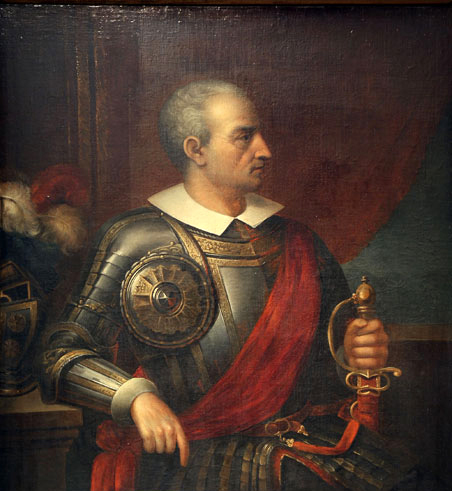
Early in his life, Almagro was abandoned by his mother, then taken in by his noble father, who gave him up to his brother (Almagro’s uncle), who horribly abused him in medieval ways, like chaining him up in a cage. Almagro ran away from home at age 15 and went back to his mother, but she refused to take him in, so he spent the rest of his adolescence on the streets as an orphan. At some point, he moved to Toledo, stabbed someone, fled justice to Seville, and then hopped on a ship to the New World at age 39. He spent a decade conquistadoring around Panama and Colombia, and like Pizarro, found decent but not Cortes-tier successes.
Almagro was ugly, short, fat, and conceited, but courageous and generous to his men. During one of his expeditions, he lost an eye and subsequently always wore an eyepatch. When Pizarro and Almagro joined forces in 1524, the former was a spry 46 and the latter was a sputtering 49. But they each served their roles: Pizarro was the frontman with more military experience and skill who would lead things on the ground, while Almagro was the planning, logistics, and business guy who would get everything set up.
In 1524, the Company of the Levant made its first expedition, a little scouting trip south from Panama along the Colombian coast with 84 men to chase rumors of a gigantic native kingdom. The expedition soon stalled out due to poor planning and bad weather.
In 1526, they launched a second expedition in the same direction with two ships and over 160 men. They messed around the Colombian coast for awhile and eventually reached Ecuador where they once again ran out of supplies. The expedition split with Almagro taking the lion’s share of men back to Panama, and Pizarro going on with the only 13 men who volunteered to stay with him. It took almost two years for them to finally reach Tumbes, a coastal Incan city with the architecture, city planning, and wealth to indicate that it was worth conquering. Cortes and his men exchanged gifts with the locals and were even (voluntarily) given some boys/servants/slaves who would be raised as translators. Pizarro then returned to Panama with a plan.
Pizarro would go all the way back to Spain for the first time in 25+ years to meet with the King and ask for a royal license to conquer this Incan Empire and become its governor. Meanwhile, Almagro would hang back in Panama and organize the next expedition, which would be larger, better equipped, better supplied, and cost way more than the previous expeditions.
Both men succeeded. Pizarro was hailed as a celebrity as he presented his tales and gifts (including a llama) to the Spanish court. King Charles I, having recently absorbed the incalculable riches of Mexico, was happy to grant a conquest license to another ambitious Spaniard. The only catch was that Pizarro was on his own with financing, which was to be expected. Notably, it was Pizarro specifically who was granted the governorship of Peru, while Almagro was officially given no title besides the Mayor of Tumbes. Before heading back to the New World, Pizarro picked up a bunch of eager adventurers for the expedition, including three half-brothers aged 29, 18, and 17, who would serve as lieutenants.
In 1532, the four Pizarros set sail from Panama with a total of 168 soldiers, with 62 cavalry (wielding 12-foot lances), about a dozen harquebuses (big, clumsy guns, more primitive than a musket), and four cannons. Individual soldiers were promised a cut of the loot based on their rank which was based on their experience and the quality of equipment they brought (cavalry at the top, basic foot soldiers at the bottom, harquebuses and crossbowmen in the middle). The army was led by the 54 year old Francisco Pizarro while the 57 year old Almagro stayed back in Panama to raise a second wave of soldiers.
Pizarro’s initial army was not an organized military unit, but rather a band of adventurers thrown together, so both the weaponry and armor was haphazard. All soldiers were equipped with at least iron chainmail, though most had at least some plate covering, often cuirasses that covered the torso. Helmets were also universal, though they usually left the bottom of the face uncovered. The horses usually had thick padded cotton to serve as an effective defense, though there was some cavalry plate armor as well. Also, pretty much all infantry had shields as a first-line of defense before the armor.
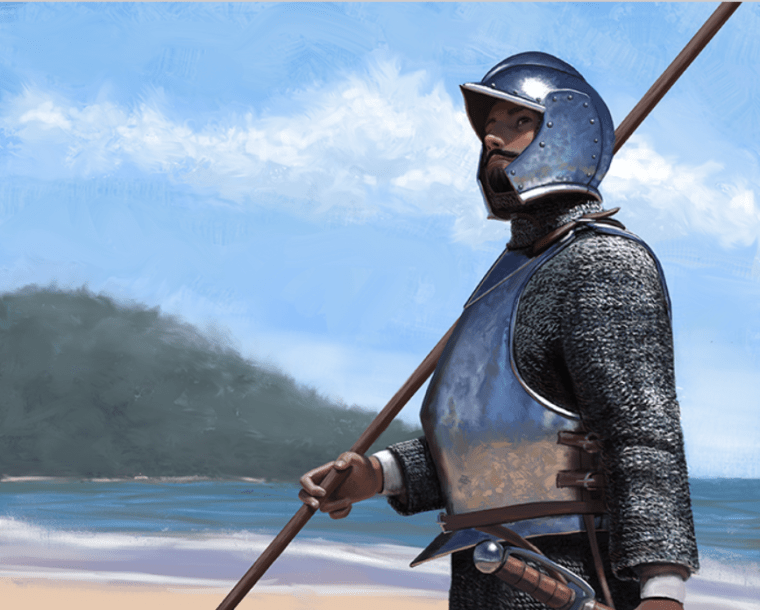
(Shout out to the forums on myarmory.com, a delightful holdover from pre-Reddit days when enthusiasts gather to discuss their nerdy hobby. I read through a ton of threads on conquistador weaponry and armor.)
A few of these conquistadors had been professional soldiers or mercenaries back in Europe, a few more had been on other expeditions in the New World, but most were poor, ambitious men of varying normal professions (ex. sailors, merchants, blacksmiths, masons, etc.) basically buying a lottery ticket for their own cut of the fame and fortune of a successful New World conquest. Many of these soldiers had bought their equipment on credit from crafty New World merchants. In addition, there were a handful of camp followers, including a priest, some African slaves, some female Muslim slaves, and some of the aforementioned merchants who continued selling goods on credit while on campaign.
Beachhead
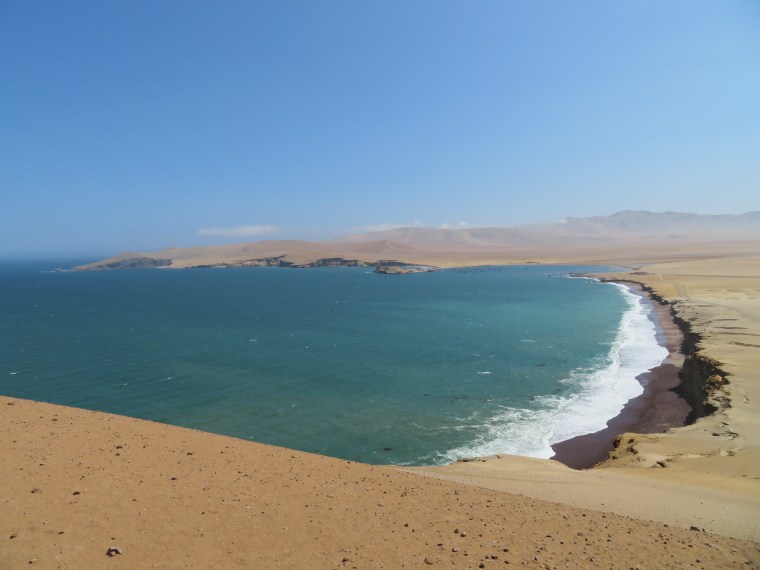
After leaving Panama, Francisco Pizarro’s expedition skipped the usual messing around in Colombia and Ecuador, and went straight to Tumbes, the coastal Inca city, But to his surprise, Pizarro found it in ruins. Many of the very-well-made-for-a-native-city buildings were burned down and bodies littered the streets. Pizarro soon learned from a surviving local through his now teenaged translators that Huayna Capac was dead, the Incan Empire was in a winding down civil war, Tumbes had sided with Huascar, and Atahualpa had punished the town for it.
This was a disappointing start to the venture. Pizarro, had… I guess not read, but somehow absorbed the many first- and second-hand writings of Cortes’s Aztec conquest, and planned to use it as a playbook for his Inca conquest. Cortes had arrived at the edge of the Mexican Empire, allied himself with Aztec rivals and vassals through war and diplomacy, and made his way to the capital city of Tenochtitlan with their military support and literal geographic guidance. But that general strategy wasn’t really viable so far in Peru. All the people Pizarro thought he could use to get to the center of the Incan Empire were either killed by civil war or smallpox.
So Pizarro pivoted. First he set up a little settlement, San Miguel de Piura, and garrisoned it with 50 men. Then he collected some incoming reinforcements from Panama (but still no Almagro), bringing his soldier count up to 168. Then Pizarro raided a few towns, captured some locals to use as slaves, and tortured some others to learn about the Incan Empire and how to get to its capital of Cusco. After perceiving that one village chiefs was lying to him, Pizarro ordered a bunch of natives to be burned to death as a warning to the others.
(It’s worth noting that despite Cortes’s reputation for brutality, he doesn’t do anything this brutal until about six months into his expedition when there’s a local revolt against his rule and he orders his men to cut a bunch of prisoners’ hands off.)
After a few weeks of meandering terror tactics, Pizarro received an emissary from the pretender Emperor Atahualpa. By this point, he was pretty much the real Emperor, as one of his armies was marching on a nearly defenseless Cusco to finally depose and murder Emperor Huascar at the end of the four-year civil war. Through the impressive Incan runner messaging system, Emperor Atahualpa had been receiving reports of bizarre foreigners, noted for their massive beasts, shiny armor, paleness, and especially their beards, which apparently didn’t exist in Peru. He was also amazed by reports that the Spaniards didn’t need to sleep (probably a misunderstanding of Spanish sentry-posting at night), could eat gold and silver, used silver weapons (because they didn’t know what iron was), and that they spent much of their time talking to symbols on flat things (ie. reading).
Emperor Atahualpa had also heard that they had been torturing and murdering his subjects for seemingly no reason. According to MacQuarrie, Emperor Atahualpa sent his emissary to the Spanish to invite them to meet him at his encampment near the city of Cajamarca, where the emperor would get to see these strange foreigners, then probably kidnap, enslave, and castrate them. Then they could be a cool little court exhibit when he took up the throne in Cusco.
Things were now looking up for Pizarro. It had taken Cortes seven months to meet Emperor Montezuma, but Pizarro was invited to meet the Incan Emperor within the first few weeks of his expedition. All he had to do was march about 200 miles inland while ascending 9,000 feet (2,750 meters) into a land he knew absolutely nothing about.
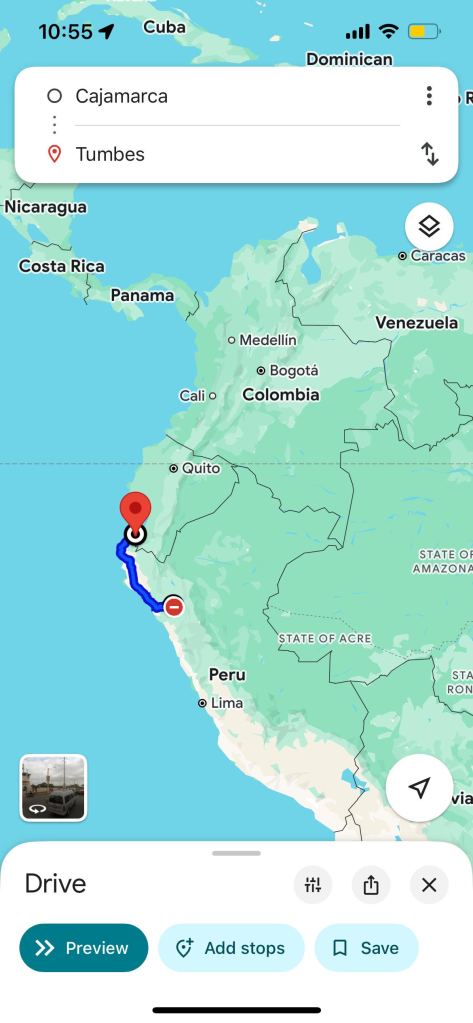
When Pizarro and his 167 soldiers reached Cajamarca, they found an army of somewhere between 30,000 and 80,000 Incas camped outside the city in an endless sea of tents. MacQuarrie describes it as a genuine “oh shit” moment for the conquistadors. They may have heard the stories of Cortes’s army beating native forces 100X+ larger, but actually seeing armies that big brought them face-to-face with reality. They really could just get overwhelmed and slaughtered at first contact. This giant empire of maybe 10 million people actually could kill/torture/enslave them all. The only thing standing between the Spaniards and annihilation or agony was about 168 of each other.
With Emperor Atahualpa and his army camped outside the city, Pizarro maneuvered his men into the city center and set up a base of operations. The Spaniards were impressed by the quality of the stone buildings and used them for shelter instead of their tents. Soon after, Pizarro decided to make contact with the Incan Emperor, and so he deployed one of his top cavalry lieutenants, future famed conquistador and first European to cross the Mississippi River Hernando De Soto along with one of the teenaged translators. Then, for some reason, 15 minutes after sending de Soto, Pizarro also sent his oldest brother, Hernando Pizarro, after them.
MacQuarrie calls De Soto a “wise choice” for serving as Pizarro’s diplomat since he was probably the second-most experienced conquistador in the group. But MacQuarrie also describes De Soto as “brash and impudent, having killed countless natives in hand-to-hand combat,” so I’m not sure about that. The Incas had no horses and had never seen an animals that big in their entire empire’s history, so of course De Soto proceeded to gallop through the Inca camp shouting for directions to find the Emperor at bewildered Incan warriors.
When he found the Emperor set up in a courtyard, de Soto charged up to him so quickly and with such a sudden stop that the Emperor’s clothes fluttered in a gust of air. In a scene that sounds so cool that it beggars belief, Emperor Atahualpa neither flinched nor looked up from the ground in a display of stoic awesomeness. Incan nobility were expected to be extraordinarily condescending and haughty towards subordinates, and Atahualpa was considered to be S-tier in this trait.
De Soto then went into a lengthy speech to the Emperor about how there were two emperors ruling the civilized world: the Holy Roman Emperor, who was also the Spanish King, and the Pope, who was god’s chief agent on earth. In 1493, the Pope assigned all land west of the Tordesillas meridian to Spain, and therefore the Incan Empire was Spanish territory, and so Emperor Atahualpa and his nobles should pledge their fealty to King Charles and convert to Christianity. This was all transmitted by a teenager with a shaky grasp of Spanish and who had barely spoken his native Incan language in four years, so I like to imagine that it went down like a newly immigrated ESL foreigner trying to explain the plot of sci-fi space opera to a geriatric.
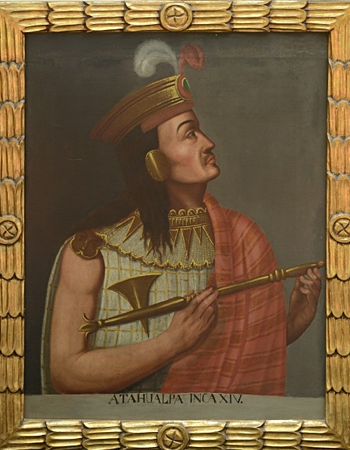
Emperor Atahualpa continued staring at the ground and not acknowledging the presence of the Spaniards. This continued awkwardly until the arrival of Hernando Pizarro, who was somehow an even worse choice for a diplomat. Not that he didn’t have his virtues: he was strong, an excellent fighter, extremely brave, and would later prove himself as an incredible military leader. But he also had a reputation for being an extraordinarily arrogant asshole, to the point where even after successfully leading men through harrowing military endeavors and saving many of their lives, they still hated his guts. MacQuarrie gives him the unenviable title of the “least popular of the Pizarro brothers.”
When Hernando Pizarro introduced himself, Emperor Atahualpa finally looked up. He asked Hernando why the Spaniards had been burning Incan subjects alive. Hernando replied with some legalistic arguments for self-defense and then accused one of the native chiefs they had burned to death of being a “scoundrel.”
They stood around awkwardly a bit more, and then De Soto, the allegedly superior diplomat, noticed that Emperor Atahualpa seemed to be purposefully avoiding looking at their horses despite how mind-blowing they must have been. So De Soto decided to get his attention by making his horse rear back on its hind legs and stomp on the ground with a great snort. Amazingly, Atahualpa didn’t budge nor look at the horse, but a bunch of his royal bodyguards freaked out and ran away. Later that day, they would all be put to death by the Emperor for cowardice.
(There are many cinematic moments in Last Days of the Incas, but this whole negotiation feels the most like something written for a movie.)
A few more words were exchanged, and Hernando Pizarro invited the Emperor to meet Francisco Pizarro in Cajamarca the next day. Emperor Atahualpa assented, but after the Spaniards left, he told his advisors that the meeting had solidified his plan to capture and castrate the Spaniards, and also to capture and breed some horses.
Hernando Pizarro, De Soto, and the translator got back to camp and reported to Francisco Pizzaro that their diplomatic mission had… not gone great. The oldest Pizarro and his lieutenants then spent a harrowing night trying to figure out what the fuck to do. They thought the Emperor might come to visit them as requested, but more likely he would just attack and kill/capture them all. The Spaniards considered slipping out in the night to head back to the coast for reinforcements and a better opportunity to fight, but they worried they’d be attacked on the retreat, plus it would be cowardly.
Finally, they figured their best shot at fame, glory, and now most importantly, survival, was to bring out the old Cortes playbook and try to capture the Incan Emperor. Maybe Pizarro could negotiate with the Emperor to get access to the capital like Cortes had done. Or maybe the Emperor really would be dumb enough to visit them in Cajamarca and they could launch an ambush.
Granted, while outnumbered by something like 59,832 soldiers, the Spaniards were aware that their odds were not great. But still, they did their best to prepare themselves for battle. At their disposal, the 168 Spaniards had 62 horses, 4 canons, and “fewer than a dozen harquebuses.” They were in a decent defensive position in the city center where they could form chokepoints on narrow roads and use stone houses for cover. But still… they were not super optimistic that their technological and geographic advantages could overcome their 20-40X manpower disadvantage. Many Spaniards assumed they would soon die and spent the night praying to the Christian god.
The entire Incan army left their camp, marched to Cajamarca and then… stopped. It was almost sundown and Incan armies didn’t march or fight at night. Pizarro and the Spanish didn’t know about this tactically suboptimal stratagem, and couldn’t figure out what the Emperor was doing. Setting up for battle? Plotting something? Psyching the Spanish out?
Having no better ideas, Pizarro took a low-risk long-shot tactic by deploying an emissary to reiterate the invitation to the Incan Emperor to visit Pizarro. A Spanish guy ran outside Cajamarca with the translator, yelled the invitation to the Incan army, and then ran back into town to avoid being killed.
Surprisingly, a portion of the Incan army then started marching toward the town center. The Spaniards couldn’t believe that had worked, so they hastened to re-set their ambush by leaving a few men, including Pizarro, out in the open in the town center, while everyone else stuffed themselves and their 62 horses into stone buildings with their few harquebuses and cannons pointed at the ready.
Emperor Atahualpa came into the town center at the head of a 5,000-6,000 man army contingent riding atop a litter carried by some of the most elite nobles of the Empire, the equivalent of princes and dukes. The town center was now extremely crowded, especially since there were only two entrances/exits on the Incan side. According to one Reddit poster, the entire Incan army was unarmed as some sort of show of strength, but MacQuarrie never says anything about this.
The Spaniards knew that a fight in the streets was mostly likely, but they were going to try another low-risk long-shot tactic first. A priest traveling with the Spanish army approached and asked Emperor Atahualpa to join him and Pizarro in one of the nearby stone buildings where the Spaniards planned to immediately grab the Emperor and kill his bodyguards. The Emperor wisely refused, which was expected.
Then it was the priest’s time to shine – he got the chance to read out the “Requirement.” Spanish law mandated that when conquering territory under the Treaty of Tordesillas, Spanish agents were “required” to first make a proclamation to the natives that the Treaty of Tordesillas was a thing and that the natives were now legally Spanish subjects. De Soto had already kind of done this, but I guess that wasn’t official, so the priest did it again, and again it was translated by a teenager who wasn’t that great at the Spanish or Incan languages. Then the priest handed Emperor Atahualpa a prayer book who stared at it in fascination.
Then Emperor Atahualpa stood up and yelled to his men to prepare for battle. The priest ran away and Pizarro yelled for his men to prepare for battle. Then the Battle of Cajamarca kicked off.
The result: In two hours, the Incas suffered 6,000-7,000 dead, along with around 2,000 captured, including Emperor Atahualpa. While many Spaniards were injured, no Spaniards died, only a single black slave.

Spanish-Native Warfare
I am fascinated by the Spanish conquistadors, but most of all, I am fascinated by their warfare.
How is it possible for 168 soldiers to defeat 30,000-80,000 soldiers? This isn’t a myth and this doesn’t seem to be exaggeration, as these numbers are corroborated by dozens of Spaniard and Incan primary and secondary sources.
And it wasn’t just a fluke. There were many battles with similarly lopsided manpower and casualty ratios throughout the conquests, particularly in Mexico where Cortes’s forces were more often harried by native armies. There were rare exceptions when the Spanish lost encounters, but only when ambushed and extremely outnumbered, like La Noche Triste when the Aztec army besieged Cortes within the Mexican capital. But in just about every single open engagement between Spanish and native forces, the Spanish always won and with dramatically fewer casualties despite being absurdly outnumbered.
By my reading, the massive Spanish military advantage can be explained by two primary factors: technology and tactics.
Technology
It might seem obvious that the Spanish leveraged their technology to achieve incredible military victories over the Incas and Aztecs, but I’ve actually seen some pushback against this point. Often, it’s pointed out that the Spanish didn’t have that many pieces of their most advanced technology (guns and cannons), and most of their foot soldiers didn’t have close to full plate armor. On the BadHistory subreddit, there is a highly up voted and often referenced nine-part series on Cortes’s conquest of the Aztecs which argues, among many other things, that Spanish military superiority is highly overrated. And yes, that post is one of the reasons I’m writing this whole essay, because someone is wrong on the internet.
MacQuarrie does a better job of describing how the Spanish trounced the Incas than Bernal Dias does with the Aztecs, and by MacQuarrie’s telling, the single most impactful element of Spanish military technology was cavalry.
The Inca simply could not beat armored soldiers on armored horses in open combat, especially when they charged with lances. The Inca tried many tactics against cavalry, including swarming, barricades, and missile barrages, and nothing worked. They did not have strong enough weaponry to seriously hurt either the horse or rider, and together, the cavalry could literally trample groups of Incan soldiers to death. There are many instances in MacQuarrie’s telling of the Incan conquest in which a few dozen Spanish cavalry charged into Incan armies of tens of thousands of warriors and at least inflicted dozens-to-hundreds of casualties with no losses, or at most, won the entire battle and routed the whole Incan army.
The only standard anti-cavalry tactic that worked every once in a rare while was swarming. Sometimes a horseman would get tired so it couldn’t gallop away, and then it would get overwhelmed by suicidally brave Incan soldiers willing to climb on top of the horse despite the risk of getting stomped or stabbed. These soldiers would then pull the horseman off the horse onto the ground and try to pry his armor off and/or stab him through gaps in his armor. But even when this rare event occasionally occurred, more often than not, other cavalry would come to the rescue of the troubled horseman and drive off the swarm.
Eventually, the Inca did crack cavalry, but only in certain contexts. Incan commanders discovered that horses don’t do well on slopes. On flat ground, cavalry is invincible, but while going up or downhill, they slow down or trip and fall or panic and rear up, or otherwise stop being invincible killing machines, and then they can be swarmed a little more effectively.
Also, though it’s less flashy, we can’t forget that cavalry provided tremendous logistical benefits to the Spaniards. The Incan relay network was amazing relative to the size and scale of the empire, but the Incan Emperor still couldn’t transmit orders and receive messages from underlings faster than the speed of a jogging man. Meanwhile, the Spanish could move significantly faster over shorter and longer distances on horseback, so they could transmit orders faster, mount better raiding and scouting parties, retreat more easily if needed, chase down fleeing soldiers with greater ease, and perform rapid military maneuvers of which the native armies could never dream.
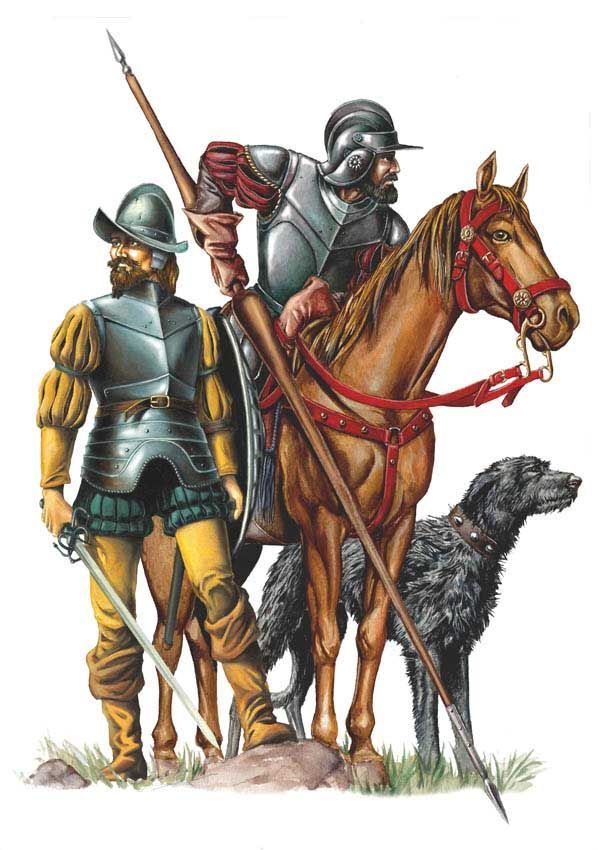
I think the next most important Spaniard military tech was iron, as applied to both armor and weapons. As mentioned, the conquistadors under Cortes and Pizarro were not a unified professional military unit with matching armor sets; they were a rag-tag group of adventurers. The wealthier soldiers, particularly the cavalry, would be decked out in plate armor not too dissimilar from medieval nights, while the poorer soldiers would settle for mostly chain mail and thick cotton with maybe a few plate pieces.
Iron armor, whether plate or mail, was almost always too tough for native weapons. Aztec obsidian weapons were sharp but brittle and often broke on impact with armor. Incan copper-tipped spears probably had a little more penetration but were still outmatched. Even with the motley assortment of Spanish armor, it was apparently sufficient to provide extreme protection to nearly all Spaniards in combat against overwhelming numbers. It’s not like every Spaniard was constantly riposting native attacks with their swords in a duel, rather, the Spaniards were constantly taking melee and ranged hits, but sustaining them without serious injury.
Bernal Dias’s Conquest of New Spain is a great book, but in some ways it’s extremely repetitious. I can’t count how many times Dias says something like, “a horde of natives fired 100 bajillion projectiles at us, and every single one of us to a man received wounds, but no one died.” It’s the same in McQuarrie’s Last Days of the Incas: constant references to projectile barrages that wounded and annoyed but virtually never killed. At one point, MacQuarrie notes that the only way for standard Incan projectiles to kill a Spaniard was if they happen to hit the bottom of a soldier’s face where the helmet ended, and indeed, there is more than one account of Spaniards having their jaws fucked up by sling-thrown rocks, and such a hit even kills one of the Pizarro brothers.
In contrast, Aztec and Incan armor never got above the equivalent level of leather, and usually didn’t cover the entire body. Iron swords, lances, spears, axes, halberds, etc. could easily penetrate anything the natives put up to stop it.
A good example of how a small technological change can act as a huge force multiplier: the Spanish tended to use their melee weapons to stab, the native warriors tended to use their melee weapons to slash. In the combat of the time, stabbing was usually far more advantageous compared to slashing because the former allowed the attacker to keep more distance and therefore stay out of danger, especially against a slashing attack. The reason the Spanish could use more stabbing weapons was because their weapons were made of iron which was far harder than obsidian, wood, rock, or bronze used by the natives. Stabbing weapons made out of those materials broke very easily (with the lesser exception of bronze) whereas iron was strong enough for a stabbing weapon to last.
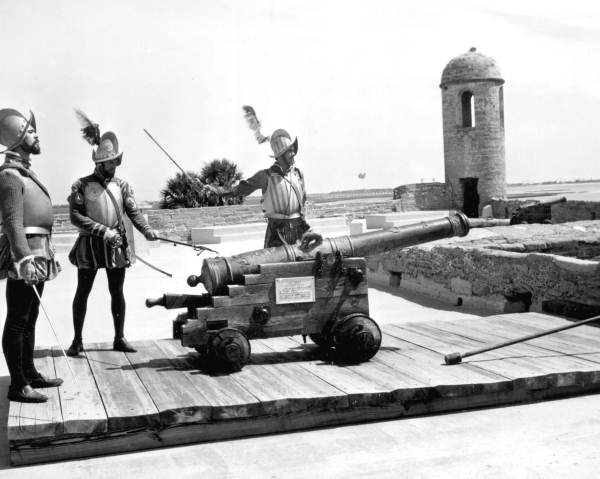
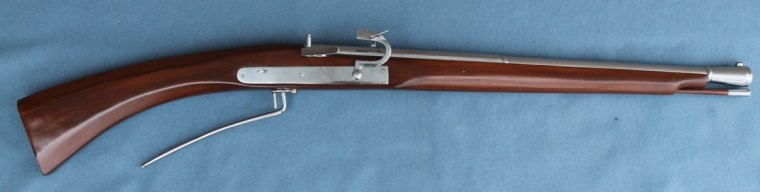
This one is a little harder to parse for me. Obviously the use of gunpowder represents a tremendous advantage over pre-iron native military forces, but both Cortes and Pizarro did not have many guns in their possession. Both usually had a handful of cannons while Cortes had 40ish infantry guns to Pizarro’s dozenish. But the hand-held guns were harquebuses, which are extremely primitive compared to modern guns, firing maybe 2 shots per minute and very inaccurately at that. In Europe, their greatest use was penetrating any-and-all armor in their path, but that’s not a super useful attribute when fighting against barely-armored natives.
On the other hand, there’s a section in Conquest of New Spain where Dias marvels at single harquebus shots regularly killing entire rows of native warriors. He says that the natives would clump so closely together when bearing down on the tiny Spanish army, and they wore such little armor, that a harquebus shot would go through the first native warrior and just keep on going through a bunch more. So penetration still had its uses.
Then there’s the psychological factor. Emperor Atahualpa’s elite bodyguards freaked out and ran at the cost of their lives because a horse reared up on its hind legs and snorted. I cannot imagine how native warriors reacted to the boom of guns in the early 16th century. The vast majority of fighters had surely never heard anything so loud in their entire lives, and certainly nothing produced by men. Both the Incas and Aztecs understandably initially thought the Spanish were using some sort of magic that produced a noise and then killed enemies, and it wasn’t until they captured the guns that they figured out it was an advanced technology.
Surprisingly, neither MacQuarrie nor Dias say too much about Spanish artillery except for how much of a pain-in-the-ass it was to lug it through Mexican jungles or up Andean peaks. Granted, the Spanish had relatively few cannons, and though more advanced than hand-held guns, they were still fairly primitive in Europe at the time, so there were no Napoleonic artillery maneuvers. But still, Bernal Dias mentions single cannon shots killing 10-15 enemy warriors, so they certainly had their uses.
Tactics
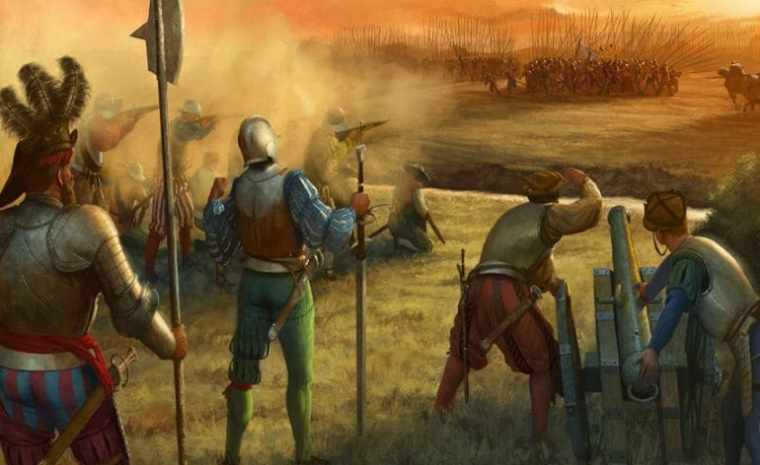
Even people with a passing knowledge of the conquistadors are aware of the key military tech differences: horses, iron, and gunpowder. But less known, and by my reading, far less acknowledged in scholarly sources, is the Spanish tactical superiority. Spanish armies were far better led than native armies both in terms of moment-to-moment leader decision-making, and doctrinal tactical options.
For one, military tactics have evolved over time just as technology has, especially as soldiers have become more specialized. I didn’t read a ton about American native warfare, but it mostly seemed like throwing hordes of soldiers at opponents. The vast majority of the Aztec and Mesoamerican armies consisted of conscripts with little training, and there didn’t seem to be much specialization beyond ranged and melee units. The Incan armies were similar except conquered ethnic groups tended to fight as cohesive units, so there was a little more variety. But I can’t imagine the tactical value of their differentiation compared to the Spaniards’ early form of combined arms warfare that utilized heavy infantry, cavalry, harquebuses, crossbows, and cannons.
For example, even though cavalry charges were the ultimate Spanish weapon, their infantry also performed extraordinarily well against native armies as long as they could hold formation. La Noche Triste was the biggest Spanish disaster in Cortes’s conquest, but it was also a military miracle that Cortes was able to extract about half of his army from the Mexican capital despite being surrounded by an enemy army at least 100X larger. Likewise, Hernando Pizarro managed to hold narrow streets during the Siege of Cusco practically forever. In both cases, heavy Spanish infantry in tight defensive formations were the backbone of the Spanish military effort. No matter how much iron armor a Spaniard soldier had, if he was isolated, he would eventually be killed by native fighters, but when locked in a protective formation, the Spanish infantry could hold their ground and use piercing weapons to pick away at enemy numbers.
A good example of how Spaniard tactics evolved beyond native tactics is the positioning of leaders. European armies gradually did away with the idea of putting their leaders on the frontline, with Swedish King Gustavus Adolphus being the last major commander to famously lead from the front, for which he died in battle in 1632. But both the Aztecs and Incas had a strong tradition of putting their generals not only on the frontlines, but surrounded by colorful uniforms and banners to highlight their presence. This was supposed to be good for troop morale and demonstrate the bravery of commanders.
I guess this worked better during the relatively less deadly clashes between native armies, but it was a disaster against the Spaniards. For instance, after La Noche Triste, when Cortes had lost half of his army in Tenochtitlan, he fled the Mexican capital in a desperate retreat, but the Aztec army caught up and forced a confrontation at the Battle of Otumba. Cortes led 600 exhausted and wounded Spaniards (only 13 of which were cavalry) and 800 equally exhausted and wounded native allied warriors against 10,000-20,000 comparatively fresh Aztec warriors in an open plain. It should have been the end of the Spanish, but Cortes spotted the enemy general on the frontline decked out in feathers and fancy attire, and ordered a cavalry charge against him. The general was immediately killed and virtually the entire Aztec army routed. An extremely similar battle occurred later between the Spaniard and Incan forces at Lima that turned the tide of the entire war.
Note that the Spaniard commanders were also extraordinarily brave and often fought at or near the front, particularly Cortes who fought in a billion small battles. But the Spaniard commanders were rarely at the tip of the spear, and certainly didn’t call attention to themselves. And, to speculate a bit, the Spanish military command structure was more sophisticated, and therefore the loss of a commander in battle would probably have a less catastrophic impact on Spanish military organization and morale.
It’s also worth noting that the Spanish armies were highly tactically superior to the native armies despite the Spaniards being of relatively low professional quality. Again, the Spanish conquistador forces were a haphazard collection of adventurers, most of whom had little-to-no prior military experience. Some had served as mercenaries or fought in Europe, but most were blacksmiths or sailors or whatever that spent their life-savings on weapons and armor for a shot at riches and glory. And yet they were still able to achieve tactical dominance against the armed forces of the Mexican and Incan Empires, including their elite specially trained professional armies (though most rank-and-file native warriors were conscripts).
This is not to say that the native armies were tactically clueless. The Inca commanders in particularly seemed to adapt pretty quickly and try to change up their tactics to fight the Spaniards. But, while there were some successful tactics like using uneven land to fight cavalry or mounting ambushes of small Spanish military units, the commanders always circled back to the same conclusion: they couldn’t beat a massed Spanish army. It didn’t matter what their numbers were. They lost at the Battle of Cajamarca when they had no forewarning of Spanish technology and tactics, but they lost just as badly (arguably worse) at the Siege of Cusco when they had practically infinite reinforcements against a tiny and trapped Spanish army. Whenever the Spanish had sufficient numbers (probably at least 150 soldiers) and competent leadership, native defeat was inevitable.
Completing the Conquest
The Battle of Cajamarca went better than Pizarro could have dreamed. His 167 men defeated an army of maybe 80,000. According to a Spaniard at the battle, “the entire countryside was covered” in dead Incan bodies. Better yet, Emperor Atahualpa was in Spanish custody, and so it was time for the Incas to turn the page to the next part of Cortes’s playbook: using a captured native Emperor to extort an entire country.
Like Cortes, the Spanish (initially) treated the captured native Emperor well. Pizarro and his top lieutenants had a calm sit down with Atahualpa and explained to him through a translator that they would not harm him if he followed their orders. As with Cortes in Tenochtitlan, for the following months, Emperor Atahualpa would basically continue running his empire and even holding court, just always under Spanish lock-and-key and with an implicit (and later explicit) threat of death at any moment.
Pizarro’s first demand was for the Incan army to not try a rescue attempt. Emperor Atahualpa complied and sent out orders to that effect, but there was still a giant Incan army of tens of thousands of men sitting outside Cajamarca, and that made the Spanish nervous.
Pizarro and his lieutenants then discussed how to get rid of this army. Some lieutenants favored using Atahualpa’s authority to chop off the right hand of every Incan soldier. Pizarro overruled this and merely ordered them to disband. Emperor Atahualpa complied. He still had about 100,000 soldiers elsewhere, but the Spanish didn’t know that.
Pizarro’s men then ventured out of Cajamarca to loot the Incan army camp while the Incan soldiers, under orders from Atahualpa, stood by and let it happen. Emperor Atahualpa watched the Spanish soldiers come back to Cajamarca carrying piles of gold and silver booty, including a bunch of the Emperor’s plates and goblets. That’s when Atahualpa got an idea… he could bribe the Spaniards.
MacQuarrie takes a very sympathetic approach to Atahualpa’s strategy here, and IMO, it at least made more sense than whatever Mexican Emperor Montezuma was trying to do with Cortes (infinite appeasement?). Emperor Atahualpa’s previous reports from scouts and now what he was seeing with his own eyes indicated that the Spaniards were obsessed with gold and silver. Atahualpa was a hostage who could be killed at any moment. So it was worth offering the Spanish basically any amount of gold and silver to get himself free, and then these stupid barbarians would hopefully fuck off back to wherever they came from.
So Emperor Atahualpa made a pitch to Pizarro: he would give him “a room full of gold twenty-two feet long by seventeen feet wide, filled to a white line halfway up its height,” which would be set at eight feet tall. Also he would throw in a whole lot of silver. Then the Spanish would let him go.
“Pizarro was clearly amazed by Atahualpa’s offer.” He was so amazed that he didn’t know if it was legitimate. It didn’t seem conceivable that even the Aztecs could cough up that much treasure, so Pizarro thought that maybe the Emperor was just buying time while he came up with a plot to escape. But seeing no better immediate plan, Pizarro agreed to the offer. Meanwhile, Pizarro would fortify his position in Cajamarca and send emissaries back to the coast to request reinforcements from Panama.
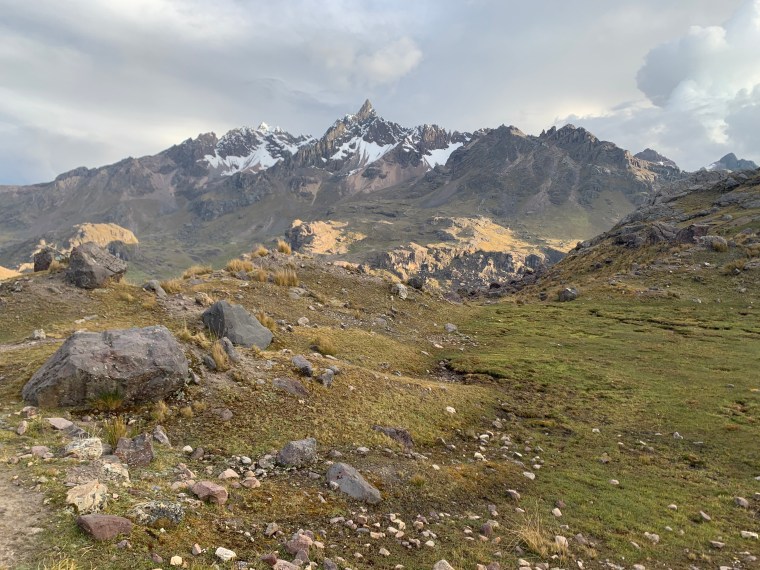
The gathering of all this gold and silver was a massive logistical operation that required thousands of human and llama porters. The Spanish sat around with Emperor Atahualpa for six months while the ransom was collected. The Emperor sent out his emissaries with orders to the Incan nobility to empty the royal treasury, forfeit their own treasuries, and empty the government warehouses of any and all treasure they held. After relatively slow inflows during the first few months, Pizarro deployed three of his men to the Incan capital of Cusco with orders from Emperor Atahualpa to oversee the gold/silver extraction operation. These men proceeded to loot royal palaces and the Incan religious equivalent of St. Peter’s Basilica in Rome using Incan labor while Incan noble generals sat by helplessly fuming at the injustice.
Throughout this time, the Spaniards and Emperor Atahualpa learned a bit more about each other. The Spaniards were impressed by the Emperor’s authority as he continued holding court, with his noble subjects showing a greater intensity of courtly deference toward him even than Spaniard subjects did toward their King/Holy Roman Emperor. A lot of the Spanish lieutenants, including Francisco Pizarro, took quite a liking to Atahualpa, whom they found dignified and highly intelligent. When away from his subjects, the Emperor relaxed and could even joke around. The Spaniards taught him chess and he played many games when locked away from his subjects at night. In the fifth month, Diego de Almagro, Pizarro’s partner in the entire conquest venture, made it to Cajamarca with 153 soldiers and 50 horses, and for whatever reason, the normally grumpy Almagro soon became particularly close with the Emperor.
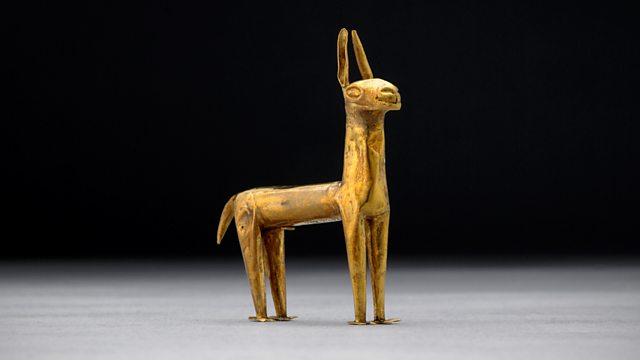
Finally, after about six months, the Incan ransom hit the line in the room. Combining the Emperor’s ransom and other assorted plunder, the Spaniards soon fed an estimated 40,000 pounds of gold and silver into a makeshift smelter to be melted down into more easily transportable bars.
It’s difficult to put a value on this sum, but MacQuarrie provides some frame of reference by relating that in the 1530s, the annual salary of a Spanish sailor (which was a pretty dangerous job) was about half a pound of gold (50-60 ducats). Also, a caravel, or standard sailing ship at the time, was valued at about four pounds of gold.
20% of the total sum was automatically reserved for the Spanish king and sent on a long journey to Spain. Counting just Atahualpa’s ransom, this amounted to 2,600 pounds of gold and 5,200 pounds of silver. Pizarro took 630 pounds of gold and 1,260 pounds of silver (worth about $16.1 million today). The rest was divided among Pizarro’s men (but not Almagro’s men) according to rank. Each cavalry soldier received 90 pounds of gold and 180 pounds of silver (about $2.3 million), and each foot soldier received half that amount (about $1.15 million).
Needless to say, Pizarro’s conquest of Peru had already been phenomenally, ridiculously, absurdly successful. Every single soldier who accompanied Pizarro in the first wave was set for life. They earned more from a single battle than they could have ever possibly dreamed, let alone have plundered in a lifetime of ordinary warfare. They were so successful that Pizarro became concerned that a lot of men were going to desert the company despite signing contracts because they didn’t need any more money; Pizarro ameliorated this somewhat by proclaiming that married men over a certain age were allowed to leave with his permission.
For another point of comparison, despite going through far more harrowing warfare and tribulation throughout their multi-year conquest, Cortes’s men in Mexico barely ended up making any money at the fall of Tenochtitlan, mostly because they had repeatedly gained and lost multiple fortunes during successful city sackings and subsequent setbacks. But Pizarro’s men were the equivalent of 16th century millionaires after a few months of work, most of which was spent sitting around camp watching Incas carry gold and silver.
The only problem was that not everyone got a piece of the pie. Almagro and his 150 man contingent had arrived after the Battle of Cajamarca, and though Pizarro and his men were happy to get reinforcements, they brought a lot of tension to the camp. There was an open question on how to divide the treasure; did the reinforcements deserve a cut even though they hadn’t fought? This concern stacked on top of an already increasingly fractured relationship between Pizarro and Almagro, the latter of whom believed that Pizarro had screwed him over before. When Pizarro went to Spain to get permission from the King to conquer the Incan Empire, he had gotten a governorship for himself across the entire territory while Almagro had merely been granted the mayorship of Tumbes (which was currently in ruins). They were ostensibly business partners, but Pizarro had cut him out of access to one of the largest and most valuable resource extraction opportunities in history.
But like Cortes, Pizarro was an excellent diplomat. At Cajamarca, apparently Pizarro did a phenomenal job of not only calming tensions with Almagro, but also getting everything else he wanted. Pizarro convinced Almagro to let the former’s men keep this entire treasure. He promised Almagro that there was far more left to plunder in the Incan Empire, and they would all march on Cusco together to get it. From then on, all the plunder would be divided equally between their men. It speaks to Pizarro’s charisma that the infamously disgruntled Almagro was placated despite never settling the governorship question.
One lingering question remained before the expedition could proceed… what should they do with Emperor Atahualpa?
The Emperor’s cautious optimism early in the negotiations had already fallen into deep depression. He wasn’t an idiot. From conversations with Spaniards, it had become increasingly obvious to him that they were not going to leave Peru once the ransom was paid. Many Spaniards were openly talking about how they were going to divide the Incan Empire into governorships and encomiendas. The arrival of Almagro and his reinforcements indicated that there were many more Spaniards out there and no reason for them not to keep coming.
For yet another fairly obvious signal of his impending doom, Pizarro invited one of the Emperor’s top generals, who was leading one of the three major Incan armies remaining, to visit the Emperor. The guy came and Pizarro simply arrested him. Boom, another major Incan army was destroyed.
The Emperor was correctly worried about keeping his head. His only chance for some sort of reprieve was to convince the Spaniards to keep him alive as a prisoner, so he asked to maintain the status quo and keep him as a puppet-Emperor. Hernando Pizarro, the extremely arrogant brother who first met the Emperor, was particularly friendly with Atahualpa, and when the Emperor heard that Hernando was escorting the Spanish King’s cut of the treasure back to Spain, he asked Hernando to take him as a prisoner to meet the Spanish King and plead his case.
Francisco Pizarro was also broadly sympathetic to Atahualpa from sheer personal contact, but the Emperor had plenty of detractors among Pizarro’s lieutenants. Many suspected that when he held court, he was using the language barrier to secretly transmit orders to underlings to organize an anti-Spanish resistance. And… they were totally right. Atahualpa was doing that. But the suspicious Spaniards couldn’t prove it and Atahualpa denied it.
In the end, the suspicious Spaniards won out. After hesitating for a few weeks, Francisco Pizarro finally decided that Atahualpa had probably worn out his use as a puppet and there was a decent chance he was conspiring, so it was safest just to kill him. Pizarro sent a priest to the Emperor who offered him a chance at salvation. Atahualpa thought that accepting meant he would live, so he did, but it actually just meant he would convert to Christianity and be killed by the marginally less painful method of strangulation rather than the more painful method of being burned at the stake. On July 26, 1533, Emperor Atahualpa was executed at age 31.
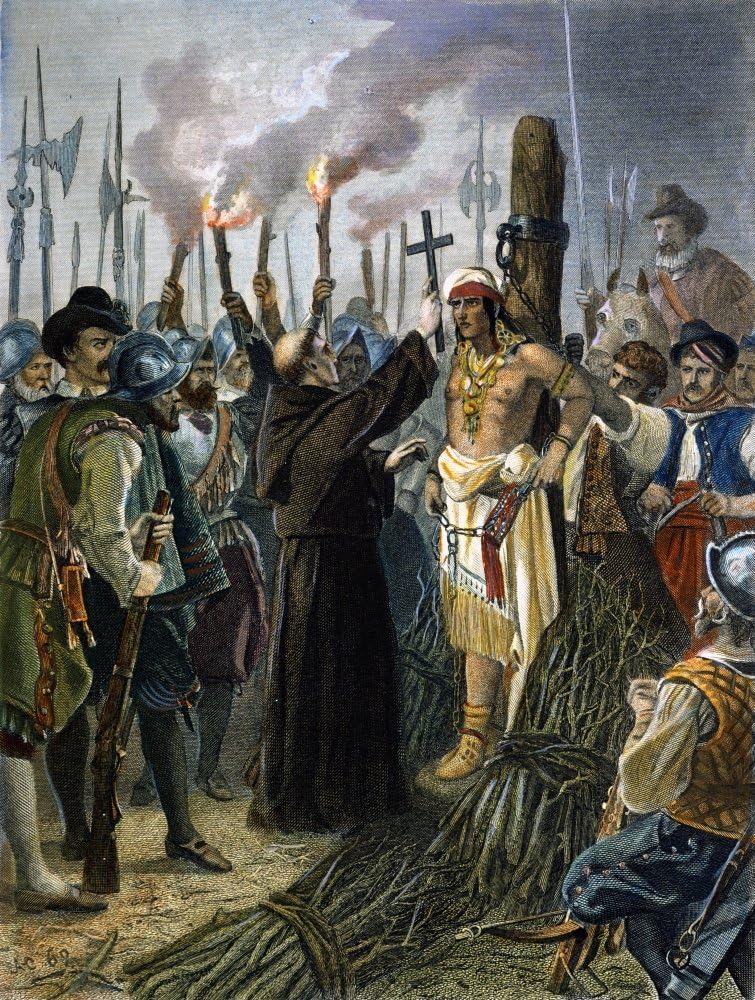
The Spanish had a few gloomy days at camp as everyone mourned the Emperor. Francisco Pizarro and Hernando de Soto allegedly both cried and expressed some remorse for not sending him off to Spain in chains. But what was done, was done, and it was time to move on. From among his thousands of other Incan prisoners, Pizarro plucked one of Atahualpa’s brothers, Tupac Hualpa, and declared him the new Emperor of the Incan Empire.
The Spanish march from Cajamarca to Cusco took three months even with the help of native scouts. The walking and riding around some of the tallest mountains in the Western hemisphere was slow and arduous, and the Spanish ran into a bit of trouble. First, the new Emperor died a mere two months into his reign from some Spanish disease. Then, there were suspicions that the captured Incan general was secretly fomenting rebellion, so they burned him at the stake.
On the other hand, some things were going even better for Pizarro than he realized. It turned out that executing Emperor Atahualpa was actually a great strategic move (though sending him to Spain probably would have had the same effect). The Incan Empire had been decapitated and there was no succession process in place since so many nobles had been captured or killed at Cajamarca. The Incan bureaucracy and two giant Incan armies remained, but with Atahualpa, Huascar, Tupac Hualpa, and many of the top Incan nobles dead, there was no one to give any orders. So the Spanish marched relatively unmolested by enemy armies through the heart of the empire. MacQuarrie notes that six Spaniards died on the march, but he doesn’t say how.
Shortly before reaching Cusco, Pizarro’s army was approached by one of the biggest players in the conquest to come: the 17 year old Manco Inca. He was another son of Huayna Capac and half-brother of Atahualpa. But he had been a full-brother of Huascar and had sided against Atahualpa in the civil war. With Huascar’s defeat, Manco Inca had been on the run for months, hiding in the countryside with a small cadre of followers. He didn’t know much about the Spaniards except that they had killed Atahualpa, so he took the initiative to present himself as an ally. The Spaniards shrugged and made him the new puppet-Emperor of the Incan Empire.
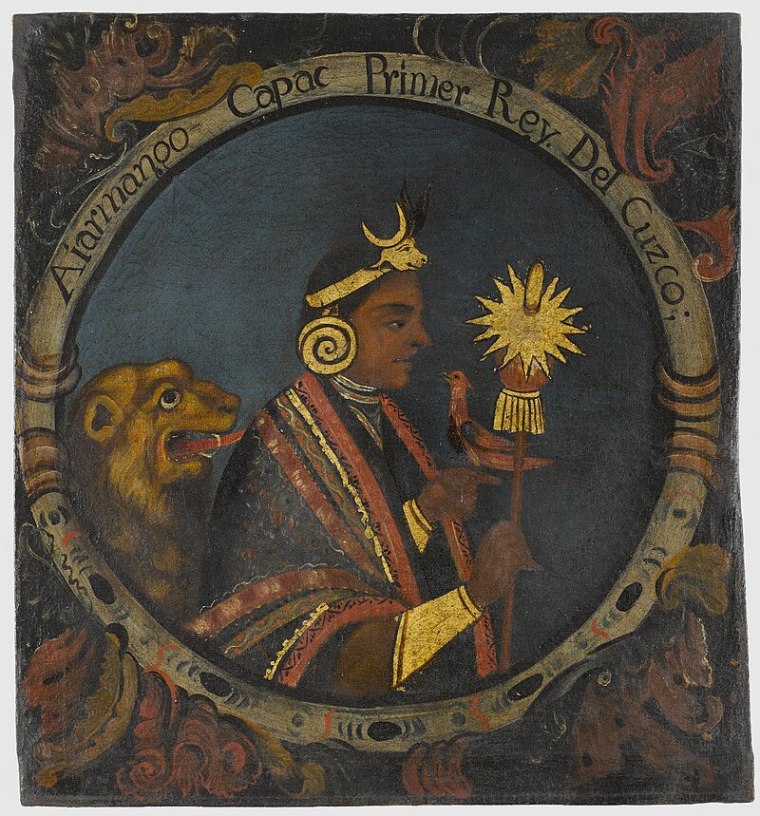
Manco Inca proved his value when he immediately warned the Spaniards that the Incan general left commanding the army stationed at Cusco was planning on burning down the capital rather than letting it fall into enemy hands. Pizarro deployed 40 cavalry in advance of his main force to stop the general. MacQuarrie doesn’t give too much detail on the ensuing battle, but apparently these 40 horsemen attacked an army numbered somewhere between 10,000-100,000 and… won. They didn’t just win the initial skirmish, they won the whole battle. The entire Incan army of tens of thousands retreated in the face of 40 cavalry. The Spanish lost three horses in the process (though no men) and killed hundreds of Incan warriors.
That that was it. Cusco was conquered. Pizarro and his army marched into the capital and set up a base of operations. They officially crowned Manco Inca as Emperor with a ceremony, introduced themselves to the Incan nobility, and began working with Manco Inca to form a new army and government. Meanwhile, the rank-and-file Spaniards began a multi-year looting process of Cusco that started with taking whatever gold and silver was left behind in the palaces and temples but soon moved on to going door-to-door in regular homes and ransacking at-will with the explicit legal sanction of the Emperor. It was a good time to be a conquistador.
Four months later, Pizarro conducted his second major treasure distribution, this time with all Spanish soldiers getting a cut, including Almagro’s men. MacQuarrie gives less detail for this one, noting that less gold had been collected than during Atahualpa’s ransom but 4X more silver, and that even Almagro’s men were catapulted to the equivalent of millionaire status.
The conquest was going so well that Pizarro was starting to suffer from success a bit. Everyone was so fucking rich that there wasn’t an incentive to stick around. Why would an ordinary rank-and-file Spanish soldier stay in far-flung Peru surrounded by natives who wanted to kill him when he could retire back to Spain or one of the more developed Spanish colonies and live the rest of his life in luxury? A few of the older, married conquistadors had already left with Pizarro’s permission after the ransom of Emperor Atahualpa, but now the vast majority of conquistadors were ready to hightail it out of there.
Francisco Pizarro wasn’t going anywhere. He was the legal governor of Peru, now known as New Castile, which extended across the entire Incan Empire. His plan was to set up a new subservient native government and tax the locals until he was one of the richest men on earth. But he needed Spanish soldiers with Spanish equipment and training to fill out his new aristocracy to maintain power. To keep his men onboard, he could only offer two prospects:
- As the Governor of New Castille, Pizarro could offer encomiendas, or land grants over which the owner was granted taxation and exploitation rights up to the level of enslaving the native inhabitants. Soldiers granted encomiendas would effectively becoming the dukes and lords of New Castile.
- Despite the mended friendship, Almagro was still pissed off at not having a governorship. So Pizarro agreed to outfit an immediate expedition led by Almagro to modern-day Chile where hopefully there was another big, juicy empire to sack and rule. Any conquistador could join Almagro where they wouldn’t be as useful to Pizarro as the encomienda holders, but would still provide a nearby allied Spanish army for assistance.
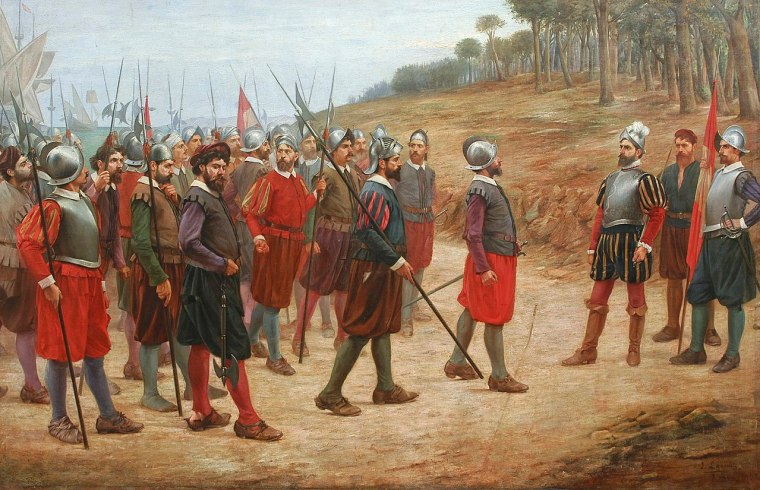
In the end, 88 soldiers stayed with Pizarro to become the aristocracy of New Castille despite nearly all being illiterates from the backwaters of Spain, while something like 400-500 men went with Almagro. Unbeknownst to either Almagro or Pizarro at the time, the Spanish King would soon revise his original decision and grant the southern half of New Castile to Almagro as a separate governorship from Pizarro’s Peru. While this would obviously cause problems in the future, at the time, Pizarro was distracted by a completely new external threat.
Ultimate authority over Spanish citizens in the New World technically lay with King Charles V back in Spain, but the de facto control over his people was limited by distance, communication time, the general Wild West frontier nature of the region, and the fluid relationships between crown and subject often mediated by potential gains for both. For instance, throughout much of the conquest of Mexico, Cortes was technically an outlaw by the decree of the King and the Cuban governor, but all was forgiven by the King once Cortes conquered Tenochtitlan and brought home the bacon.
Hence, despite, Pizarro getting a royal license to conquer Peru and an accompanying governorship, shortly after taking Cusco, he faced a Spanish challenger. Pedro de Alvarado was Hernan Cortes’s second-in-command who was instrumental in the Mexican expedition’s success but was overshadowed by his flashier comrade’s prestige and wealth. So Alvarado eventually left Cortes with 550 men to launch his own expeditions, the latest of which was aimed at modern-day Ecuador, which was well within New Castile. It was a blatantly illegal act, but given the fluidity of Spanish authority, Pizarro had serious concerns that Alvarado would sack a chunk of the Incan Empire or even outright fight Pizarro to seize it for himself.
In another sign of the renewed partnership between Pizarro and Almagro, the latter turned his southward marching army around and went back north to re-link with Pizarro’s forces to defend New Castile. But rather than come to blows with Alvarado, Almagro reached out diplomatically and they came to an accord. Pizarro and Almagro bought off Alvarado with one thousand pounds of gold in exchange for 340 of Alvarado’s men joining Pizarro and Almagro’s armies to help hold Peru. Apparently satisfied, Alvarado and the rest of his men fucked off back to Honduras where Alvarado reigned as governor.
With one major opponent out of the way, Pizarro turned his attention to a grander task: subjugating the Incan people. He had already made impressive progress including killing Emperor Atahualpa, killing and capturing a significant chunk of the Incan nobility, extorting a significant portion of the Incan people’s wealth, destroying at least two major Incan armies, and occupying the Incan capital. The next order of business was defeating what remained of the Incan military forces; there were still two major armies floating around commanded by Incan nobles loyal to Atahualpa.
This turned out to be a less serious threat than the Spanish expected. Pizarro dispatched one of his lieutenants to take care of one army and it was chased and beaten until the commander was captured and executed within a few weeks. Better yet, shortly after dealing with Alvarado, Almagro accidentally took out the other major Incan armies. While marching back down south, Almagro’s forces ran into the Incan army, and the Incan generals got into such a fierce argument regarding whether to surrender or fight the Spanish that the head general was killed by his men and the army dissolved. Another Spanish win.
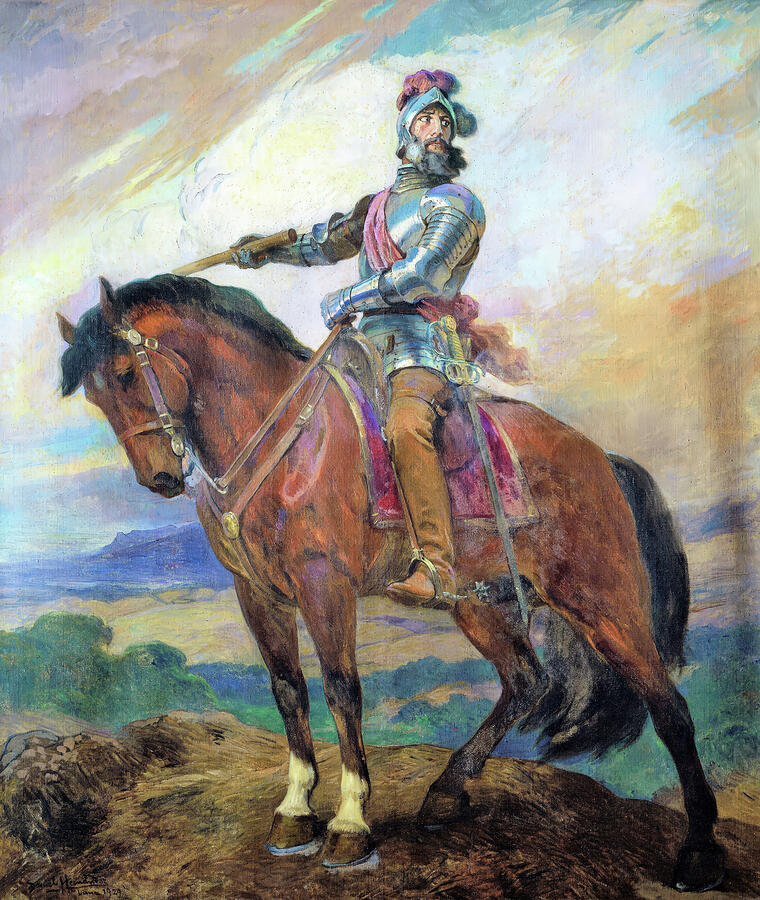
Just when everything seemed in the clear for Pizarro, he was confronted with another Spanish challenger… Almagro.
As Almagro was marching back south after picking up a chunk of Alvarado’s men and accidentally beating an Incan army, he got news from Spain: King Charles V had granted him governorship over the southern half of the Incan Empire. Unbeknownst to Pizarro, Almagro had sent some advocates to Spain to make his case while Pizarro was busy in Cajamarca, and it had seriously paid off.
The now seemingly inevitable clash between Pizarro and Almagro had an additional wrinkle – no one knew exactly where the southern half of the Incan Empire was. The place hadn’t been mapped out, let alone precisely enough to draw a line perfectly through the center of it, so no one knew where Pizarro’s land ended and Almagro’s land began. And it just so happened that Cusco, the capital, was roughly in the center.
So when Almagro returned to Cusco, there was suddenly more tension than ever between not just Almagro and Pizarro, but between their followers. After first seizing Cusco, 88 conquistadors had decided to stay with Pizarro and get encomiendas; now these 88 men, and a certain number of both Spanish and native hangers-on who had arrived since, were dependent upon Pizarro’s status as governor to hold their titles. On the other side, hundreds of Almagro’s men stood to gain encomiendas if Cusco and its surroundings were deemed part of Almagro’s governorship. Within days, members of the two factions were getting into drunken brawls in Cusco’s pubs. Hernando de Soto (an Almagro loyalist) and Juan Pizarro (who obviously supported his older brother) nearly murdered each other in horseback combat.
Part of the problem was that Francisco Pizarro wasn’t even in Cusco anymore. He had been travelling around the northern portion of the Incan Empire trying to set up his puppet regime. When he finally made it back to Cusco after a two month absence, he immediately entered into negotiations with Almagro under the supervision of a newly-arrived royal dignitary. In yet another example of Pizarro’s skilled diplomacy, he made an agreement with Almagro to put the Cusco question on hold while Almagro took all the men he wanted and a massive financial subsidy to relaunch his recently aborted invasion of Chile. The implicit agreement was that if Almagro found a big juicy kingdom to the south, he would get his own conquest and happily set up a prosperous government while Pizarro held Cusco and the north. If Almagro didn’t find a big juicy kingdom to the south, then… well, they’d cross that bridge when they came to it.
In July 1535, almost four years after Pizarro arrived in Peru to start his conquest, Almagro began a southward march with 570 men, leaving Pizarro alone to complete his subjugation of the Incas.
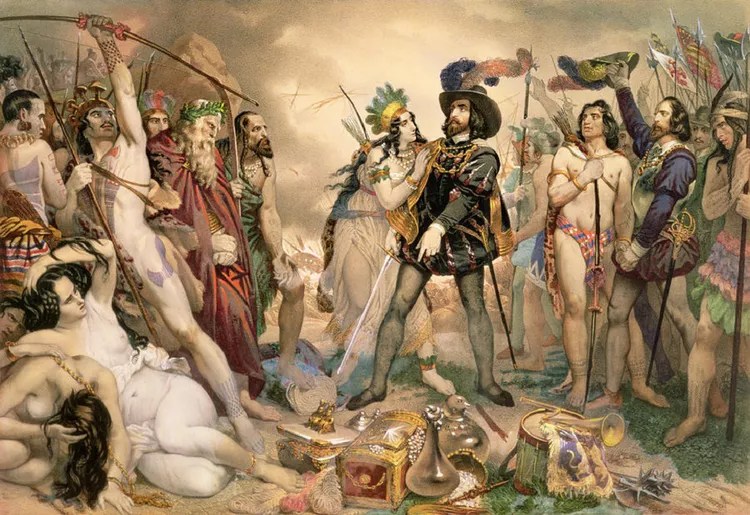
The Importance of Information, Context, and Illusion When Conquering
Francisco Pizarro had shown considerable competence in conquering the Incan Empire, but then he had to hold onto it. This is where he, and his lieutenants, got into trouble.
As a contrast, it’s useful to go back to Hernan Cortes. In my readings of Fifth Sun, Conquest of New Mexico, and Last Days of the Incas, I’ve come away with a tremendous amount of respect for the skills of most of the top conquistadors, but IMO, none stood above Cortes. I think his combination of military, diplomatic, and strategic skills were not only unparalleled among the conquistadors, but should put him in the top tier of general historical conquerors. While Pizarro definitely made some good moves during his early conquest of the Incas, he also had a relatively easy time due to some fortuitous circumstances (like the Incan civil war and recent smallpox epidemic). Cortes threw himself and his army into a more perilous situation, faced more setbacks, and had to personally make more key decisions to finally overcome the Aztecs, and though Cortes made mistakes, on the whole, he performed phenomenally well as an expedition leader.
If I had to refine Cortes to his best characteristic, it would be trickster. It wasn’t just that Cortes was a great liar, it was that he had an insane mastery of understanding the relevant information in any given context, and then using well-placed lies to manipulate both enemies and allies into positions that most benefited himself. The conquest of Mexico was not just a series of battles, it was a series of interpersonal, diplomatic, and geopolitical deceptions orchestrated by Cortes.
For instance, early in Conquest of New Spain, Cortes established a settlement on the coast and started making his way inland in the vague direction of Tenochtitlan, the Mexican capital. Here is a sequence of events that followed:
Cortes Solves A Morale Problem.
About half of Cortes’ men were loyal to the Governor of Cuba rather than Cortes. A lot of those men and many of Cortes’ loyalists were exhausted and worried about the risks of continuing the expedition. So Cortes came up with the idea to scuttle (run aground) his ships, thereby making a full retreat an annoying and time-consuming maneuver. But Cortes worried that he would come on too strong if he outright suggested this, so according to Bernal Dias, Cortes subtly dropped hints of this policy to some loyalists, they spread it around camp, and then some moderate loyalists brought the idea to Cortes. He pretended to think it over for a while, then made a big charismatic speech to the army endorsing it, and then proposed it to his men all at once and they assented with a big cheer.
Cortes Stops (Completely Justified) Deserters
Everyone was on board with the ship scuttling plan except for a portion of the Cuban Governor loyalists. They ask Cortes to leave with the ships and they reminded Cortes that weeks earlier he had made an explicit arrangement with the entire expedition that anyone could leave any time they wanted with full supplies. Cortes couldn’t spare the manpower nor supplies, so he came up with a plan where he made a big public show of shaming the Cuban Governor loyalists while giving them their cut of the plunder and supplies. This aligned the Cortes loyalists against these guys, and there was such a hostile atmosphere in camp that the Cuban Governor loyalists backed down and agreed to stay.
Cortes Mounts a Booty Kick-Up Ruse
Cortes’s army had gotten less plunder than it expected thus far, and Cortes still had to send his legally mandated 20% of the plunder to the Spanish King. However, a lot of his men had low morale and didn’t want to give up their meager shares. But Cortes knew that if he sent back too little treasure to the King, it would cause him political problems. He was stuck between two forces with limited resources to deploy between them.
So Cortes announced in a big speech that he cared so much for his men that rather than demand that they surrender 20% of their loot, he gave each and every one of them the option of whether or not to surrender 20% of their gold and silver to the King. A combination of peer pressure, patriotism, and shame incentivized every single soldier to give up the full 20%.
Cortes Runs A Two-Pronged Smear Campaign Against His Bosses
Cortes continued a multi-month ongoing ruse against both the Cuban Governor and Spanish King Charles where he kept writing letters to both of them in which he accused the other of treacherous oath violations. Cortes was later fully condemned by both men and made an outlaw, but his dual smear campaign bought him enough time to complete the conquest of Mexico (after beating and absorbing an army sent to arrest him by the Cuban Governor), at which point he was so successful and wealthy that all the old grudges were ignored and he was essentially put above the law.
Cortes Plays 4D Chess with His Allies and Enemies
Cortes and his army arrived at Cempoala, a tribe on the outskirts of the Mexican Empire that hated their overlords for demanding heavy taxes and human sacrifices. Five Mexican tax collectors arrived shortly after Cortes and demanded the Cempoalans hand over 20 citizens to be sacrificed. Completely on his own initiative, Cortes arrested them and then declared his eternal friendship with Cempoala, including a promise to protect the tribe against Mexican reprisal. The Cempoala chief was terrified that Cortes had fucked up their arrangement with the Mexicans and thought the Mexicans would surely come back with an army and kill them all, so he had no choice but to act happy and declare his faith in Cortes.
Then Cortes secretly let two of the five Mexican tax collectors go with a bunch of Spanish gifts and a proclamation that Cortes was actually loyal to Mexican Emperor Montezuma, and that this whole arrest thing was actually part of a ruse to falsely align with the long-disgruntled Cempoalans so that the Spanish could enact some sort of long con to force them back into fealty under Mexican dominance.
The Cempoalans noticed that the two tax collectors were gone, so the Spanish claimed they escaped. The Cempoalans demanded that the remaining three tax collectors be sacrificed. The Spanish openly complied, but then secretly released the other three tax collectors with more Spanish gifts and promises. These five tax collectors then went back to Tenochtitlan and had nothing but good things to say about Cortes, which, at least according to Bernal Dias, spread confusion in the Mexican leadership as a sizeable portion of Emperor Montezuma’s advisors genuinely believed that the Spaniards were potential allies against rebellious tribal vassals.
Meanwhile, the Cempoalans were probably getting less trustful of Cortes, but given how crucial he was to their defense, they publicly bought his “the tax collectors keep breaking out of our makeshift jail!” stories. And so the Cempoalans remained native allies and gave Cortes a huge amount of supplies as well as native warriors and porters for his march on Tenochtitlan.
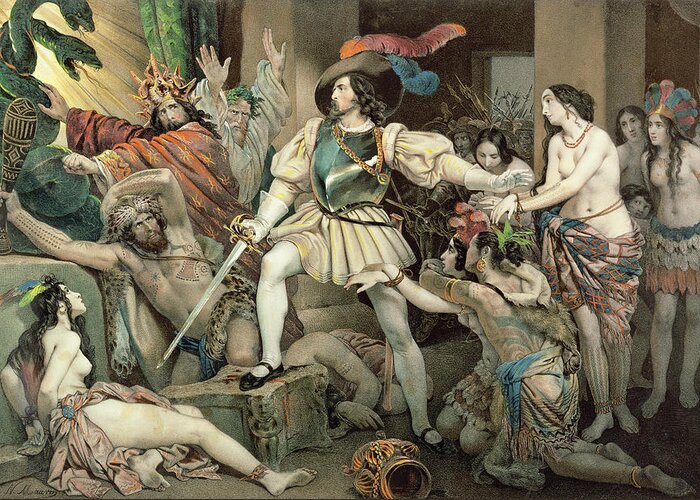
All of this happened in, like, 15 pages of Conquest of New Spain. Note that the author, Bernal Dias, was a member of Cortes’s expedition and an outright loyalist of Cortes to the point of siding with him closely during the multiple stages of the Spanish expedition civil war between Cortes and the Cuban Governor. So Dias might have some incentive to portray Cortes well, but he still portrays Cortes as constantly lying to basically everyone, including his closest advisors, and sometimes for the sake of embezzling expedition funds at the expense of his own men. It’s wild.
Anyway, all this about Cortes serves as a useful contrast to Pizarro. Cortes’s conquest of Mexico was in large part due to his dazzling diplomacy that undermined the Mexican government, built a coalition of loyal anti-Mexican allies, and eventually squashed his Spanish rivals to form a united conquistador force. Meanwhile, Pizarro nearly lost all of his progress in the Incan Empire precisely because he and his lieutenants so badly fumbled the diplomatic and administrative aspects of ruling New Castile that they triggered an enormous country-wide native revolt.
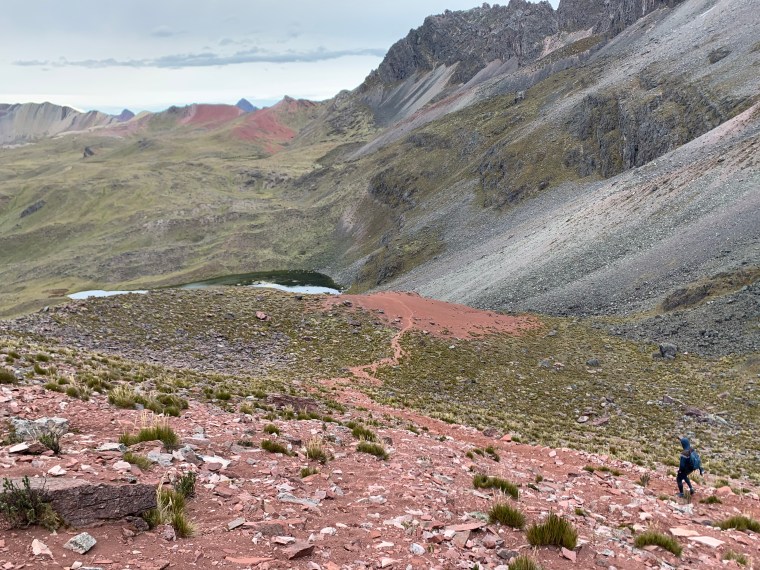
The Failed Consolidation
Francisco Pizzaro seemed to understand well that the ultimate source of his power was the military strength of his Spanish soldiers. But as with any occupation, he was vastly outnumbered by the native population, and so even with reinforcements, he couldn’t rely solely upon strength of arms. He needed a compliant collaborationist Incan government to pacify the natives and permit Pizarro to establish a Spanish aristocracy to systematically extract wealth from the Incan population.
Pizarro understood equally well that the basis of this collaborationist government would have to be the teenaged Manco Inca, who, understandably, was fighting an uphill battle to gain legitimacy among the Incan people. A rival noble faction soon emerged in Cusco to challenge his rule, and Pizarro, again a natural diplomat, attempted to negotiate a truce. But that failed, so Manco Inca asked Almagro for help, and while Almagro prepared for his Chilean expedition, he dispatched a bunch of Spanish soldiers who successfully assassinated the rival Incan nobles.
With that matter supposedly settled and Almagro gone south, Pizarro too left Cusco to focus on state-building matters in the north, particularly by constructing his own city to serve as an alternative capital, which would later become modern-day Peru’s capital of Lima. Unfortunately for Pizarro, this is where after years of great success, things started to go wrong, not in his work up north, but in whom he delegated the administration of Cusco: his youngest brothers Juan and Gonzalo.
Or rather, half-brothers. It’s hard not to notice the familial break in MacQuarrie’s descriptions. All four brothers had tremendous talent, especially when it came to warfare, but only Francisco Pizarro had the genes for cool-headedness, situational awareness, and diplomacy. All three other brothers swapped those characteristics for being obnoxious assholes who couldn’t help but start unnecessary conflicts. Or another way to think about it was that all four Pizarros were extremely greedy by temperament, but only the eldest (Francisco) had traits that converted his greed into a source of competent ambition; the other brothers just couldn’t control themselves.
From the start of the occupation of Cusco, Juan and Gonzalo, along with many other Spaniards, had embarked on a systematic plundering of the city. Over time, this went beyond smashing down the doors of random houses and ransacking personal possessions to stuff like kidnapping an Incan noble and threatening to murder his entire family if he didn’t gather every single bit of wealth he owned in a pile in front of them. The Spaniards soon went through every wealthy person in the city, often visiting the same nobles over and over.
Now that they were left officially in charge of the city, Juan, Gonzalo, and their lieutenants settled into even more psychopathic roles. In addition to the random extortions and assaults of Cusco’s native inhabitants, they began trying to sleep with as many women as possible, especially the presumably healthier and more beautiful wives and children of the nobility. Sometimes the sex was consensual, sometimes it was in a grey area, and often it was definitely rape. Occasionally Spaniards would marry local women, but more often they turned them into concubines.
All of this quickly antagonized an already extremely antagonized Incan population, particularly the Incan aristocracy beneath their heel in Cusco. Among the worst treated was Emperor Manco Inca (about 20 years old), who, despite being a Spanish puppet and ally, was sadistically bullied by Juan and Gonzalo (in their mid-20s). They started by stripping his palace of its riches and servants, greatly reducing the grandeur to which an emperor was accustomed. Then Juan and Gonzalo started doing this thing where they would cordially invite Manco Inca to dinner, get him liquored up, and ask him if he had any hidden gold and silver he hadn’t given him yet. Because of the implication, he would tell them a spot and they would get a pay day. So Juan and Gonzalo began regularly inviting Manco Inca to dinner to do it again and again, and the threats became more explicit until they were nearly slapping him around.
But that was not the worst of Manco Inca’s treatment. The Emperor was married to a famously beautiful woman, Cura Ocllo, who was not just his first wife and therefore the Empress, but of course, also his sister. Gonzalo informed Manco Inca that he wanted to sleep with Cura Ocllo. This went so far beyond the pale of Incan social norms that a noble publicly admonished Gonzalo, prompting Gonzalo to threaten to murder the man and “cut [him] into little pieces” if he interfered in his courtship.
Emperor Manco Inca tried to buy Gonzalo off by revealing yet another hidden treasure trove. Gonzalo accepted but still said he wanted to fuck his sister/wife. So the Emperor used his power to find the most insanely beautiful woman in the Incan Empire and offered her to Gonzalo. Gonzalo said thanks, but he wanted Cura Ocllo. Next, the Emperor gathered 20 insanely beautiful Incan women from whom Gonzalo could choose. Gonzalo responded the same way and was getting increasingly pissed off. Manco Inca then got one of his other sisters to wear the dress and make-up of Cura Ocllo and pretend to be her as she was offered to Gonzalo. But the ruse only lasted for a little while and Gonzalo once against demanded that the Emperor give up his sister/wife.
And so he did. The Emperor of the Incan Empire allowed his sister/wife/Empress to become the mistress of a rude, arrogant, blasphemous foreigner who openly treated all the Emperor held dear with contempt.

It only took months for the Incan rebellion to begin to take shape. Manco Inca, still only about 20 years old, began to coordinate with loyal nobles and military lieutenants to build an insurgency. Meanwhile, the head of the Incan religion, Villac Umu, was so disgusted by Almagro’s rapacious conduct on his southward military campaign (including treating Incan porters like slaves) that he deserted the Spanish forces and began fomenting his own rebellion. Elsewhere throughout the Incan Empire, local notables were equally disgruntled by the new Spanish aristocracy who treated their encomiendas much the same way Juan and Gonzalo Pizarro treated Cusco. Incas throughout the country were abused and humiliated, and began considering fighting to the death a superior alternative to life under Spanish rule.
In retrospect, the mismanagement of the Pizarro brothers was obvious, though at least Francisco Pizarro’s error was more of delegation to the wrong people than direct transgression. The smart move would have been to treat the Incan people like a frog in a pot of water with the Spanish boiling them slowly. Of course, they were going to extract maximal material value from the Incas, but they shouldn’t have tried to do it all at once, and they certainly shouldn’t have done so in a manner designed to maximally humiliate the conquered. In particular, it would have been easy and low-cost to encase Manco Inca in a gilded cage where all his earthy desires were fulfilled and his puppetry could commence without friction. Instead, he and his compatriots were tortured until they couldn’t take it anymore.
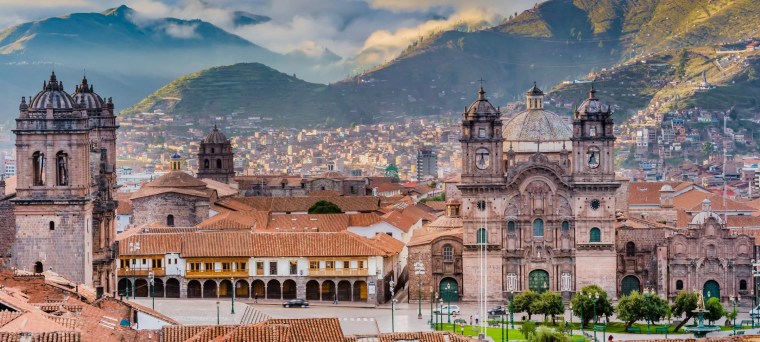
Four months after Juan and Gonzalo Pizarro had begun to run Cusco, Manco Inca had his first covert meeting with Incan conspirators from across the Empire, including Villac Umu, and the rebellion officially began.
The rebellion’s first strategic move was not its best. Though the Spanish were widely unpopular, they had a small but real collaborationist class, mostly consisting of dissident groups that opposed the old regime, like some recently conquered non-Incan ethnic groups. These traitors happily carried out Spanish orders and often acted as spies, and they were certainly present for this very first big rebellion meeting.
So right after the meeting, Manco Inca fled Cusco to set up a base of operations hidden in the countryside. But then a spy immediately revealed this plan to Juan and Gonzalo Pizarro, and they deployed a cavalry force to catch the fleeing Manco Inca, which was quickly accomplished after torturing an Incan noble by tying his genitals to a horse. Manco Inca was imprisoned and all pretense of royal respect was stripped as Juan and Gonzalo openly heaped verbal abuse and tortured the Emperor into revealing more treasure troves, which he somehow still had.
Elsewhere, the rebellion got off to a far better start. The Incas came to the obvious conclusion that beating the Spaniards in open battle and full readiness was nearly impossible. But now, not only were there few Spaniards in Peru since most had gone on the southern expedition with Almagro, but also the few that remained were not at full readiness. They were illiterate thugs who hit the lottery and just wanted to live lives of indolent luxury. Most were sitting in their country estates in robes being fed chocolate and torturing their servants. It was the perfect time for the Incas to launch an assassination campaign. Within three months, more than thirty encomienda-holding Spaniards were murdered across New Castile.
Then the rebellion was further helped by more Spanish leadership confusion. While Juan and Gonzalo were out of Cusco trying to hunt down some of these assassins, Hernando Pizarro, the second-eldest brother, showed back up in Cusco for the first time after travelling back-and-forth to Spain to deliver the Spanish King his cut of the treasure after the ransom of Atahualpa.
Like the rest of the Pizarros, he really really liked money, and was quite annoyed that he had missed out on the second major plunder distribution after the capture of Cusco. Then, just like his brothers, he hit upon the idea of extorting Emperor Manco Inca with a combination of faux-friendliness and extortion. But since Hernando hadn’t been around during the Emperor’s attempted escape, Hernando assumed that Manco Inca’s imprisonment was just due to the excessive enthusiasm of his brothers, and so Hernando released the Emperor from prison and invited him to a bunch of nice dinners for friendly extortions. Manco Inca returned the favor by immediately getting back in touch with the rebellion and plotting his escape.
This was successfully executed less due to Manco Inca’s brilliance and more due to Hernando’s stupidity. Manco Inca told Hernando that there was a big giant pile of treasure a few miles outside the city coincidentally next to this religious site where he wanted to perform some native ceremonial stuff. The Emperor asked if he could go to the site to do the ceremonies and get the treasure for Hernando, thereby killing two birds with one stone. Hernando said that sounded great and let him go. Manco Inca walked out of the city with his entourage and melted into the countryside to lead the rebellion.
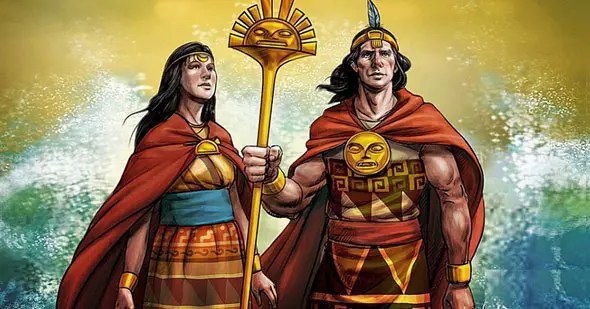
The Rebellion
I’m no military genius, but when I was reading about the conquests of Mexico and Peru, it seemed obvious to me there were only two ways that the natives could beat the Spanish in military engagements. Either the natives had to use their homefield and geographic advantages to ambush small Spanish armies, or the natives should have waited until the Spanish were all in one place and then gathered a bajillion native soldiers and used their impossibly overwhelming numerical advantage to crush the Spanish all at once.
It was quite personally gratifying when I got to this part in Last Days of the Incas and saw this is exactly what the Incan rebellion did.
Within weeks, Manco Inca returned to Cusco at the head of an army. Its exact size was unknown, and the numbers would rise and fall over time as forces came and went. Wikipedia puts the top estimate at 100,000 warriors, but MacQuarrie says the Spanish saw “hundreds of thousands of Incan troops” from the start, and later puts the high-end estimate at 200,000. MacQuarrie described the view of some Spanish scouts seeing the army for the first time:
“The valley floor that was normally green had somehow turned a beige color – the color of Incan tunics. Masses of native soldiers had appeared seemingly from nowhere, gathering in the valley until they were so numerous that it looked like masses of toy soldiers had been poured upon the ground.”
(The 70 Spanish cavalry who scouted this army actually charged into the innumerable mass, killed hundreds, routed a significant portion of it, nearly captured Manco Inca, and stole a bunch of the royal treasury. But once the Emperor had gotten away, the Incas rallied and began to surround the Spanish, so the cavalry pulled back to the city.)
The Incan army made camp in the hills and mountains completely surrounding Cusco. Opposed to them was a total of 196 Spanish soldiers with 86 horses (this includes the returning scouts) along with 500 native ally soldiers. They were led by the three younger Pizarros with Hernando in overall command and Juan and Gonzalo serving as top lieutenants along with Ponce de Leon (who would later discover Florida and fail to find the Fountain of Youth). Notably among the native allies was Pasac, a cousin of Manco Inca who stayed loyal to the Spanish. Though the Spanish cavalry soldiers were top-tier, most of the foot soldiers were relatively recent arrivals who hadn’t fought at Cajamarca or the first Battle of Cusco, but rather were late-coming opportunists hoping for a piece of the pie; a first-hand account described them as “thin and scrawny men.”
The Siege of Cusco began on May 6, 1535, and the Spanish believed they were well and truly fucked. Discounting their native allies, they were probably outnumbered at least 500-to-1, and were completely cut off from reinforcements. And it wasn’t like Cusco was some impregnable fortress – there weren’t even walls around the city. The Spanish and their allies retreated to the city center to set up a tight base of operations with relatively few streets to cover and no chance of being flanked.
The Incas spent the first few days getting organized as they tried to set up camps and supply lines for the largest army assembled in human history in South America up to that point (possibly to this day?). They kept up war cries day and night to freak the Spanish out, and it worked. Manco Inca presided over big ceremonies, including what MacQuarrie calls “sacrifices” and which I assume were of the human variety. Hernando Pizarro tried deploying a few cavalry units to venture out of the city to look for weaknesses, and every time they killed a ton of Incas, but had to retreat under a swarm of attackers and an absolute tsunami of projectiles. They suffered only one fatal casualty when one of the rare successful swarm events occurred and a mounted soldier was pulled off his horse. As the rest of the Spanish cavalry retreated, they saw the Incas decapitate both the soldier and the horse.
After a few days, the Incan army assaulted Cusco. The Spanish were squeezed from all sides into an even smaller space in the city center. A tempo of battle set in that would remain in place for months. The Incas would shower the Spanish soldiers with endless barrages of projectiles that were annoying and often wounded, but rarely killed. Meanwhile, Incan infantry units would move toward the city center until they usually met resistance in the form of heavy Spanish infantry locked in defensive formations that could hold off native attackers. When these infantry groups were exhausted or Incan warriors found unguarded streets, Spanish cavalry came in as the trump card to annihilate everything in its path until they too were exhausted and had to pull back. Finally, the native allies took on support roles as medics, supply transporters, and occasionally combatants when a gap appeared.
Fighting like this continued for months, but in the early days, the Incas employed an additional sensible tactic. Once the Spanish were squeezed into the center, they used their projectiles to set fire to as much of the city center as possible, probably figuring it was easier to rebuild Cusco than kill 200 armored Spaniards. This came the closest to not only working but completely defeating the Spanish during the first day of fighting when all the Spaniards were pushed into two large buildings that started to burn. But they were saved by black slaves stationed on the roof to put out the fires and a Hernando-led counterattack that left “at least 150 or 200 Indians dead on the ground.”
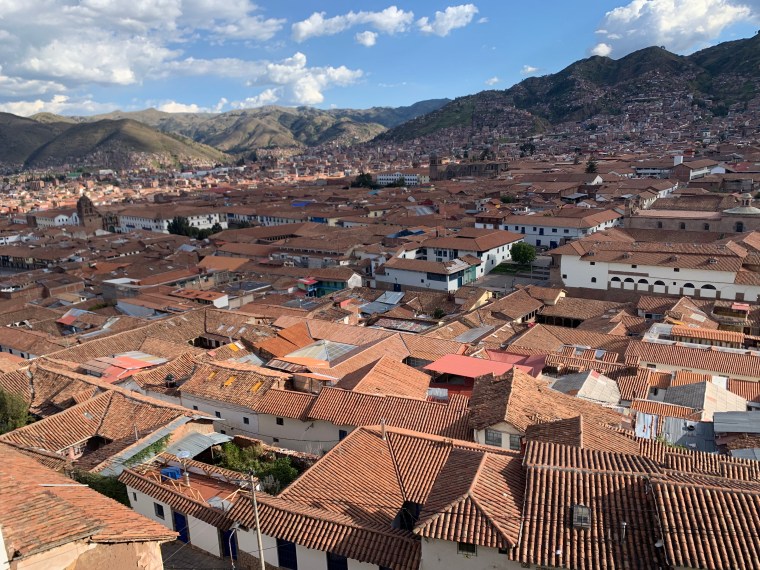
In those early days of fighting, there was a lot going in the Incan army’s favor, and many of the Spaniards assumed they would all die. But the Spanish also had some positive factors to highlight. For one, somehow, miraculously, not a single Spanish soldier had died so far besides one horseman who was decapitated (along with a few native allies). Meanwhile, hundreds or thousands of Incas had died, so their K:D ratio was off the charts. Second, Hernando Pizarro, despite being a universally acknowledged asshole who was nearly despised by his own men as much as the Incas, was proving to be an exceptional commander. He was calm under pressure, incredibly brave, an excellent personal fighter (it helped that he was a physical beast well over six feet in height), and a sound tactician.
And finally, and most bewildering, the Incas wouldn’t fight at night! With their overwhelming manpower advantage, the Incas could have easily kept up a 24/7 assault on the Spanish until they dropped dead of exhaustion. Instead, they retired back to camp at sundown every day, thereby allowing the Spanish to rest and strategize for the next day.
The attacks over the following weeks and months continued the pattern, but to the Incas’ credit, they did a fair amount of tactical experimentation. They tried building anti-cavalry barricades in the streets, but apparently the horses just slammed through them or jumped over. The results for the anti-cavalry pits were the same. They found better luck with pushing a wall of stones onto a cavalry unit, but another cavalry unit came to the rescue and saved the beleaguered horsemen. Another brief success was the use of bolas to trip horses, but then cavalry units started bringing infantry with them (particularly native allies) to free horses when hit by these.
The Incan generals kept coming to the conclusion that there was nothing they could do against cavalry on flat ground. It wasn’t easy for the Spanish to stay locked in combat under endless waves of projectile fire, and periodically set-up or demolish street barricades to keep the enemy at bay, or mount exhausting charges through enemy formations, but it all worked. In fact, it worked so well that all the Incan bodies and blood covering the streets of Cusco caused their own problems.
The Spanish knew they could hold off Incan attacks for a while, but they also knew their only chance of ultimate survival was either holding out until reinforcements arrived or punching a hole in the besieging army and fleeing Cusco. To that end, Hernando Pizarro conceived of a daring maneuver – he wanted to use a chunk of his forces to sally forth and seize the nearby fort of Saqsaywaman, which was being held by the Incas and used as a major base of operations for the siege. Hernando figured that taking the fort would both weaken the Incan encirclement and give the Spanish a secondary base for safety. The problem was that taking it would not only be extremely difficult but would also leave the Spaniards in central Cusco shorthanded for fending off attacks.
Nevertheless, Hernando Pizarro deployed 50 cavalry and a few support soldiers led by Juan Pizarro for the task. Early on the day of the fortress assault, Juan ran to the aid of a fallen cavalry comrade and sustained a slinged rock right to the unarmored jaw. These projectiles were said to break swords in half, so Juan’s face was so fucked up that he couldn’t wear a helmet anymore. Regardless, Juan Pizarro led his 50 men to attack Saqsaywaman, which MacQuarrie describes as having three rows of walls, each 1,000 feet long and 28 feet high, made of massive stones weighing up to 360 tons each, and guarded by a total of 30,000 Incan warriors led by Villac Umu, the equivalent of the Incan pope. This is insane. I don’t know how this is a thing that real people did in real life.
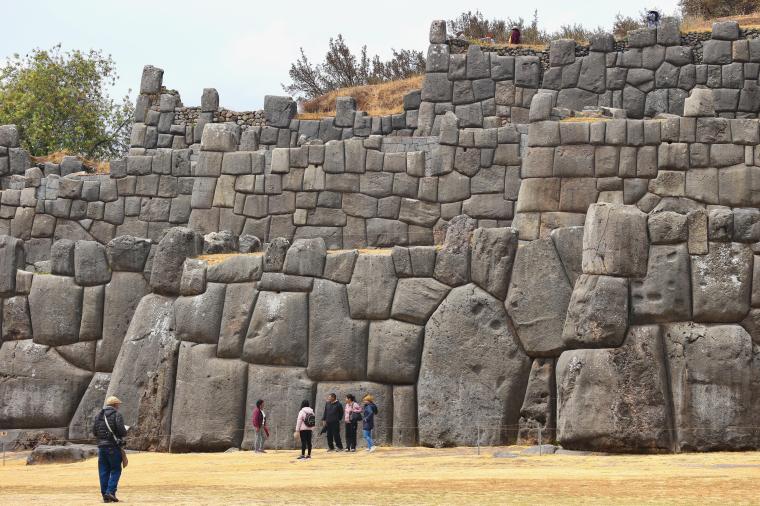
First, Juan and his men rode out of Cusco in force, then they blasted through/outran an Incan force sent to stop them, then they approached a grassy plain laid out before the fortress, and then they directly assaulted the fortress with 600 times fewer men than the opposing army. They made a frontal assault I guess with the intention of just climbing the walls, but they found the ginormous hail of projectiles so extreme that even with their armor it was impossible to advance. They retreated, regrouped, and launched another attack, this time just trying to slam their way through the wicker barricade covering the main gate. This somehow worked despite the projectile fire, and the Spanish began to penetrate the fortress.
But then, for the first time since the conquest started five years ago, a Spanish military force lost an engagement, at least temporarily. A few of the support soldiers had already fallen during the first assault, but this time Juan Pizarro was hit by another slinged rock, crushing his skull. The Spanish soldiers who breached the fortress were pushed back by a counterattack and they retreated to make camp beyond the range of the projectiles but still near the fortress. Juan was picked up by his comrades and carried off the battlefield, but he died two weeks later from the head wound. His will left 200,000 ducats (about 2,000 pounds of gold or $49 million in modern USD [???]) to his “already fabulously wealthy” brother Gonzalo instead of his native wife or half-native daughter.
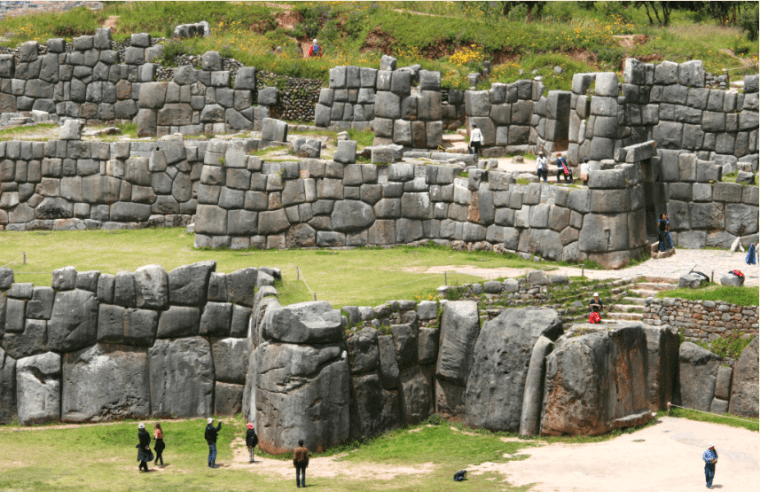
Hernando Pizarro had faced a tough day of fighting back in Cusco with most of his cavalry gone. And yet, that night, he deployed his other brother, Gonzalo, the one who stole Manco Inca’s wife, to take over command of the attack on Saqsaywaman, along with 12 more cavalry. At the same time, Villac Umu received 5,000 Incan soldier reinforcements at the fortress.
Then Gonzalo had a stroke of genius. Or at least a stroke of insight against terrible strategy. He gathered the already exhausted assault force and readied them to attack again, but this time… at night.
Somehow, the 60ish Spaniards built a bunch of ladders, then rushed the walls in the early hours of the morning, climbed over the walls, got inside, and took the entire fortress guarded by something like 34,000+ native warriors. Commanding from inside, Villac Umu retreated deeper and deeper into the fortress but couldn’t stop the Spanish no matter how many men he threw at them, especially in narrow corridors. He eventually fled Saqsaywaman with most of his soldiers, but many Incan warriors jumped from the fortress walls to their deaths rather than die in battle or get captured.
MacQuarrie puts the total Incan death toll in the fight for Saqsaywaman at 3,000 soldiers + maybe another 1,000 or so in the fighting in Cusco. Spanish dead in the Siege of Cusco in the first few days were… maybe five Spaniards, two African slaves, and a handful of native allies.
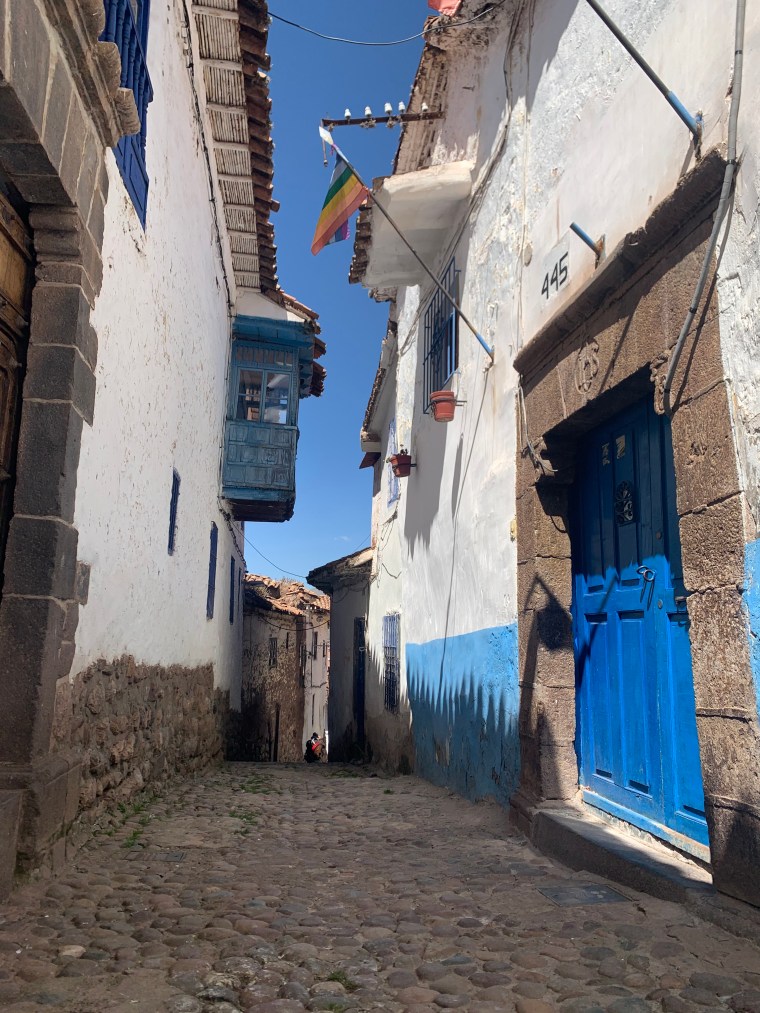
Though the Spaniards in Cusco were completely cut off from the outside world, word eventually spread throughout Peru. When Francisco Pizarro heard about what was going on, he immediately gathered relief forces to break the siege. He had about 500 soldiers distributed among a few cities, including Lima. Within a week, he had gathered two small armies and sent them toward Cusco. Additionally, Pizarro grabbed the nearest member of the royal family, a cousin of Manco Inca’s named Cusi-Rimac, and declared him the new Emperor of the Incan Empire with a hasty ceremony.
This is a spot where I wish MacQuarrie gave more character detail, though I doubt any relevant historical records exist. The sense I get is that Francisco was more sober-minded than his brothers, and though he got insanely rich in Peru and even picked up a local mistress (a 17 year old sister of Manco Inca whom he allegedly treated well), he didn’t seem to engage in psychopathic Westworld-style torturing of the natives. Even at the height of his wealth and power in Peru, he dressed simply rather than decking himself out in silk, and he spent his free time walking around farms and playing common-man sports. He seemed to be more concerned with attaining glory than wielding it.
Thus, I wonder if Francisco was super pissed off that his brothers had fucked everything up. I’m also a little surprised that Francisco didn’t lead any of the relief forces himself, but I guess now that he was getting into his 60s, he wasn’t too eager anymore to literally lead men into battle. Regardless, he skillfully organized a response to the rebellion and put a plan in motion to save his brothers’ lives (although one was already dead).
Unfortunately for Francisco, Emperor Manco Inca dispatched an Incan army to stop the Spanish relief forces under the command of General Quizo Yupanqui, one of the last surviving generals who had served under Huayna Capac. General Quizo would soon prove himself to be the Napoleon of the Incan military command, though maybe Erwin Rommel is the better comparison. His orders were to use his superior manpower and local knowledge to tie down the Spanish relief forces on the roads while Manco Inca’s main army crushed the Spaniards at Cusco. Instead, General Quizo decided he was just going to destroy the relief armies entirely.
Sometimes I think historians bend over backwards to defend the strategic decisions of the native armies that fought against the conquistadors. In my opinion, it’s an unavoidable conclusion that Cortes and the Pizarros outclassed the Aztec and Incan commanders, and Spanish military doctrine was far ahead of Incan military doctrine, hence the natives doing pretty idiotic stuff like the Aztecs repeatedly trying to capture Spanish soldiers for sacrifices instead of just killing them, or the Incas refusing to fight at night and seemingly not posting any night sentries in the middle of battles. But the native commanders were not idiots. Most were well-aware that they were severely outmatched militarily and technologically, and they tried different strategies and tactics to reverse their disadvantages.
Usually they failed, but sometimes they succeeded, and there was no better example than General Quizo. He had to figure out how to stop three Spanish armies consisting mostly of cavalry. He knew his men probably couldn’t beat them in a straight fight, so he decided to drop giant rocks on them.
Granted, the plan sounds like something an 8 year old would come up with, but it was more complicated than that. As soon as the Spanish relief forces started marching, the network of Incan spies and runners brought reports to General Quizo and he maneuvered his army toward the closest one, consisting of 70 soldiers. They marched quickly on narrow mountain roads at 15,000 feet and the general knew they would tire fast (don’t forget the effects of high altitude). He picked a particular spot on the road that went through a canyon, and launched an ambush with projectiles; the surprised Spaniards ran back the way they came to regroup, but they soon reached a river they had just crossed on a bridge, except now… the bridge was gone. The Incas had destroyed it.
Then, from atop the surrounding canyon walls, a bunch of Incas pushed gigantic boulders and SPLATTERED numerous Spaniards and their horses. Feeling trapped, the Spaniards fled in all directions; some ran into the hoard of Incan warriors coming down the road and were overwhelmed, some ran into the river and drowned. All 70 Spanish soldiers were killed or captured. It was by far the greatest victory of the Incan Empire since the Spaniards had arrived on their shores.
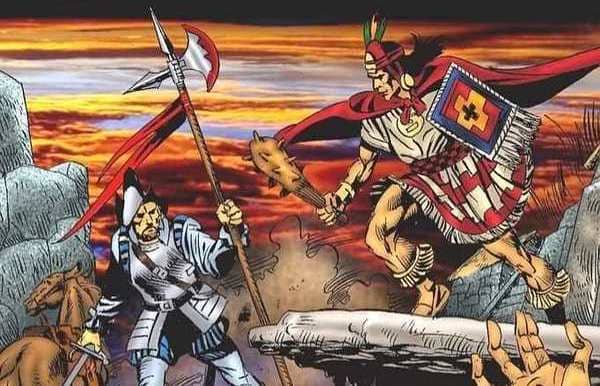
And then General Quizo did it again! He sent the captured Spanish soldiers along with all the Spanish swords, harquebuses, and cannons with a small warrior detachment back to Cusco as a present for Emperor Manco Inca, and then General Quizo set off for the next relief force, numbering 60 Spanish soldiers. This time, the general “quite literally crushed them with an avalanche of boulders” and yet another Spanish army was wiped off the map. Back in Cusco, as many as 200,000 soldiers couldn’t beat 170 Spaniards, but General Quizo’s army (unfortunately no manpower number is given) took out 140 Spanish soldiers in a matter of days.
With no other Spanish armies currently en route, General Quizo took his force on a detour. 60 encomienda-owning Spaniards were nearby in a town apparently hoping this whole rebellion thing would just blow over, or according to MacQuarrie, hoping that their 60 men would be enough to deter any Incan army from attacking. But they didn’t expect General Quizo to do the impossible… something military at night. I mean, the Incan army didn’t attack at night, but they surrounded the town and attacked at dawn, so that was pretty good for an Incan army. The Spaniards held out for awhile with a similar fighting style as in Cusco, but within a day, they were overwhelmed and killed or captured to a man. Thus bringing General Quizo’s inflicted casualty count up to 200 Spanish soldiers.
Back in Lima, Francisco Pizarro had no idea any of this was going on. The Spaniards had their own native information and spy network, but it was nowhere near as sophisticated as the Inca rebellion’s. So, assuming the two deployed relief forces were fine, Pizarro deployed two more Spanish armies. One of them consisted of only 20 soldiers (all cavalry) tasked with escorting the new alleged Emperor Cusi-Rimac to Cusco to assume his throne once the siege had broken.
General Quizo set another ambush for this small force, though this time without the giant boulders. Whether by fortune or coordination, when the Incan army attacked, Emperor Cusi-Rimac and his entourage turned on the Spanish and butchered them from behind. 18 Spanish cavalry were cut down; two escaped. General Quizo’s kill/capture count rose to 218 Spanish soldiers.
That left a single Spanish relief force consisting of 30 cavalry. MacQuarrie doesn’t even bother giving much detail for this part. They were sent out by Pizarro and… it’s gone. Four soldiers made it out of the ambush and retreated back to Cusco. General Quizo’s casualty count rose to 244, around one-third of all Spanish soldiers in Peru. 100 Spanish soldiers, including 80 cavalry, remained in Lima under Francisco Pizarro’s command. And he needed every man and horse, because General Quizo began to march on Lima with 50,000 warriors with orders to take the city.
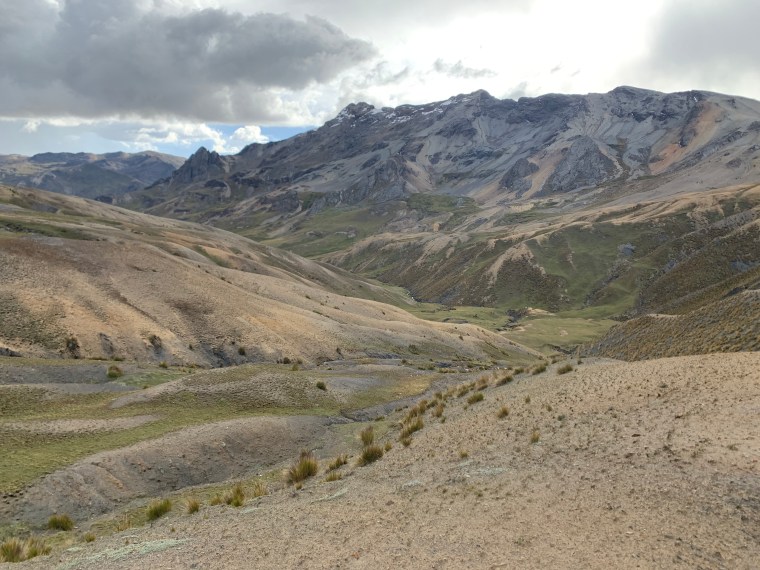
Back in Cusco, the massive Incan army continued daily assaults on the Spaniards and their native allies. Hernando Pizarro and his lieutenants held daily strategy discussions where they debated holding out for a relief force from Francisco Pizarro or trying to break out of the city. They had no idea that Francisco’s relief armies had already been destroyed until Manco Inca told them so. It seemed like a good idea, but ended up backfiring. On the Emperor’s orders, his soldiers threw the heads of five captured Spaniards into the city center for the besieged soldiers to see. The Incas also threw “more than one thousand” “ripped-up letters” they had collected from the relief forces. Apparently, Manco Inca thought it would demoralize the soldiers to see their “talking paper” in shreds. MacQuarrie notes: “Even after three years among the Spaniards, it seems, Manco had no more idea of how writing worked than he had had before the Spaniards’ arrival.”
The letters had the opposite impact as intended. The soldiers pieced as many pages as they could together and got a bunch of letters from loved ones back in Spain as well as news of great victories over the Moors by the Spanish King, so they all celebrated and vowed to fight the Incas even harder. Hernando Pizarro even rallied 70 cavalry and launched an insane breakout of Cusco, not to flee the city, but to drive straight into the heart of the Incan army to try to capture Emperor Manco Inca. It’s a whole crazy subplot that ends with Manco Inca fleeing on a captured horse and the Incas flooding a plain by destroying a dam to stop Hernando’s advance. The Spanish ended up killing a ton of natives, losing a bunch of horses (but sustaining no deaths among the Spanish soldiers), and retreating back to Cusco.
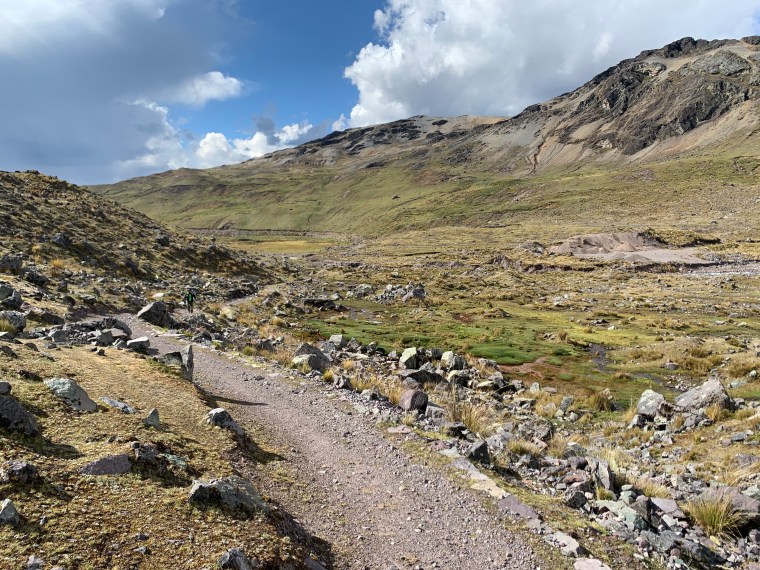
Back in Lima, 80 Spanish cavalry, 20 Spanish infantry, and several thousand native warriors prepared to defend the city against 50,000 Incan warriors led by easily their best general, Quizo Yupanqui. MacQuarrie describes the atmosphere in the city as apocalyptic; the news had filtered back that Cusco was in a desperate siege, all of the relief forces had been wiped out, and many of the encomienda holders were dead. The entire Spanish conquest of the Incan Empire felt like it was coming to a cataclysmic end at the hands of a 20 year old Emperor.
General Quizo’s army surrounded Lima in the same way Manco Inca’s army had surrounded Cusco. The general even used clay models to map out his battle plan, noting that besieging Lima would be more difficult than Cusco because the former was on the coast where the land was flatter and Spanish cavalry were more effective.
General Quizo’s orders were to take the city, capture Francisco Pizarro alive, kill or capture the rest of the Spaniards, and summarily execute all native collaborators. But there was a problem… by the general’s judgment, the wise strategy was another siege, just like in Cusco. They could cut off the Spaniards and starve them out indefinitely, thereby bypassing any fighting that would doubtlessly cost many native lives for every one Spaniard life. However, Emperor Manco Inca’s orders were to capture Lima now. A quick victory would be the nail in the coffin for Spanish morale, and then General Quizo could march back to Cusco with a bunch of captured Spanish soldiers and weapons, and help finish off the siege there.
General Quizo was left in a classic general’s dilemma. The dictates of sound military strategy were diametrically opposed to the dictates of sound political strategy, and the commands of his boss. Against his judgment, General Quizo mounted a direct assault against Lima. On the approach, a first-hand account related Francisco Pizarro “seeing such a multitude of warriors [that he] had no doubt whatsoever that [his] side was completely lost.”
And yet it was a disaster for the Incas. The land was too flat. The Incan army approached with a mass of tens of thousands against the Spanish 100, but the combination of harquebuses, canons, and cavalry simply annihilated the native troops, while the native allies rushed in to mop up. General Quizo pulled his men back and re-set up the siege.
Four days passed until the general decided he had to try assaulting Lima again. During the night before, he gathered his lieutenants and gave a speech pledging victory or death in tomorrow’s battle. As a bonus, he told his top lieutenants that there were at least a dozen Spanish women in the city, and if they won, they could divide the women among themselves and eugenically breed great warriors with them because clearly Spaniards are phenomenal fighters.
The next day, the great General Quizo, who had led the Incan military effort in defeating over 1/3rd of all Spanish forces, who had figured out how to beat Spanish cavalry, who sort of learned night fighting, who had brought the Incan people so close to final victory against the Spanish menace utterly botched it all. Because…
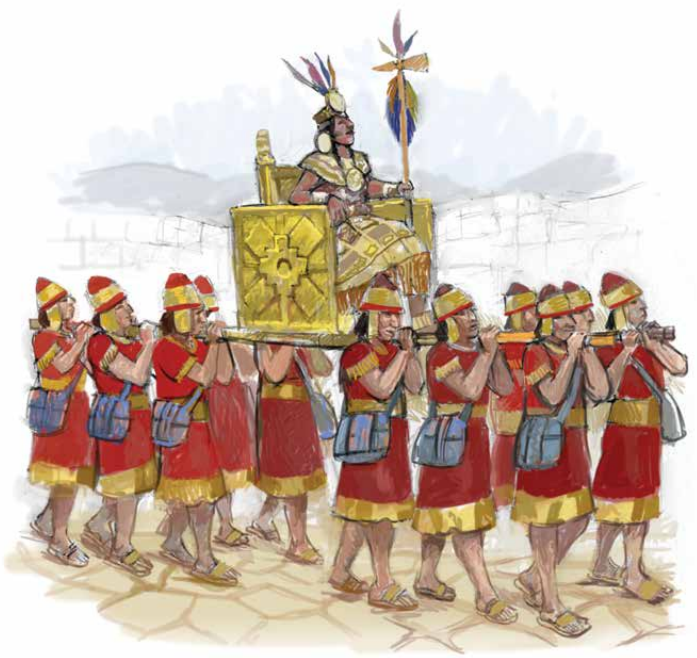
In garish clothes, surrounded by fancy courtiers, General Quizo rode at the front of his army in an elaborate litter carried by servants. Leading the Spanish army from the rear, Francisco Pizarro decided to charge all his cavalry at the Incan guy who looked like he was in charge, and it went as one would expect. General Quizo, along with most of his lieutenants, was killed in a cavalry charge at the outset of the battle. The rest of the Incan army turned and fled, and the Spanish chased them down stabbing and hacking until they were too exhausted to stab and hack anymore. Lima was saved and about a third of the Incan rebellion, along with its best general, was destroyed.
The siege of Cusco lasted another four months. Manco Inca’s mass of warriors successfully cut off Hernando Pizarro and his ~170 Spaniards + few hundred native allies from the outside world, but they apparently had enough supplies to hold out for awhile, and the Incan forces could never break them in assaults. I don’t know why Francisco Pizarro never mounted another relief force to help his brothers; maybe they were concerned about splitting the meager remaining forces and losing another relief column on the road to Cusco. Instead, the Spaniards in Cusco were saved from the other direction.
Diego de Almagro’s expedition to Chile had not gone well. They spent almost two years on the southern venture and had basically nothing to show for it. Francisco Pizarro had waltzed into Peru, captured the Emperor of one of the two largest empires in the Western hemisphere, ransomed him for an unfathomable fortune, then sacked the capital with almost no resistance, and then set up a governorship over something like 9.5 million natives. It all seemed so easy, but when Almagro tried doing the same thing in Chile, he found that the natives were far poorer, far more decentralized, and far more willing to fight to the death as communities. In total, Almagro lost 100 Spaniards, half of their horses, and most of the 12,000 native ally warriors, and they basically generated no loot worth mentioning. Chile just wasn’t worth conquering.
But Almagro still had 400 Spanish soldiers, most of whom were mounted, and a few thousand native allies, and when the news of the Incan rebellion finally reached him, he marched north with what remained of his army. In advance, he sent a messenger not to Francisco Pizarro nor the Spaniards trapped in Cusco, but to Emperor Manco Inca, with whom he had been friends back in the early days of the Spanish occupation. Almagro told Manco Inca that he had 1,000 Spanish soldiers (a lie), was expecting sea-bound reinforcements of 2,000 soldiers (also a lie), and that he was coming to Cusco (true) to negotiate an end to the rebellion (maybe true).
This is another instance where I wish more characterization was available, because at some point during the northward march, Almagro seemingly decided that this was not a maneuver to save his Spanish comrades. Rather, this was a golden opportunity to exploit the fluid legal system of the conquistador claims in the New World. Almagro realized that he could use the Incan rebellion to steal Peru from Pizarro, or at least steal Cusco and southern Peru, possibly with the help of his old friend Manco Inca and some sort of negotiated settlement with the Incan rebellion.
Somehow, from within Cusco, Hernando Pizarro found out about Almagro’s diplomatic overture toward Manco Inca, immediately figured out that Almagro was double-crossing him, and made a similar diplomatic overture to the Incan Emperor in which he offered to forgive Manco Inca and his men of all their treason if they would lift the siege now. He also told them that Almagro was a liar and a scoundrel and they shouldn’t trust anything he said.
All of a sudden, the political situation in the Incan Empire was a lot more complex. It wasn’t an enormous Incan rebellion trying and failing to destroy a beleaguered but undestroyable Spanish force, it was a three-way conflict between the Pizarros (holding the major cities and infrastructure), Almagro (with the strongest concentrated force), and Manco Inca (holding the countryside and commanding an endless mass of native warriors).
This was arguably an improvement in the situation for Emperor Manco Inca. Unfortunately, MacQuarrie is light on detail for the period of the siege during the four months after the defeat of General Quizo at Lima, but presumably the expectation was that the Spanish would eventually get reinforcements from abroad (Francisco Pizarro had sent out a desperate request for help from the other Spanish colonies and Spain at the start of the rebellion) and break the siege before Manco Inca’s forces could crush Hernando Pizarro and his forces. Thus the entry of Almagro onto the scene offered Manco Inca some hope of playing the two Spanish factions off against each other and ending up in a decent position once one side was defeated, albeit probably in some sort of power-sharing arrangement with Pizarro or Almagro rather than returning full mastery of Peru to the Incan dynasty.
But Emperor Manco Inca had to figure out which Spanish force to side with – the Pizarros or Almagro. Obviously, the latter was the more natural choice based on the current military situation and their past friendship. And also, Almagro had never taken the Emperor’s wife/sister as a sex slave.
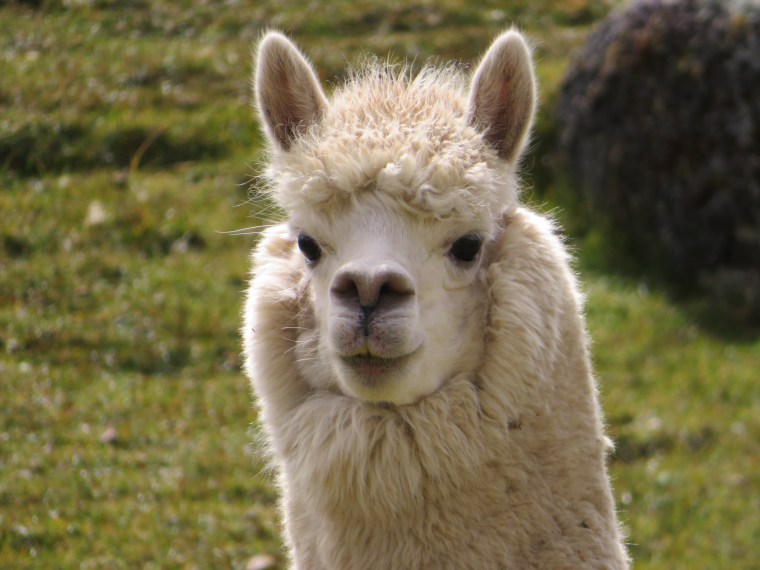
But Almagro was also a Spaniard and Manco Inca had by this point figured out not to trust Spaniards. So when Emperor Manco Inca met with Almagro’s emissaries, which consisted of two Spaniards and a native ally, the Emperor asked the Spaniards to prove their loyalty and trustworthiness by chopping off one of the hands of the native ally. The Spaniards understandably hesitated at the unchristian nature of the request, but the New World is the New World, so one of them grabbed a sword and tried to do it. He only cut off four of the native’s fingers rather than the whole hand, but this was good enough for Manco Inca. An alliance was agreed upon between the Incan rebellion and Almagro against the Pizarros.
But then this Spanish guy, Rui Diaz, screwed it all up. He was another Almagro emissary who arrived shortly after the other two emissaries (and their mangled native companion) had left. He had been a personal friend of Manco Inca and apparently believed that he could negotiate a three-way truce to end the war. Manco Inca asked Diaz if there was a sum of money he could pay to the Spanish King to call all the Spaniards out of Peru, and rather than string him along, Diaz answered honestly, “even if these mountains were made of gold and silver and you were to give them to the King, he would [still] not withdraw the Spaniards from this land.”
I guess this left Manco Inca in a bad mood, because he decided to hit Diaz with another loyalty test. This time, he ordered Diaz to kill a Spanish prisoner captured from one of Pizarro’s relief forces. Dias refused, so Manco Inca ordered him to be arrested and then decided that he couldn’t trust Almagro. The alliance was over within days of its beginning.
Almagro was on the way to Cusco with his army, and if Manco Inca’s forces of 100,000+ couldn’t beat the ~170 exhausted Spaniards trapped in Cusco, they definitely couldn’t beat however many men Almagro was bringing. Manco Inca retreated with his army into a more defensible position in the countryside and waited to see what would happen between Almagro and the Pizarros. And so after nine months, the Siege of Cusco ended. The Spanish sustained single-digit deaths along with the loss of dozens or hundreds of native allies, while the Incan army easily lost thousands.
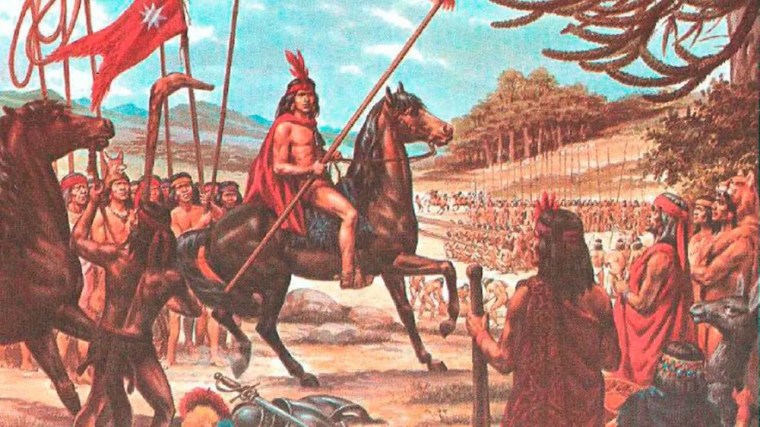
It did not take long for the intra-Spanish feud to get going in earnest. When Almagro arrived in Cusco with his 500 soldiers, he put up very little pretense of acting as a liberating force, and snuck his men into the city in the middle of the night. By the time Hernando Pizarro figured out what was going on, Almagro’s men had seized most of the key points in Cusco.
Pizarro launched an attack in the streets, was easily overwhelmed, and ended up besieged in a single building with a group of loyalists, including Gonzalo Pizarro. A lot of his men were captured, but most surrendered or even joined Almagro, because even after bravely and successfully leading them to an incredible military victory, they still hated Hernando Pizarro. Likewise, Almagro had personally hated Hernando even when he was on good terms with Francisco Pizarro. There was a brief standoff where it looked like Almagro was just going to burn Hernando and his men alive in the building, but rather than die or surrender, Hernando led a heroic charge out intending to fight to the death. However, he, Gonzalo, and the rest of his loyalists were beaten in battle and captured.
News quickly spread of the coup. Francisco Pizarro formed a 500-man army (mostly consisting of reinforcements from the sea) and sent them to Cusco to retake the Incan capital, and once again, the 60ish year old Francisco Pizarro delegated leadership to a lieutenant. With the defections, Almagro amassed more than 600 Spanish soldiers and 4,000-10,000 native ally warriors.
There aren’t many details on Manco Inca’s army at this point, but between the fighting losses and normal attrition of massive armies, it was likely in decline. Rather than stand by and wait for the two Spanish armies to destroy each other and maybe leave an opening for a good Inca attack, the Emperor switched tactics. He announced the dissolution of most of the rebellion’s army and the conversion to guerrilla warfare. He concluded that the Spanish simply could not be beaten in open battle, so their only hope of resistance was in using their great mass of population and mastery of the landscape to pick away at Spanish forces. It was probably the right call, but it also signaled the true end of any real hope of the Incan aristocracy taking back sovereignty over the Empire.
Back in Cusco, the military command of Almagro’s forces fell not to Almagro, who was then also in his 60s, but his second-in-command, the 48 year old Rodrigo Orgonez. Like the rest of these guys, he had a crazy and checkered past: he was the son of Jews who converted during the Spanish Inquisition, fled his hometown because there was a warrant for his arrest due to a brawl, fought in the Italian Wars and personally helped capture a French King, completely stole his last name from a local aristocrat to make himself sound noble, and, of course, went to the New World for a shot at unfathomable fame and fortune. And like Pizarro and Almagro, his ultimate goal was to become the governor of a province and live like a king, but having failed to get his slice of Chile, he now wanted his slice of Peru as Almagro’s second-in-command.
He was also a hell of a commander. He went out to meet the 500-man relief army led by a Pizarro lieutenant with 400 Spanish soldiers and thousands of native allies, and launched a fantastic night attack that killed a handful of Pizarro’s men, routed some, and captured the rest. Within days, most of Pizarro’s relief force switched sides and joined Orgonez and Almagro.
With that enormous victory, Almagro consolidated his hold over southern Peru. He sent Orgonez out with 300 Spaniards to track down and capture Emperor Manco Inca, and they very nearly succeeded; the Emperor was so close to being caught that he left behind a bunch of his wives and the mummified body of Huayna Capac. Manco Inca had no choice but to retreat even further inland, beyond the Andes, into the Amazon jungle, where he set up a new capital city. Then Almagro crowned Paullu, yet another son of Huayna Capac and a brave commander who had fought alongside Almagro for years, as the new Inca Emperor, complete with an elaborate ceremony in Cusco.
With the loss of yet another relief force, Francisco Pizarro had hit another serious setback, but he was still probably in a better position than Almagro overall. Almagro had a larger army and controlled the capital, but Pizarro had the state apparatus and the ports. What he needed was time to bring in more reinforcements and take another shot at Cusco. To that end, Pizarro sent a lawyer friend to enter into negotiations with Almagro, but really his job was to drag discussions out for as long as possible to buy time.
I’m not sure if Almagro’s position was too weak or if the negotiating stopped him from attacking Lima, but either way, he and Orgonez sat around Cusco for months after chasing away Manco Inca. During that time, Gonzalo Pizarro “somehow” escaped, and Pizarro’s lawyer convinced Almagro to release Hernando Pizarro. Both events left Orgonez fuming as he had been advising Almagro to execute the two Pizarro brothers since the capture of Cusco. To be fair to Almagro, he was worried about alienating the Spanish King if he went too hard on the Pizarros, but also, in his old age, the lawyer’s moralistic arguments about being a good Christian seemed to have gotten to him.
After five months of fake negotiating, Francisco Pizarro had amassed a new army of >800 Spanish soldiers (mostly fresh off the boat) and placed Hernando Pizarro at its head. They marched on Cusco and were met outside the city by Almagro’s army of 500 Spanish soldiers led by Orgonez and 6,000 native allies led by Emperor Paullu.
MacQuarrie’s description of the Battle of Las Salinas is a little confusing. By his telling, the normally skilled Orgonez believed that Hernando Pizarro wouldn’t launch a direct attack for some reason, but then… Pizarro did. In fact, Pizarro’s army seemingly walked right up to Orgonez’s army and fired 100 harquebuses and a bunch of crossbows, destroying a significant portion of Orgonez’s army in a single volley. Orgonez then ordered a desperate charge off the back foot and his army was swiftly crushed with Orgonez dying in battle and Emperor Paullu suddenly switching sides to collapse the flanks. MacQuarrie puts the Orgonez side’s death toll at 120 to Pizarro’s army losing only nine.
Almagro watched the battle from a nearby hill and fled back to the city before its end. Pizarro’s army easily took Cusco from the small garrison left behind and captured Almagro. Now quite old and unwell, he asked to speak to Francisco Pizarro, who was still back in Lima. Hernando Pizarro, ever the asshole, refused, and ordered Almagro to be executed by garrote without trial.
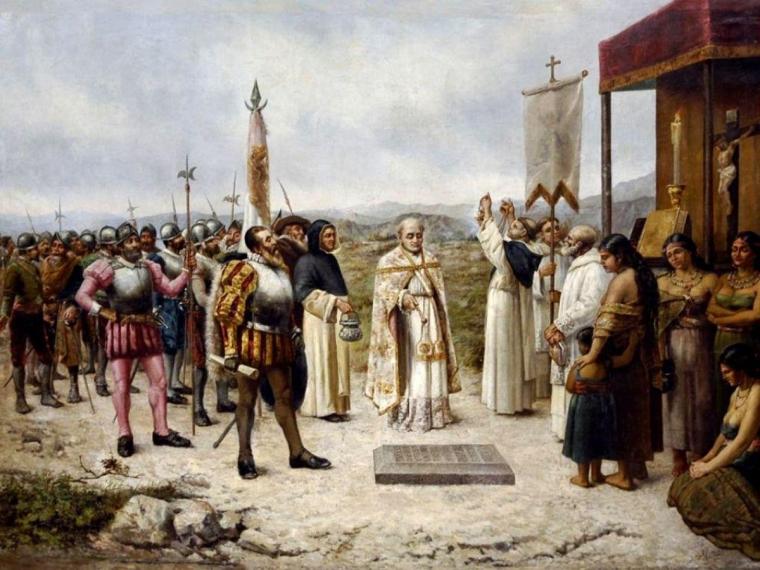
Completing the Conquest (Again)
All that gets about 2/3rds through Last Days of the Incas, and I’m far as I’m concerned, that was the end of the expedition of the conquistadors. The Spanish expedition to conquer the Incan Empire began in earnest in 1532 and ended in 1538. By then, the Pizarros had won. Their Spanish competitors were dead, captured, or co-opted, and they had a puppet-Emperor in the form of Paullu. There was still an Incan resistance, but it was pushed to the edge of the Empire and no longer had a realistic hope of overthrowing the Spanish. Peru was conquered.
But to rush through the most interesting bits of the rest of the story as an epilogue…
Manco Inca launched a guerrilla war against Pizarro-dominated Peru for about seven years. The Spanish initially suffered some decent casualties as the Incas went back to targeting encomienda-holders and the emerging trade routes, but eventually Spanish security measures and counterinsurgency operations (ie. burning down entire villages) put a stop to most of it. The Spanish made a few attempts to crush Manco Inca at his new capital at Vilcabamba in the Amazon jungle, but they were always surprising Spanish failures. Due to logistics, it was too far away from major cities to send large armies, and their small cavalry forces didn’t do well in the jungles, especially against the bow-wielding local native allies of the Incas.
However, Gonzalo Pizarro eventually mounted a 300 man expedition which, despite losing over 30 cavalry early on to another boulder ambush (!) and encountering gun- and horse-wielding Incas, eventually broke through to Vilcabamba and sacked the city. Gonzalo rounded up and executed nearly all the remaining Inca generals and rebellious nobility, but Manco Inca escaped and went into hiding in the Peruvian countryside.
In 1541, nine years after he arrived in Peru to start his conquest and three years after the defeat of Almagro, Francisco Pizarro was sitting in one of his Lima villas having lunch with a group of friends and associates when 20 men stormed his house and shouted their intent to murder him. They were a bunch of disgruntled ex-Almagro supporters who blamed Pizarro for destroying their shot at fortune and not incorporating him into the state of New Castille after Almagro’s defeat. Most of the lunch guests ran, but 63 year old Pizarro, his least-useful half-brother (Francisco-Martin Pizarro), and two other guests stayed and fought. Still a strategist, Pizarro maneuvered to a doorway to create a bottleneck and then held off the mass of attackers in single combat. But then one attacker grabbed another attacker and threw him at Pizarro like a human shield; Pizarro stabbed the guy and the other attackers used the opportunity to get past his blade and stab him and the other defenders to death.
And so Francisco Pizarro was assassinated. Like Julius Caesar, Pizarro had been warned in advance about the plot (by a spy among the conspirators) but Pizarro dismissed the story as “Indian gossip.” His governorship was succeeded by a viceroy sent to Peru by the Spanish crown.
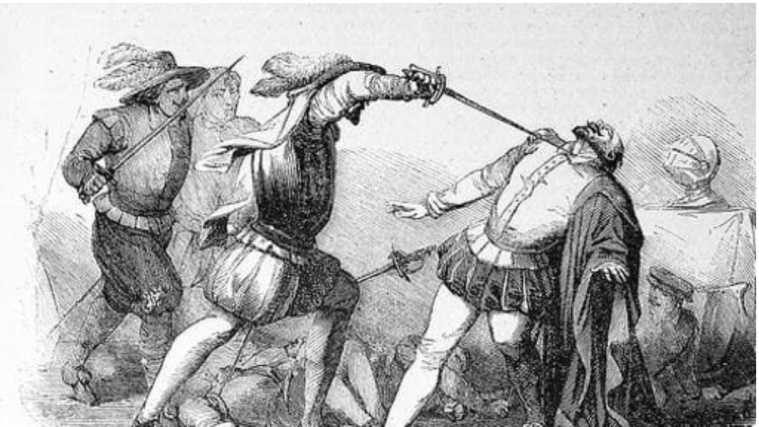
Soon after the assassination, the supporters of Almagro, called Almagristas, actually formed a small army for an insurrection, but were defeated. Seven of the survivors ran away and somehow found Emperor Manco Inca who was roving around the wilderness continuing a low-level guerilla war. Manco Inca took the seven Spaniards in and used them as advisors to train his soldiers in Spanish combat techniques as well as to teach him personally about Spanish culture, leadership, religion, etc.
After a full two years of living with the Incas and having daily conversations with Manco Inca, the seven Spaniards hatched a crazy scheme. While playing a sport with the Emperor, one of the Spaniards suddenly pulled out a knife and repeatedly stabbed him in the back. The Spaniards then fled on stolen horses, intending to go to Cusco where they would tell the regime of New Castille about their feat in the hopes of getting a pardon. Instead, the Incas tracked them down that night and murdered them all. Manco Inca succumbed to his wounds and died in 1544 at age 29.
That same year, Gonzalo Pizarro was up to no good. Though he was extremely rich and famous and respected in the New World, he was also pissed off that the King had sent some bureaucrat from Spain to take over New Castille as viceroy after Francisco’s assassination. Worse yet, the viceroy implemented the New Laws which ended native slavery and regulated the brutality of encomiendas. So Gonzalo and a bunch of equally disgruntled conquistadors who just wanted to exploit the natives in peace revolted against the Spanish viceroy and quickly took over most of Peru. His men crowned him as the new viceroy and he assumed dictatorial power.
I’m not sure what Gonzalo’s ultimate plan was, or if he even had a plan. You don’t have to be an expert in 16th century Spanish politics to know that the revolt wasn’t going to last. First, the Spanish King sent an emissary to New Castile to announce that part of the New Laws would be scaled back, and then he offered pardons to many of the insurrectionists. This fractured Gonzalo’s ranks and he went on a pretty severe reign of terror, ultimately executing 340 Spaniards of questionable loyalty.
Then, two years after Gonzalo had seized power, the viceroy collected an army on the coast delivered from Spain and its other colonies, attacked Gonzalo’s forces, and defeated them at the Battle of Jaquijahuana, mostly due to a bunch of defections in his ranks. The Spanish viceroy was killed in the fighting and Gonzalo fought practically down to the last man until he surrendered. The next day, he was executed by decapitation at age 36.
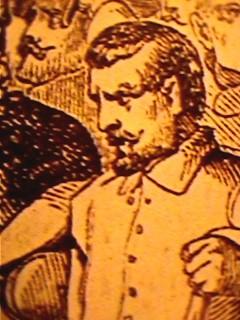
In the following year, 1549, Incan Emperor Paullu died. He never played that big of a role in the conquest, but it’s interesting that he ultimately won the Incan game of thrones. He was a son of Huayna Capac and a supporter of Manco Inca who ordered Paullu to accompany Diego de Almagro on the Chilean expedition. Over the years, he earned Almagro’s trust as a military commander of the native ally forces, and he helped Almagro seize Cusco from Hernando Pizarro, for which Almagro crowned him Emperor (despite Manco Inca still being alive). Then during the Battle of Las Salinas in 1538, Emperor Paullu betrayed Almagro and helped Hernando Pizarro’s forces win and then subsequently retake Cusco. For his treachery, Emperor Paullu was kept on the throne and he proceeded to rule for 11 more years until he died peacefully. Sometimes collaborating works.
By that point, there was only one Pizarro left. The second oldest, Hernando Pizarro, had actually been out of the picture for awhile. He had fought in the Battle of Cajamarca, commanded the Spanish forces in the defense of Cusco against Manco Inca, was captured by Almagro, was released, led his brother’s army to defeat Almagro and Orgonez at Las Salinas, and then executed Almagro without his brother’s permission. Next, he went back to Spain to shore up Francisco Pizarro’s legal claims in the New World against the deceased Almagro and preemptively defend himself against any charges of criminality for his conduct in defense of the realm.
It turns out that he should have been a bit more preemptive. A lieutenant of Almagro got to Spain before Hernando and convinced the King that Hernando had unjustly murdered Almagro, who was the rightful governor of southern Peru. Hernando arrived soon afterward and presented his own case to the King – that Almagro was a traitor – but I guess Hernando was a better fighter than talker because he failed to persuade. And so Hernando Pizarro was arrested and thrown in prison… for 20 years, from 1541 to 1561. He got out at age 60 having outlived all of his brothers and being prematurely aged by harsh conditions, but at least he still had some conquistador money. Hernando Pizarro lived another 17 years, dying in 1577 as the last of the Pizarro brother conquistadors.
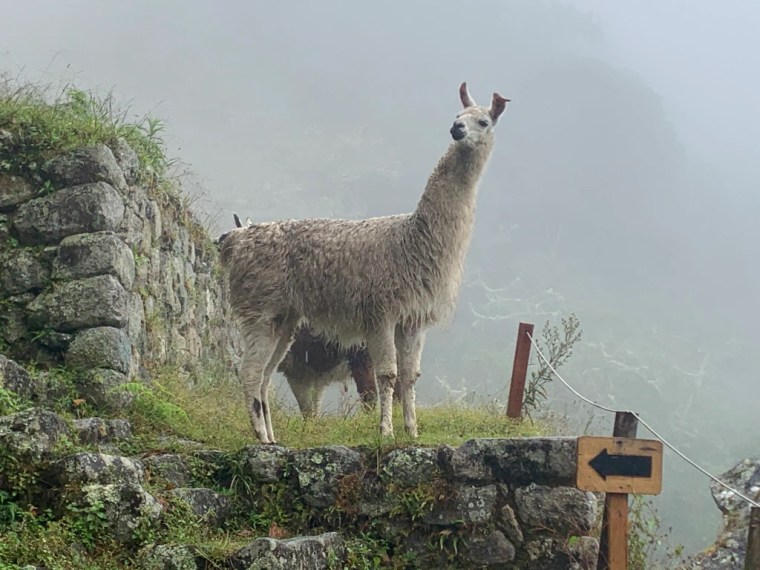
The Spanish Conquests As Historical Case Studies of Civilizational Contrast and The Importance of Individual Decision-Making
Beyond just recounting the adventures of Cortes and Pizarro, I want to try to conceptually explain why the conquistadors are so fascinating to me.
Evaluating historical figures is a lot like evaluating Survivor contestants. The toughest part is discerning between merit and circumstance or luck. Was Franklin Delano Roosevelt one of the most impactful presidents in history because he, personally, made a lot of excellent decisions that brought America through the Great Depression and won World War II? Or was he just in the right place at the right time and any basically competent American politician put in his context would have ended up with the same legacy? If FDR and President Benjamin Harrison had been quantumly swapped, would we consider Harrison one of the greatest presidents of all time and Roosevelt a historical footnote?
While acknowledging that this requires a tremendous amount of subjective judgment and recognition of ambiguity, I think the place to start when parsing merit and circumstance is analyzing the quality and quantity of a historical figure’s individual decision-making.
For instance, how do we know that Napoleon was a great military commander? For one, he commanded something like 80 battles and only lost maybe 10. Prime facie, it’s hard to win that many battles by sheer luck. 80 is a high enough number to expect randomness to mostly be shaken out. And that’s not even factoring Napoleon’s military decision-making outside of battles such as strategic maneuvering of entire armies, logistical management, etc. We can assume that Napoleon’s individual military command decision had a significant impact on that win record.
That’s a matter of quantity regarding seemingly good decision-making, but what about quality? What if Napoleon only won his 70 battles because his side always had overwhelming numbers, or because French troops were superior, or because his command staff was excellent, or because of some other factors that gave him advantageous circumstances? Maybe any mediocre French general of the age could have been put in charge of those 80 battles and had similar outcomes.
We know this isn’t true because we can mix and match the variables with other historical figures and contexts. There were many generals during Napoleon’s age, and none except for possibly Arthur Wellesley achieved anything remotely close to Napoleon’s quantity or quality of wins. Napoleon had many competent marshals in his command staff, but all who tried to command independently did worse than Napoleon despite overseeing similar armies (some did so badly that even their competence as members of the command staff has to be called into question). Napoleon won some battles with overwhelming military superiority, but he also had many incredible victories with inferior forces (ex. Austerlitz or Borodino).
You can even take a broader view and compare the extent of Napoleon’s decision-making as a commander across military eras. Speaking very roughly, generals during the Napoleonic Era were unusually important to battle outcomes compared to eras before and after. Back in Medieval Europe, armies were too disorganized for generals to issue many minute commands. In World War II, armies were so vast that military decision-making increasingly had to be delegated, and armies were so technologically disparate that tech itself often dictated the correct strategies and tactics (hence why many of the most famously overrated generals – like Patton and MacArthur – are from this era). The Napoleonic Era was a sweet spot where armies were complex and maneuverable but not so vast and technological, hence general decision-making was elevated as a key factor in battle outcomes, and hence Napoleon’s achievements were even more impressive.
If you look at Napoleon’s military career and come to the conclusion that his record of victories was not attributable to his skills, then there is only one explanation for his alleged accomplishments… luck. If Napoleon’s individual decision-making didn’t win him 70 battles, then he must have gotten extremely lucky over and over and over again. He’d have to be one of the luckiest people in all of history, especially once you factor in all of his other achievements across the political, diplomatic, and civic domains. Even without a detailed understanding of Napoleonic history, it’s easy to dismiss such an argument because the level of luck needed to give Napoleon his military career is so extraordinarily unlikely.
With this framework in mind, consider how impressive the Spanish conquests of the New World were from a civilizational perspective.
Imagine if, in the year 1300, 1,000 Chinese warriors showed up on an English shore and tried to take over the kingdom of Edward I. Even with the Chinese technological superiority of the time, I don’t think it’s plausible that the 4-5 million English people would end up being ruled by a Chinese monarch. To be a bit fairer, maybe shift the time frame to 1216, right in the middle of the First Baron’s War (a major civil war), and throw in a fictitious Chinese plague that kills 5% of the English population. Even then, I can’t imagine that 1,000 well-led Chinese soldiers would expertly navigate the political climate and end up ruling England from London for the next 300 years.
But that’s pretty much what happened in the New World, not once, but twice. Yes, Cortes and Pizarro arrived at their respective empires during times of relative weakness (though I think this is often overstated by historians), yes they were both assisted by local allies, but ultimately, both men ended up ruling over empires of 6-10 million people with minuscule military forces and cunning diplomacy that leveraged their technological advancement. I cannot think of a better historical example of the contrast in… civilizational power or whatever you want to call it, than the Spanish conquests in the New World.
But, just as remarkably, this doesn’t discount the competence of Cortes and Pizarro. The technological disparity between the Spanish and New World natives was vast, but so were the numbers in the opposite direction; you couldn’t just put any random Spanish commander in charge of these conquistador armies and find the same level of success.
One relevant data point is the many failed conquests and ventures of other Spanish conquistadors. One of Pizarro’s lieutenants, Ponce de Leon, died from wounds received during his second venture into Florida. Another lieutenant, Hernando de Soto, launched an expedition that tore across the southeastern U.S., but he died of a fever near the Mississippi River and little ultimately came from the expedition. Vasquez de Coronado found similar success in the southwestern U.S. but went bankrupt, was charged with war crimes, and died of an infectious disease after retreating. Lucas de Ayllón established the first Spanish settlement in what would become the United States, but he and most of his colonists died from starvation and disease, and San Miguel de Gualdape was abandoned. During the conquest of the Incan Empire alone, Almagro, Orgonez, Gonzalo Pizarro, Juan Pizarro, and many other top Spanish lieutenants could be considered failed conquistadors since they were ultimately killed during their venture.
But even more relevant data points can be found in the details of the Conquest of New Spain and Last Days of the Incas. Cortes and Pizarro made dozens or hundreds or thousands of decisions that impacted their fortunes and could have led to their deaths. When Francisco Pizarro first encountered a 30,000-80,000 man army led by Emperor Atahualpa at Cajamarca, it could have gone wrong in a million different ways. Pizarro could have tried to deal with the Emperor diplomatically and gotten ambushed, then enslaved and castrated. Pizarro could have messed up his own ambush and lost the Battle of Cajamarca. Pizarro and his men could have fled in the middle of the night and retreated back to the coast where a unified and emboldened Incan army could have hunted him down. In the Battle of Cajamarca, or any battle that Pizarro and Cortes fought in, one of the bajillion arrows, darts, javelins, and slinged rocks could have hit them in the face and killed them right then-and-there.
And while delegation was obviously important, it’s amazing how many of these key decisions were directly made by Cortes or the Pizarros. If we evaluate President FDR, we have to consider how many of his administration’s policies were determined and enacted by cabinet members and assistant secretaries, etc., but Cortes and the Pizarros were on the ground, in the thick of things, surrounded by mere hundreds of questionably loyal men, and they were more often than not the ones making the decisions that resulted in success or failure, in life or death.
And they ultimately succeeded beyond their wildest expectations. There were a billion things that could have gone wrong. There were a billion different outcomes that would have been worse for the Pizarros and Cortes than complete victory. But they both achieved complete victories.
Imagine that we had a quantum computer that could run the Cortes and Pizarro conquests through a simulator with slightly different variables each time. Out of 1,000 attempts, how many times would they succeed? Obviously, I’m pulling this completely out of my ass, but I’d give them 500 wins each. If we swapped their conquests, I’d give Cortes more wins over the Incan Empire and Pizarro fewer wins over the Mexican Empire. I’d give both significantly more wins over the average commanders of their day (maybe 100?).
With all that said, I can’t help but take another swipe at the revisionist claims against this narrative. In this very highly upvoted and often linked series of Reddit posts, the OP attempts to undermine the success of Cortes with arguments concerning his military capabilities, diplomacy, the importance of the native allies, etc. And while there are occasionally interesting points made, while reading it, I kept finding the general argument absurd from the 100,000-foot view. If Cortes really was a bumbling incompetent commander who was constantly being manipulated by crafty native allies, then how did he end up ruling the Mexican Empire? What are the odds that he was just insanely, incredibly, phenomenally lucky in dozens of battles and diplomatic negotiations? And what are the odds that Francisco Pizarro was equally lucky 20 years later?
All of that is why I find the Spanish New World conquests so fascinating. They are incredible case studies in historical analysis. They are simultaneously clear instances of sharp civilizational contrasts and the value of individual decision-making in achieving unlikely historical outcomes.
 Matt Lakeman


An excellent work. One small thing I want to highlight: another advantage of the Spanish stabbing weapons over the native slashing weapons, would be the fact that you can pack more troops together on the frontlines if they’re packed shoulder to shoulder like a phalanx formation, rather than needing space between them for swinging their weapons. That gives a lot of benefits:
I think that goes some way to explaining how the Spanish kept winning fights despite being outnumbered like 500 to 1. Not only does melee combat not allow the larger force to use its full numbers in battle (because they’ll be stuck at the back, unable to fight; contrast that with ranged combat where backline troops can still shoot)… but the kind of melee combat the Spanish were capable of inherently gives them the advantage on the frontline. The Incas might have outnumbered the Spanish 500 to 1 — but on the actual point of contact, there might be only 1 Incan warrior with a club vs. 5 Spaniards with spears. And zooming out to the frontline formation level, there might be only 10 Incan warriors with clubs, loosely spaced out into a line, versus 50 Spanish spearmen in a dense formation, multiple ranks deep.
At that point, it doesn’t matter that the 10 Incan warriors have like 990 more Incan warriors behind them, ready & waiting to step onto the frontline when a “slot” opens up; those extra troops aren’t in the fight, and the 10 Incan warriors are *brutally* outnumbered in the actual fighting. The Incan advantage in numbers is essentially an advantage in wood waiting to be fed into the woodchipper, rather than a tidal wave crashing down on the Spanish all at once.
That’s something you see a lot of in military history, more generally speaking: locally outnumbering your enemy at the point of contact despite them globally outnumbering you. It’s something every tactician strives for, every great general in history achieved, the key to almost every stunning upset victory: just outnumber the enemy. From there, Lanchester’s Square Law (https://www.youtube.com/watch?v=wpjxWBwLkIE) will give you the advantage almost automatically, because more troops means more firepower for eliminating the enemy before they can hit you, and more hitpoints for absorbing the enemy firepower without taking losses.
(In this specific case, Lanchester’s Square Law might not go far enough, honestly! Because this 5 vs. 1 Spanish versus Incan engagement might actually be more like a 4 vs. 0 — because if “parrying” is a thing, and opposing attacks can cancel out, then you can have a situation where the Incan warrior attacks, one of the 5 Spanish spearmen parries the blow, leaving the other 4 free to then stab the Incan warrior. Or the 5 Spanish spearmen attack from all angles, the Incan warrior can only parry 1 attack from 1 direction, and the other 4 then stab him.
In combination with the superior reach of the Spanish spears giving them 1 “free turn” to stab the Incan warrior as he moves up into club range, the Spanish don’t have a 5:1 advantage so much as an *Infinity*:1 advantage, because the Incan warrior doesn’t get to attack at all before dying! And if he does, his swing probably doesn’t hit because there are 5 chances to parry it. And if it hits, it probably doesn’t even do anything because it just bounces off the Spanish armor. Man, it must have been *tough* to be the Incan warrior in question.)
All this is to say, I *think* I can understand how 168 soldiers can beat 30 000 – 80 000. It looks less like a battle, and more like wood lining up to be fed into a woodchipper. Or those GIFs of crowds charging a Phalanx in Rome: Total War (https://www.reddit.com/r/gaming/comments/3ek3to/total_war_rome_2_charging_a_pike_phalanx_head_on/).
(This also probably explains why like 50 Spanish cavalrymen could keep charging into 100 000 strong Incan armies and capture/almost capture the Incan emperor, over and over again — it’s just a matter of density, and Incan formations not being dense. If they all just blobbed together in one spot like a pike phalanx, they could have absorbed the blow, but I think that just went against their every instinct, honed by years of club-based combat… I bet that in some alternative universe where the Aztecs and Inca focused on wooden spears instead of clubs, the Spanish expeditions were doomed and just got overwhelmed by the sheer numbers. But of course, we’ll never know.)
LikeLiked by 1 person
This is great stuff, filled in some blanks for me, thanks.
LikeLike
I have to say that reading the whole story gives an opposite conclusion, kind of demystifying Francisco Pizarro, for me. He seems to have been a very good warlord, but not really world-class, certainly not proportionate to his impact on history; Quizo Yupanqui and Manco Inca sound like, if anything, better leaders. And the other Spanish leaders were nothing special at all. But Pizarro succeeded due to (1) a level of technological advantage where being outnumbered 100:1 was a cakewalk for his soldiers, and even 1000:1 was not hopeless, and (2) blatantly copying Cortez’s conquest for his political strategy. Yes, most people would have failed even with those advantages, but quite a few might have done even better.
LikeLiked by 1 person
This blog just gets better and better. I’ve also got a nerdy fascination with medieval and primitive arms and armour and thought a lot about the conquistadors vs aztec/inca. Coming in to this I was leaning more towards the interpretation in that reddit thread that the tech advantage couldn’t have been enough to overcome 1000:1 numerical odds. Just because, even if they can’t penetrate steel armour, primitive weapons are still very deadly against bare flesh and 16th century harnesses have a lot of gaps and unarmoured spots like the face, legs and sometimes arms, so for any conquistador that gets hit by enough attacks something will eventually get through. Also when I read an account of Pizarro exploring the coast before he discovered the inca quite multiple times it would say stuff like “[random conquistador] got hit ten times in the legs by arrows and had to be evacuated after fighting a handful of tribesmen.”
But your summary makes it sound like they were all but impervious to arrows/sling stones etc. So I’m wondering if the armour they were wearing wasn’t the standard 16th century configuration and if they had something more specialised. If I was going up against a barrage of stone and wood weapons I’d want full body coverage including the face and I’d probably use a lot more chainmail since it’s much more effective for that than it is against steel stabbing weapons and is flexible enough you don’t need to leave gaps for mobility like you do with plate. Maybe they looked more like high medieval knights than the normal 16th century soldiers they’re usually depicted as.
LikeLiked by 1 person
They couldn’t throw a net over the cavalry? Their quipu practice should make them, I would think, suited for retiarius technique. Maybe combined with the boulders to entrap them in the city center and starve them out. How long could they have really held out for?
LikeLiked by 1 person
One would think so… I’m especially curious about how much supplies the Spaniards had in Cusco. I guess there weren’t too many people (a few thousand at most including civilians?), but considering how quickly Manco Inca’s forces arrived at the city, I’m surprised they had enough for a 6+ month siege.
LikeLike
That was a great post! Are you planning to cover Afonso de Albuquerque next? In my opinion, he’s also one of the Big Three Iberian conquerors.
LikeLike
I’m afraid I don’t know anything about him, reading his wikipedia now.
LikeLike
I can’t find any source corroborating your mention that Pizarro and his men may have been castrated if captured. I have never heard of this as an Inca practice.
LikeLike
It’s in MacQuarrie, I believe right after Atahualpa meets Hernando Pizarro.
LikeLike
When I looked at MacQuarrie I didn’t find a citation for the claim. This expert claims that the historical record does not attest to eunuchs (a category which would include casstrated harem guards) in the precolumbian empires: https://www.reddit.com/r/AskHistorians/comments/5tud5h/were_there_eunuchs_in_precolumbian_american/
LikeLike
From MacQuarrie’s Conquest of the Incas, pages 67-68:
(Context – Ponce de Leon, Hernando Pizarro, and their translator are leaving from their meeting with Emperor Atahualpha)
“As they rode past the masses of native warriors, the Spaniards could not have known that Atahualpa had already made a decision. Tomorrow, Atahualpa had decided, he would capture the foreigners, kill most of them, and castrate the rest to use as eunuchs to guard his harem. Atahualpa would then seize the magnificent animals the foreigners rode in order to breed them in great numbers…”
I also don’t know his citation.
LikeLike
Wikipedia says Pizarro went to the New World in 1509, so he was 31 not 24. Also Hernan Cortes was not illiterate. He had some sort of legal training and worked as a bureaucrat for a few years in Spain and the Hispaniola(The Rest is History podcast has a good series on the conquest of Mexico).
LikeLike
From MacQuarrie’s Conquest of the Incas, page 21:
“Thus in the year 1502, at the age of twenty-four, the impoverished, illiterate, illegitimate, and title-less Francisco Pizarro had perhaps not surprisingly found his way onto a ship that had set out from Spain for the Indies – the islands Columbus had declared were located in Asia…”
I looked at Pizarro’s Wikipedia and for the 1509 claim, it cites – https://www.chroniclesofamerica.com/bios/alonso_de_ojeda.htm – which says:
“In some way or other [Alonso de Ojeda] made his way back to Hispaniola, where his former associate Cosa also was. There he conceived the idea of establishing colonies on the mainland between Cabo de Vela and the Golfo de Uraba, and after some time spent in petitioning the Government, finally the two comrades obtained the necessary permission. He went back to Spain and organized his third and last expedition, only after great effort. Among the persons who embarked in his four vessels was Pizarro, the future conqueror of Peru.”
I don’t have any particular stock in defending specific claims by MacQuarrie, but this source is from 1913 and could be interpreted as Pizarro joining the expedition after it had already left Spain. Idk.
You are right on Cortes not being illiterate, will make an adjustment.
LikeLike
A bit off-topic, but do you have a sense for whether (and if so, why) the Incas were basically the most advanced civilization to have ever existed in the Americas at the time Europeans arrived? My sense is that we don’t know of any prior civilizations that were as sophisticated or had as much territorial extent (and eg when we go looking for artifacts on top of incredibly hard-to-reach mountains, we find Incan artifacts like the Children of Llullaillaco but we don’t find anyone else’s, even though they would probably have lasted long enough for us to discover even if they’d been left thousands of years ago).
But naively it would be kind of surprising for this continent that had been almost totally causally isolated for 11,000 years to be at its peak of technological development right at the time that the Old World finally got enough of a tech stack to cross the Atlantic! Unless things were just steadily getting more advanced for that whole time such that most random points in time would have been peak tech level so far for the Americas, but this doesn’t seem true in the Old World, eg the fall of Rome. Was there some global climactic thing that made everyone get their act together around the same time? Just a weird coincidence?
LikeLike
I don’t know why the Incas were so much more advanced than the surrounding civilizations. I tend to lean toward ideological explanations for civilizational disparities (ideas guide behavior which leads to better or worse outcomes), but I’m not sure if there is enough known about Incan culture, governance, and leadership to make determinations.
LikeLike
Some historians argue the pre-Columbian Americas were more akin to the Egyptians, Babylonians, Akkadian tech/societal development level. Basically arguing the closest old world comparable year was that for the new world the development was considered that 1000AD was equivalent to 1500BC. Its considered more that the prcoess got going later due to there being more isolation between cradles of civilisation (i.e. meso America is more distant from the Andes than the Indus Valley is distant from Mesopotamia)
Another point is we view Romans as technologically superior to Medieval Europe and Arabia but that often isn’t the case for instance windmills and waterwheels for infrastructure, stirups and metal working for fighting, maths and astronomy for natural sciences was more advanced in medieval Europe and the Islamic world than the Romans. What Romans had was lots of governmental/state capacity we tend to in modern times view them the same but in the past they were distinct. I.e. your government being able to co-ordinate being able to build big temples is distinct from how good a forge works to make armor and weapons. You’re viewing governmental unification/coordination and ability to execute big projects as technological advancement as one and the same.
Basically the popular view you are subscribing to is monumental architecture = technological advancement which ignores how sophisticated medieval non-monumental technology were to say against the Greeks/Romans and even more so than the Incan/Aztecs.
LikeLiked by 1 person
Very good article. I think popular history these days tries too hard to portray the Spaniards as negatively as possible. Some put more emphasis on their atrocities which I get, but increasingly many portray them as incompetent idiots which I think is just cope. I think hating invaders is natural for the invaded. Persians were not fans of Alexander and no society in history would blame them for that. But it is unusual for the descendants of the conquering culture to disown their own victorious ancestors. This I think most societies throughout history would have found unusual and even wrong. But spirit of this age I suppose.
LikeLike
i mean a counter point is that often the past isn’t just the past. I.e. the descendants of the conquered are still around and there anger at the conquerers intersects to make the stories anger people.
i.e. Roberto Suarez the leading Coca leaf supplier in the 70s and 80s lived in Bolivia and was a descendant of a conquistador who was one of those granted land. Who grew up with his family ruling an area the size of West Virginia with various native peasants tied to the land. Ended up allying with the pro ex-Nazi military government of his home country and being involved in events like the Cocaine Coup.
LikeLike
my comment got cut off so cont
Suarez allied with ex Nazis such as the Butcher of Lyon Klaus Barbie who terrorised Bolivia much as he had occupied France. Klaus Barbie incidentally killed Che Guevera.
So the past is never just the past the descendants of the conquistadors are still around pissing of quite a lot of people (not just the descendants of the conquered). Also the regimes that worshipped the conquistadors were often military juntas angering more people.
incidentally Tupac the rapper is named after Tupac Amaru who led a big revolt against Spain and was a descendant of the Inca emperors
https://en.wikipedia.org/wiki/Roberto_Su%C3%A1rez_G%C3%B3mez
https://en.wikipedia.org/wiki/Klaus_Barbie
LikeLike
Great read, about a subject I’ve never read much about, but I think the discussion of luck as a factor in Napoleon’s (and the others’) victories has it reversed. Many entrepreneurial commanders made gambles as risky as they did, but we only pay particular attention to the successful ones.
LikeLike
Regarding your point:Imagine if, in the year 1300, 1,000 Chinese warriors showed up on an English shore and tried to take over the kingdom of Edward I. Even with the Chinese technological superiority of the time, I don’t think it’s plausible that the 4-5 million English people would end up being ruled by a Chinese monarch. To be a bit fairer, maybe shift the time frame to 1216, right in the middle of the First Baron’s War (a major civil war), and throw in a fictitious Chinese plague that kills 5% of the English population. Even then, I can’t imagine that 1,000 well-led Chinese soldiers would expertly navigate the political climate and end up ruling England from London for the next 300 years.
Funnily enough if you switch the example to Jurchen/Manchu/Mongol/Turk/nomad this example can work for many of the Nomadic dynasties that conquered China and potentially other regions like India.So to provide a comparable there is a big discussion re Chinese history about how did and initial 5k Jurchens under Wanyan Aguda conquer the Liao and Song dynasty. Below is an example of the discussions.
https://www.quora.com/How-did-the-Jin-dynasty-with-an-army-of-only-5000-catapharacts-%E9%93%81%E6%B5%AE%E5%B1%A0-conquer-the-Song-dynasty-which-had-nearly-1-million-soldiers
https://tvtropes.org/pmwiki/pmwiki.php/UsefulNotes/SongLiaoJurchenJinAndWesternXiaDynasties
My perspective is that you can see comparable lopside ratios with steppe horse archers that qualitatively and tactically all sorts of government were unable to deal as occured with the Spanish conquests.
So it was probably a combo individual ambition, military tech, unity, discipline and novelty that helped guide them through.Also and interesting conquerer with not as lopsided k/d ratio that has similar accounts is Babur founder of the Mughal in India. Interestingly left food reviews in his diaries along side accounts of battles so food history youtubers discuss his thoughts on fruits and wine parties and other food.
https://en.wikipedia.org/wiki/Baburnama
LikeLiked by 1 person
If our author is interested in historically comparable conquests by another civilization against a different civilization also led by a Spainard around a similar time frame with similar although greater troop numbers an interesting comparabale is the Moroccan conquest of the Songhai empire led by Judar.
Judar was a eunuch slave soldier born in Spain as Diego de Guevara where he has enslaved by Barbary pirates (to the shores of Tripoli song lyrics by the marines refers to American raids against North Africa slavers; these guys raided and enslaved Europeans for centuries) and sold to the Morrocan sultan as a slave soldier (I’ll discuss an english account at some point below).
He was eventually given troops (4k to 20k) by the Sultan and made a Pasha (lord) and instructed to conquer the Songhai (Saharan Africa – muslim/pagan empire). In this he succeeded but was unable to crush revolts unlike the Spanish and he was ultimately executed by the sultan. Part of it was while Mali/Songhai was gold rich they mostly got it by panning rivers for gold while the Morrocans thought they had gold mines so they struggled to both secure the extraction of it and it struggled to compete with new world gold as it was lower quality. Ultimately though both the Songhai and the Moroccans failed and that region of the Sahara descended into anarchy and splintered. One interesting modern consequence is that like the Spanish in the new world who created a variety of mixed ethnic groups like the metiso/metis/etc. the invasion force ended up creating an ethnic group the Arma.
https://en.wikipedia.org/wiki/Barbary_corsairs
https://en.wikipedia.org/wiki/Judar_Pasha
https://en.wikipedia.org/wiki/Moroccan_invasion_of_the_Songhai_Empire
https://en.wikipedia.org/wiki/Arma_people
LikeLike
Also re the english account of being kidnapped and being made a slave soldier is Thomas Pellow. Pellow was a cabin boy who was captured at age 11 by Barbary pirates. He then became a slave for the sultan Moulay Ismail. Moulay Ismail is interesting in that he is the man with the most recorded children in history, at least 600 children and poentially more than a 1000. Anyway Pellow was subject to his whims and eventually rose up the ranks commanding troops and becoming a senior harem figure. Eventually he decided to flee and escape back to England.
White Gold a modern book on Pellow https://www.amazon.com/White-Gold-Extraordinary-Thomas-Million/dp/0374289352
His story about his struggles written in 1740 https://archive.org/details/b33010687/page/n5/mode/2up
https://en.wikipedia.org/wiki/Thomas_Pellow
https://en.wikipedia.org/wiki/Ismail_Ibn_Sharif
LikeLike
https://www.legadoandalusi.es/magazine/judar-pasha/?lang=en
https://www.legadoandalusi.es/magazine/the-story-of-the-arma/?lang=en
Also some fun sources on Judar
LikeLike
“Hernando Cortes had faced a tough day of fighting back in Cusco with most of his cavalry gone.”
I’m guessing you mean Hernando Pizarro?
LikeLike
Yep, fixed.
LikeLike
This seems strange given the expected succession struggles. Maybe someone else won it for him and had the real power at least initially, but Wikipedia says
Similarly https://www.thecollector.com/huayna-capac-last-true-inca-king/:
LikeLike